


How to Use a Commercial Floor Scrubber for Better Cleaning & Longer Machine Life

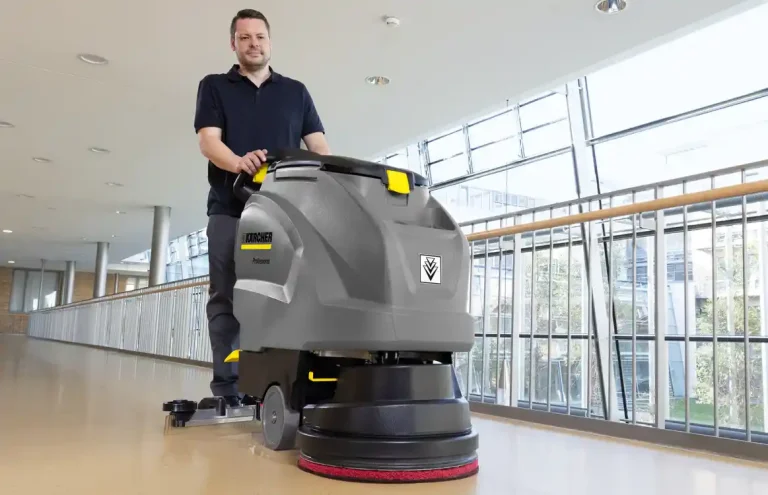
Keeping floors clean in commercial, industrial, or high-traffic spaces may not be that easy. Manual mopping is labor-intensive and time-consuming and, in many instances, can never achieve the deep clean necessary for safety and hygiene. It is here that commercial floor scrubbers are utilized. Commercial floor scrubbers are aimed at making the cleaning of the floor faster, efficient, and effective. However, you might wonder: How to Use a Commercial Floor Scrubber for Better Cleaning properly?
In this guide, we’ll explore everything from understanding what a floor scrubber is to step-by-step instructions for walk-behind industrial models, maintenance tips, and common mistakes to avoid. By the end, you’ll be equipped to operate these machines with confidence and efficiency.
Understanding Commercial Floor Scrubbers
Before learning how to operate a floor scrubber, it’s essential to understand what it is and how it works.
A commercial floor scrubber is an automated floor cleaning device that is capable of scrubbing and cleaning hard floors well. It is a combination of rotating brushes, cleaning solutions, and vacuum suction that can loosen dirt, grime, and debris of the surfaces such as tile, concrete, and vinyl.
Types of Commercial Floor Scrubbers
There are several types of floor scrubbers, each suited for different spaces and cleaning needs:
- Walk-Behind Floor Scrubbers
Walk-behind models can be used in small- to medium-sized locations like in retail shops, schools, hospitals, and offices. They also need the operator to follow the machine behind and direct the machine on the floor. If you’d rather not commit to a purchase, walk-behind scrubber rentals are a flexible way to test a model before buying.
- Ride-On / Industrial Floor Scrubbers
Industrial floor scrubbers, which are also called ride-on scrubbers, are targeted at large plants such as warehouses, factories, and airports. The machines are bigger and quicker and have the ability to cover large territories with little effort.
- Robotic / Autonomous Floor Scrubbers
While not the focus of this guide, some businesses use robotic scrubbers for continuous cleaning with minimal human supervision.
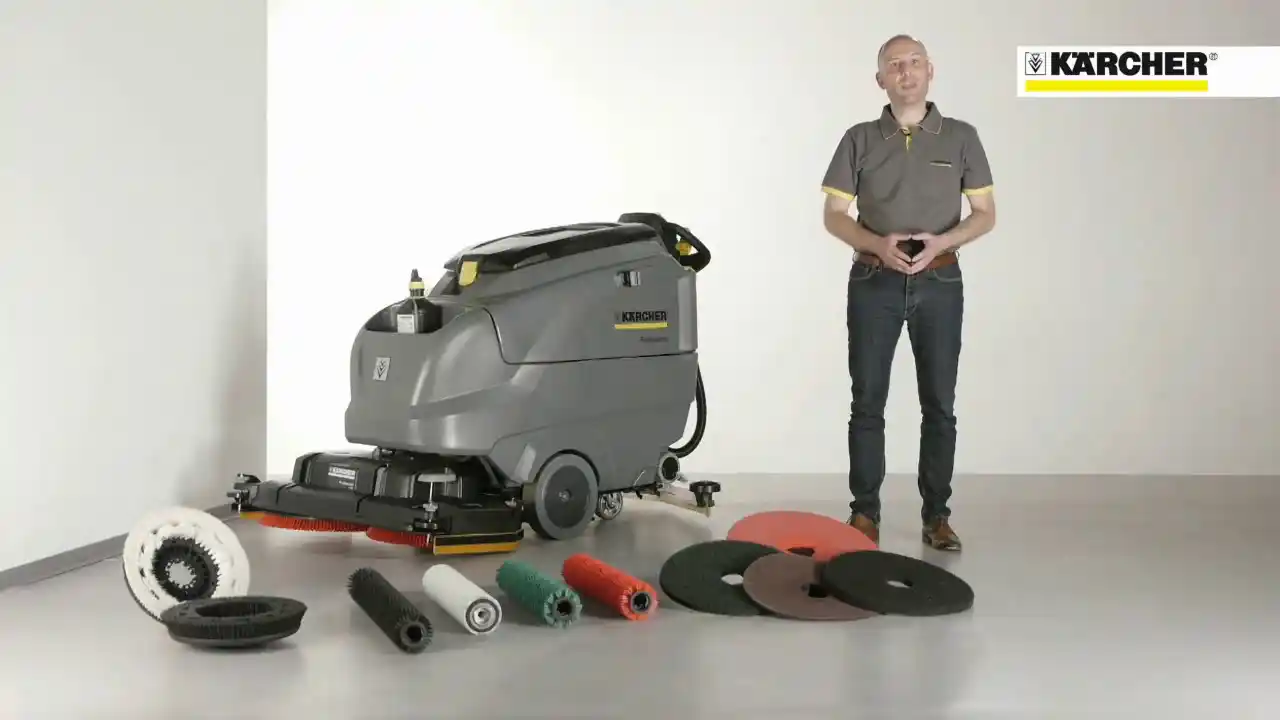
Key Components of a Floor Scrubber
Understanding the components of a floor scrubber helps operators maximize efficiency:
- Brushes or Pads: Rotate to scrub and lift dirt from the floor.
- Solution Tank: Holds the cleaning solution.
- Recovery Tank: Collects dirty water after scrubbing.
- Squeegee: Removes water and solution from the floor, leaving it dry.
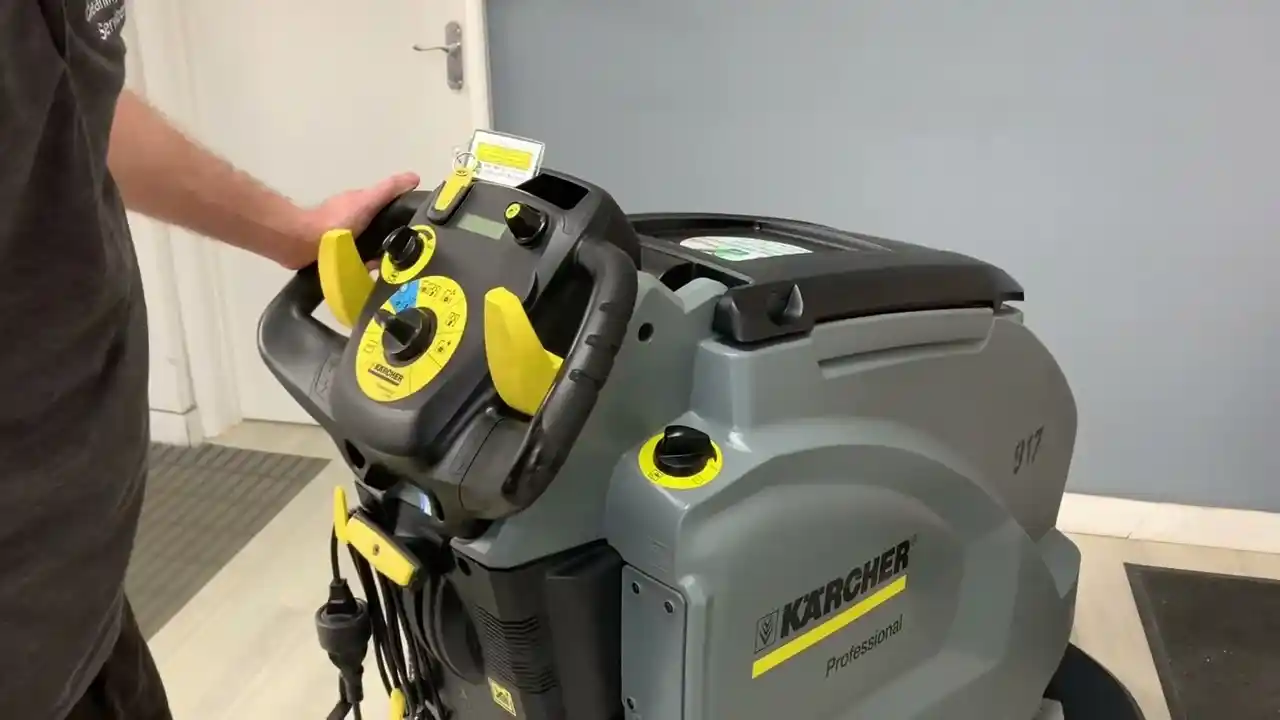
- Control Panel: Allows adjustment of settings such as brush speed, water flow, and vacuum suction.
Preparing for Operation
Before learning how to use a floor scrubber machine, preparation plays a major role. Safety, efficiency, and maximum cleaning outcomes will be guaranteed due to proper preparation.
Safety Precautions
- Always read the user manual for your specific model.
- Wear personal protective equipment (PPE), including gloves, safety shoes, and eye protection if necessary.
- Ensure the floor is clear of large debris or objects that could damage the machine or interfere with cleaning.
Inspecting the Machine
Before starting, check your floor scrubber for:
- Proper brush or pad installation.
- Clean squeegees and no blockages.
- Sufficient cleaning solution in the tank.
- Charged battery or proper connection to power supply.
Checking the Floor and Cleaning Solution
- Identify the type of floor and its condition. Some floors may require a specific cleaning solution.
- Avoid harsh chemicals that can damage floors or harm the operator.
- Fill the solution tank according to the manufacturer’s recommendations.
By taking these preparation steps, you ensure the floor scrubber works efficiently and reduces the risk of accidents.
Operating a Walk-Behind Floor Scrubber
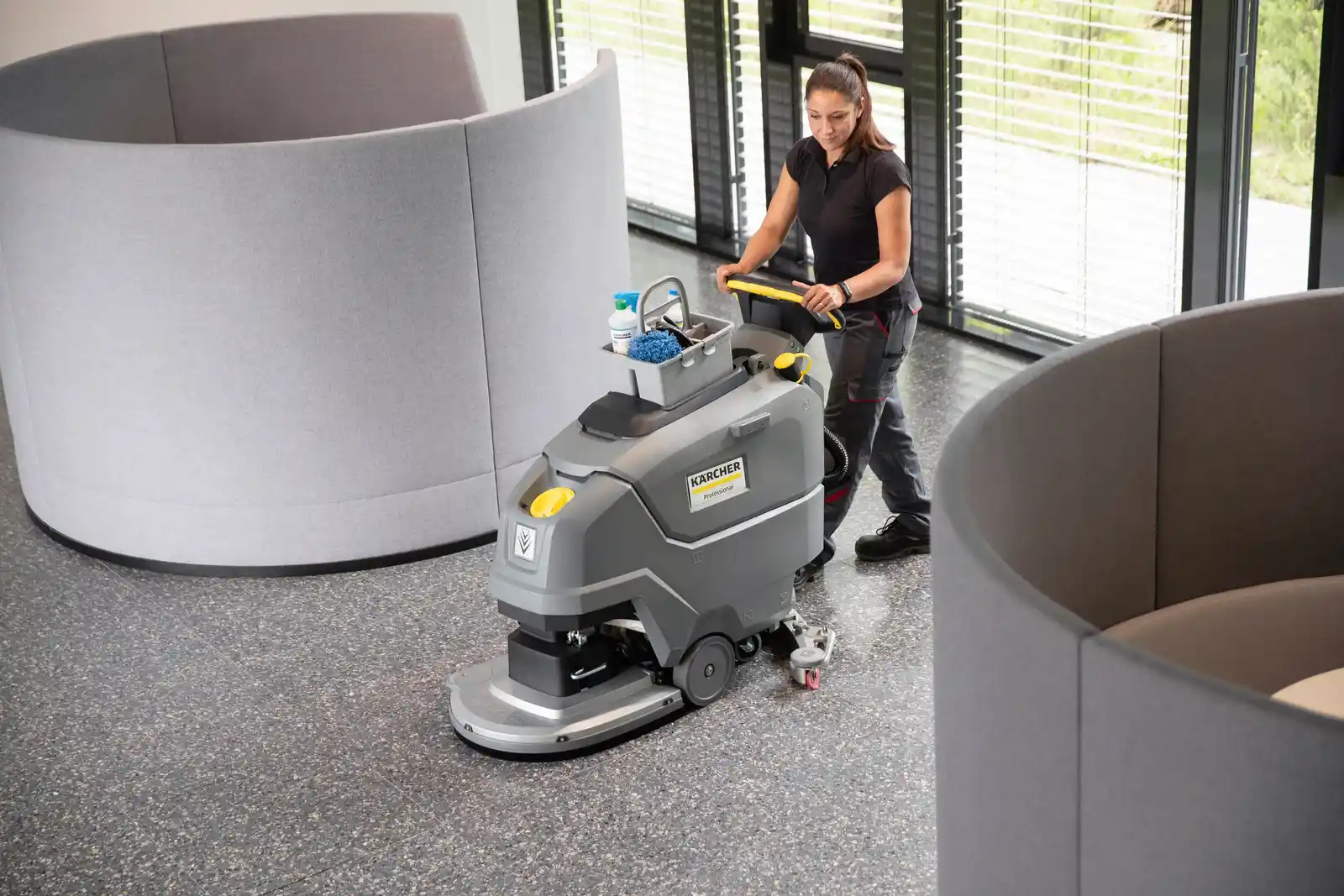
One of the most widespread machines used in commercial cleaning settings is the walk-behind floor scrubber. They suit medium-to-small areas (retail stores, offices, hospitals, and schools). Knowing how to operate a walk-behind floor scrubber correctly is one of the methods that would guarantee your floors are cleaned effectively, safely, and without damage.
These devices offer the ability of integrating brushes, cleaning solution, and a vacuum system to sweep out dirt, grime, and debris in a single movement. Also, as compared to manual mopping, walk-behind scrubbers save labor, conserve water, and produce a more even clean.
Absolutely! The following is a brief and simplified summary of the steps to follow in the operation of a walk-behind floor scrubber, with each step clear and easily understandable:
Step 1: Pre-Operation Preparation
Before using a walk-behind floor scrubber, clear the area of debris and obstacles. Check that brushes, pads, and the squeegee are in good condition. Fill the solution tank, empty the recovery tank, and ensure the battery is charged or the cord is safely connected. Wear appropriate safety gear.
Step 2: Starting the Machine
Connect the main power and change the settings of the brush speed and the water flow based on what type of floor you have. Switch on the solution flow and vacuum system to prepare the scrubber to the cleaning process.
After setting the settings, turn on the flow of solution to supply the cleaning solution to the floor, and turn on the vacuum system to be ready to retrieve water and dirt. It is necessary to make sure that these preliminary steps are done properly to ensure cleaning and long life of the machines.
Step 3: Scrubbing the Floor
With the machine powered and settings adjusted, begin scrubbing the floor. The most efficient method is to guide the scrubber in straight, overlapping passes. Overlapping ensures complete coverage and prevents missed spots. Move at a steady, controlled pace, as moving too quickly can reduce cleaning effectiveness and leave streaks.
Step 4: Monitoring the Machine
During the use of the scrubber, one should constantly check the performance of the machine. Monitor the recovery tanks and solution. Ensure that the solution tank is not drained, or the cleaning industry is performing poorly or destroying the brushes. The recovery tank must be emptied when it fills up to ensure that there is maximum suction and to avoid water spilling on the floor.
Step 5: Completing the Cleaning
After finishing the cleaning area, it is important to follow proper shutdown and maintenance procedures. First, turn off the solution flow and vacuum system to stop the application of water and cleaning solution. Empty the recovery tank and rinse it thoroughly to remove all dirty water and prevent residue buildup.
Next, rinse the brushes or pads and the squeegee to remove dirt and grime, extending their lifespan and maintaining efficiency for future use. Wipe down the machine’s exterior and control panel to keep it clean and free from residue. Finally, return the machine to its designated storage area and ensure it is ready for the next cleaning session.
Step 6: Tips for Optimal Use
Move at a steady pace and slightly overlap each pass. Use the correct cleaning solution and brush pressure for your floor type. Clean and inspect the machine after each use to keep it in top condition.
- Avoid rushing: moving too quickly can reduce cleaning efficiency.
- Overlap each pass slightly to avoid missed areas.
- Adjust brush pressure carefully to protect sensitive flooring.
- Clean and inspect the machine after each use to maintain optimal performance.
- Use appropriate cleaning solutions recommended for your floor type.
Operating an Industrial or Ride-On Floor Scrubber
For large spaces like warehouses or airports, industrial floor scrubbers make cleaning faster and more efficient. Understanding how to use an industrial floor scrubber ensures safety and productivity.
Step-by-Step Guide
Step 1: Pre-Operation Checks
- Inspect brushes, pads, and squeegees.
- Ensure sufficient cleaning solution in the tank and the recovery tank is empty.
- Check battery levels or power connection.
Step 2: Adjust Machine Settings
- Set brush pressure according to floor type.
- Adjust water flow to balance cleaning effectiveness with minimal water waste.
- Select the appropriate speed for floor conditions.
Step 3: Plan Your Cleaning Path
- For large areas, plan a path to cover the entire space efficiently.
- Avoid random movement; a systematic approach saves time and energy.
Step 4: Start Scrubbing
- Drive the machine steadily, keeping an eye on solution flow and brush performance.
- Handle corners and edges carefully, possibly using a reduced speed.
Step 5: Empty and Clean
- Empty recovery tank when full.
- Rinse brushes and squeegees after finishing each area.
- Charge the battery and store the machine properly for the next use.
Tips for Industrial Floor Scrubber Use
- Avoid excessive water flow to prevent slippery floors.
- Regularly inspect pads and brushes for wear and replace as needed.
- Use designated cleaning solutions to protect floor finishes.
Floor Scrubber Technology Trends Every Facility Manager Should Know
The floor scrubber market is going through what several industry analysts describe as a “golden decade” of change, moving away from lead-acid batteries and fully manual operation toward lithium-ion power and increasing autonomy. Here’s what that shift means for anyone buying, renting, or operating a scrubber this year.
1. Lithium-ion is now the default expectation, not a premium upgrade
Battery-powered units already made up the largest share of the U.S. commercial scrubber and sweeper market a few years ago, and that lead has only grown. Facilities are increasingly choosing lithium-ion over lead-acid because it delivers higher productivity, longer runtime, minimal maintenance, and shorter charging time, with a typical battery life of several years depending on usage. For facility managers, this means less downtime for charging and lower long-term maintenance costs compared to older lead-acid models.
2. Autonomous and robotic scrubbers are moving from pilot programs to everyday use
Robotic scrubbers are no longer a novelty confined to trade shows. Industry researchers note that robotic scrubbers are shifting from limited pilots toward fleets that integrate with digital work orders and building management systems, with retail chains, logistics operators, and healthcare networks leading adoption of connected, ride-on fleets. Analysts tracking the segment estimate the global floor scrubber market at roughly $2.16 billion in 2026, with the autonomous slice of that market growing even faster as labor shortages push more facilities toward automation.
3. “Proof-of-clean” data is becoming a procurement requirement
Buyers today expect more than a clean-looking floor. Procurement teams increasingly ask for lithium-ion power, verifiable proof-of-clean reporting, and fast local service coverage before signing off on new equipment. Connected telematics that track utilization, uptime, and cleaning verification are becoming a standard ask in RFPs for schools, hospitals, and government facilities.
4. Smart navigation and sensor tech are improving safety and coverage
Newer machines increasingly rely on AI-driven navigation and sensor-based systems for more precise, efficient cleaning, alongside improved traction control and collision avoidance for safer operation around foot traffic. This is especially relevant for facilities running “day cleaning” schedules, where scrubbers now operate during business hours rather than only overnight.
What this means if you’re choosing equipment in 2026:
- If your facility runs multiple shifts, prioritize lithium-ion models to avoid battery-swap downtime.
- If you manage several sites, ask suppliers about telematics and utilization dashboards, not just PSI or tank capacity.
- If labor is hard to staff or retain, an autonomous or ride-on scrubber may pay for itself faster than in past years — browse ride-on and walk-behind floor scrubber options to compare.
- If you’re not ready to commit capital, equipment financing or a rental agreement can offset the higher upfront cost of lithium-ion and autonomous units.
Maintenance During and After Use
Proper maintenance is crucial for the longevity and effectiveness of any floor scrubber. Whether you’re learning how to operate a floor scrubber for the first time or a seasoned operator, regular care prevents costly repairs and keeps machines running smoothly.
Daily Maintenance
- Empty and rinse both the solution and recovery tanks.
- Clean brushes, pads, and squeegees to prevent buildup.
- Wipe down the machine and control panel.
Weekly Maintenance
- Inspect electrical components and battery connections.
- Check hoses and fittings for leaks or cracks.
- Replace worn pads or brushes as necessary.
Monthly Maintenance
- Inspect the squeegee blade for signs of wear and replace if needed.
- Lubricate moving parts according to manufacturer guidelines.
- Perform a thorough inspection of the machine’s overall condition.
By following these steps, you extend the life of your equipment and maintain high cleaning performance. If a machine is underperforming despite regular upkeep, a professional floor scrubber repair and maintenance service can often extend its usable life well beyond what in-house servicing alone can achieve.
Common Mistakes to Avoid for Using Commercial Floor Scrubber
Even experienced operators can make errors that reduce cleaning efficiency or damage floors. Here are the key mistakes to watch out for:
- Using the Wrong Machine for the Job: Using a walk-behind scrubber in a large warehouse wastes time, while a ride-on model in tight spaces can be hard to maneuver and cause damage. Always choose the right machine for the area size and floor type.
- Ignoring Safety Precautions: Skipping PPE or operational guidelines can lead to accidents. Always wear gloves, non-slip shoes, and eye protection, and place warning signs when cleaning in public spaces.
- Overlapping Excessively or Missing Spots: Inefficient movement patterns either waste time with too much overlap or leave areas unclean. Use a systematic path with slight overlaps for full coverage.
- Poor Maintenance Practices: Failing to clean brushes, squeegees, or tanks after use leads to residue buildup and wear. Routine inspections and timely part replacements ensure consistent performance and longer machine life.
- Incorrect Solution or Pad Use: Harsh chemicals or the wrong pad type can damage floors, while soft pads may not clean effectively. Match the cleaning solution and pad to the floor surface for optimal results.
Conclusion
Learning how to use a commercial floor scrubber correctly transforms floor maintenance from a labor-intensive chore into an efficient and effective process. From understanding what a floor scrubber is and what it does to step-by-step instructions for walk-behind and industrial models, proper preparation, and maintenance, following best practices ensures safe, clean, and polished floors.
Whether you’re cleaning a small office, a retail store, or a massive warehouse, these machines save time, reduce labor costs, and maintain high hygiene standards. With consistent practice, attention to detail, and proper machine care, you’ll master how to operate a floor scrubber like a pro.
Frequently Asked Questions
How to properly use a floor scrubber?
To properly use a floor scrubber, start by clearing loose debris and selecting the correct pad or brush. Fill the solution tank with an approved cleaner, adjust settings, scrub in overlapping passes, and then vacuum or rinse the floor to leave it clean and dry.
What is the correct order in cleaning floors?
The correct order in cleaning floors begins with removing loose debris by sweeping or dust mopping. Next, scrub the surface using appropriate cleaning solutions, followed by rinsing if required. Finish by drying the floor completely to prevent streaks, residue buildup, and slip hazards.
Do you need to sweep before using a floor scrubber?
Yes, sweeping before using a floor scrubber is recommended. Removing loose dirt, dust, and debris prevents clogging, improves scrubbing efficiency, and reduces wear on brushes or pads. Pre-sweeping also helps achieve more consistent cleaning results across the entire floor surface.
Do you put soap in a floor scrubber?
Yes, soap or cleaning solution is added to a floor scrubber’s solution tank. Always use manufacturer-approved detergents and follow dilution guidelines. Using the correct cleaner improves soil removal while protecting the machine and floor finish and ensuring safe, residue-free cleaning results.
How much does a commercial floor scrubber cost in 2026?
Pricing varies widely by size and power source. Compact walk-behind models sit at the low end; ride-on and lithium-ion units cost more upfront but lower running costs over time; and fully autonomous scrubbers carry the highest price tag due to onboard sensors and navigation systems. Renting or financing can make higher-end lithium-ion and autonomous models accessible without a large upfront purchase.
Are autonomous floor scrubbers worth it for a small or mid-size facility?
Autonomous scrubbers tend to make the most financial sense for facilities with large, repetitive floor plans (retail chains, distribution centers, and airports) where predictable layouts make automated routes practical. Smaller or irregularly shaped spaces often still get better value from a well-maintained walk-behind or ride-on model.
What’s the difference between a lithium-ion and lead-acid floor scrubber?
Lithium-ion scrubbers charge faster, tolerate partial (“opportunity”) charging without damaging the battery, and generally require less maintenance over their lifespan than lead-acid models. Lead-acid units are typically cheaper upfront but need more careful charging routines and more frequent battery replacement.

Michael Adeniran is the CEO of Pressure King Inc. He has been dealing in commercial cleaning equipment for many years. He is one of the leading specialists and experts in commercial cleaning products.


