


Pressure Washer PSI for Concrete: What PSI Do You Really Need?
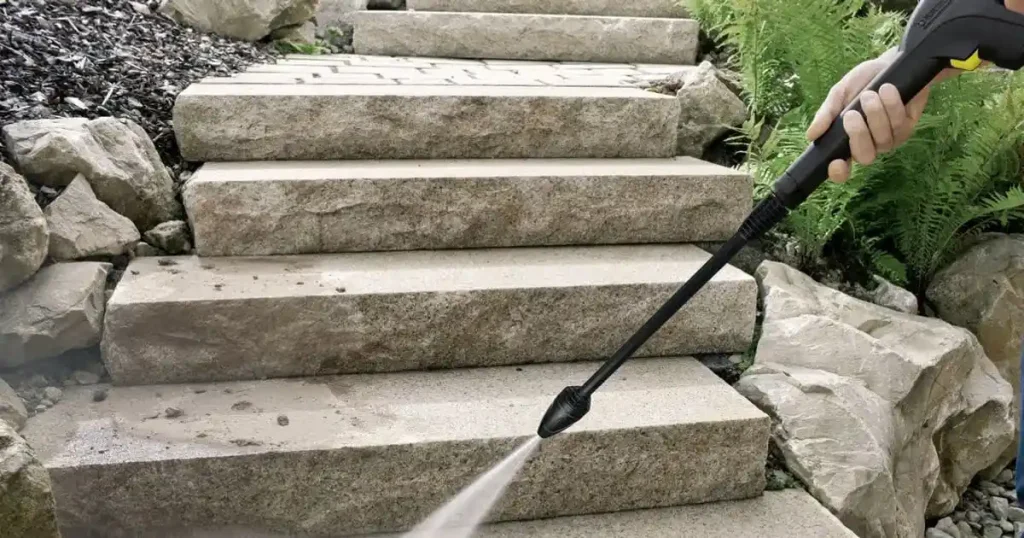
Cleaning concrete seems simple until you choose the wrong pressure. Too little pressure may leave behind dirt, stains, oil, and grime, while too much pressure can damage the concrete surface. This is why choosing the correct pressure washer PSI for concrete is important before starting any driveway, patio, sidewalk, garage floor, or commercial concrete cleaning project.
For most concrete surfaces, a pressure washer between 2,500 and 3,000 PSI is usually enough for regular cleaning. However, the ideal PSI depends on the condition of the concrete, type of stains, machine GPM, nozzle choice, cleaning distance, and whether you are using accessories like a surface cleaner.
A powerful pressure washer does not automatically mean better cleaning. The best results come from using the right combination of pressure, water flow, cleaning chemicals, and technique. In this guide, we will explain what PSI you need for different concrete surfaces, how to avoid damage, and how to choose the right equipment for the job.
What Is the Best Pressure Washer PSI for Concrete?
The best pressure washer PSI for concrete depends on what you are cleaning and how dirty the surface is. Most concrete cleaning jobs, such as driveways, sidewalks, patios, and garage floors, can be completed effectively with a machine producing around 2,500 to 3,000 PSI. This range provides enough power to remove common dirt, mildew, mud, and surface buildup without being unnecessarily aggressive.
For heavier cleaning jobs, such as removing oil stains, grease, tire marks, industrial buildup, or years of embedded grime, a higher PSI machine may be helpful. Commercial cleaning professionals often use equipment in the 3,000 to 4,000 PSI range combined with higher GPM, hot water, detergents, and surface cleaners to improve cleaning speed and results.
Choosing PSI should not be based only on getting the highest pressure available. Concrete strength, surface condition, nozzle type, and operator technique all affect the final result. Even a 4,000 PSI pressure washer can damage concrete if used incorrectly.
Quick PSI Guide for Concrete Cleaning
| Concrete Cleaning Job | Recommended PSI | Best Approach |
|---|---|---|
| Light dirt and dust | 2,000–2,500 PSI | Wide spray nozzle |
| Residential driveway cleaning | 2,500–3,000 PSI | 25-degree nozzle or surface cleaner |
| Sidewalk and patio cleaning | 2,500–3,500 PSI | Surface cleaner recommended |
| Oil and grease removal | 3,000–4,000 PSI | Hot water + detergent |
| Commercial concrete cleaning | 3,000–4,000 PSI | Higher GPM + professional accessories |
| Weak or damaged concrete | Under 2,500 PSI | Test carefully first |
Why PSI Is Not the Only Factor When Cleaning Concrete
Many people think PSI is the only measurement that determines pressure washer performance. While PSI is important, it only tells you the force of the water hitting the surface. A complete cleaning system also depends on GPM, nozzle size, temperature, detergent, and the type of attachment being used.
A lower PSI machine with higher water flow can sometimes clean faster than a higher PSI machine with poor water volume. This is because GPM helps carry loosened dirt away from the surface instead of only breaking it apart.
PSI vs GPM: Which Matters More for Concrete?
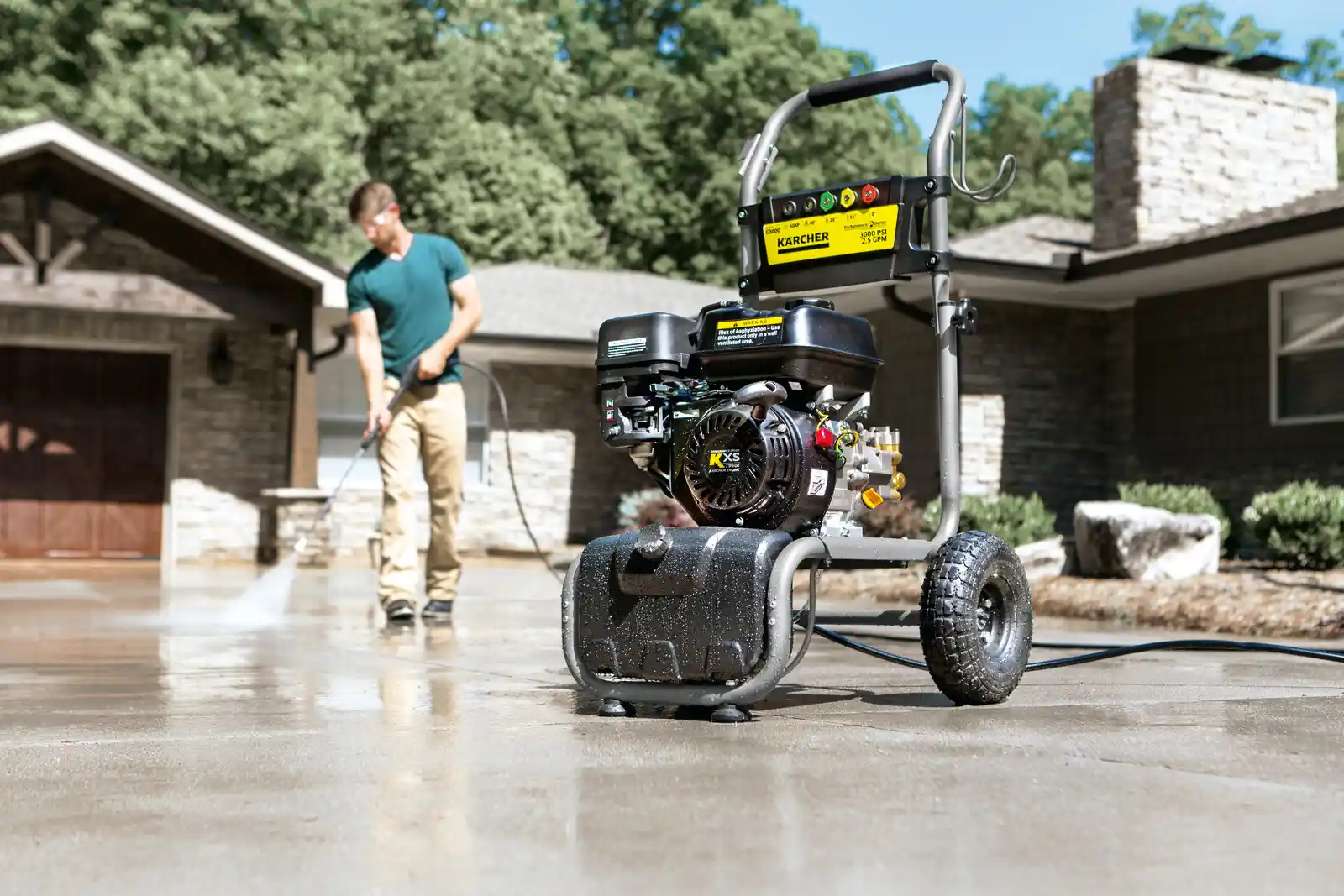
PSI and GPM work together during concrete cleaning. PSI provides the impact needed to remove dirt, while GPM provides the water volume needed to rinse away debris.
For example, a 3,000 PSI pressure washer with higher GPM can often clean a large driveway faster than a small machine with similar pressure but lower water flow. This is especially important for contractors and commercial users who need consistent results across large areas.
When choosing a commercial pressure washer for concrete, look at both PSI and GPM instead of focusing only on pressure numbers.
Is 3000 PSI Good for Concrete?
Yes, a 3000 PSI pressure washer is one of the most common choices for concrete cleaning because it provides a good balance between cleaning power and surface protection. It is strong enough for most driveways, sidewalks, patios, garage floors, and outdoor concrete areas.
A 3000 PSI machine can remove dirt, mildew, algae, tire marks, and general buildup when paired with the correct nozzle and cleaning method. For large flat areas, using a surface cleaner attachment can provide more even results than using a wand alone.
However, 3000 PSI does not mean every concrete surface is safe from damage. Old concrete, cracked surfaces, decorative concrete, and sealed concrete should always be tested first.
Is 2000 PSI Enough to Clean Concrete?
A 2000 PSI pressure washer can clean concrete, but it depends on the type of dirt and condition of the surface. It works well for light cleaning tasks such as removing dust, loose dirt, pollen, and minor mildew from patios, walkways, and outdoor surfaces.
For heavily stained driveways, oil spots, grease buildup, or commercial concrete areas, 2000 PSI may not provide enough cleaning power. In these situations, using detergent, hot water, or upgrading to a higher PSI and GPM machine can produce better results.
A lower PSI machine is often safer for older concrete because it reduces the risk of surface damage.
Is 4000 PSI Too Much for Concrete?
A 4000 PSI pressure washer is not automatically too powerful for concrete, but it requires more careful handling. This pressure range is commonly used for heavy-duty cleaning applications such as commercial sidewalks, parking areas, industrial floors, loading docks, and equipment cleaning.
The risk comes from improper use. Holding the nozzle too close, using a narrow spray tip, or staying in one area too long can create visible marks, remove the surface layer, or damage weak concrete.
For professional cleaning, higher PSI machines are often paired with surface cleaners, proper nozzle selection, and experienced operation to achieve strong results without harming the surface.
Best Pressure Washer PSI for Different Concrete Surfaces
Different concrete surfaces require different cleaning approaches. A driveway with oil stains does not need the same setup as a lightly dirty patio. Understanding the surface condition helps you choose the right pressure and avoid unnecessary damage.
Pressure Washer PSI for Concrete Driveways
For most concrete driveways, a pressure washer between 2,500 and 3,000 PSI is usually effective. This range can remove dirt, algae, mud, tire marks, and general outdoor buildup. If the driveway has oil stains or years of buildup, increasing PSI alone is not always the best solution. Applying a concrete-safe degreaser before pressure washing can improve results, especially when combined with hot water.
A pressure washer surface cleaner is also recommended for driveways because it creates a consistent cleaning pattern and reduces streaks caused by uneven wand movement.
Pressure Washer PSI for Sidewalks and Walkways
Concrete sidewalks typically require around 2,500 to 3,500 PSI, depending on dirt level and surface condition. Because sidewalks often show uneven cleaning marks, using a surface cleaner can provide a more professional finish.
For public walkways, commercial properties, and larger areas, contractors often use higher-flow pressure washers to complete the job faster while maintaining consistent results.
Pressure Washer PSI for Concrete Patios
Patios usually require more caution because many have decorative finishes, sealants, or older concrete. A pressure range of 2,000 to 3,000 PSI is often enough for routine cleaning. Before pressure washing, check whether the patio has a protective coating or decorative surface. Using too much pressure can remove finishes or create uneven areas.
Pressure Washer PSI for Garage Floors
Garage floors often collect oil, grease, tire marks, and automotive fluids. A pressure washer around 2,500 to 3,500 PSI can work well when combined with the correct detergent.
For oil-heavy garage floors, hot water pressure washers are often more effective because heat helps break down grease faster than pressure alone.
Best Nozzle for Pressure Washing Concrete
Choosing the right nozzle is just as important as choosing the correct pressure washer PSI for concrete. A pressure washer with high PSI can still damage concrete if it is paired with an aggressive nozzle or used too close to the surface. Nozzles control the spray angle, which changes how concentrated the water pressure becomes.
For most concrete cleaning jobs, a wider spray pattern is safer because it spreads the pressure across a larger area. A narrow spray may remove tough stains faster, but it also increases the risk of etching, lines, and surface damage.
25-Degree Nozzle for Concrete Cleaning
A 25-degree nozzle is one of the best choices for general concrete cleaning. It provides enough cleaning power for driveways, sidewalks, patios, and outdoor surfaces while maintaining a safer spray pattern.
This nozzle works well for removing normal dirt, mud, mildew, and surface buildup. It is often the first choice for homeowners and professionals because it provides a good balance between cleaning strength and surface protection.
40-Degree Nozzle for Light Concrete Cleaning
A 40-degree nozzle creates a wider and softer spray pattern. It is useful for lightly dirty concrete, rinsing, and surfaces that require more gentle cleaning.
This nozzle is a better option for older concrete, decorative concrete, or areas where you are unsure how the surface will react. Starting with a wider spray and increasing pressure only when needed is a safer cleaning approach.
Turbo Nozzle for Tough Concrete Stains
A pressure washer turbo nozzle creates a rotating spray that combines the power of a narrow stream with a wider cleaning area. It can be useful for removing stubborn stains, heavy dirt, and buildup from strong concrete surfaces.
However, turbo nozzles should be used carefully. They can be too aggressive for weak, painted, sealed, or decorative concrete. Always test a small area before using a turbo nozzle across the entire surface.
Why You Should Avoid a 0-Degree Nozzle on Concrete
A 0-degree nozzle produces an extremely concentrated water stream. While it can remove tough buildup, it can also easily damage concrete by cutting into the surface.
For most concrete cleaning projects, a 0-degree nozzle is unnecessary. A wider nozzle combined with proper PSI, detergent, and cleaning technique will usually provide better results with less risk.
Should You Use a Pressure Washer Surface Cleaner for Concrete?
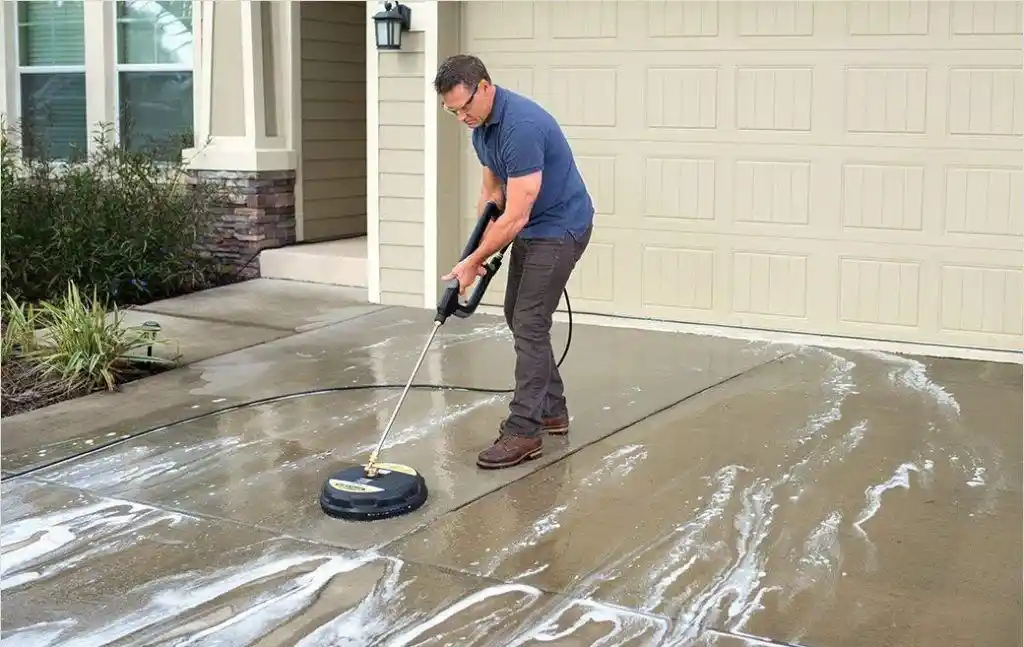
A pressure washer surface cleaner is one of the most useful accessories for cleaning large concrete areas. While a pressure washer wand can remove dirt effectively, it can leave visible lines or uneven cleaning marks if the operator moves the wand inconsistently. A surface cleaner uses rotating spray bars underneath a protective housing to clean a wider area evenly. This makes it especially useful for driveways, sidewalks, parking areas, patios, warehouse floors, and commercial concrete surfaces.
A surface cleaner can make driveway cleaning easier. For contractors and commercial cleaning companies, it can significantly improve productivity by covering large areas faster while producing a more uniform finish.
Benefits of Using a Surface Cleaner on Concrete
More Even Cleaning Results
One of the biggest advantages of a surface cleaner is consistency. A regular wand depends heavily on operator movement, distance, and angle. Small differences can create visible stripes or uneven sections.
A surface cleaner maintains a consistent distance from the concrete, helping produce a more professional appearance.
Faster Cleaning for Large Areas
Large concrete surfaces take much longer when cleaned with only a pressure washer wand. A surface cleaner covers more area per pass, reducing the time needed for driveways, sidewalks, and commercial pavement.
For businesses that clean concrete regularly, this can improve efficiency and reduce labor time.
Less Water Spray and Splashback
Surface cleaners help control water and debris compared to using an open pressure washer wand. This makes them more comfortable to use around buildings, customers, vehicles, and landscaping.
Hot Water vs Cold Water Pressure Washers for Concrete Cleaning
Both hot and cold water pressure washers can clean concrete, but they are designed for different types of cleaning challenges. The right choice depends on what type of buildup you are removing. Cold water pressure washers are effective for dirt, mud, dust, mildew, and general outdoor cleaning. They are commonly used for driveways, sidewalks, patios, and routine maintenance.
Hot water pressure washers are more effective when concrete has grease, oil, food residue, chemicals, or industrial buildup. Heat helps break down oily substances, allowing detergents to work more effectively and reducing the need to rely only on higher pressure.
When to Use a Cold Water Pressure Washer
Cold water machines are a practical choice for:
- Residential driveways
- Sidewalks
- Patios
- Outdoor concrete areas
- Dirt and mud removal
- Regular maintenance cleaning
They are often more affordable and easier to maintain compared to hot water units.
When to Use a Hot Water Pressure Washer
Hot water pressure washers are recommended for:
- Commercial parking areas
- Restaurants
- Loading docks
- Fleet washing areas
- Industrial concrete floors
- Oil and grease removal
For commercial cleaning, hot water combined with the right PSI, GPM, detergent, and accessories often provides better results than simply increasing pressure.
Can Pressure Washing Damage Concrete?
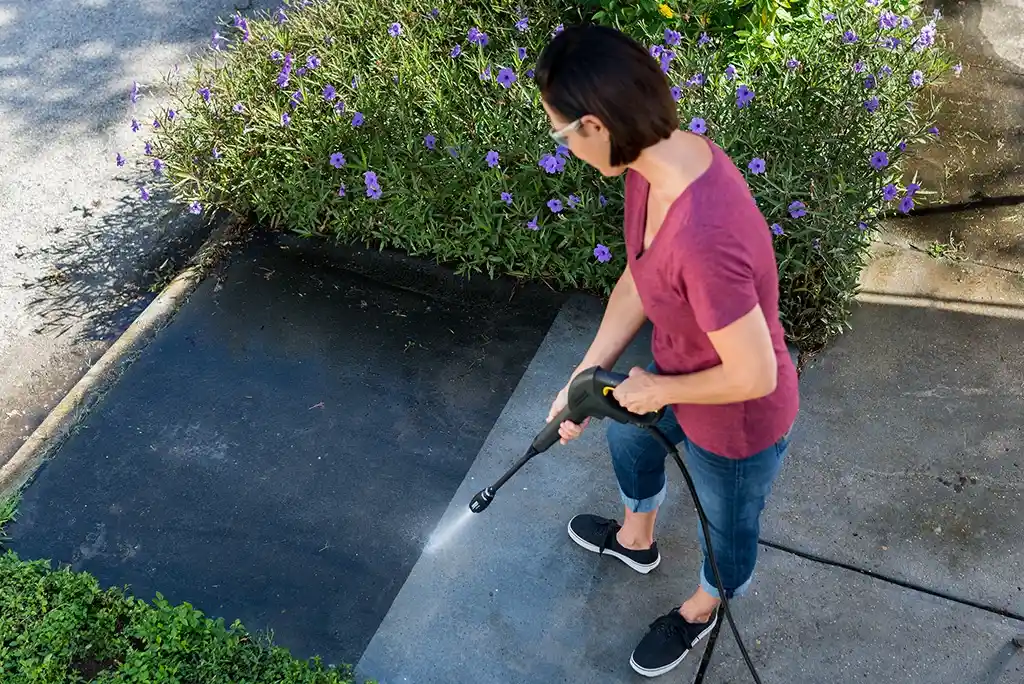
Yes, pressure washing can damage concrete if the wrong equipment or technique is used. Concrete is strong, but it is not impossible to damage. Excessive pressure, incorrect nozzles, poor technique, or cleaning too aggressively can remove the surface layer or create visible marks.
The goal of pressure washing concrete is not to use the maximum available pressure. The goal is to use enough pressure to remove contaminants while protecting the surface underneath.
Common Types of Concrete Damage From Pressure Washing
Surface Etching
Etching happens when the pressure removes part of the concrete surface. It can leave rough patches or visible marks. This commonly occurs when a narrow nozzle is held too close to the surface or when the operator stays in one area too long.
Concrete Pitting
Pitting creates small holes or rough areas in the concrete surface. Older or weaker concrete is more vulnerable to this type of damage. Using lower pressure, wider nozzles, and proper cleaning distance can reduce the risk.
Removing Concrete Sealers
If concrete has a protective sealer, excessive pressure may strip or damage the coating. Always check whether the surface has been sealed before pressure washing.
How to Pressure Wash Concrete Without Damaging It
Using the correct process is just as important as choosing the right pressure washer PSI for concrete. A controlled approach produces better results than simply increasing pressure.
Step 1: Inspect the Concrete Surface
Before starting, check for:
- Cracks
- Loose concrete
- Damaged areas
- Sealers or coatings
- Decorative finishes
- Weak spots
Damaged concrete may require lower pressure or a different cleaning method.
Step 2: Remove Loose Dirt and Debris
Sweep away leaves, gravel, dust, and loose debris before pressure washing. This prevents unnecessary mess and allows the pressure washer to focus on stuck-on dirt.
Step 3: Apply Cleaning Detergent When Needed
For normal dirt, water pressure may be enough. For oil, grease, mildew, or heavy stains, using the correct detergent can improve results. Chemical cleaning often reduces the need for excessive PSI.
Step 4: Start With a Safer Pressure Setting
Always begin with a lower pressure setting or wider nozzle. Increase pressure gradually only if needed. Starting too aggressively can permanently damage concrete before you realize there is a problem.
Step 5: Maintain Proper Distance
Keep the wand at a consistent distance from the concrete. Moving too close increases pressure concentration and can create marks. Avoid holding the spray in one spot for too long.
Step 6: Clean in Overlapping Passes
Move steadily across the surface with overlapping passes. This helps prevent missed areas and uneven cleaning. For large areas, a surface cleaner will usually provide better consistency.
Step 7: Rinse the Surface Properly
After cleaning, rinse away loosened dirt and detergent. Remaining chemicals can leave residue or affect the appearance of the concrete.
Commercial Pressure Washer PSI for Concrete Cleaning
Commercial concrete cleaning requires more than just a powerful machine. Businesses often need equipment that can handle longer operating hours, larger surfaces, tougher stains, and repeated use.
For many commercial applications, pressure washers between 3,000 and 4,000 PSI are commonly used. However, professionals also consider GPM, water temperature, pump quality, accessories, and the type of concrete being cleaned.
A commercial pressure washer setup may include:
- High-GPM pressure washer
- Hot or cold water system
- Surface cleaner attachment
- Heavy-duty hose
- Professional spray gun
- Multiple nozzle options
- Concrete-safe detergents
Choosing Between Residential and Commercial Pressure Washers
A small residential pressure washer may be enough for occasional driveway cleaning. However, contractors, property managers, fleet operators, and facility maintenance teams usually need commercial-grade equipment.
Commercial machines are designed for:
- Longer run times
- Higher cleaning frequency
- Tougher surfaces
- More demanding applications
- Professional accessories
Pressure King helps businesses in New Jersey and New York choose commercial pressure washers, hot water units, cold water machines, hoses, guns, surface cleaners, and cleaning accessories based on their actual needs.
Common Mistakes When Choosing Pressure Washer PSI for Concrete
Choosing the wrong pressure can create poor results or unnecessary damage. Many cleaning problems happen because users focus only on PSI and ignore other important factors.
Choosing the Highest PSI Available
Higher pressure does not always mean better cleaning. Too much pressure can damage concrete while providing little improvement over a properly matched machine.
Choose pressure washer psi based on the surface condition and cleaning requirement.
Ignoring GPM
A machine with high PSI but low water flow may clean slower than expected. GPM plays an important role in moving dirt away after it has been removed.
Using the Wrong Nozzle
A powerful machine with the wrong nozzle can cause damage. Match the nozzle to the surface and type of cleaning.
Cleaning Too Close to the Surface
Holding the wand too close concentrates pressure in one area. Maintain proper distance and keep the spray moving.
Using Only Pressure for Oil Stains
Oil and grease often require detergent or hot water. Increasing PSI alone may not solve the problem.
Recommended Equipment for Concrete Pressure Washing
The right accessories can make concrete cleaning faster, safer, and more effective. Instead of relying only on PSI, professional cleaners use a complete setup designed for the job.
Important equipment includes:
- Commercial pressure washer
- Hot water pressure washer for grease removal
- Cold water pressure washer for general cleaning
- Pressure washer surface cleaner
- 25-degree and 40-degree nozzles
- Turbo nozzle for tough stains
- Heavy-duty pressure washer hose
- Professional spray gun and wand
- Concrete cleaning detergents
For businesses handling regular concrete cleaning, investing in the correct equipment can improve cleaning speed and reduce maintenance problems.
Conclusion
The best pressure washer PSI for concrete is usually between 2,500 and 3,000 PSI for everyday cleaning, while tougher commercial jobs may require 3,000 to 4,000 PSI. However, PSI is only one part of effective concrete cleaning. The right nozzle, GPM, detergent, temperature, and cleaning technique all affect the final result.
Before choosing a pressure washer, consider the type of concrete, level of buildup, and how often you will use the equipment. For homeowners and businesses, the right combination of machine power and accessories will provide better cleaning results while protecting the concrete surface.
For professional concrete cleaning applications in New Jersey and New York, Pressure King can help you choose the right commercial pressure washer, surface cleaner, hoses, guns, wands, and accessories for your specific cleaning needs.
Frequently Asked Questions About Pressure Washer PSI for Concrete
What PSI pressure washer do I need for concrete?
For most concrete cleaning jobs, a pressure washer between 2,500 and 3,000 PSI is a good choice. Heavy stains, grease, and commercial concrete may require 3,000 to 4,000 PSI with proper accessories.
Is 3000 PSI enough to clean concrete?
Yes, 3000 PSI is enough for most concrete driveways, sidewalks, patios, and garage floors. Using the correct nozzle and technique is still important to avoid damage.
Can 2000 PSI clean concrete?
Yes, 2000 PSI can clean lightly dirty concrete, but it may struggle with oil stains, heavy buildup, and commercial cleaning applications.
Will 4000 PSI damage concrete?
4000 PSI can damage concrete if used incorrectly. The risk increases with narrow nozzles, close spraying distance, weak concrete, or poor technique.
What nozzle should I use for concrete?
A 25-degree nozzle is usually the best option for general concrete cleaning. A 40-degree nozzle is better for lighter cleaning, while turbo nozzles should be used carefully.
Is a surface cleaner better than a wand for concrete?
For large flat surfaces like driveways and sidewalks, a surface cleaner usually provides more even results and reduces streaking compared to a standard wand.
Should I use hot water or cold water for concrete?
Cold water works well for dirt and general cleaning. Hot water is better for grease, oil, food residue, and commercial concrete cleaning.
How much PSI does it take to remove oil stains from concrete?
Oil stain removal often requires more than PSI alone. A pressure washer around 3,000–4,000 PSI combined with degreaser, hot water, and the right nozzle usually provides better results.

Michael Adeniran is the CEO of Pressure King Inc. He has been dealing in commercial cleaning equipment for many years. He is one of the leading specialists and experts in commercial cleaning products.


