


Surface Cleaning Concrete Floors in Industrial Warehouses: Step-by-Step Guide
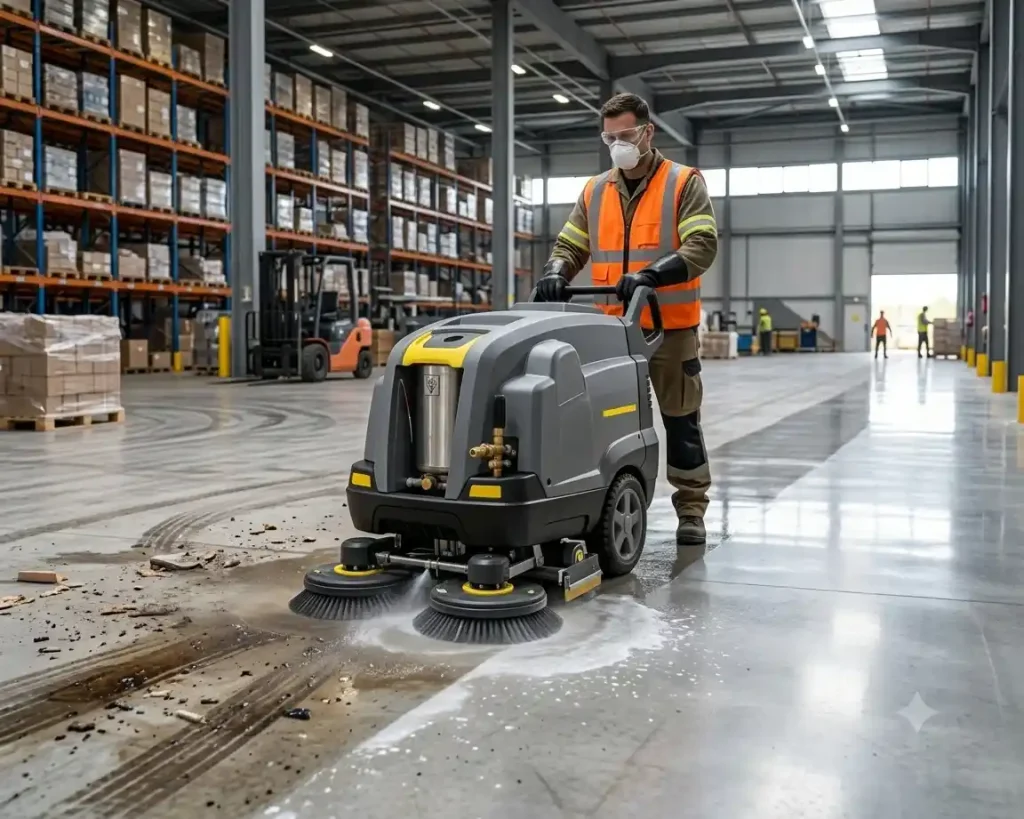
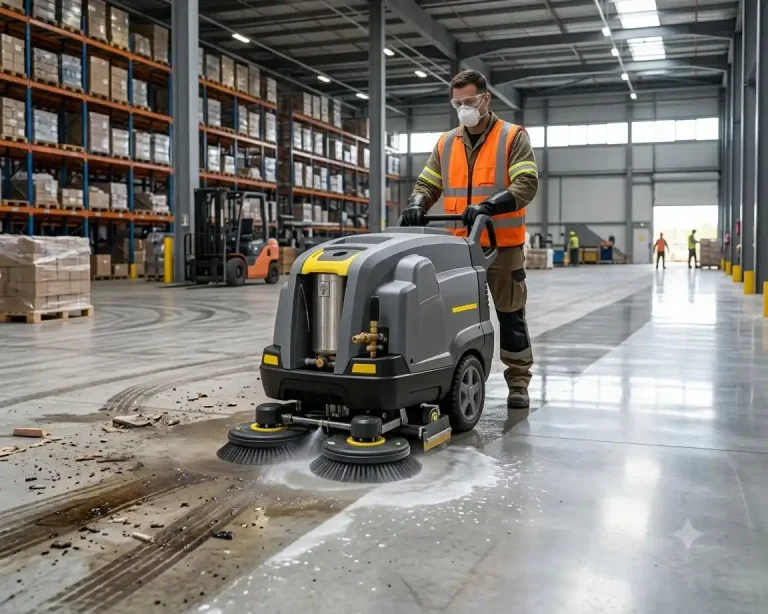
Industrial warehouse floors experience some of the toughest cleaning challenges. Daily operations expose concrete floors to dust, dirt, oil, grease, forklift marks, chemical residue, and heavy foot or vehicle traffic. Over time, this buildup can affect workplace safety, equipment movement, and the overall appearance of the facility.
Learning how to clean industrial warehouse floors with a pressure washer provides businesses with an efficient way to remove stubborn contamination and maintain a safer working environment. However, warehouse floor cleaning requires more than simply using high pressure. Choosing the correct PSI, GPM, water temperature, detergents, and cleaning accessories is essential for achieving professional results.
In this guide, we will explain the best methods for industrial warehouse floor cleaning, how commercial pressure washers help, what equipment you need, and how businesses can maintain cleaner concrete surfaces with less downtime.
Why Industrial Warehouse Floors Need Professional Cleaning
Warehouse floors are constantly exposed to materials that regular cleaning methods cannot remove effectively. Dust, grease, oil leaks, production residue, and vehicle marks can accumulate quickly, especially in facilities with heavy equipment and constant activity. A dirty warehouse floor is not only a visual issue. Built-up contamination can create safety risks, reduce traction, and make routine maintenance more difficult. Regular pressure washing helps businesses maintain cleaner work areas while protecting concrete surfaces from long-term buildup.
Professional cleaning is especially important for manufacturing facilities, distribution centers, automotive warehouses, food processing facilities, storage facilities, industrial plants, and equipment service areas. Using the right commercial pressure washer equipment allows facility managers to maintain large areas efficiently without disrupting daily operations.
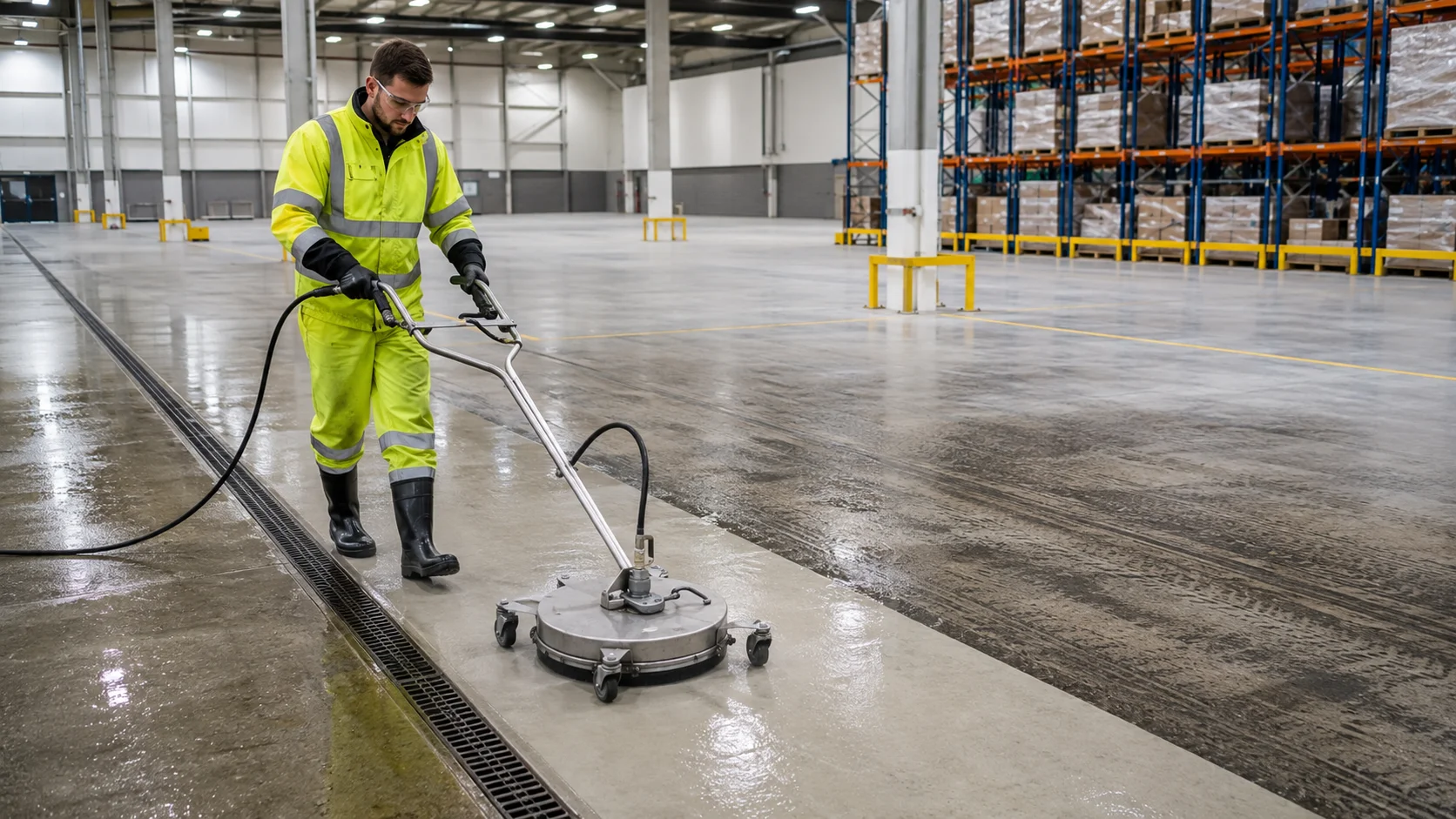
Can you clean warehouse concrete floors with a pressure washer?
Yes, pressure washers are commonly used for cleaning industrial concrete floors when the correct equipment and techniques are applied. A commercial pressure washer uses high-pressure water flow to remove dirt, oil, grease, and other contaminants from concrete surfaces. However, warehouse floors require careful handling because not all concrete surfaces are the same. Some floors may have coatings, sealants, or protective finishes that can be damaged by excessive pressure. Before starting the job, inspect the surface and identify the type of contamination that needs to be removed.
The condition of the concrete, existing coatings, drainage availability, cleaning frequency, and type of contamination should all influence the cleaning method. Testing a small area first can also help determine the appropriate pressure and cleaning solution.
Benefits of Using a Commercial Pressure Washer for Warehouse Floors
Industrial facilities need cleaning equipment that can handle large areas and demanding conditions. Commercial pressure washers provide several advantages over basic cleaning methods.
Faster Cleaning for Large Areas
Warehouses often contain thousands of square feet of concrete flooring. Manual scrubbing can require significant labor and downtime, especially when employees must clean around racks, equipment, and loading areas. A commercial pressure washer combined with the right accessories can cover large sections more efficiently while maintaining consistent cleaning results. This can help facility managers complete routine maintenance without unnecessarily extending operational downtime.
Better Removal of Tough Contaminants
Industrial floors commonly collect oil, grease, dirt, dust, tire marks, and production residue. These contaminants can become difficult to remove when they remain on the floor for extended periods. Pressure washing provides the mechanical cleaning action needed to loosen stubborn buildup. When combined with an appropriate detergent, the process can be even more effective against greasy or oily contamination.
Improved Workplace Safety
Clean warehouse floors can help reduce conditions that contribute to slipping hazards and excessive dust. Removing oil, grease, and other residue also helps maintain better traction in areas where employees and vehicles frequently move. Regular cleaning should be part of a broader facility safety and maintenance program. Pressure washing alone does not eliminate every workplace hazard, but keeping concrete surfaces clean can support a safer and more organized environment.
Reduced Maintenance Problems
Removing buildup regularly helps prevent contamination from becoming harder to remove later. Oil, grease, and dirt that remain on concrete for long periods may require stronger chemicals, additional labor, or more intensive cleaning. A consistent maintenance program can therefore make future cleaning easier while helping facilities keep their floors in better condition.
Choosing the Right Pressure Washer for Industrial Warehouse Floors
Selecting the correct machine is one of the most important steps in achieving effective warehouse cleaning results. A pressure washer should provide enough cleaning power for the contamination without unnecessarily stressing the concrete or its protective coating. A commercial pressure washer should be selected based on floor size, contamination type, cleaning frequency, available water supply, and required mobility. Facilities that clean large areas regularly may also benefit from equipment designed for longer operating periods and compatibility with professional accessories.
For industrial applications, Kärcher commercial pressure washers are available in different configurations designed for professional cleaning environments. Facility managers can also consider whether a cold-water or hot-water machine is more appropriate for their specific cleaning requirements.
What PSI Do You Need for Warehouse Concrete Floor Cleaning?
The correct PSI depends on the condition of the concrete and the type of buildup. Higher pressure is not automatically better because excessive force can damage concrete coatings or contribute to surface wear.
| Cleaning Application | Recommended PSI |
|---|---|
| Light dust and dirt removal | 2,000–2,500 PSI |
| General warehouse cleaning | 2,500–3,000 PSI |
| Oil and grease removal | 3,000–4,000 PSI |
| Heavy industrial contamination | 3,500+ PSI |
These ranges should be treated as general starting points rather than universal requirements. The actual pressure should be adjusted according to the floor condition, equipment manufacturer’s recommendations, nozzle selection, and cleaning results. The best approach is to begin with a moderate setting and increase pressure only when necessary. This provides greater control and reduces the risk of damaging coatings or the concrete surface.
Why GPM Is Important for Warehouse Floor Cleaning
GPM, or gallons per minute, determines how much water moves through the pressure washer system. For large industrial floors, adequate water flow can improve cleaning speed because the additional water helps carry away loosened dirt and contaminants. A machine with high PSI but low GPM may provide strong impact while taking longer to rinse large areas. A machine with balanced PSI and higher GPM can often move loosened debris more efficiently, which is particularly useful when cleaning expansive warehouse floors.
For facility managers, productivity depends on more than pressure alone. PSI, GPM, nozzle selection, water temperature, detergent, and cleaning attachments should all be considered when choosing commercial equipment.
Hot Water vs Cold Water Pressure Washing for Warehouse Floors
The right water temperature depends largely on the type of contamination. Cold-water machines can handle general dirt and debris, while hot-water equipment can provide an advantage when floors contain significant amounts of oil and grease.
Cold Water Pressure Washing
Cold-water pressure washers are effective for routine cleaning involving dust, dirt, mud, and general surface contamination. They can be a practical choice for warehouses where grease and oil are not major concerns. Cold-water equipment may also be suitable for facilities that perform frequent maintenance cleaning and primarily need to remove loose or lightly embedded debris.
Hot Water Pressure Washing
Hot-water pressure washers provide additional cleaning power for industrial environments where oily or greasy contamination is common. Heat helps loosen and break down oily substances, allowing them to be removed more efficiently. They are particularly useful for automotive facilities, manufacturing plants, equipment service areas, and warehouses where oil and grease accumulate regularly. Using heat can reduce the need to rely solely on higher pressure when dealing with stubborn contamination.
Best Accessories for Cleaning Industrial Concrete Floors
The pressure washer is only part of an effective cleaning system. Professional accessories can improve coverage, operator control, and overall productivity.
Surface Cleaner Attachments
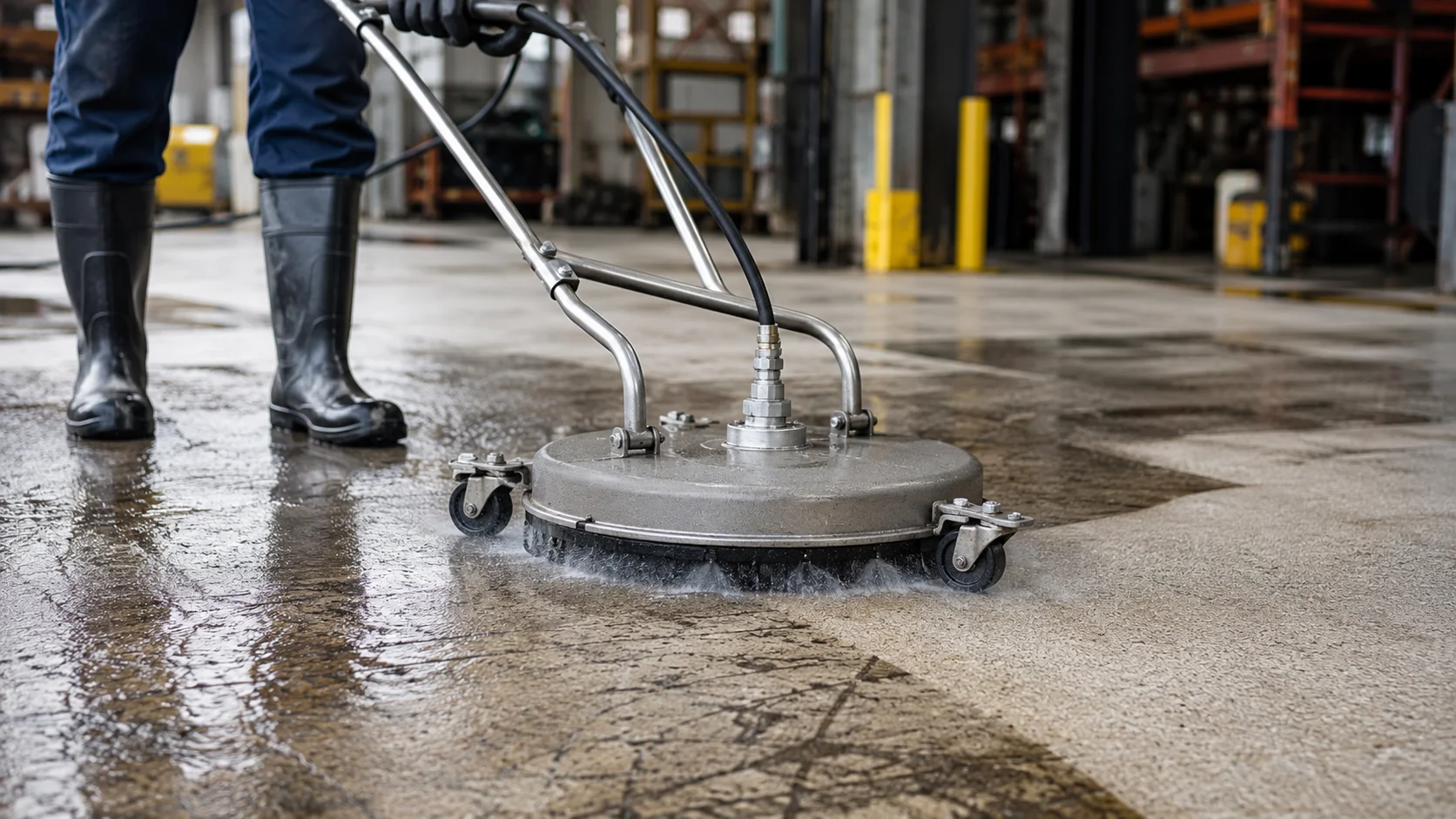
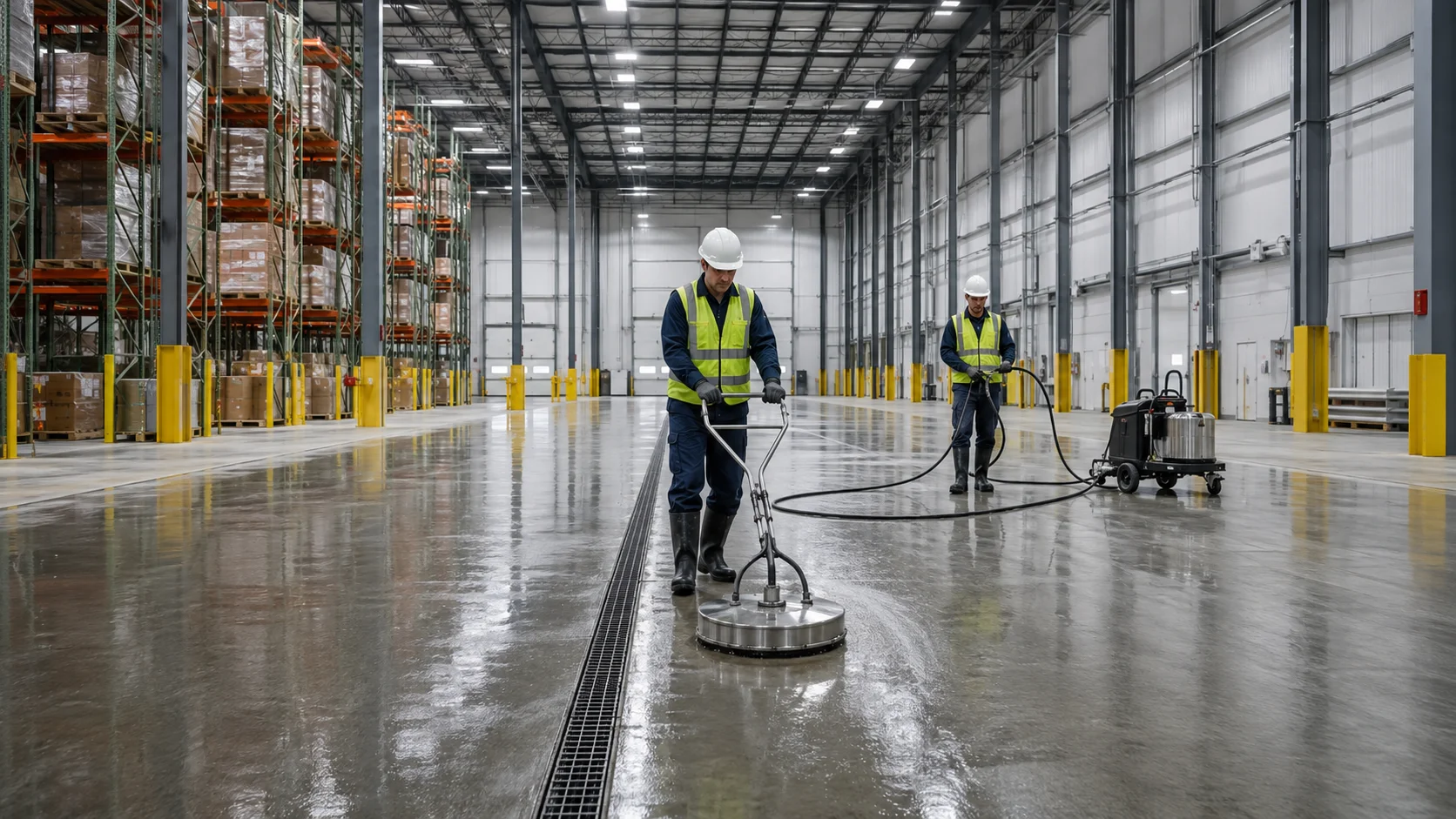
A surface cleaner is one of the most useful accessories for large warehouse floors. It uses rotating spray nozzles beneath a protective housing to clean a wider area than a conventional wand. The result can be faster cleaning, more consistent coverage, and reduced streaking. Operators can move the attachment steadily across the floor rather than repeatedly sweeping a narrow spray pattern back and forth.
For large concrete surfaces, using the appropriate pressure washer surface cleaner can make a noticeable difference in cleaning efficiency.
Commercial Pressure Washer Hoses
Industrial cleaning requires durable hoses capable of handling frequent use and the pressure levels generated by commercial equipment. A suitable hose can improve reliability while giving operators enough reach to clean larger areas without constantly repositioning the machine. Inspect hoses regularly for cuts, abrasion, leaks, and damaged connections. Replacing worn components helps maintain safe and consistent operation.
Professional Spray Guns and Wands
A commercial spray gun provides better control during extended cleaning jobs. Operators can use spray wands for edges, corners, loading areas, equipment spaces, and sections that a surface cleaner cannot easily reach. Selecting compatible accessories also helps ensure that the equipment operates within its recommended specifications.
Cleaning Detergents
Industrial detergents can help break down oil, grease, food residue, and other stubborn contaminants before pressure washing. The right detergent can reduce the amount of mechanical force needed to remove buildup. Always select a cleaning chemical that is compatible with the concrete, coating, pressure washer, and type of contamination. Follow the chemical manufacturer’s instructions for dilution, dwell time, application, and rinsing.
Step-by-Step Guide: How to Clean Industrial Warehouse Floors with a Pressure Washer
Follow a practical step-by-step process for cleaning industrial warehouse floors, from surface preparation and detergent application to pressure washing, rinsing, and drying.
Step 1: Inspect the Floor Surface
Before cleaning, inspect the concrete floor carefully. Look for cracks, damaged coatings, loose areas, stains, and drainage problems. This inspection helps determine the safest cleaning approach. It also allows operators to identify areas that may require repairs before water and cleaning chemicals are introduced.
Step 2: Remove Loose Debris
Sweep or remove loose dirt, packaging material, dust, and debris before pressure washing. Removing this material first prevents unnecessary mess and allows the pressure washer to focus on stuck-on contamination. Pay particular attention to areas around racks, machinery, loading zones, and corners where debris tends to accumulate.
Step 3: Apply Industrial Cleaning Detergent
For grease, oil, or heavy buildup, apply an appropriate industrial detergent before pressure washing. Allow the cleaner to work for the recommended amount of time rather than immediately rinsing it away. Proper dwell time gives the chemical an opportunity to break down contamination, which can make the subsequent pressure-washing stage more effective.
Step 4: Select the Correct Pressure Setting
Start with moderate pressure and adjust it based on the cleaning results. Avoid immediately using maximum pressure because it may damage coatings, weaken vulnerable areas, or create unnecessary surface wear. Test the selected setting in an inconspicuous area before proceeding across the entire floor.
Step 5: Use a Surface Cleaner for Large Areas
For large warehouse floors, a surface cleaner attachment provides more consistent coverage than a standard spray wand. Move steadily across the floor and maintain a consistent pace to reduce missed sections and uneven cleaning. Work in manageable sections so operators can monitor the results and avoid allowing dirty water to dry back onto the surface.
Step 6: Rinse Thoroughly
After cleaning, rinse the floor completely to remove remaining detergent and loosened debris. Proper rinsing is particularly important when chemicals have been used. Make sure wastewater is handled according to the facility’s drainage and environmental requirements. Do not allow contaminated runoff to enter inappropriate drainage systems.
Step 7: Allow the Floor to Dry
Ensure proper ventilation and drainage so the floor can dry safely before normal operations resume. Restrict traffic through wet areas to reduce slip risks and prevent freshly cleaned surfaces from becoming contaminated again. For busy facilities, scheduling cleaning during planned downtime can make the drying process easier to manage.
Common Mistakes When Cleaning Warehouse Floors
Avoid common warehouse floor cleaning mistakes such as using excessive pressure, choosing the wrong detergents, ignoring drainage, or skipping surface preparation.
Using Too Much Pressure
Excessive pressure can damage concrete surfaces and protective coatings. Starting with the highest available PSI may also create unnecessary wear without improving the cleaning result. Use the lowest effective pressure and adjust the technique based on the type of contamination and floor condition.
Ignoring Drainage
Industrial facilities should have a drainage plan before pressure washing. Large quantities of water mixed with oil, chemicals, or other contaminants require appropriate collection and disposal procedures. Planning drainage in advance also helps prevent standing water from interfering with warehouse operations.
Skipping Detergent
Some contaminants require chemical assistance for effective removal. Oil and grease, in particular, may remain on concrete even when high-pressure water is used. The appropriate detergent can loosen these contaminants before the final rinse, reducing the need for excessive pressure.
Using Residential Equipment
Small consumer machines may not be designed for large industrial cleaning tasks. They can require longer operating times and may not provide the water flow, durability, or accessory compatibility needed for demanding warehouse environments. Commercial equipment is generally better suited to facilities that clean large areas frequently.
Warehouse Floor Cleaning Maintenance Schedule
The ideal cleaning schedule depends on the facility type, traffic levels, contamination, and daily activity. A warehouse with heavy forklift traffic and frequent oil exposure may require more frequent cleaning than a low-traffic storage facility. Low-traffic warehouses may benefit from monthly or quarterly deep cleaning combined with routine sweeping. Manufacturing facilities may require weekly or scheduled maintenance cleaning, while food processing environments typically require cleaning procedures based on sanitation requirements.
Automotive and equipment service areas may also need frequent oil and grease removal. Creating a written warehouse floor cleaning schedule helps facility managers maintain consistent standards and identify areas that require additional attention.
Pressure Washer Maintenance for Industrial Use
Commercial pressure washers require regular care to maintain performance.
- Inspect hoses and fittings for damage, wear, or leaks.
- Check pumps for unusual leaks or pressure changes.
- Clean filters regularly to maintain proper water flow.
- Monitor fluid levels according to manufacturer recommendations.
- Store the pressure washer and accessories properly after use.
- Follow the manufacturer’s recommended maintenance schedule.
- Perform routine inspections to identify small problems before they cause downtime.
- Use commercial pressure washer repair services for professional equipment repairs and maintenance.
Pressure King Inc helps businesses in New Jersey and New York maintain and select commercial pressure washing equipment designed for industrial applications.
Conclusion
Cleaning industrial warehouse floors requires the right combination of equipment, technique, and maintenance planning. A commercial pressure washer can provide an effective solution for removing dirt, grease, oil, and industrial buildup while supporting cleaner and safer warehouse operations.
The best results come from matching PSI and GPM to the floor condition, selecting the appropriate water temperature and detergent, and using accessories such as surface cleaners for large areas. Regular maintenance and proper wastewater management are also important parts of an effective cleaning program.
For facilities in New Jersey and New York, Pressure King Inc provides commercial Kärcher pressure washers, accessories, hoses, and cleaning solutions designed for demanding industrial environments. Choosing the right pressure washer setup can help businesses reduce downtime, improve cleaning efficiency, and maintain cleaner warehouse operations.
Frequently Asked Questions
What is the best pressure washer for industrial warehouse floors?
The best pressure washer depends on floor size, contamination level, available water supply, and cleaning frequency. Commercial Kärcher pressure washers offer different configurations for professional and industrial applications.
How much PSI is needed to clean concrete warehouse floors?
Many warehouse floors can be cleaned effectively within the 2,500–3,500 PSI range, but the appropriate pressure depends on the concrete condition, contamination, coatings, nozzle, and cleaning method. Always test a small area before beginning full-scale cleaning.
Is hot water pressure washing better for warehouse floors?
Hot water is generally more effective for removing grease, oil, and other oily industrial contamination because heat helps break down stubborn buildup. Cold water can be sufficient for routine dust, dirt, and mud removal.
Can pressure washing damage warehouse concrete?
Yes. Excessive pressure, incorrect nozzles, or improper cleaning techniques can damage concrete surfaces and protective coatings. Selecting the correct PSI and testing the equipment before full-scale cleaning can help reduce this risk.
Should I use a surface cleaner for warehouse floors?
Yes. A surface cleaner can improve cleaning efficiency and provide more consistent results across large concrete areas. It is particularly useful for warehouses where a standard spray wand would require significant time and repeated passes.

Michael Adeniran is the CEO of Pressure King Inc. He has been dealing in commercial cleaning equipment for many years. He is one of the leading specialists and experts in commercial cleaning products.


