


Cleaning Industrial Machinery Safely Using Hot and Cold Pressure Washers
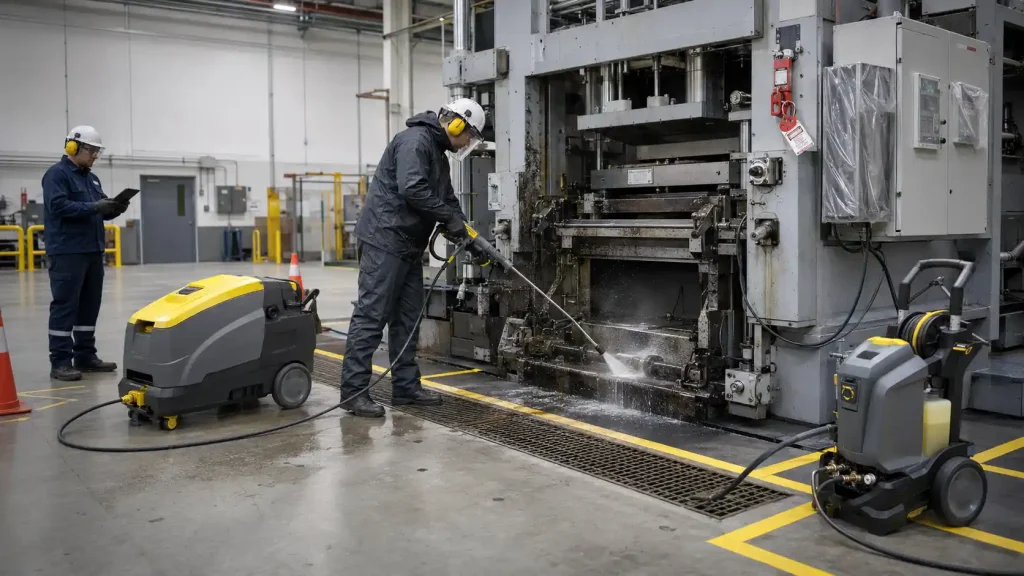
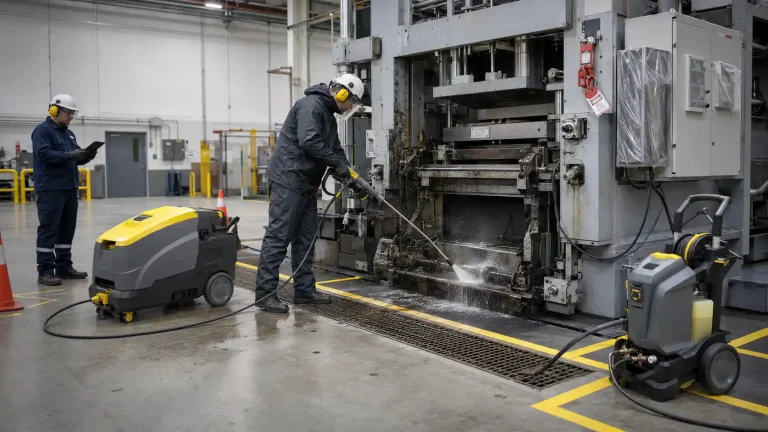
Industrial machinery operates under demanding conditions. Manufacturing equipment, production machines, conveyor systems, and heavy-duty tools are constantly exposed to oil, grease, dust, metal particles, coolant residue, and other contaminants. Over time, this buildup can affect equipment performance, create safety concerns, and increase maintenance requirements. Regular cleaning is an important part of industrial maintenance because it helps businesses keep machinery operating efficiently and extends equipment life.
Using a pressure washer is one of the most effective ways to remove industrial contamination, but choosing the correct equipment is essential. The wrong pressure, temperature, or cleaning method can damage sensitive components. Facilities can review Pressure King’s commercial pressure washers to compare equipment options suited to demanding cleaning applications.
This guide explains how to clean industrial machinery with a pressure washer, when to use hot or cold water systems, what PSI and GPM are required, and how businesses can choose the right commercial cleaning equipment.
Why Industrial Machinery Requires Regular Cleaning
Industrial equipment collects contamination during normal operation. Unlike residential cleaning tasks, factory and manufacturing environments often deal with materials that are difficult to remove. Common industrial machinery contaminants include oil and grease, metal dust, production residue, coolant buildup, dirt and debris, chemical residue, and carbon deposits. The type and amount of contamination vary by industry and machine, so cleaning methods should be matched to the operating environment and the materials being removed.
Without proper cleaning, these contaminants can reduce machine efficiency, make inspections more difficult, increase maintenance requirements, create safety concerns, and contribute to poor workplace conditions. A consistent cleaning routine gives maintenance teams a better opportunity to identify buildup, leaks, and other problems before they become larger operational issues.
Regular pressure washing helps companies maintain cleaner production environments and protect expensive equipment investments. For manufacturing facilities, Pressure King also provides industrial cleaning systems for manufacturing and production facilities that cover machinery, production floors, loading docks, and related cleaning needs.
Can You Use a Pressure Washer on Industrial Machinery?
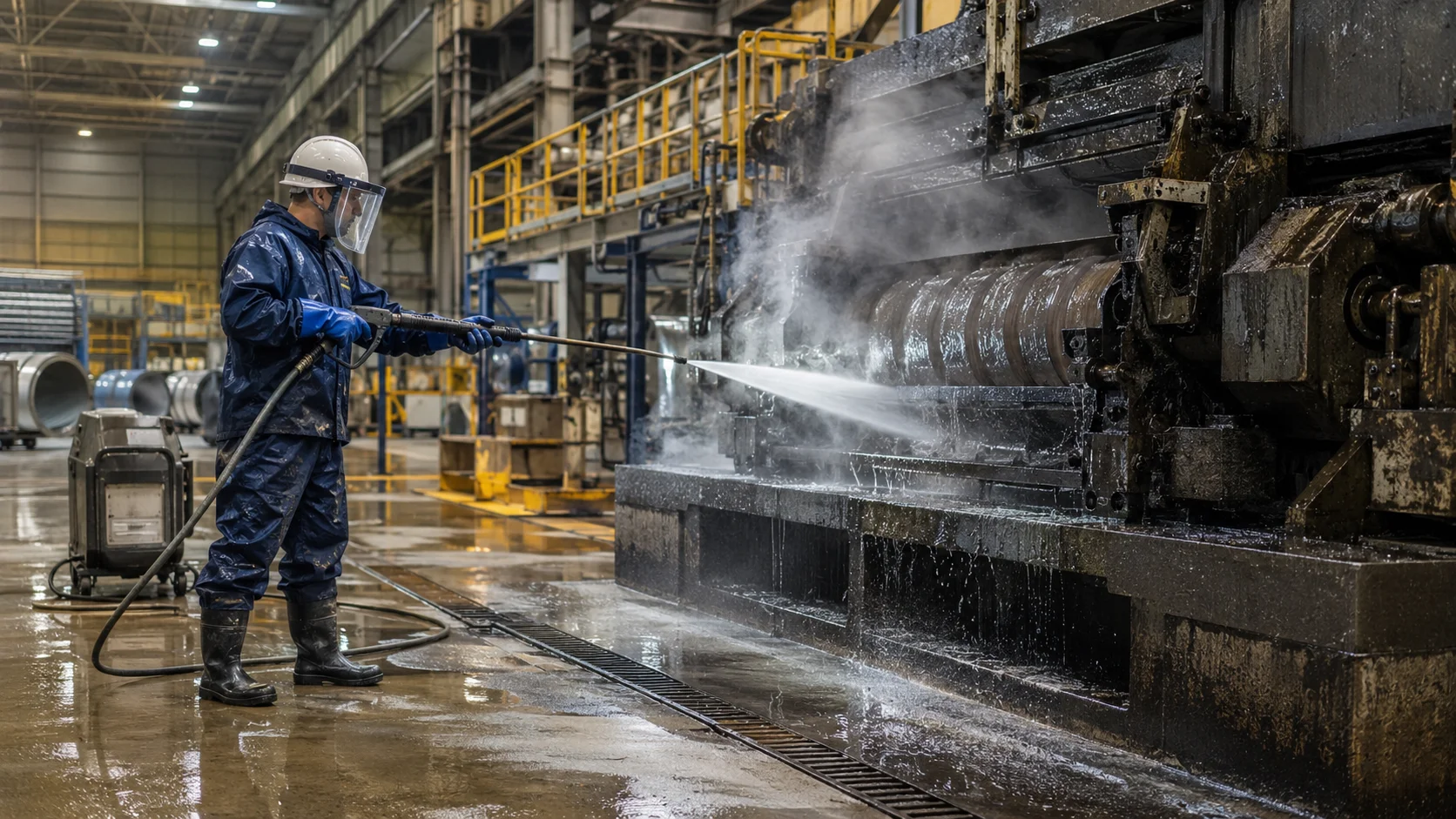
Yes, pressure washers can be used for industrial machinery cleaning when the correct equipment and techniques are followed. However, industrial machinery requires careful cleaning because some components may be sensitive to water pressure. Before cleaning, operators should identify electrical components, sensors, hydraulic systems, sealed bearings, and other sensitive machine parts. These areas may need to be covered, isolated, or cleaned with reduced pressure to prevent water intrusion and unnecessary component damage.
The goal is to remove contamination while protecting important equipment components. Commercial pressure washers provide adjustable pressure settings, different nozzle options, and temperature choices that allow businesses to customize cleaning based on their machinery.
Hot Water vs Cold Water Pressure Washers for Industrial Cleaning
Choosing between hot and cold water depends mainly on the type of contamination. The right system can make a significant difference in cleaning speed, detergent performance, and overall labor requirements.
Cold Water Pressure Washers for Machinery Cleaning
Cold water pressure washers are effective for removing dust, dirt, loose debris, mud, and general buildup. They are a practical choice for routine cleaning when the main objective is to remove surface contamination rather than dissolve heavy oil or grease. Cold-water systems can offer lower operating costs, straightforward maintenance, and dependable performance for general cleaning. They are particularly useful when facilities need frequent cleaning without the added heating system required by hot-water equipment.
Hot Water Pressure Washers for Industrial Machinery
Hot water pressure washers provide additional cleaning power by using heat to break down difficult contaminants. They are ideal for removing oil, grease, hydraulic fluid, industrial residue, and heavy buildup, making them useful for machinery exposed to lubricants and other stubborn materials. Heat helps soften oily materials, allowing detergents and water pressure to work more effectively. For manufacturing facilities and industrial plants, a hot water pressure washer can significantly improve cleaning performance. Pressure King offers commercial hot water pressure washers designed for demanding applications where heat helps break down grease, oil, and stubborn residue.
What PSI Is Needed for Industrial Machinery Cleaning?
The correct PSI depends on the equipment type and contamination level. Using too little pressure may not remove buildup, while excessive pressure can damage components.
| Machinery Cleaning Application | Recommended PSI |
|---|---|
| Light equipment cleaning | 1,500–2,500 PSI |
| Factory machinery cleaning | 2,000–3,000 PSI |
| Heavy industrial equipment | 3,000–4,000 PSI |
| Large machinery and outdoor equipment | 3,000+ PSI |
A professional cleaning setup focuses on balance. PSI should work together with GPM, temperature, and detergent selection.
Why GPM Matters for Factory Equipment Cleaning
GPM determines how much water moves through the pressure washer system. For industrial cleaning, higher GPM helps rinse contaminants faster, remove loosened debris, improve productivity, and reduce cleaning time. Large manufacturing facilities often need higher-flow equipment because they clean large machines, production areas, and multiple pieces of equipment. When selecting equipment, Pressure King’s commercial pressure washer range can help facilities compare PSI and GPM options against the demands of their cleaning workflow.
A pressure washer with the right PSI and GPM combination provides better results than focusing on pressure alone. Matching flow and pressure to the application can improve cleaning speed while helping operators avoid excessive force on sensitive machinery.
Best Pressure Washer Types for Manufacturing Facilities
Manufacturing environments have different cleaning requirements. Equipment selection should consider the location, available power source, required mobility, cleaning frequency, and type of contamination.
Electric Pressure Washers
Electric commercial pressure washers are useful for indoor facilities, locations with suitable electrical access, and environments where lower operating noise is important. They can provide a practical solution for routine indoor cleaning while avoiding the exhaust associated with combustion-powered machines. Their quieter operation can also be useful when cleaning takes place near active production or occupied areas.
Gas-Powered Pressure Washers
Gas-powered units are useful when mobility is important and electrical access is limited. They can be used for outdoor equipment cleaning, large industrial yards, remote areas, and other locations where operators need a self-contained power source.
Diesel-Powered Pressure Washers
Diesel-powered pressure washers are designed for demanding applications that require long operating periods. They are commonly used for heavy machinery, industrial sites, and large-scale cleaning operations where sustained cleaning performance and mobility are important.
Trailer-Mounted Pressure Washers
Trailer systems provide mobility for companies cleaning multiple locations or large outdoor areas. A trailer-mounted setup can simplify transportation, provide a professional self-contained configuration, and help crews move quickly between demanding cleaning jobs.
Important Accessories for Industrial Machinery Cleaning
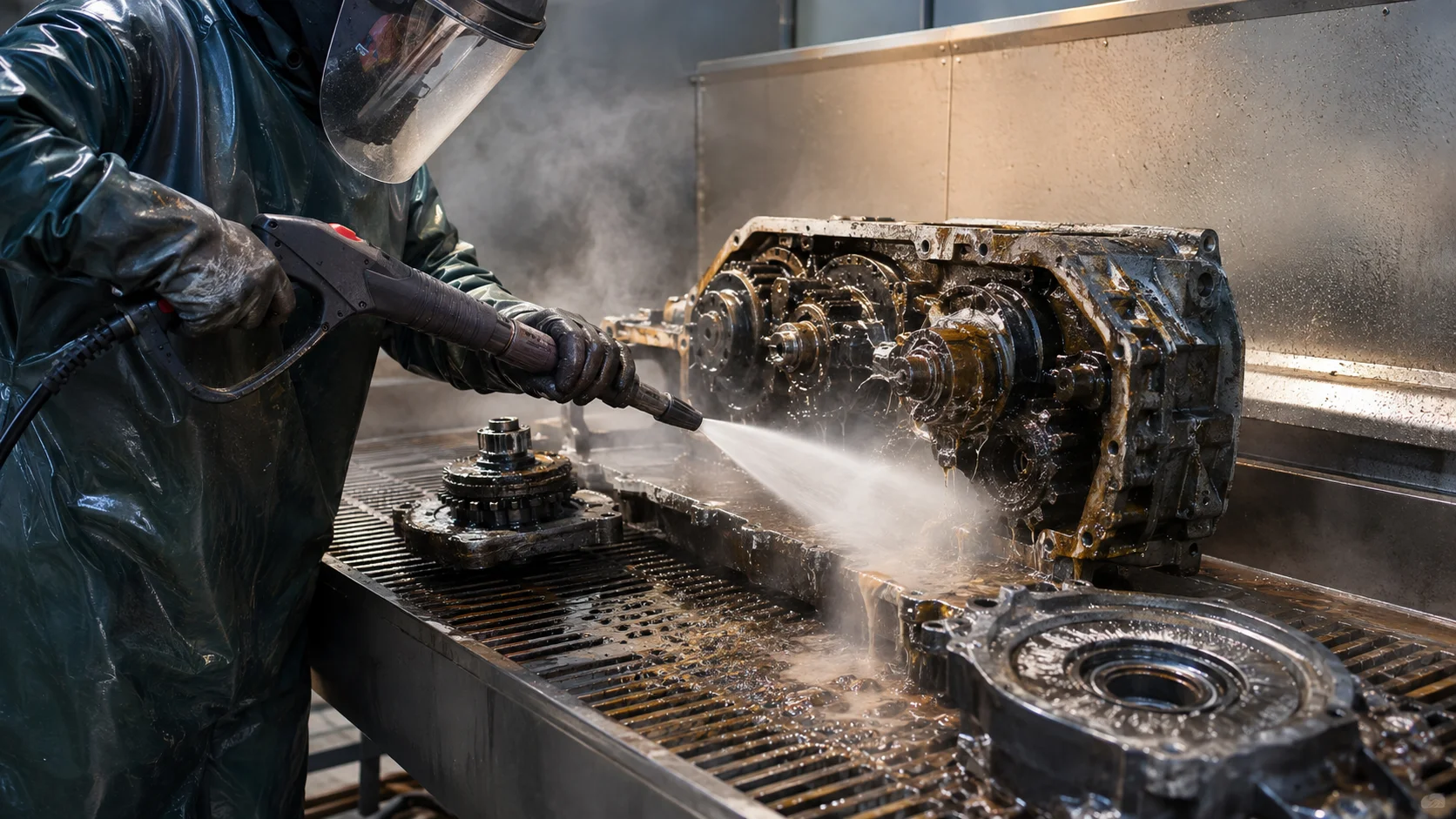
The right accessories improve cleaning performance and operator efficiency. Pressure King’s commercial pressure washer accessories include hoses, nozzles, guns, wands, and other attachments that can help operators adapt equipment to different machinery and surface-cleaning tasks.
Pressure Washer Nozzles
Different pressure washer nozzles control the spray pattern and cleaning intensity. Wide-angle nozzles are useful for general cleaning, narrower spray patterns can provide more targeted cleaning, and turbo nozzles can help address stubborn buildup. Operators should select the nozzle based on the surface, contamination, and safe working pressure.
Commercial Hoses
Industrial applications require durable hoses designed for frequent use. Quality hoses support safer operation and more consistent pressure while reducing the likelihood of premature hose failure during demanding cleaning work.
Spray Guns and Wands
Professional spray guns provide better control when cleaning large machinery. A suitable wand can also help operators maintain an appropriate distance from the equipment surface, which is important when working with higher-pressure systems.
Cleaning Chemicals
Industrial detergents help break down grease, oil, and production residue that water pressure alone may not remove efficiently. For heavy oily contamination, Pressure King’s industrial oil and grease remover is designed for professional pressure-washing applications and can be used according to its product directions. The right chemical reduces cleaning time and can improve results when used with the appropriate pressure and temperature.
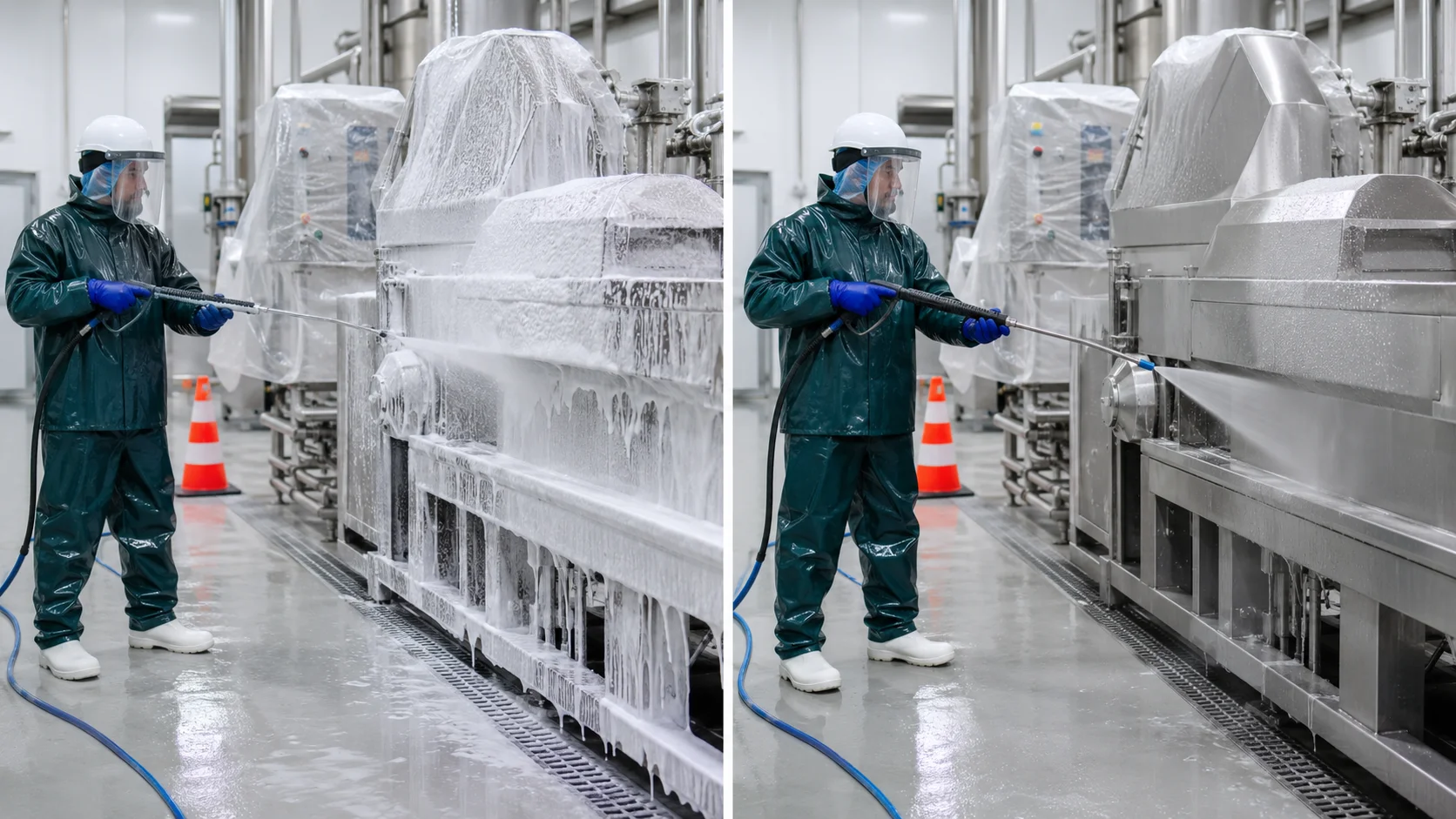
Step-by-Step Guide to Cleaning Industrial Machinery
A step-by-step cleaning process helps maintenance teams safely remove dirt, grease, and buildup while protecting sensitive components and keeping industrial machinery operating efficiently.
Step 1: Review the Equipment Before Cleaning
Inspect the machinery carefully before starting. Identify sensitive components, electrical areas, and parts that require protection. This initial review helps determine where direct spray should be avoided and where a lower-pressure approach may be more appropriate.
Step 2: Remove Loose Contamination
Remove large debris before pressure washing. Clearing loose material first prevents unnecessary interference during cleaning and allows the pressure washer and detergent to work more effectively on the remaining contamination.
Step 3: Protect Sensitive Components
Cover or avoid areas that should not receive direct water pressure. Use suitable protection around electrical connections, sensitive sensors, controls, and other components that could be affected by water intrusion.
Step 4: Apply Industrial Detergent
Use an appropriate cleaning chemical for the type of oil, grease, or production residue present. Apply it according to the product instructions and allow sufficient dwell time for the solution to loosen contamination before rinsing.
Step 5: Select the Correct Pressure Setting
Start with a lower pressure setting and increase only when needed. Testing the cleaning method on a less sensitive area first can help operators confirm that the pressure and spray pattern are appropriate.
Step 6: Clean From a Safe Distance
Maintain a safe and consistent distance between the nozzle and the equipment surface. Moving too close can concentrate cleaning force and increase the risk of damaging paint, seals, labels, or sensitive components.
Step 7: Inspect After Cleaning
Check for remaining contamination and confirm that the equipment is sufficiently dry before returning it to operation. A final inspection can also reveal areas that need additional cleaning or maintenance attention.
Common Mistakes When Cleaning Industrial Machinery
Avoiding common cleaning mistakes helps protect industrial machinery, improve cleaning results, and reduce the risk of equipment damage, downtime, and costly repairs.
Using Excessive Pressure
Too much pressure can damage seals, paint, and sensitive components. Operators should avoid assuming that a higher PSI automatically produces a better result. The goal is to use enough cleaning force to remove contamination without creating unnecessary wear or water intrusion.
Ignoring Temperature Selection
Cold water may not effectively remove heavy grease because heat can help soften and break down oily contamination. For machinery with substantial grease or oil buildup, a suitable hot-water system and compatible detergent may provide more efficient cleaning.
Using Incorrect Detergents
Some chemicals can damage surfaces or equipment if they are incompatible with the material being cleaned. Always select a detergent based on the contamination, surface, equipment requirements, and manufacturer guidance.
Cleaning Without Preparation
Poor preparation can increase risk and reduce cleaning efficiency. Failing to identify sensitive components, remove loose debris, or choose the right cleaning method can lead to avoidable equipment damage and longer cleaning times.
How Pressure Washing Supports Preventive Maintenance
Regular machinery cleaning is an important part of preventive maintenance programs. Clean equipment is easier to inspect, making it easier for maintenance teams to spot leaks and other issues. Consistent cleaning also reduces contamination buildup and supports cleaner, more organized workplace conditions.
Clean equipment also allows maintenance teams to identify problems more easily. When dirt, grease, and production residue cover machine surfaces, small leaks, cracks, or other abnormalities can be harder to notice.
Maintenance Tips for Industrial Pressure Washers
- Inspect hoses and fittings: Check regularly for leaks, cracks, or loose connections.
- Check the pump: Monitor pump performance and address pressure issues early.
- Clean filters: Remove dirt and debris from filters to maintain proper water flow.
- Monitor fluid levels: Keep oil and other required fluids at recommended levels.
- Store equipment properly: Protect pressure washers from moisture, extreme temperatures, and damage when not in use.
- Follow a maintenance schedule: Routine maintenance can reduce unexpected downtime and keep equipment ready for demanding jobs.
- Use professional repair services: Pressure King’s commercial pressure washer repair services can help with diagnostics, repairs, maintenance, and parts replacement.
- Consider equipment rentals: Businesses with short-term, seasonal, or temporary cleaning needs can explore commercial pressure washer rentals instead of purchasing equipment.
How Kärcher Pressure Washers Support Industrial Cleaning
Kärcher develops professional cleaning equipment for industries that require reliable performance. Industrial users can choose from different pressure ranges, hot- and cold-water configurations, commercial-grade construction, and professional accessories. The right combination allows a facility to match cleaning performance to the type of machinery, contamination, available utilities, and frequency of use.
Selecting the correct Kärcher system depends on the cleaning environment, machinery type, and operational requirements. Facilities should consider PSI, GPM, water temperature, power source, mobility, accessories, and cleaning chemicals before selecting a machine.
Conclusion
Cleaning industrial machinery with the right pressure washer helps businesses maintain safer facilities, improve equipment inspections, and reduce contamination buildup. Choosing between hot and cold water systems, selecting the correct PSI and GPM, and using proper accessories are essential for achieving professional cleaning results.
For manufacturing facilities and industrial businesses throughout New Jersey and New York, Pressure King Inc provides commercial Kärcher pressure washers, accessories, and cleaning solutions designed for demanding industrial environments. The right cleaning equipment helps companies protect their machinery, improve productivity, and maintain efficient operations.
Frequently Asked Questions
What is the best pressure washer for industrial machinery cleaning?
The best pressure washer depends on the machinery type, contamination level, and cleaning frequency. Commercial Kärcher pressure washers provide different solutions for industrial applications.
Should I use hot or cold water for factory equipment cleaning?
Hot water is usually better for grease and oil removal, while cold water works well for general dirt and dust.
Can pressure washing damage industrial machinery?
Yes, improper pressure or incorrect techniques can damage sensitive components. Proper equipment selection is important. Operators should identify vulnerable components before cleaning and use an appropriate pressure, nozzle, temperature, and working distance.
How much PSI is needed to clean industrial equipment?
Most industrial equipment cleaning applications require 2,000–4,000 PSI depending on the type of machinery and contamination. Some lighter applications may require less pressure, while larger outdoor equipment may require higher cleaning capacity.
Do industrial pressure washers need regular maintenance?
Yes. Regular maintenance helps protect pumps, hoses, and other components while reducing downtime. Routine inspections can also help identify worn or damaged parts before they affect cleaning performance.

Michael Adeniran is the CEO of Pressure King Inc. He has been dealing in commercial cleaning equipment for many years. He is one of the leading specialists and experts in commercial cleaning products.


