


Choosing the Right Commercial Pressure Washer for Auto Repair Shops and Service Centers
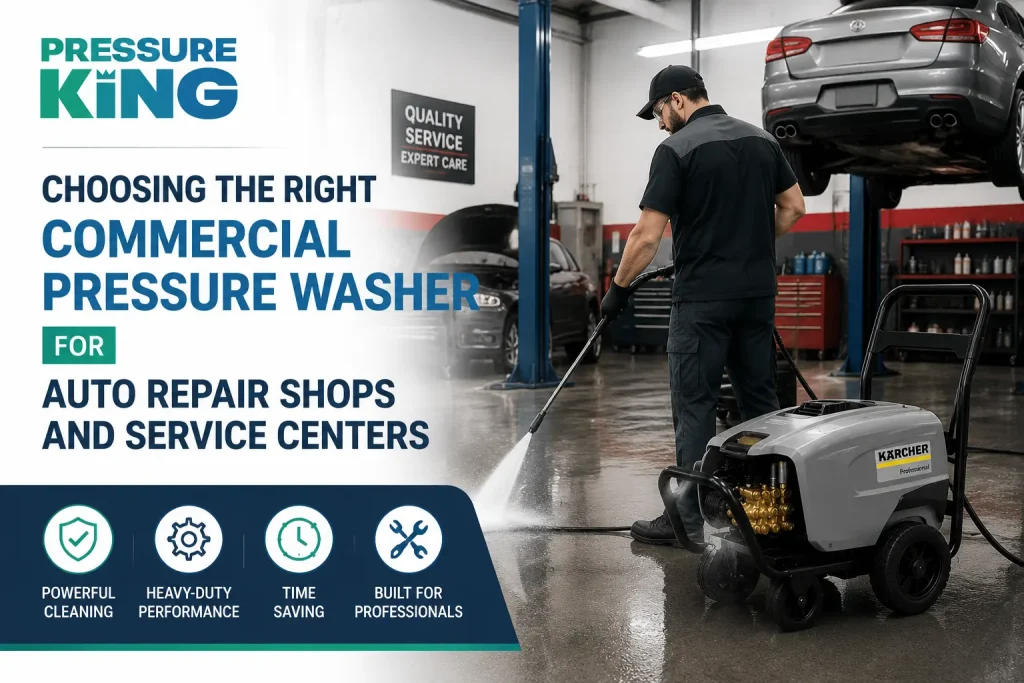
Auto repair shops, dealerships, detailing centers, and automotive service facilities deal with some of the toughest cleaning challenges. Oil spills, grease buildup, brake dust, road grime, tire residue, and vehicle contamination are common parts of daily operations. Keeping service areas clean is important for safety, efficiency, and customer perception. A dirty repair shop floor or contaminated vehicle bay can create hazards and make the business appear less professional.
A commercial pressure washer for auto repair shops provides an effective solution for cleaning vehicles, service bays, garage floors, tools, and equipment. Unlike residential machines, commercial pressure washers are designed for frequent use, longer operating hours, and demanding cleaning applications.
This guide explains how automotive businesses can choose the right pressure washer, what PSI and GPM they need, when to use hot water, and which accessories improve cleaning performance.
Why Auto Repair Shops Need Commercial Pressure Washers
Automotive service environments experience constant exposure to materials that are difficult to remove with standard cleaning methods. Oil, grease, brake dust, road grime, and other residues can quickly build up on floors and equipment. Common contaminants include motor oil, grease, transmission fluid, brake dust, tire marks, road salt, dirt, mud, and vehicle debris. These substances can settle into concrete floors and other surfaces, making routine cleaning more difficult if they are left untreated.
Regular pressure washing helps automotive businesses maintain cleaner working environments while improving safety and efficiency. Commercial equipment can also reduce the time employees spend manually scrubbing large service areas.
Pressure washing can be especially useful for busy shops because cleaning can be completed more efficiently when the machine, water flow, temperature, and accessories are properly matched to the application. Businesses can choose from a range of commercial pressure washers designed for professional cleaning requirements.
Common Automotive Applications for Pressure Washers
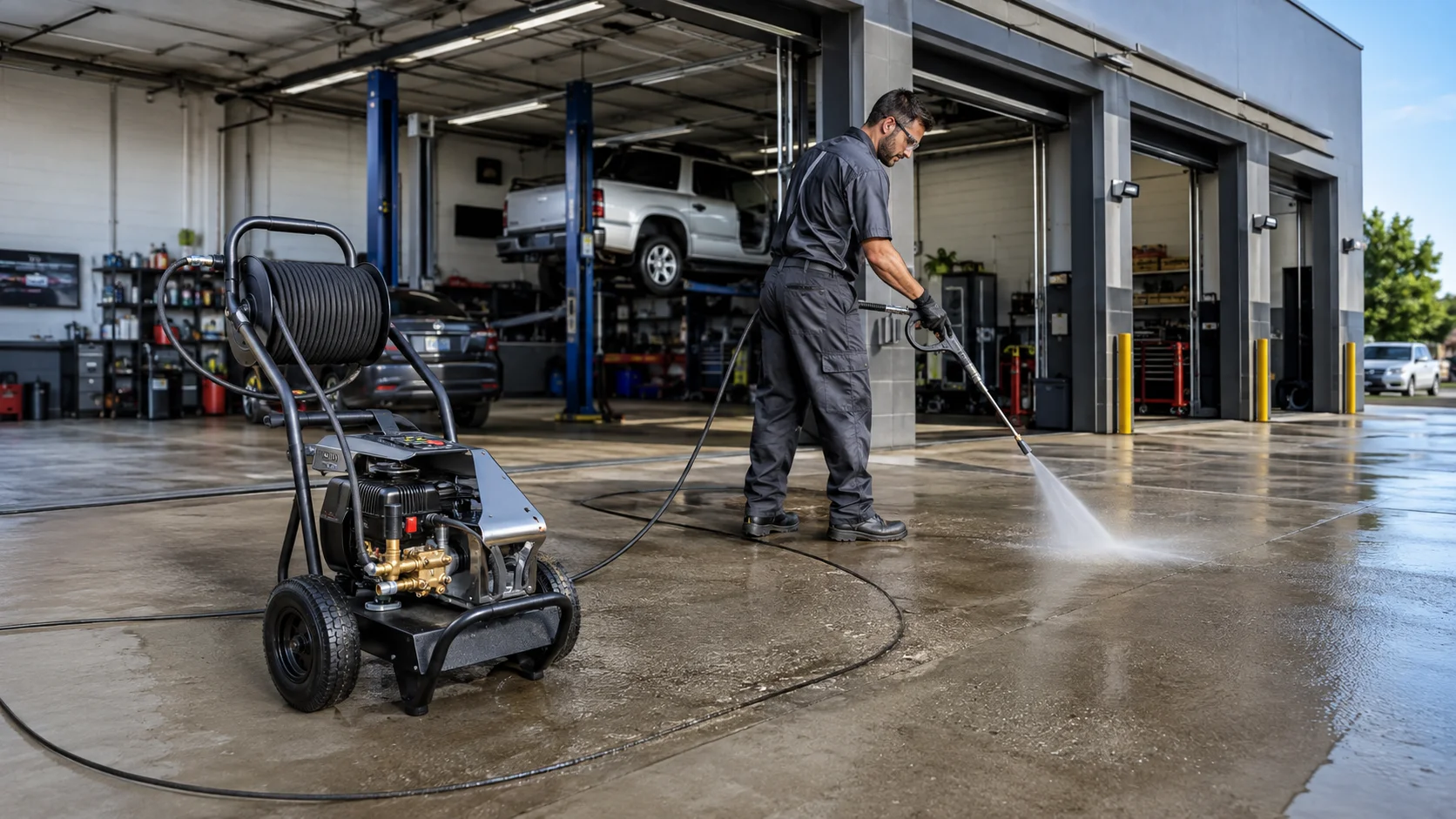
Pressure washers can be used across different areas of automotive businesses. The appropriate pressure and cleaning method should always depend on the surface and type of contamination.
Vehicle Exterior Cleaning
Auto shops and dealerships regularly need to remove road dirt, mud, salt buildup, and environmental contamination from vehicle exteriors. A properly configured pressure washer can remove loose and bonded surface dirt efficiently. Operators should use appropriate pressure, nozzle selection, and spray distance to avoid damaging paint, trim, decals, or other sensitive vehicle surfaces.
Service Bay Floor Cleaning
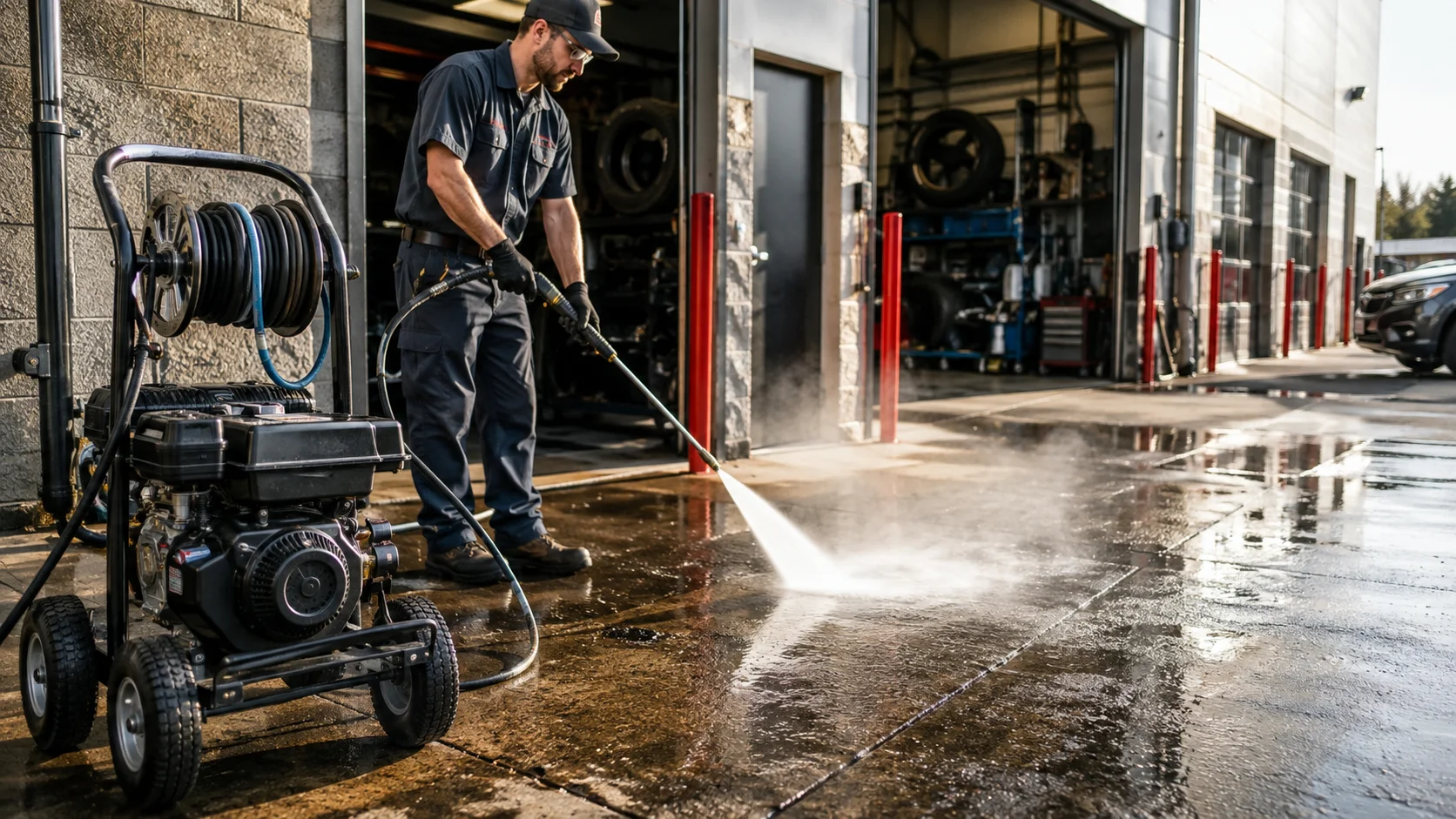
Repair shop floors can collect oil, grease, coolant, tire marks, and other automotive fluids throughout the day. These contaminants can be difficult to remove using ordinary mopping or scrubbing methods. Hot water pressure washing is particularly useful for suitable floor surfaces because heat can help loosen oily and greasy contamination. Regular cleaning also helps prevent heavy buildup from becoming increasingly difficult to remove.
For heavy grease and oil contamination, businesses can consider Pressure King’s range of hot water pressure washers, which are designed for demanding professional cleaning applications.
Engine and Equipment Cleaning
Automotive facilities also use pressure washers for certain equipment and maintenance areas. Shop equipment, tools, and engine components can collect dirt, grease, and residue during regular operations. However, sensitive electrical components and other parts that can be damaged by water should be protected or cleaned using an appropriate alternative method. Proper pressure and spray distance are important whenever pressure washing equipment or vehicle components.
Detailing Operations
Professional detailers use pressure washers for pre-washing vehicles, removing loose surface contamination, and cleaning wheels and tires. A controlled pre-wash can loosen dirt before contact cleaning begins. This can help reduce the amount of manual scrubbing required while supporting a more consistent vehicle cleaning process.
How Kärcher Pressure Washers Support Automotive Businesses
Automotive businesses need equipment that provides consistent performance and reliability during frequent cleaning tasks. Kärcher commercial pressure washers are designed for professional cleaning applications where durability and efficiency are important. Businesses can select from different configurations based on their cleaning environment and operating requirements. Hot water and cold water systems are available for different cleaning applications, while electric, gas-powered, and mobile options provide flexibility for different facilities.
The right equipment depends on the number of vehicles being cleaned, cleaning frequency, facility size, type of contamination, available utilities, and whether the machine will primarily be used indoors or outdoors.
Selecting equipment based on the actual cleaning application helps businesses avoid paying for capabilities they do not need while ensuring the machine has enough power for demanding tasks. Pressure King also provides commercial hot and cold Kärcher pressure washer options for different automotive cleaning requirements.
What PSI Is Best for Auto Repair Shop Cleaning?
The required PSI depends on the cleaning application. Using excessive pressure can damage vehicle paint, seals, and sensitive components.
| Application | Recommended PSI |
|---|---|
| Vehicle exterior washing | 1,500–2,500 PSI |
| Auto detailing | 1,000–2,000 PSI |
| Garage floor cleaning | 2,500–3,500 PSI |
| Grease removal | 2,500–4,000 PSI |
| Heavy equipment cleaning | 3,000+ PSI |
For most automotive businesses, balanced pressure combined with proper detergents provides better results than simply choosing the highest PSI machine.
Why GPM Matters for Automotive Cleaning
GPM determines how much water flows through the pressure washer system. While PSI affects cleaning force, GPM contributes to rinsing ability, coverage, and overall cleaning productivity. For automotive applications, adequate water flow helps rinse vehicles faster, remove loosened dirt, and clean larger service areas more efficiently.
A repair shop cleaning multiple vehicles daily needs equipment that provides enough water flow to maintain productivity. Facilities with larger service bays may also benefit from higher-flow equipment because operators can cover and rinse larger areas in less time. For businesses that prioritize cleaning speed, higher-flow equipment can be particularly useful. Pressure King offers 8 GPM pressure washer options designed for demanding commercial applications where productivity and coverage are important.
Hot Water vs Cold Water Pressure Washers for Auto Shops
Choosing between hot and cold water depends on the cleaning application. Automotive facilities often deal with both ordinary dirt and heavy oil or grease, so the appropriate system depends on the type of work performed.
Cold Water Pressure Washers
Cold water systems are effective for vehicle washing, dirt removal, outdoor cleaning, and general maintenance. They are suitable for businesses mainly dealing with road dirt, mud, dust, and other lighter contamination. Cold water equipment can also be practical for routine exterior cleaning where grease and oil are not the primary concern.
Hot Water Pressure Washers
Hot water systems are ideal for grease removal, engine-area cleaning, repair shop floors, fleet maintenance, and other applications involving heavy contamination. Heat helps loosen and break down oily materials, allowing operators to remove certain types of grease and oil more efficiently. This can reduce the amount of manual scrubbing required. For auto repair shops where grease and oil are common cleaning challenges, hot water equipment can provide a significant advantage over cold water systems.
Best Pressure Washer Types for Automotive Facilities
Different automotive businesses require different equipment setups. A small detailing center may have different requirements from a large repair facility or dealership.
Electric Pressure Washers
Electric pressure washers are suitable for indoor service bays, detailing centers, and facilities with reliable electrical access. They generally provide quiet operation and are practical for applications where operators are working close to occupied areas. They can be a good option for shops that primarily perform indoor cleaning and have an appropriate electrical supply.
Gas-Powered Pressure Washers
Gas-powered units provide greater mobility for outdoor vehicle washing, large automotive facilities, and mobile detailing operations. They can be useful when cleaning locations are spread across a property or when operators need to work away from a fixed electrical connection.
Hot Water Pressure Washers
Hot water systems are particularly useful for automotive businesses that regularly handle grease, oil, heavy vehicle contamination, and dirty service areas. The additional heat can help reduce cleaning effort and improve results on suitable surfaces. Shops should still select pressure and temperature according to the surface being cleaned.
Essential Pressure Washer Accessories for Auto Shops
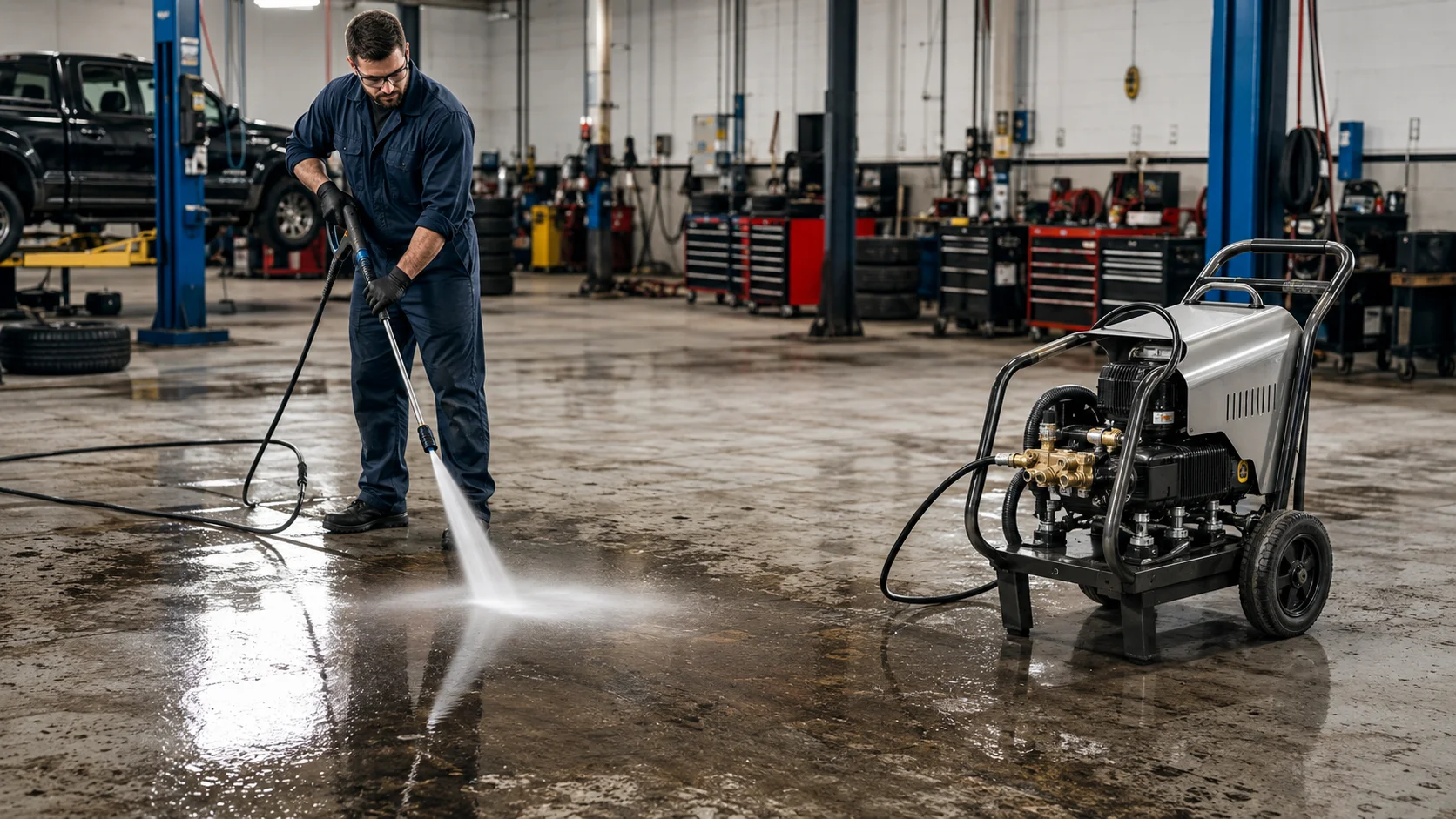
The right accessories can significantly improve cleaning efficiency. Instead of relying on one standard nozzle for every task, automotive businesses can select accessories according to the surface, contamination, and cleaning area.
Foam Applications
Foam applications help distribute cleaning solutions across vehicle surfaces before pressure washing. The foam can loosen dirt and road film, allowing the contamination to be rinsed away more easily. This approach can reduce manual scrubbing and provide more consistent coverage across vehicle exteriors.
Vehicle-Safe Nozzles
Correct nozzle selection is important when cleaning vehicles. Using an unsuitable nozzle or holding the wand too close to the surface can damage paint, trim, decals, or other components. Operators should select the nozzle according to the application and maintain an appropriate spray distance throughout the cleaning process.
Surface Cleaners
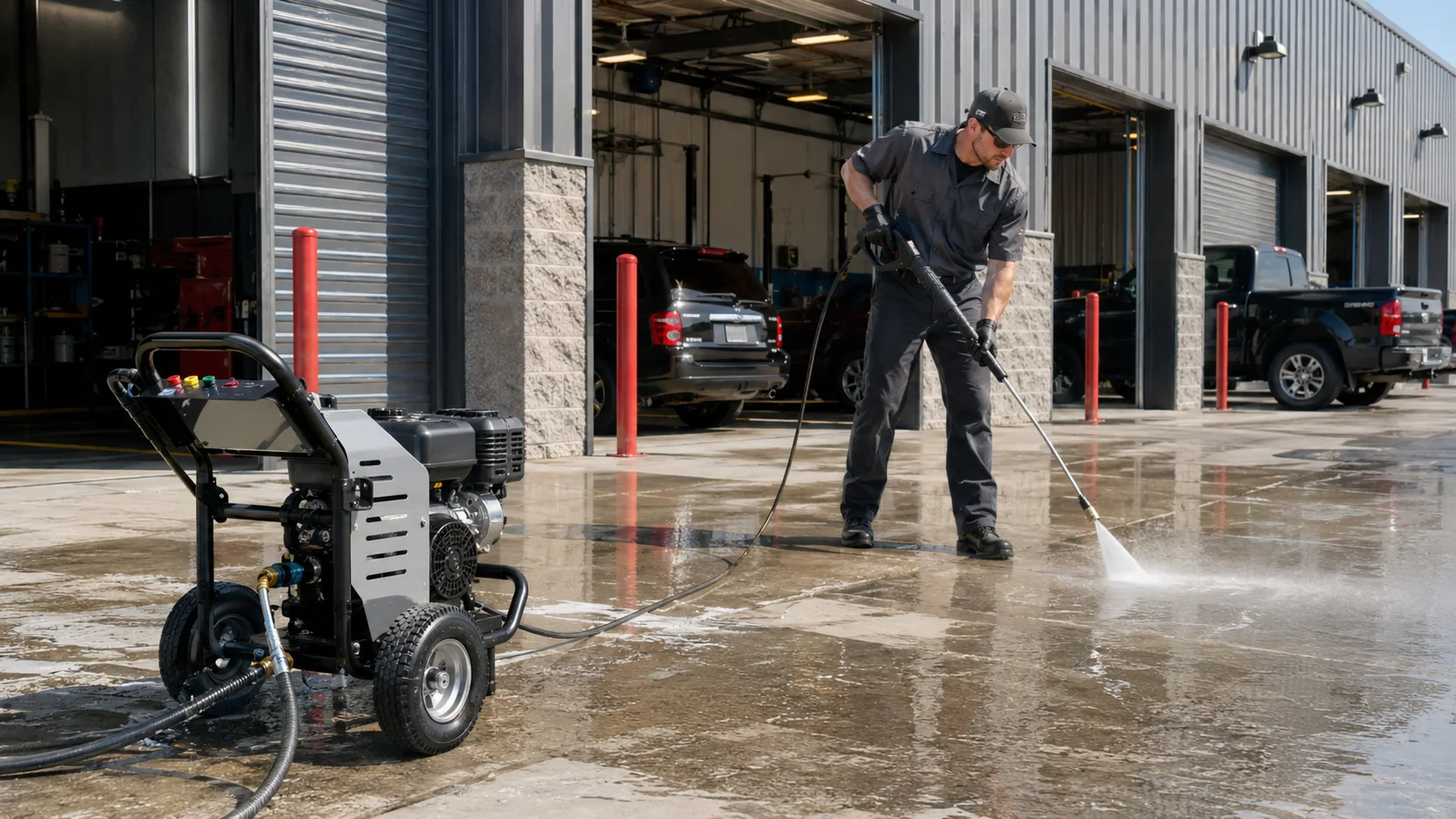
Surface cleaners are useful for garage floors, service bays, sidewalks, and other concrete areas. They provide more consistent cleaning across large flat surfaces than a standard spray wand and can help reduce streaking. For larger automotive facilities, a surface cleaner can also make floor maintenance faster and more manageable.
For shops with large concrete service areas, commercial pressure washer surface cleaners can help provide wider and more consistent coverage than a standard wand.
Commercial Hoses
Durable hoses are important for automotive businesses that use pressure washers frequently. A suitable commercial hose helps operators move around service bays and cleaning areas while maintaining reliable equipment performance. Regularly inspecting hoses for cuts, wear, leaks, or other damage can also improve safety. Pressure King offers commercial pressure washer hoses for professional cleaning applications.
Cleaning Chemicals
Automotive cleaning chemicals can help remove oil, grease, brake dust, road film, and other stubborn contamination. The cleaning solution should be selected according to the surface and type of contamination. Using an appropriate detergent can help loosen buildup before pressure washing, reducing the amount of mechanical cleaning required.
Step-by-Step Process for Cleaning an Auto Repair Shop With a Pressure Washer
A structured cleaning process helps automotive businesses achieve consistent results while protecting floors, equipment, vehicles, and other surfaces. Planning the work also helps minimize disruption to technicians and customers.
Step 1: Remove Loose Debris
Begin by clearing dirt, trash, loose materials, packaging, and other debris from the cleaning area. This gives the pressure washer a clear surface to work on. Removing loose debris first also prevents larger materials from being pushed around by high-pressure water or entering drainage areas. For busy repair shops, it is helpful to section off the cleaning area before beginning.
Step 2: Apply Degreaser
For garage floors and heavily contaminated areas, apply an appropriate degreaser or cleaning solution. Allow the product enough contact time to loosen oil, grease, and other buildup according to the manufacturer’s instructions. Proper chemical application can reduce the amount of pressure needed during the cleaning stage.
Step 3: Select Proper Pressure
Choose PSI based on the surface and contamination level. Avoid automatically using maximum pressure because excessive pressure can damage coatings, equipment, vehicle surfaces, and other sensitive materials. If the surface or cleaning requirement is unfamiliar, test a small area first. This helps determine whether the selected pressure and nozzle provide adequate cleaning without causing unnecessary damage.
Step 4: Use Hot Water When Needed
For grease and oil buildup, heated water can improve cleaning performance. Hot water helps loosen oily contamination, making it easier to remove during the pressure washing process. Not every cleaning task requires hot water. Cold water may be sufficient for ordinary dirt, dust, mud, and routine outdoor cleaning.
Step 5: Clean Using Controlled Movements
Maintain consistent passes across floors and surfaces. Keep the wand at a consistent distance and work systematically across each section instead of moving randomly. Slightly overlapping each pass helps prevent missed areas and produces a more uniform result. For large concrete floors, a surface cleaner can make this process faster and more consistent.
Step 6: Rinse Thoroughly
Finish by removing chemical residue, loosened dirt, grease, and other contaminants with a thorough rinse. Pay special attention to corners, edges, drains, equipment bases, and other locations where contamination or cleaning solution may collect. After rinsing, inspect the area and repeat targeted cleaning where necessary instead of increasing pressure across the entire surface.
Common Mistakes Auto Businesses Should Avoid
There are some very common mistakes. They should be avoided for better results.
Using Residential Pressure Washers
Residential machines are not designed for daily commercial workloads. Auto repair shops often operate pressure washers for extended periods and require equipment that can handle demanding cleaning conditions. Using appropriately rated commercial equipment can provide better reliability and productivity for businesses with frequent cleaning requirements.
Using Too Much Pressure on Vehicles
Excessive pressure can damage paint, seals, trim, decals, and sensitive vehicle components. Vehicle cleaning should use an appropriate pressure setting, nozzle, and spray distance. Operators should focus on effective cleaning rather than using the maximum PSI available.
Ignoring Hot Water Benefits
Cold water may not provide the same cleaning efficiency when dealing with heavy grease and oil. Automotive repair shops frequently encounter these contaminants, particularly on service bay floors and equipment. Where appropriate, hot water can help loosen oily buildup and reduce the effort required to clean heavily contaminated surfaces.
Choosing Equipment Without Considering Accessories
The pressure washer itself is only one part of a complete cleaning system. Hoses, nozzles, surface cleaners, foam equipment, and detergents can all affect cleaning performance. Choosing accessories based on the specific cleaning tasks allows automotive businesses to build a more efficient and practical pressure washing setup.
Maintenance Tips for Automotive Pressure Washing Equipment
Auto businesses often rely on pressure washers daily, making maintenance essential.
Important maintenance steps include:
- Inspect hoses regularly
- Check pumps
- Clean filters
- Maintain heating systems
- Replace worn accessories
Pressure King Inc helps automotive businesses throughout New Jersey and New York select, maintain, and support commercial Kärcher pressure washing equipment.
How Pressure Washing Improves Auto Business Operations
A clean automotive facility provides benefits beyond appearance. Regular pressure washing helps businesses maintain service areas, manage difficult contamination, and create a cleaner environment for employees and customers. It can also make floors, equipment, and work areas easier to inspect. Removing accumulated oil, grease, dirt, and other residue helps maintenance teams identify areas that may require additional attention.
For auto repair shops and service centers, professional cleaning equipment can become an important part of routine facility maintenance rather than an occasional cleaning solution.
Conclusion
Choosing the right commercial pressure washer for auto repair shops helps automotive businesses maintain cleaner service areas, remove difficult contamination, and improve daily efficiency. The correct combination of PSI, GPM, water temperature, detergents, and accessories allows shops to achieve professional cleaning results.
For automotive businesses, dealerships, and service centers throughout New Jersey and New York, Pressure King Inc provides Kärcher commercial pressure washers, hoses, accessories, and cleaning solutions designed for demanding automotive applications. Investing in the right equipment helps businesses reduce cleaning time, protect their facilities, and maintain professional standards.
Frequently Asked Questions
What is the best commercial pressure washer for an auto repair shop?
The best pressure washer depends on cleaning needs, contamination level, and usage frequency. Many automotive businesses benefit from commercial Kärcher pressure washers with hot water capabilities.
How much PSI do I need to clean a mechanic shop floor?
Most repair shop floors can be cleaned effectively with 2,500–3,500 PSI depending on oil and grease buildup.
Is hot water pressure washing better for grease?
Yes. Hot water helps break down grease and oil faster than cold water.
Can a pressure washer damage car paint?
Yes, excessive pressure or incorrect nozzle selection can damage paint. Proper settings and technique are important.
Do auto repair shops need commercial pressure washers?
Yes. Commercial machines are designed for frequent use and demanding cleaning conditions.

Michael Adeniran is the CEO of Pressure King Inc. He has been dealing in commercial cleaning equipment for many years. He is one of the leading specialists and experts in commercial cleaning products.


