


Commercial Pressure Washer for Warehouses: Complete Guide for Distribution Center Cleaning
Warehouses and distribution centers operate in environments where cleanliness, safety, and efficiency are extremely important. These facilities handle constant movement of products, forklifts, trucks, pallets, and employees, which creates continuous exposure to dirt, dust, oil, packaging debris, and outdoor contaminants.
Over time, warehouse floors, loading docks, parking areas, and service zones can develop heavy buildup that regular cleaning methods cannot remove effectively. Poorly maintained surfaces can affect workplace safety, equipment movement, and the overall appearance of the facility.
A Commercial Pressure Washer for warehouses provides an efficient solution for removing stubborn dirt, grease, stains, and industrial buildup. With the right PSI, GPM, accessories, and cleaning methods, pressure washing helps warehouse operators maintain cleaner facilities while reducing maintenance time.
This guide explains how warehouses and distribution centers use commercial pressure washers, what equipment specifications matter most, and how facility managers can choose the right cleaning solution.
Why Warehouses Need Commercial Pressure Washing Equipment
Warehouses experience constant activity throughout the day. Forklifts, delivery vehicles, employees, and storage operations create cleaning challenges that require reliable equipment.
Common warehouse contaminants include dust buildup, dirt and mud, oil leaks, forklift tire marks, packaging residue, pallet debris, road salt, and grease from equipment. Because these contaminants accumulate through daily warehouse activity, routine cleaning is important for keeping high-traffic areas manageable.
This buildup can contribute to slippery surfaces, a poor workplace appearance, more difficult maintenance inspections, and increased cleaning labor. Commercial pressure washers help address these problems by removing stubborn contamination more efficiently than many conventional cleaning methods.
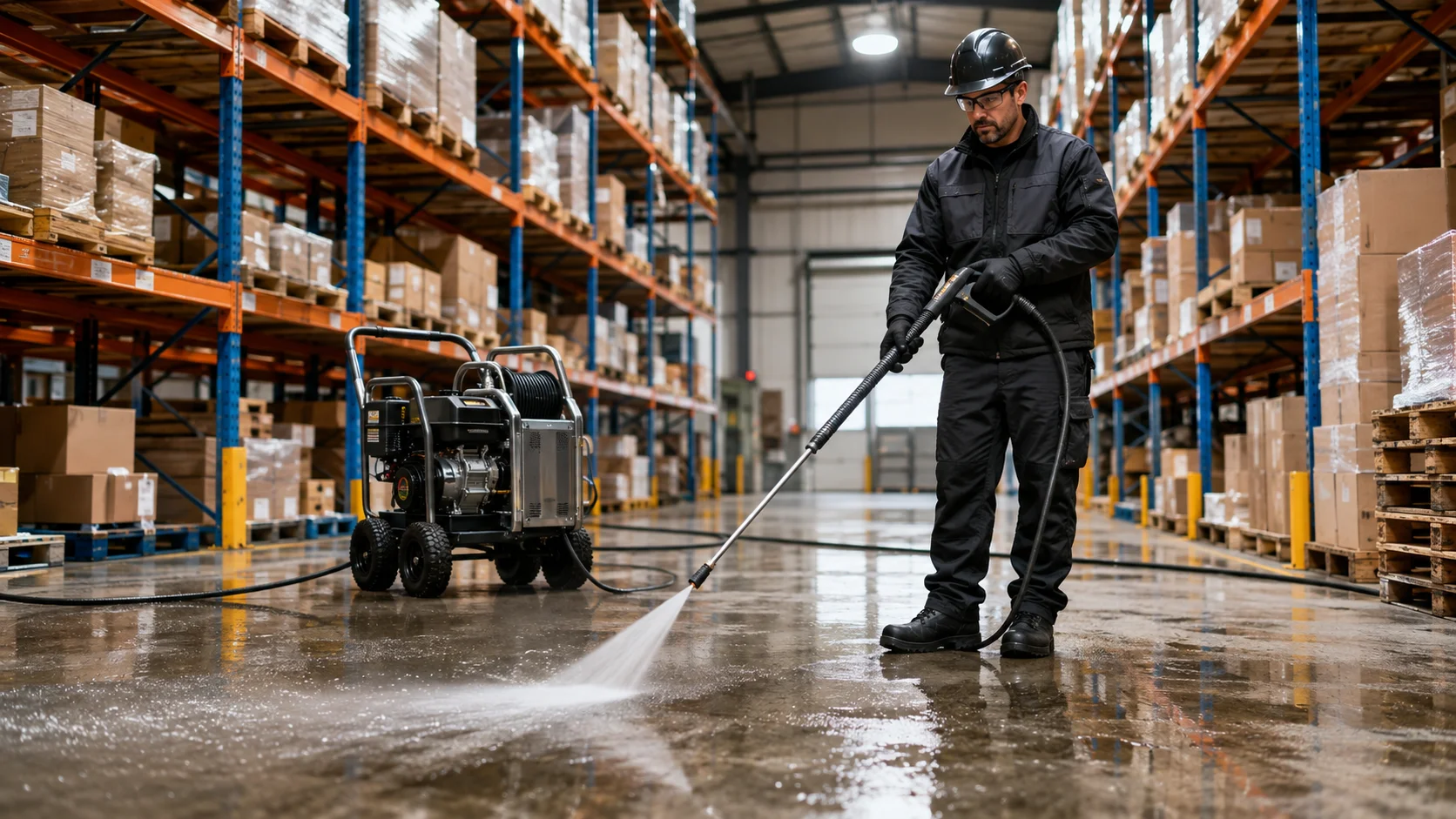
Common Areas in Warehouses That Require Pressure Washing
Distribution facilities contain several areas that benefit from professional pressure cleaning.
Loading Dock Cleaning
Loading docks experience constant exposure to delivery trucks, forklifts, pallets, and outdoor debris. As a result, these areas commonly develop oil stains, dirt buildup, tire marks, and weather residue. Regular pressure washing helps remove this accumulation and keeps loading areas cleaner and easier to maintain.
Warehouse Concrete Floor Cleaning
Concrete warehouse floors collect dust, dirt, vehicle marks, and spills as equipment and employees move through the facility. Pressure washers paired with surface cleaner attachments can cover large floor areas more consistently, making routine maintenance more efficient.
Parking Lots and Truck Areas
Warehouse parking areas and truck yards are exposed to oil leaks, mud, road salt, and heavy vehicle traffic. Commercial pressure washing helps remove this buildup from high-use outdoor surfaces and keeps these areas in better condition.
Equipment and Forklift Cleaning
Forklifts and warehouse equipment can collect dirt, grease, and industrial residue during normal operation. Regular cleaning makes equipment easier to inspect and maintain while helping operators identify leaks, buildup, or other issues that may require attention.
How Kärcher Pressure Washers Support Warehouse Cleaning
Warehouses require cleaning equipment that can operate reliably in demanding environments. Kärcher commercial pressure washers provide professional solutions for industrial applications through different configurations. Kärcher equipment is available in several configurations, including hot water and cold water pressure washers, electric-powered units, gas-powered systems, diesel-powered models, and trailer-mounted pressure washers.
Facility managers should consider warehouse size, cleaning frequency, the type of contamination, available utilities, and mobility requirements before selecting a machine. Matching the equipment to the application can improve cleaning efficiency and reduce operational interruptions.
Choosing the Right PSI for Warehouse Cleaning
The required PSI depends on the cleaning application and surface condition. Using too much pressure can damage concrete coatings or warehouse surfaces.
| Warehouse Cleaning Application | Recommended PSI |
|---|---|
| General warehouse floors | 2,000–3,000 PSI |
| Loading docks | 2,500–3,500 PSI |
| Oil and grease removal | 3,000–4,000 PSI |
| Truck yards | 2,500–4,000 PSI |
| Heavy industrial areas | 3,500+ PSI |
For warehouse applications, the goal is not simply maximum pressure. The best results come from balancing PSI with water flow, temperature, and cleaning chemicals.
Why GPM Matters for Distribution Center Cleaning
Large warehouses require efficient cleaning because downtime can affect operations. GPM affects cleaning speed, rinsing ability, surface coverage, and overall productivity. A higher-flow pressure washer can move more water across a surface, allowing operators to clean and rinse larger areas more efficiently.
For distribution centers covering thousands of square feet, the right GPM can have a significant effect on maintenance time. Facility managers should therefore consider both PSI and GPM instead of selecting equipment based on pressure alone.
Hot Water vs Cold Water Pressure Washers for Warehouses
The right water temperature depends on the cleaning challenge.
Cold Water Pressure Washers
Cold water systems are effective for dust removal, dirt cleaning, general floor maintenance, and many outdoor cleaning tasks. They are generally suitable when a warehouse is dealing primarily with ordinary dirt and debris rather than heavy oil or grease contamination.
HOT Water Pressure Washers
Hot Water Pressure Washers systems are particularly useful for oil stains, grease buildup, loading docks, and equipment cleaning. Heat helps break down oily contamination, making it easier for cleaning teams to loosen and remove buildup from suitable surfaces. Warehouses with forklifts, machinery, or vehicle traffic often benefit from hot water pressure washing.
Best Pressure Washer Types for Warehouses
Different warehouse operations require different equipment setups.
Electric Pressure Washers
Commercial Electric Pressure Washers are useful for indoor facilities, warehouses with reliable electrical access, and noise-sensitive environments. They offer quiet operation, lower emissions, and convenient indoor use, making them a practical option when the cleaning area and available utilities support an electric machine.
Gas-Powered Pressure Washers
Gas-powered systems provide useful mobility for outdoor yards, truck areas, and large facilities where operators need to move freely without depending on an electrical connection.
Diesel-Powered Pressure Washers
Diesel systems are suitable for heavy-duty warehouse operations, long cleaning periods, and demanding industrial environments where durable, continuous-duty equipment is required.
Trailer-Mounted Pressure Washers
Trailer-mounted units are useful for large distribution centers, multiple facility locations, and outdoor cleaning operations. Their mobile configuration allows professional cleaning teams to transport the equipment to different work areas without relying on a permanently installed system.
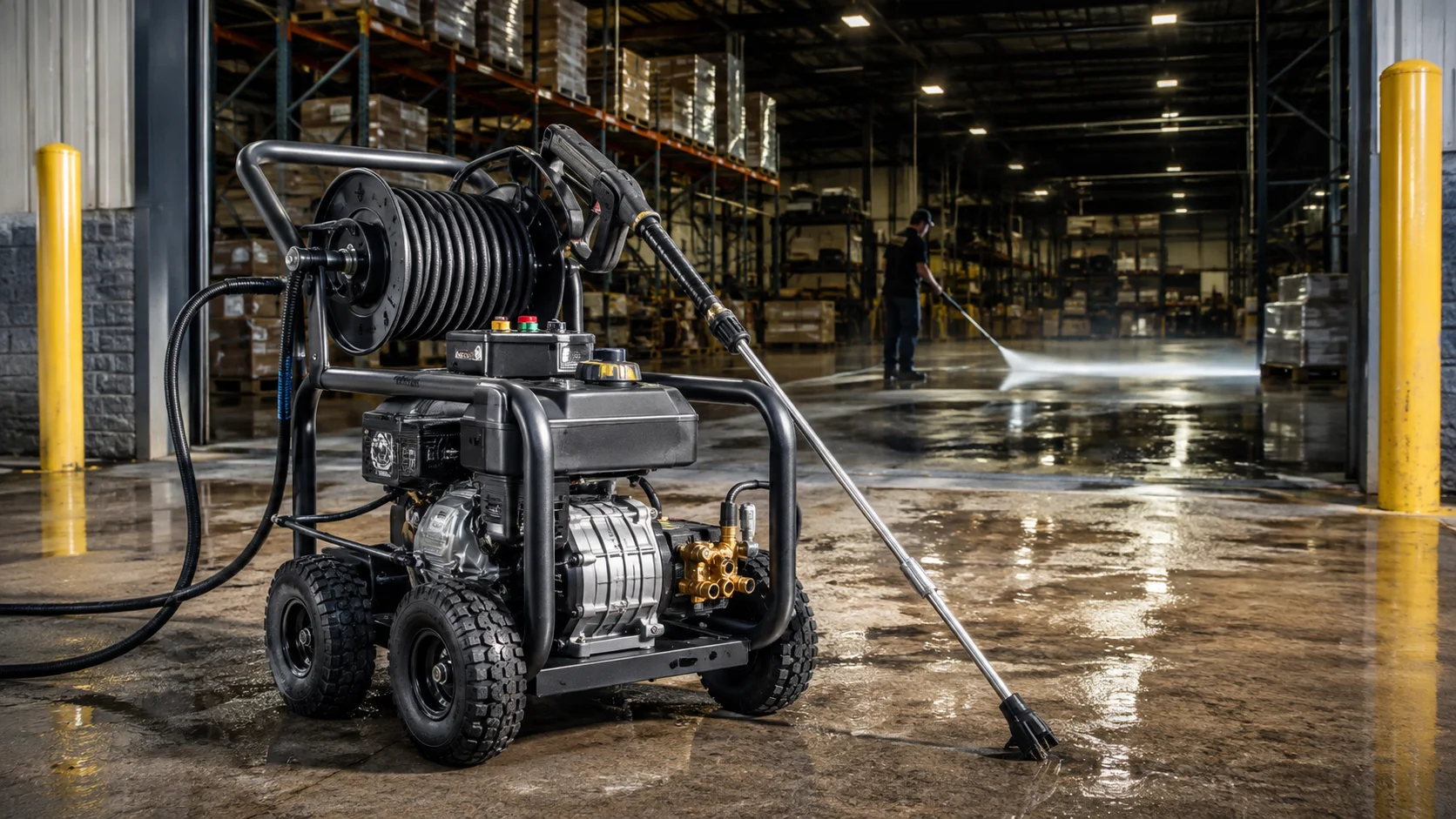
Essential Pressure Washer Accessories for Warehouses
Accessories improve productivity and cleaning results.
Surface Cleaner Attachments
Pressure Washer Surface Cleaners can provide faster cleaning, more consistent results, and reduced operator fatigue compared with using a standard wand across large concrete areas. They are especially useful when maintaining broad, relatively flat warehouse floors.
Commercial Pressure Washer Hoses
Heavy-duty hoses provide better durability and reliable operation in demanding warehouse environments. Using the appropriate hose also helps operators manage equipment safely while moving between cleaning areas.
Spray Guns and Wands
Professional spray guns allow operators to control cleaning pressure and reach difficult areas. They are particularly useful for corners, edges, equipment surfaces, and locations where a surface cleaner cannot be used effectively.
Turbo Nozzles
Turbo nozzles help remove stubborn buildup from durable surfaces. Their concentrated cleaning action can be useful for heavily soiled areas, although operators should select the nozzle and pressure carefully to avoid damaging sensitive surfaces.
Industrial Cleaning Chemicals
Pressure Washer Detergents can help loosen grease, oil, dirt, and other industrial residue before rinsing. The cleaning solution should be selected for the contamination and surface being cleaned, and operators should follow the equipment and chemical manufacturer’s instructions.
Step-by-Step Warehouse Pressure Washing Process
A structured warehouse pressure washing process helps teams clean floors, loading areas, equipment zones, and other surfaces efficiently while protecting workers, equipment, and facility materials.
Step 1: Inspect the Cleaning Area
Start by walking through the cleaning area and identifying the condition of the floor, drainage points, heavily contaminated sections, and any surfaces that may be sensitive to pressure or chemicals. This inspection helps the operator choose an appropriate cleaning method before equipment is turned on.
Step 2: Remove Loose Debris
Remove packaging material, dirt, dust, pallet debris, and other large objects before pressure washing. Clearing loose material first prevents debris from being pushed into drains or scattered across areas that have already been cleaned.
Step 3: Apply Cleaning Solution
Apply a suitable detergent when the surface contains oil, grease, or stubborn industrial buildup. Allow the cleaning solution enough contact time to loosen the contamination, following the product manufacturer’s instructions..
Step 4: Select Proper Pressure
Set the pressure according to the surface condition and type of contamination rather than automatically using the highest available PSI. Start with an appropriate setting and increase it only when necessary.
Step 5: Clean Using Consistent Movements
Work across the surface using controlled, even passes, and maintain a consistent distance from the area being cleaned. Overlapping each pass slightly helps prevent missed sections and produces a more uniform result.
Step 6: Rinse Thoroughly
Finish by rinsing away loosened dirt, remaining detergent, grease, and other debris. Pay particular attention to corners, edges, drainage areas, and locations where cleaning solution may collect.
Common Mistakes Warehouses Should Avoid
Avoid excessive pressure, improper cleaning methods, inadequate equipment maintenance, and inconsistent cleaning schedules that can reduce efficiency or damage warehouse surfaces.
Using Residential Pressure Washers
Residential machines are not designed for industrial workloads. Using equipment beyond its intended application can reduce productivity and may lead to premature wear or downtime.
Choosing Equipment Only Based on PSI
PSI alone does not determine cleaning performance. Water flow, temperature, nozzle selection, cleaning chemicals, and the type of contamination all influence the final result.
Ignoring Water Flow Requirements
Large facilities often require higher GPM for efficiency. A machine with insufficient water flow may take significantly longer to clean large warehouse floors and outdoor areas.
Skipping Equipment Maintenance
Poor maintenance can lead to downtime. Regular inspection and servicing help identify worn components before they cause unexpected equipment problems.
Creating a Warehouse Pressure Washing Schedule
A consistent warehouse pressure washing schedule helps maintain clean floors, loading areas, equipment zones, and high-traffic surfaces while preventing heavy dirt and residue buildup.
Weekly Cleaning
A practical schedule can divide cleaning tasks according to traffic and contamination levels. Weekly cleaning is often appropriate for loading docks, high-traffic areas, and equipment zones that accumulate dirt quickly.
Monthly Cleaning
Monthly cleaning can be used for warehouse floors, parking areas, and outdoor spaces that need routine maintenance without the same frequency of dock cleaning.
Seasonal Deep Cleaning
Seasonal deep cleaning can focus on large facilities, truck yards, and exterior areas where accumulated grime may become more noticeable after changing weather conditions. A regular schedule prevents heavy buildup and makes routine cleaning easier to manage.
Pressure Washer Maintenance for Warehouse Operations
Important maintenance tasks include checking hoses for wear, inspecting the pump, cleaning filters, monitoring oil levels where applicable, and replacing worn components before they cause a larger problem. Following the manufacturer’s maintenance recommendations can help keep the pressure washer reliable and reduce unexpected downtime.
Pressure King Inc helps warehouse and distribution businesses throughout New Jersey and New York select, maintain, and support Kärcher commercial pressure washing equipment.
How Pressure Washing Improves Warehouse Safety
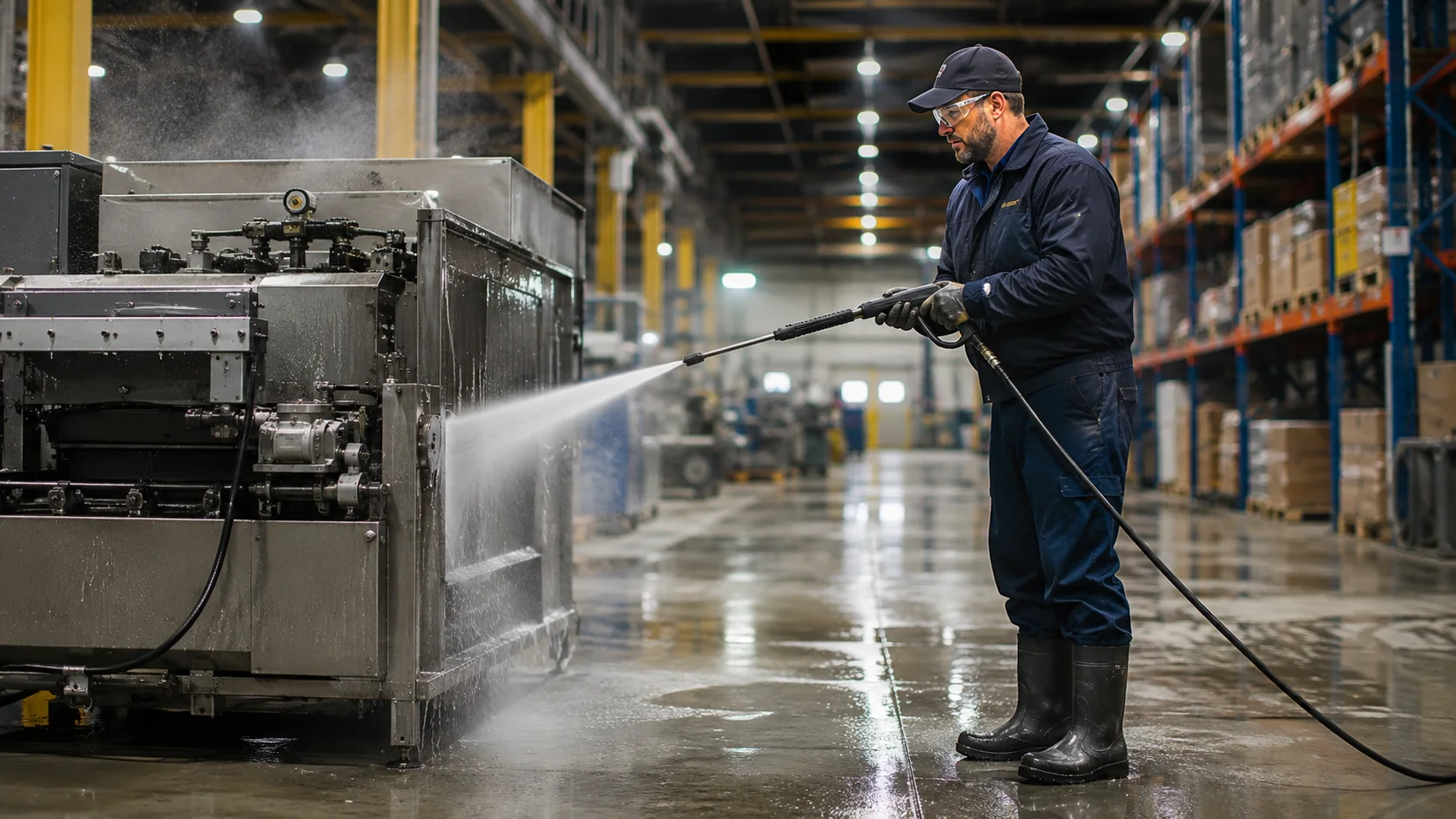
Clean warehouse environments support better operations. Regular pressure washing can help reduce slippery surface conditions, improve workplace appearance, keep equipment areas cleaner, and support broader facility safety programs. Cleaning should still be coordinated with the warehouse’s established safety procedures and surface requirements. For logistics companies and distribution centers, professional cleaning equipment is an important part of facility management.
Conclusion
A commercial pressure washer for warehouses helps distribution centers and industrial facilities maintain cleaner floors, loading docks, parking areas, and equipment zones. The right combination of PSI, GPM, water temperature, and accessories improves cleaning performance while reducing maintenance challenges.
For warehouses and logistics facilities throughout New Jersey and New York, Pressure King Inc provides Kärcher commercial pressure washers, hoses, accessories, and cleaning solutions designed for demanding industrial applications. Choosing the right pressure washing system helps businesses improve efficiency, maintain safer workplaces, and protect their facilities.
Frequently Asked Questions
What is the best commercial pressure washer for warehouses?
The best pressure washer depends on warehouse size, cleaning frequency, and contamination type. Commercial Kärcher pressure washers provide solutions for different industrial requirements.
What PSI is needed for warehouse concrete floors?
Most warehouse floors can be cleaned effectively with 2,000–3,500 PSI depending on buildup and surface condition.
Is hot water pressure washing better for loading docks?
Yes. Hot water helps remove oil, grease, and vehicle-related contamination from loading areas.
Can pressure washing damage warehouse floors?
Yes, excessive pressure can damage coatings or surfaces. Proper PSI selection is important.
How often should warehouses pressure wash?
The schedule depends on traffic, facility type, and contamination levels. Many warehouses benefit from regular weekly, monthly, or seasonal cleaning.

Michael Adeniran is the CEO of Pressure King Inc. He has been dealing in commercial cleaning equipment for many years. He is one of the leading specialists and experts in commercial cleaning products.


