What Is the Average Backpack Vacuum Capacity?

Key Takeaways
- Most commercial backpack vacuums have a 5–10 quart capacity.
- 5–6 quarts is a practical choice for everyday commercial cleaning.
- Larger 8–10 quart models suit heavy debris and large facilities.
- Capacity should be balanced with weight, comfort, debris type, and cleaning time.
- The right capacity reduces emptying cycles and cleaning interruptions.
Backpack vacuums are common in commercial cleaning settings. In offices and hotels, schools, airports, and in healthcare centers, these machines enable cleaning personnel to clean the premises more quickly and efficiently than by using the conventional upright or canister vacuums.
The most frequently discussed question that buyers pose before deciding on what type of backpack vacuum to purchase is, “What is the average capacity of a backpack vacuum, and how does it affect its performance?”
For commercial cleaning teams, backpack vacuum capacity can affect how often operators need to stop and empty the collection container. However, capacity should be evaluated alongside weight, cleaning duration, debris type, filtration, and overall machine design rather than treated as the only measure of performance.
This guide will break down the explanation of the capacity of the backpack vacuum into specifics and help you select the appropriate capacity to fit your cleaning requirements.
Understanding Backpack Vacuum Capacity
Backpack vacuum capacity is the volume of debris that the collection container of the vacuum can take before it must be emptied. Capacity is usually calculated in quarts (qt) or liters (L).
Backpack vacuums are made to last longer compared to upright vacuums, whose dustbin is usually small, thus, has to be emptied frequently. The fact that they have a bigger capacity means that cleaning teams do not have to stop and this directly translates to efficiency and increased labor productivity.
However, capacity isn’t just about size. It also affects:
- Cleaning time
- Operator comfort
- Weight distribution
- Suitability for different environments
Capacity vs. Operator Comfort
A larger collection container can reduce the number of emptying cycles, but greater capacity can also increase the overall weight carried by the operator. This makes weight distribution an important consideration for facilities where cleaning staff wear backpack vacuums for extended shifts.
The ideal capacity should provide enough debris storage for the expected cleaning session without creating unnecessary strain. For long commercial cleaning shifts, an ergonomic design and balanced weight distribution can be just as important as having a larger collection container.
Weight Distribution Matters
Backpack vacuums are designed to distribute equipment weight across the operator’s back and shoulders. A properly balanced model can make longer cleaning sessions more manageable, particularly when the vacuum is used throughout large facilities.
Cleaning Duration and Capacity
The longer a cleaning session lasts, the more useful an appropriate collection capacity becomes. Facilities with short cleaning tasks may not need a large-capacity machine. while extended commercial cleaning routes can benefit from fewer emptying interruptions.
Average Backpack Vacuum Capacity Range
Most types of backpack vacuums are available in a standard range of capacity, although they are sold in many different sizes. Backpacks have a vacuum capacity of between 5 to 10 quarts, which is about 4.7 to 9.5 liters. This distance is a compromise between enough storage of debris and comfort of the operators enabling the cleaning personnel to work productively without having to be interrupted frequently.
Within this range, capacities are generally categorized as:
- Small Capacity (3–4 quarts / 2.8–3.8 liters): Lightweight and easy to carry, suitable for short cleaning sessions or spaces with minimal debris.
- Average Capacity (5–6 quarts / 4.7–5.7 liters): The industry standard for most commercial applications, offering enough storage for typical office, hotel, or school cleaning while remaining ergonomic.
- Large Capacity (7–10 quarts / 6.6–9.5 liters): Designed for high-traffic areas or spaces with heavier debris, such as gyms, airports, or warehouses.
- Extra-Large Capacity (10+ quarts / 9.5+ liters): Specialized models for industrial or outdoor cleaning, handling extended cleaning sessions and heavy debris loads.
The selection of a suitable capacity is dependent on your cleaning space and workflow. Most commercials and hospitality environments have 56 quarts, which is the right amount of storage space with just enough storage capacity to last longer without overwhelming the operator. The bigger capacities can be required in cases of heavy-duty purposes, although they are heavier and can be tiring.
How Facility Size Influences Backpack Vacuum Capacity
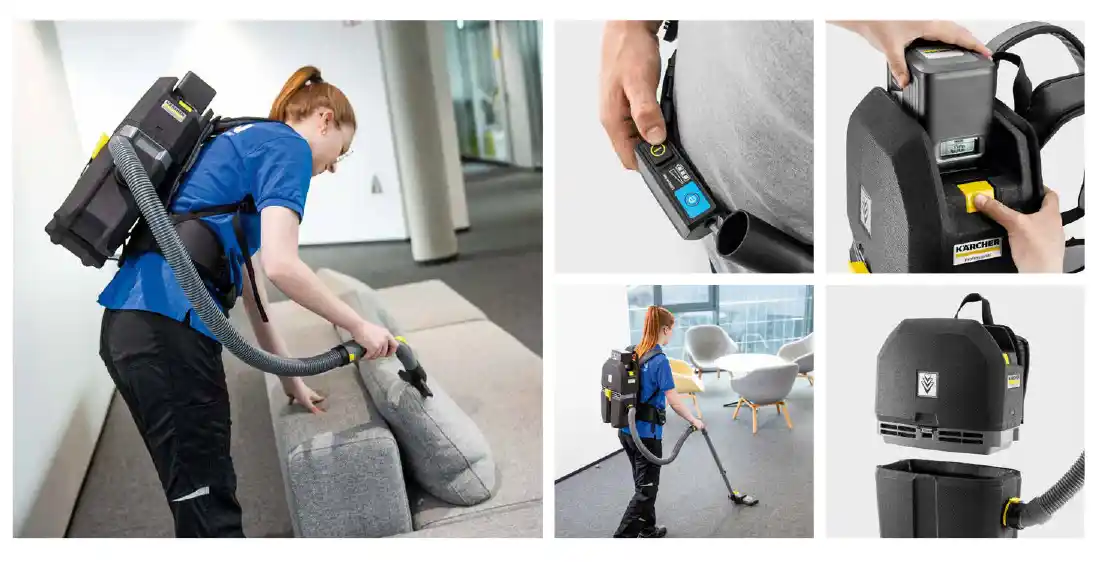
The size and layout of a facility can help determine how much collection capacity a cleaning team actually needs. A small office with limited debris may work efficiently with a smaller backpack vacuum, while a large hotel, airport, or warehouse may require greater capacity to reduce interruptions during longer cleaning routes.
Facility size should also be considered together with cleaning frequency. A large building cleaned several times a day may have different capacity requirements from a similarly sized facility that receives a single cleaning pass each evening.
Small Commercial Spaces
Smaller offices, classrooms, and similar spaces may not generate enough debris to justify a high-capacity backpack vacuum. A compact model can be easier to carry and may provide sufficient collection capacity for routine cleaning.
Large Facilities
Airports, hotels, universities, and warehouses can generate more debris across larger cleaning routes. In these settings, a larger-capacity vacuum may reduce the number of times operators need to stop and empty the collection container.
High-Traffic Areas
High-traffic areas tend to accumulate debris more quickly than lightly used spaces. When cleaning these areas, capacity should be selected according to the amount and type of debris rather than floor area alone.
Backpack Vacuum Capacity by Type
Not all backpack vacuums are equal, and one of the primary aspects that determines the capacity is the type of vacuum. The capacity, weight, and purpose of the vacuum may differ greatly based on the vacuum being corded, battery-powered or gas-powered. These differences will assist you to choose the appropriate vacuum cleaner to clean your house.
1. Corded Electric Backpack Vacuums
The most frequent type of a backpack vacuum in a commercial environment is the corded electric models. The range of their capacity is 5-10 quarts (4.7-9.5 liter). These vacuums are continuous cleaning types hence are suited in offices, schools, and health institutions where there is a need for uninterrupted performance.
2. Battery-Powered Backpack Vacuums
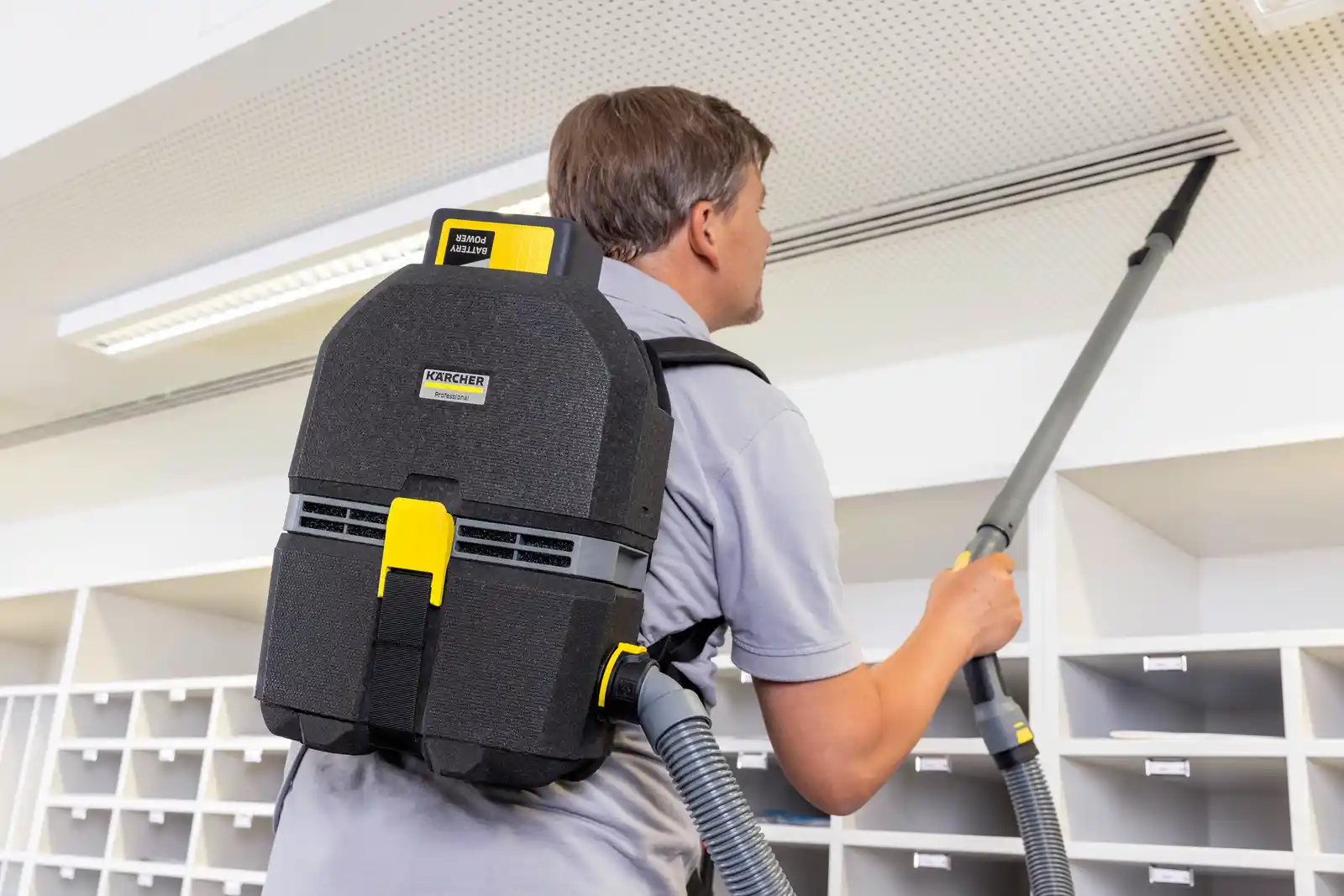
Vacuums that run on batteries are light and easily portable and can be used with flexibility in places where the cords can be limiting or where noise-sensitive individuals like the hotel and hospital may require it. Their average capacity is normally between 4-6 quarts (3.8 and 5.7 liters).
The capacity is slightly lower to ensure that the average weight is lower and the operators can carry the vacuum over long distances without experiencing any strain. The vacuums suit well in fast cleaning or vacuuming or in places where the debris is moderate.
3. Gas-Powered Backpack Vacuums
Gas vacuum cleaners are mostly utilized in industrial or outdoor purposes, such as construction sites, warehouses, and large outdoor buildings. They are generally bigger and include an 8-10+ quart (7.6-9.5+ liters) to accommodate heavy debris like dirt, gravel, and leaves.
These vacuums are not very popular indoors because of the noise and emissions but are good at heavy-duty and high-capacity. The bigger capacity should be ready to accommodate more weight, although it lowers the number of emptying the vacuum needs to be emptied.
4. Specialized Backpack Vacuums
There are also highly-specialty cleaning backpack vacuums, like an HEPA-filtrated vacuum used in healthcare facilities or a wet/dry vacuum in an industrial facility. The capacities of these special models can differ with respect to intended use.
To illustrate this, the capacity of HEPA backpack vacuums can be slightly reduced to ensure that they can be portable, whereas wet/dry vacuums can have larger tanks to effectively deal with liquids and solids.
How Filtration Affects Backpack Vacuum Selection
Capacity is only one part of a backpack vacuum’s overall performance. Filtration also matters, particularly in facilities where fine dust and airborne particles are a concern. A vacuum with an appropriate filtration system can help cleaning teams manage collected particles while supporting the requirements of the environment in which the machine is used.
Healthcare facilities, schools, offices, and other commercial environments may have different filtration requirements. When comparing models, cleaning managers should consider the type of debris being collected and the filtration system used by the vacuum rather than selecting equipment based on capacity alone.
How Capacity Affects Cleaning Productivity
The capacity of a backpack vacuum plays a crucial role in determining cleaning productivity. A vacuum with adequate capacity allows operators to cover larger areas without frequent interruptions to empty the container, which saves time and increases overall efficiency. By choosing the right capacity for your environment and debris type, facilities can ensure a smoother, faster, and more productive cleaning routine.
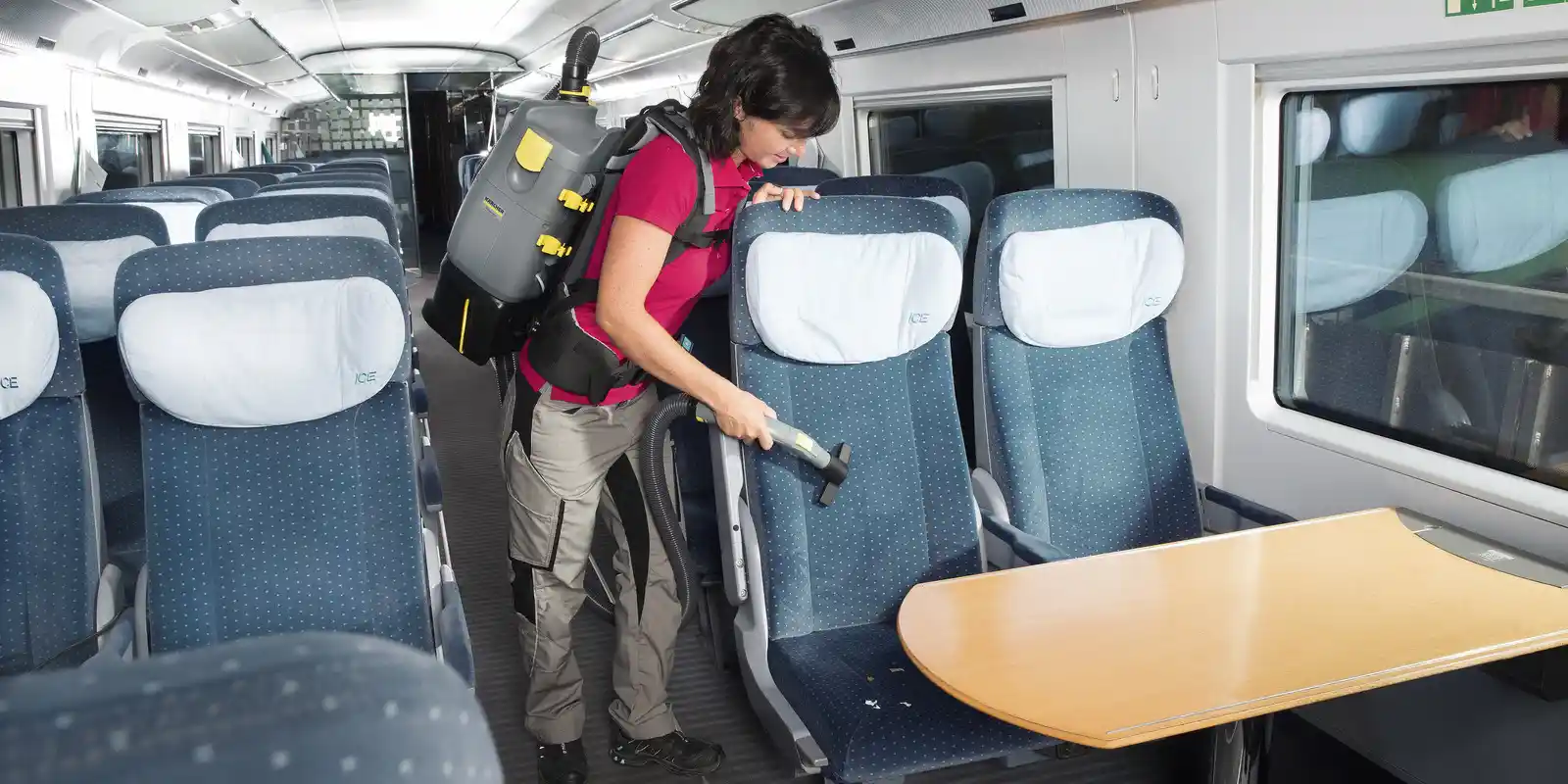
Fewer Dumping Cycles
In commercial environments, even small time savings per shift can add up significantly over weeks or months. Larger capacity means fewer trips to empty the vacuum, which:
- Reduces downtime
- Increases cleaning speed
- Improves labor efficiency
Workflow Efficiency
Cleaning staff can focus on coverage instead of equipment maintenance. This is especially important in large facilities such as airports, convention centers, and universities.
Consistent Suction Performance
Modern backpack vacuums are designed to maintain strong airflow even as the container fills. However, exceeding optimal capacity can reduce suction if filters become clogged, making the right size essential.
Types of Debris and Capacity Needs
When selecting a backpack vacuum, understanding the type of debris you’ll be cleaning is just as important as knowing the vacuum’s capacity. Different debris types occupy space at varying rates, which directly impacts how often the vacuum needs to be emptied and, ultimately, your cleaning efficiency.
Choosing the right capacity based on debris type ensures that the vacuum performs optimally and reduces unnecessary interruptions during cleaning.
Light Dust and Fine Particles
Environments like offices, libraries, and healthcare facilities typically generate fine dust, paper particles, and other lightweight debris. These vacuums can cover large areas without frequent emptying, maintaining workflow efficiency and reducing operator fatigue.
- Common in offices and healthcare facilities
- Compact debris fills space slowly
- Average 5–6 quart capacity is sufficient
Hair, Lint, and Fibers
Hotels, gyms, theaters, and salons often accumulate hair, carpet fibers, and lint. Unlike dust, these materials are bulkier and take up more space in the collection bag or container. Choosing the right size ensures smooth cleaning sessions, especially in high-traffic areas.
- Found in hotels, gyms, and theaters
- Takes up more space than dust
- May require closer to 6–8 quarts
Heavy Debris and Outdoor Dirt
Industrial sites, warehouses, and outdoor spaces produce heavier debris such as gravel, leaves, and sand. Gas-powered or wet/dry backpack vacuums are often the best choice here, as they combine high capacity with robust suction power to manage heavier loads efficiently.
- Construction cleanup or industrial use
- Fills containers quickly
- Larger 8–10 quart capacity is recommended
Bagged vs Bagless Backpack Vacuum Capacity
When choosing a backpack vacuum, one important consideration is whether to go with a bagged or bagless model. Both types have their own advantages and limitations, and capacity is a key factor that differentiates them. Understanding how bagged and bagless vacuums handle debris can help you select the right vacuum for your cleaning needs.
Bagged Backpack Vacuums
Bagged vacuums use a replaceable dust bag to collect debris, and their capacity is determined by the bag’s volume. Most commercial bagged backpack vacuums have capacities ranging from 5–10 quarts (4.7–9.5 liters). Bagged models offer several advantages:
- Capacity measured by bag size
- Common sizes: 5, 6, or 10 quarts
- Cleaner disposal and better air quality
Bagged systems often feel like they hold more because debris compacts efficiently inside the bag.
Bagless Backpack Vacuums
Bagless models collect debris directly in a reusable container, with capacities typically ranging from 5–8 quarts (4.7–7.6 liters). The main benefits include:
- Capacity measured by container volume
- Easier to see when full
- Requires more frequent cleaning of filters
Bagless models may require slightly larger containers to match the effective capacity of bagged system.
Emptying Frequency and Maintenance Requirements
The practical capacity of a backpack vacuum also depends on how frequently the collection container or bag needs to be emptied and maintained. Even a large-capacity vacuum may require more frequent attention when collecting bulky debris or when filters become loaded with fine particles.
Cleaning teams should follow the manufacturer’s instructions for emptying the collection system and maintaining filters. Regular care can help preserve airflow and keep the vacuum operating consistently throughout routine commercial cleaning tasks.
How to Choose the Right Backpack Vacuum Capacity
Selecting the right backpack vacuum capacity is essential for balancing cleaning efficiency, operator comfort, and workflow productivity. A vacuum with too small a capacity can lead to frequent emptying, interrupting cleaning routines, while an oversized vacuum may become heavy and tiring to wear.
When selecting a backpack vacuum, consider:
- Size of the facility
- Type of debris
- Duration of cleaning sessions
- Operator strength and comfort
- Bagged vs. bagless preference
For most buyers, starting with an average-capacity backpack vacuum offers the best balance of performance and usability.
Additional Factors to Consider Before Buying
Capacity should be considered alongside several other specifications before purchasing a commercial backpack vacuum. A machine with the right collection volume may still be unsuitable if its weight, filtration, noise level, battery runtime, or hose and attachment configuration does not match the cleaning environment.
Comparing the complete equipment package can help cleaning managers choose a vacuum that supports the actual workflow rather than focusing on a single specification.
Noise Level
Noise can be an important consideration in offices, schools, hotels, hospitals, and other occupied facilities. A quieter backpack vacuum may allow cleaning teams to work with less disruption during operating hours.
Runtime for Battery Models
For battery-powered backpack vacuums, runtime should be compared with the expected cleaning session. A machine with sufficient capacity but limited battery life may still require interruptions before the collection container is full.
Attachments and Cleaning Reach
The available tools and attachments can affect how effectively a backpack vacuum handles different surfaces and hard-to-reach areas. Consider the cleaning tasks the equipment will perform before choosing a model based primarily on capacity.
Final Thoughts
The average backpack vacuum capacity is typically between 5 and 6 quarts, making it ideal for most commercial cleaning environments. This range delivers enough debris storage to minimize interruptions while maintaining ergonomic comfort for the operator.
Larger capacities are available for specialized applications, but for everyday professional cleaning, the industry standard remains firmly in the mid-range. Choosing the right capacity ensures efficient cleaning, reduced fatigue, and long-term productivity.
Frequently Asked Questions (FAQs)
What is the average capacity of a commercial backpack vacuum?
Most commercial backpack vacuums fall within the 5–10 quart range, while 5–6 quarts is commonly presented as a practical mid-range capacity for everyday commercial cleaning.
Is a larger backpack vacuum capacity always better?
No. A larger capacity can reduce emptying cycles, but it may also increase the machine’s weight. The best capacity balances debris volume, cleaning duration, and operator comfort.
What backpack vacuum capacity is best for offices?
A 5–6 quart backpack vacuum can be suitable for many office cleaning applications because it provides a practical balance between collection capacity and portability. The actual requirement depends on the amount of debris and cleaning schedule.
What capacity is suitable for warehouses?
Warehouses that collect heavier debris may benefit from larger-capacity equipment, with the source article identifying 8–10 quarts as a suitable range for heavy debris and industrial applications.
Does vacuum capacity affect cleaning productivity?
Yes. Adequate capacity can reduce the number of times operators need to stop and empty the collection container, which can help reduce downtime and improve workflow efficiency.
Should I choose a bagged or bagless backpack vacuum?
Both options have advantages. Bagged models offer cleaner disposal and commonly come in 5-, 6-, and 10-quart sizes, while bagless models make it easier to see when the container is full but may require more frequent filter cleaning.

Michael Adeniran is the CEO of Pressure King Inc. He has been dealing in commercial cleaning equipment for many years. He is one of the leading specialists and experts in commercial cleaning products.