Best Commercial Floor Scrubbers for Warehouses and Large Spaces
Key Takeaways
- Choose based on warehouse size, layout, and floor type.
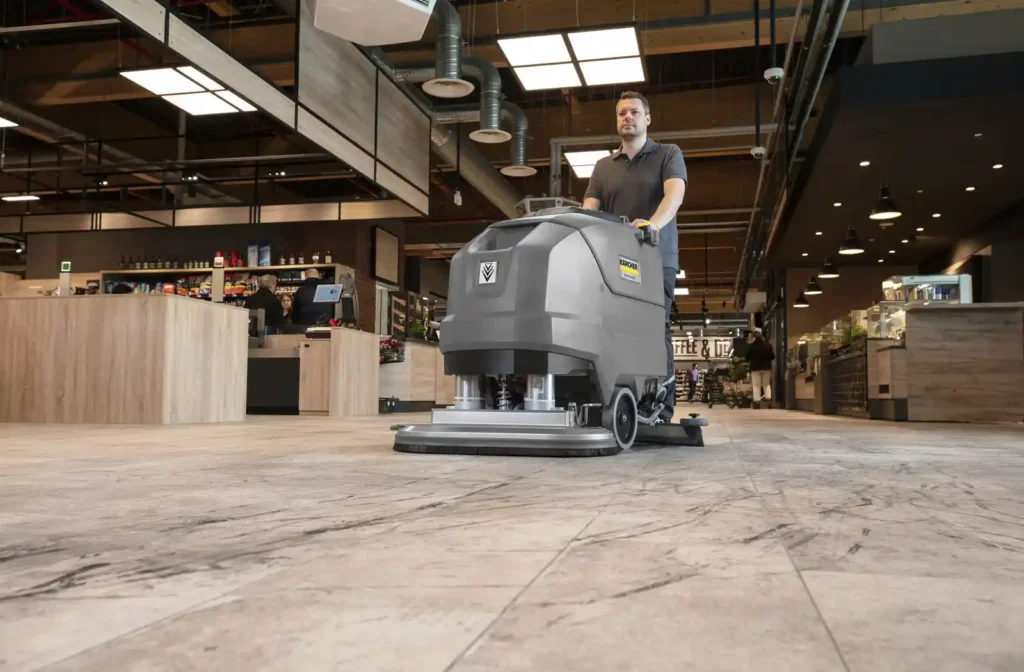
- Walk-behind models suit tight spaces, while ride-on models suit large areas.
- Compare cleaning path, tank capacity, and battery runtime.
- Regular maintenance reduces downtime and repair costs.
- The right scrubber improves cleaning efficiency, safety, and productivity.
Cleanliness in the world of industrial operations is not only an issue of aesthetics but also a question of safety, productivity, and compliance. In the case of warehouses, manufacturing facilities, and distribution centers, floor cleanliness is closely related to safety, the effectiveness of respective equipment, and the efficiency of the overall work process. Nevertheless, with such large spaces to maintain, there is a huge challenge to produce pristine floors without proper equipment.
The contemporary scrubbing machines are designed to operate in a high-scale industrial arena in a fast, consistent, and less labor-intensive manner. Regardless of whether you have a logistics center or an industrial warehouse, a proper investment in a floor scrubber might save you a lot of time and make your operation easier and safer to complete in line with health and safety practices.
For warehouse managers, choosing a commercial floor scrubber involves more than comparing machine size or cleaning speed. Floor conditions, aisle width, traffic patterns, cleaning frequency, labor availability, and the amount of floor space that must be covered during each shift can all influence which machine provides the best operational value.
Types of Commercial Floor Scrubbers for Warehouses
Where cleaning of large warehouse space is concerned, there is no universal size that fits all. Various floor types, traffic rates, and floor layout dictate the type of scrubbing solution. Being aware of the main kinds of industrial scrubber machines will enable the facility administration, operations overseers, and cleaning contractors to identify the best solution to address their demands.

1. Walk-Behind Floor Scrubbers
The scrubber walk-behind machines are smaller and workable tools that can be used in medium-sized areas of warehouses, small passages, and areas with racks and other barriers.
Key Features:
- Manually controlled by walking behind the unit
- The normal range of the cleaning path is 17 to 32 inches
- They are available in corded and battery-driven options
- Can be used when doing general maintenance and spot cleanings
Pros:
- Cheaper price than ride-on models
- It is simple to operate and handle
- Excellent in places that are inaccessible by ride-on machines
Cons:
- They are inefficient in covering large and open spaces since they have a slower coverage rate
- Has the potential to cause operator fatigue during prolonged use
2. Ride-On Floor Scrubbers
Ride-on machines are deemed to be the ideal floor scrubbers in high-square-footage warehouses, applicable in high-square-footage and widespread floor plans. The machines are designed to be fast, comfortable to the operator, and heavy-duty.
Key Features:
- The machine is operated by and is mounted on by an operator through a dashboard
- The normal path of cleaning would be between 26 and 45+ inches
- Solutions ( 30+ gallons) and recovery tanks
- Has a cleaning capacity of more than 50,000 sq. ft. an hour
Pros:
- Top performances in big areas
- Fatigue and high output of the operator reduced
- Industrial grade cleaning strength that gets dirt out of industrial waste and dust
Cons:
- Higher upfront investment
- Needs a bigger turning radius, not the best in tight places
Looking for an industrial floor cleaning machine that balances power, speed, and ROI? Ride-on scrubbers are your top-tier solution for demanding warehouse cleaning needs.
3. Robotic / Autonomous Floor Scrubbers
Robotic scrubbers are the newest advancement in warehouse floor care technology. These autonomous machines are designed to clean independently, using sensors, mapping, and machine learning to navigate your space without direct human supervision.
Key Features:
- Operates via pre-programmed routes or real-time navigation
- Obstacle detection, floor mapping, and automatic adjustments
- Integrated data tracking and cleaning reports
Pros:
- Operates during off-hours or alongside warehouse shifts
- Reduces labor costs and frees up staff for other tasks
- Provides consistent, repeatable cleaning performance
Cons:
- Higher initial investment
- May require more setup and occasional supervision
How Warehouse Layout Affects Scrubber Selection
Warehouse layout can determine how effectively a floor scrubber moves through the facility. Wide-open storage areas may benefit from larger ride-on machines with wider cleaning paths, while facilities with narrow aisles and closely positioned racks may need a more compact machine with better maneuverability.
Traffic patterns should also be considered. If forklifts, pallet jacks, employees, and cleaning equipment frequently share the same space, a machine that can maneuver safely around active work areas may be more practical than one designed only for maximum coverage.
Narrow Aisles and Storage Racks
Narrow aisles can limit the turning radius and overall dimensions of the scrubber you can use. Walk-behind models or compact scrubbers may provide better access where racks leave limited operating space.
Open Warehouse Floors
Large open floors allow operators to take advantage of wider cleaning paths and larger tanks. In these environments, ride-on scrubbers can help cover more square footage while reducing the physical effort required from operators.
High-Traffic Work Areas
Warehouses with constant vehicle and employee movement may require cleaning equipment that can operate efficiently without disrupting normal workflows. Cleaning schedules, machine maneuverability, and operator visibility should all be considered when selecting equipment for these environments.
Cleaning Performance and Productivity Factors
A warehouse floor scrubber should be evaluated based on more than its maximum cleaning path. Productivity also depends on solution and recovery tank capacity, battery runtime, brush or pad configuration, operating speed, and the amount of time required for refilling or charging.
For large facilities, reducing interruptions can be just as important as increasing cleaning speed. A machine that can operate for longer periods between refills or charges may help cleaning teams complete scheduled work with fewer delays.
Cleaning Path Width
A wider cleaning path can increase coverage in open areas, but it may be less practical in narrow warehouse aisles. The cleaning width should match the facility’s available operating space.
Tank Capacity
Larger solution and recovery tanks can reduce the number of stops required during a cleaning shift. This can be particularly useful in warehouses where large floor areas must be cleaned continuously.
Battery Runtime
Battery runtime should match the expected cleaning schedule. If a machine requires frequent charging during a shift, productivity can suffer. Facilities with long cleaning cycles should consider runtime, charging time, and battery maintenance requirements together.
Comparison of Top Models of Floor Scrubbers
Choosing the right commercial floor scrubber can significantly impact operational efficiency, safety, and cleanliness standards in warehouses and large commercial environments. Below is a detailed comparison of top-performing floor scrubbers available at Pressure King, tailored to suit varying facility sizes and cleaning demands.

1. Karcher BR 30/1 C BP – Ultra-Compact Scrubber for Tight Spaces
The Karcher BR 30/1 C BP is designed for professionals looking for an easy-to-maneuver, battery-powered scrubber ideal for cleaning small and confined areas.
This model is particularly useful in office-adjacent zones, tight storage spaces, or warehouse entrances where maneuverability and portability matter most. The microfiber roller system offers 20% more effective cleaning and 60% faster drying compared to traditional mopping. Its compact form makes it ideal for quick daily cleans without disrupting workflow.
- Cleaning Path: 12 inches
- Solution Tank Capacity: 1 gallon
- Recovery Tank: 0.7 gallons
- Run Time: Up to 50 minutes
- Weight: Lightweight and easy to carry (approx. 13 lbs)
2. Karcher BD 30/4 C BP – Efficient Cleaning with Eco Mode
The Karcher BD 30/4 C BP is a compact walk-behind floor scrubber that balances performance and sustainability. It’s engineered for fast, professional cleaning in environments with heavy foot traffic and tight aisles.
What sets this model apart is its Eco! Efficiency mode, which lowers noise levels and conserves energy during operation—ideal for businesses that need quiet, low-disruption cleaning. The foldable handlebar makes it easy to transport and store in cleaning closets or tight janitorial storage areas.
- Cleaning Path: 11 inches
- Solution Tank: 0.8 gallons
- Recovery Tank: 1.1 gallons
- Battery: Lithium-ion (fast-charging)
- Run Time: Approx. 60 minutes
- Weight: Approx. 44 lbs
3. Karcher BD 50/70 R BP – The Best Floor Scrubber for Warehouse Environments
For large-scale cleaning operations, the Karcher BD 50/70 R BP is a high-performance ride-on floor scrubber built for efficiency, durability, and operator comfort. It covers vast floor areas with minimal downtime.
This model stands out as the best floor scrubber for warehouse facilities, offering excellent visibility, operator ergonomics, and cleaning power. Despite being a ride-on unit, it remains compact enough to navigate moderately congested areas such as warehouse pick lines or around pallet racks.
- Cleaning Path: 20 inches
- Solution Tank: 18 gallons
- Recovery Tank: 20 gallons
- Run Time: Up to 2.5 hours
- Drive: Battery-powered ride-on
- Special Features: Available with AGM battery or pad driver configuration
How to Calculate the Right Floor Scrubber Productivity
Choosing a warehouse floor scrubber based only on advertised cleaning speed can lead to unrealistic productivity expectations. Actual performance is influenced by turning, refilling, battery charging, obstacle avoidance, operator breaks, and other interruptions. Comparing the machine’s practical cleaning capacity with the facility’s cleaning schedule gives a more useful picture of productivity.
For example, a large warehouse may benefit from a ride-on machine with greater tank capacity and longer runtime even if a smaller machine has a lower purchase price. The goal is to select equipment that can complete the required cleaning area within the available operating window.
Measure the Cleaning Area
Start by calculating the floor area that needs to be cleaned during each shift. This helps determine whether a compact walk-behind machine can meet the required schedule or whether a higher-productivity ride-on scrubber is more appropriate.
Account for Cleaning Interruptions
Refilling tanks, charging batteries, navigating around obstacles, and moving between cleaning zones can reduce actual productivity. These factors should be considered when estimating how long a machine will take to clean the facility.
Match Equipment to the Cleaning Window
If cleaning must be completed during a short shift or scheduled downtime, choose equipment that can cover the required area within that window. A machine with suitable runtime, tank capacity, and operating speed can help reduce interruptions.
Floor Scrubber Maintenance for Warehouse Operations
Regular maintenance is important when floor scrubbers operate in demanding warehouse environments. Dust, debris, chemical residue, and frequent use can affect brushes, squeegees, filters, batteries, and recovery systems if routine care is neglected.
Operators should follow the manufacturer’s maintenance schedule and clean the machine after use. Emptying and rinsing tanks, inspecting brushes and squeegees, checking hoses, and maintaining batteries can help keep cleaning performance consistent and reduce unexpected downtime.
Clean Tanks and Recovery Systems
Solution and recovery tanks should be emptied and cleaned regularly to prevent residue buildup and unpleasant odors. Keeping these components clean also helps maintain proper water recovery during operation.
Inspect Brushes and Squeegees
Brushes, pads, and squeegees experience regular wear during warehouse cleaning. Inspecting them routinely and replacing worn components can help maintain consistent scrubbing and water pickup.
Check Batteries and Connections
Battery-powered scrubbers require appropriate charging and battery care. Operators should follow the manufacturer’s instructions and inspect relevant connections and components as part of routine equipment checks.
Total Cost of Ownership for Warehouse Floor Scrubbers
The purchase price is only one part of the cost of operating a commercial floor scrubber. Warehouse managers should also consider labor, battery replacement, routine maintenance, replacement brushes and squeegees, water and cleaning solution, and potential downtime when comparing machines.
Labor and Productivity Costs
Labor can represent a significant portion of warehouse cleaning expenses. Higher-productivity equipment may allow the cleaning team to cover more floor space within the same shift, potentially reducing the time required for routine floor maintenance.
Maintenance and Replacement Costs
Brushes, pads, squeegees, batteries, and other components eventually require service or replacement. When comparing equipment, consider the availability and expected maintenance requirements of these parts rather than focusing only on the initial
Downtime and Equipment Reliability
Unexpected equipment downtime can disrupt cleaning schedules and place additional pressure on maintenance teams. Choosing a machine supported by reliable service, replacement parts, and technical assistance can help facilities keep cleaning operations on schedule.
Conclusion
When it comes to maintaining large-scale facilities like warehouses, distribution centers, or manufacturing plants, investing in the best floor scrubber for warehouse operations isn’t just a cleaning decision—it’s a business decision.
With a wide range of industrial scrubber machine options available, selecting the right model means better productivity, reduced cleaning costs, improved safety, and a professional environment that reflects your commitment to operational excellence.
From compact walk-behind units for narrow aisles to high-performance ride-on models for expansive floors, the right equipment will transform how your facility handles daily cleaning.
Frequently Asked Questions (FAQs)
What is the best floor scrubber for warehouse use?
The best floor scrubber depends on your facility size and layout. Ride-on models like the Karcher BD 50/70 R BP are ideal for large warehouses due to their wide cleaning path and long run time.
How often should commercial floor scrubbers be maintained?
Daily cleaning of tanks and brushes is essential. A full maintenance check should be done weekly, with monthly inspections for wear and battery health.
Are walk-behind or ride-on scrubbers better for large spaces?
Ride-on scrubbers are more efficient for large areas. They cover more ground faster, reduce operator fatigue, and lower overall labor costs.
Can floor scrubbers be used on all types of warehouse flooring?
Yes, most industrial scrubber machines work on concrete, epoxy, tile, and sealed floors. Always check brush type compatibility for specialty flooring.
What size scrubber do I need for a 50,000 sq ft facility?
For large facilities like this, a ride-on scrubber with a cleaning path of 20″ or more and a tank capacity of at least 15 gallons is recommended.
How do I choose the right industrial scrubber machine for my business?
Consider your square footage, cleaning frequency, staffing, floor type, and budget. Contact Pressure King for expert advice and model recommendations.
Are ride-on floor scrubbers suitable for warehouses with narrow aisles?
Some compact ride-on scrubbers can work in moderately narrow warehouse areas, but the machine’s overall width and turning radius should be checked before purchase. Facilities with very narrow aisles may benefit from a walk-behind or compact scrubber.
How long can a commercial floor scrubber operate on one charge?
Runtime varies by model, battery type, cleaning conditions, and operating settings. Businesses should compare the manufacturer’s stated runtime with the actual cleaning schedule to determine whether one charge can cover the required area.
What should I look for in a warehouse floor scrubber?
Consider cleaning path width, tank capacity, battery runtime, maneuverability, floor compatibility, operator comfort, maintenance requirements, and available service support. The right combination depends on the size and layout of your warehouse.
Are autonomous floor scrubbers worth considering for warehouses?
Autonomous scrubbers may be useful for facilities that have repetitive cleaning routes and want to reduce the amount of direct operator involvement. However, businesses should consider setup requirements, navigation capabilities, floor layout, maintenance, and overall cost before investing.

Michael Adeniran is the CEO of Pressure King Inc. He has been dealing in commercial cleaning equipment for many years. He is one of the leading specialists and experts in commercial cleaning products.