

Boat and RV Pressure Washing: A Guide for Cleaning Contractors
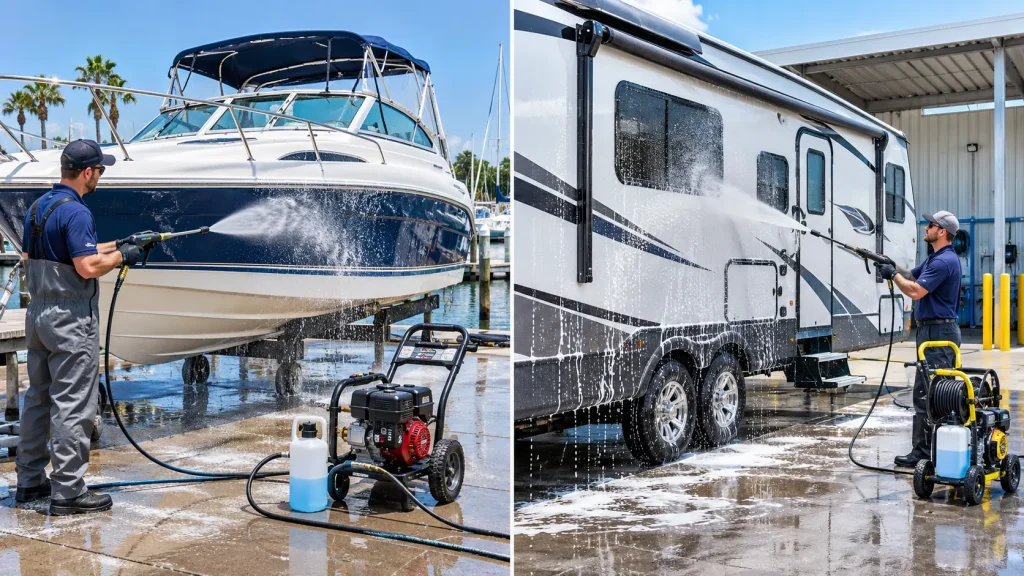
Boats and RVs collect dirt, salt, algae, road grime, and other buildup that can be difficult to remove. Professional cleaning contractors need the right equipment and cleaning methods to remove these contaminants without damaging paint, fiberglass, seals, or other sensitive surfaces.
Boat and RV pressure washing can make exterior cleaning more efficient, but not every surface can handle the same water pressure. Using the wrong nozzle, detergent, or cleaning technique may cause expensive damage.
This guide explains how to pressure wash boats and RVs safely, choose suitable equipment, protect sensitive surfaces, and manage wastewater during professional cleaning.
Key Takeaways
- Surface Protection: Check fiberglass, gelcoat, paint, seals, and decals before pressure washing.
- Equipment Selection: Choose suitable PSI, GPM, nozzles, and accessories based on surface requirements.
- Cleaning Methods: Boats and RVs need different cleaning approaches because of their materials and construction.
- Damage Prevention: Avoid high-pressure spray around windows, electrical components, vents, and damaged coatings.
- Wastewater Management: Follow marina, local, and state rules for collecting and disposing of wash water.
Can You Safely Pressure Wash Boats and RVs?
Yes, boat and RV pressure washing can be safe when manufacturers allow it and proper cleaning methods are used. However, excessive pressure can damage fiberglass, paint, decals, seals, and exterior fittings. Contractors should always check manufacturer guidelines before starting.
Different boat and RV surfaces require different cleaning methods. Low-pressure rinsing, suitable detergents, and soft brushes can remove everyday dirt without damaging sensitive materials. High-pressure cleaning should only be used on approved surfaces.
Professional contractors should inspect the exterior and choose the least aggressive cleaning method. Using suitable equipment and controlled water pressure helps protect delicate surfaces, prevent costly damage, and achieve effective cleaning results.
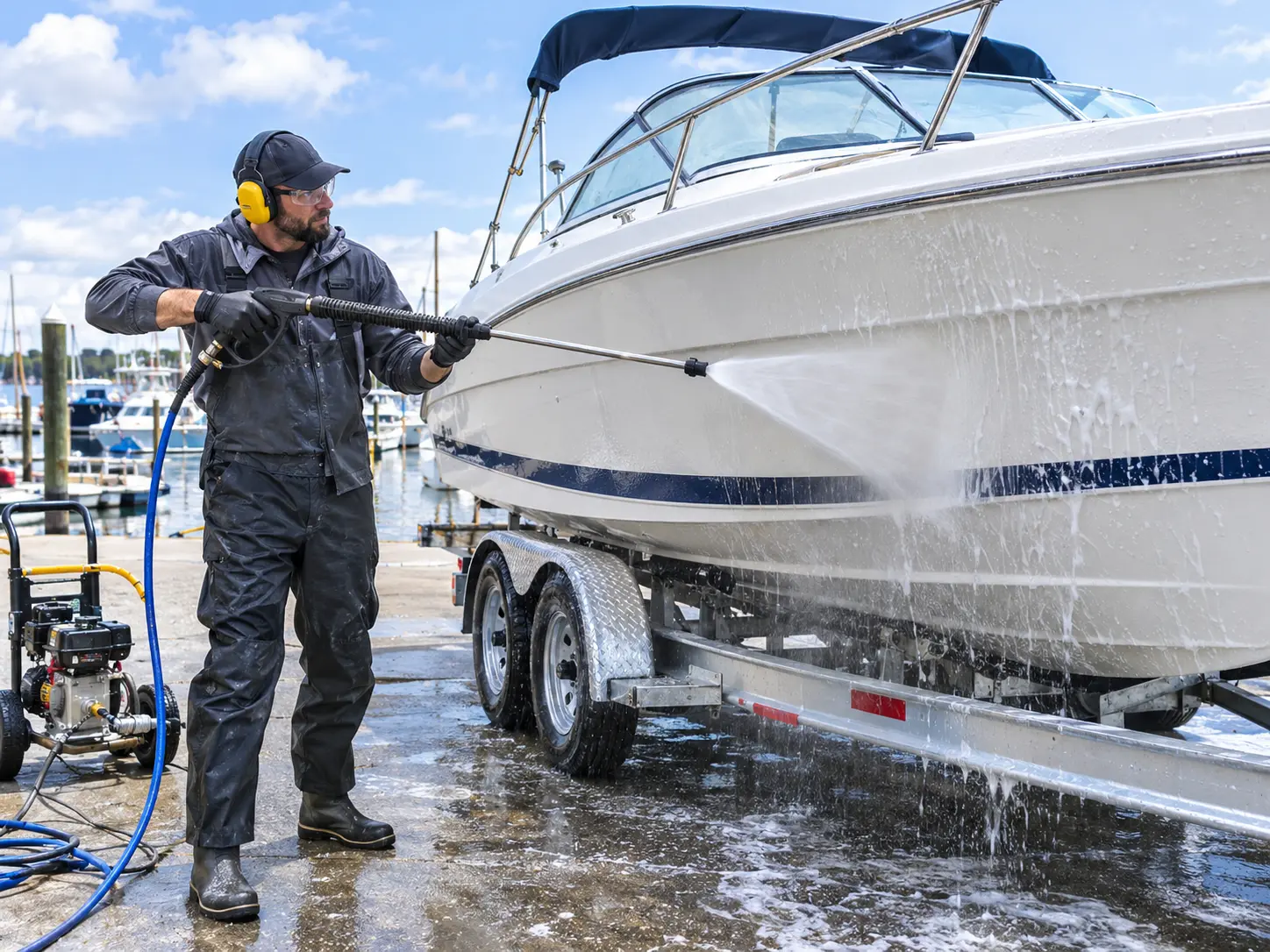
Boat and RV Surfaces Before Cleaning
Boats and RVs have different materials, including fiberglass, paint, seals, and protective coatings that react differently to water pressure. Contractors should inspect these surfaces before cleaning to identify sensitive areas, choose suitable pressure settings, and prevent damage. Some areas may require gentle manual cleaning instead of pressure washing.
Boat Surfaces That Require Careful Cleaning
Boats often have fiberglass, gelcoat, painted surfaces, non-skid decks, and metal fittings. These materials can collect salt, dirt, algae, and mineral deposits.
Fiberglass and gelcoat can be damaged by excessive pressure, especially when the surface is already cracked or worn.
Non-skid decks may need gentle brushing to remove dirt from textured areas. Contractors should also protect marine electronics, windows, seals, and exposed fittings.
Special care is needed when cleaning hulls with antifouling coatings because pressure washing may release paint particles into wastewater.
RV and Camper Surfaces That Need Protection
RVs may have fiberglass panels, painted aluminum, vinyl decals, rubber seals, roof membranes, and exterior joints.
These parts have different cleaning requirements. High-pressure water can loosen decals, damage sealants, or enter gaps around windows and doors.
Roof membranes, vents, awnings, and electrical connections are especially sensitive.
Choosing the Right Pressure Washer for Boat and RV Cleaning
Choosing the right equipment is essential for safe and effective boat and RV cleaning. Contractors should look for pressure washers with suitable water flow, adjustable pressure, and compatible accessories. Portability, reliability, and surface requirements also matter when selecting equipment for different cleaning jobs.
PSI and GPM: What Matters Most?
PSI stands for pounds per square inch and measures water pressure. GPM stands for gallons per minute and measures water flow.
Higher PSI increases cleaning force, while GPM affects how much water is available to rinse away dirt.
For boat and RV cleaning, higher pressure is not always better. Sensitive finishes, decals, and seals can be damaged by concentrated spray.
Electric vs. Gas Pressure Washers
Electric pressure washers are often useful for controlled cleaning where a suitable power supply is available. They generally operate more quietly and require less engine maintenance.
Gas pressure washers offer greater mobility where electricity is unavailable and may support demanding commercial cleaning workloads.
However, gas-powered equipment must operate outdoors, away from openings where exhaust could enter enclosed spaces.
Nozzles and Cleaning Accessories
Pressure washer nozzles control the spray pattern and affect how much force reaches the surface.
Wide-angle spray tips may provide gentler cleaning than narrow, concentrated nozzles when used with suitable operating pressure.
Useful accessories may include:
- Wide-angle spray nozzles
- Adjustable-pressure equipment
- Soft cleaning brushes
- Compatible pressure washer hoses
- Low-pressure detergent applicators
- Suitable extension tools
Avoid using narrow, high-impact nozzles on painted panels, gelcoat, decals, or other sensitive surfaces.
Selecting Suitable Cleaning Detergents
Boat and RV cleaning detergents should be compatible with the surface, protective coatings, and pressure washing equipment.
Marine cleaners may be used for approved boat surfaces, while RV-safe products are designed for specific exterior materials and finishes.
Avoid harsh chemicals or abrasive cleaners unless the manufacturer approves their use.
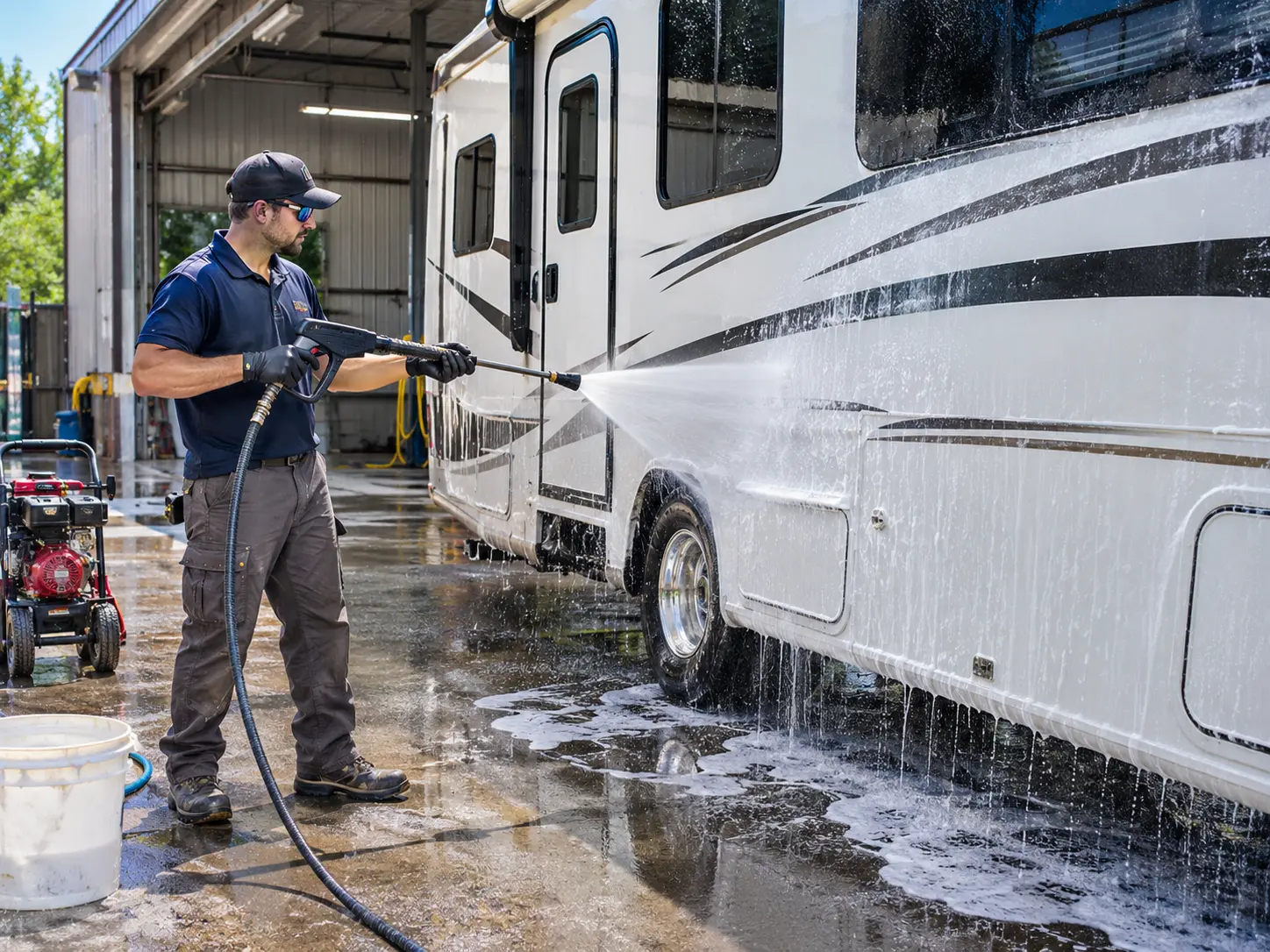
How to Prepare a Boat or RV for Pressure Washing
Proper preparation helps prevent surface damage and water leaks during boat and RV pressure washing. Contractors should inspect seals, coatings, and sensitive areas before cleaning. Choosing a suitable location and preparing the equipment also helps ensure a safe and efficient cleaning process.
Follow these steps before washing:
- Check Manufacturer Instructions: Confirm whether pressure washing is allowed on the surface.
- Inspect Exterior Materials: Look for cracks, loose decals, damaged paint, and worn seals.
- Close Openings: Secure windows, doors, hatches, and vents.
- Protect Sensitive Components: Avoid direct spray on electrical connections, electronics, and vulnerable fittings.
- Choose a Suitable Cleaning Area: Confirm safe access and wastewater collection requirements.
- Test a Small Area: Use an approved gentle cleaning method on a less visible section before continuing.
How to Pressure Wash a Boat Safely: Step-by-Step
Boat cleaning requires special care around fiberglass, gelcoat, painted surfaces, and marine fittings. Salt, dirt, and buildup can be removed using suitable cleaning methods and controlled water pressure. Contractors should follow manufacturer guidelines to protect coatings and ensure proper wastewater management.
Step 1: Remove Loose Dirt and Salt
Gently rinse approved boat surfaces with clean water to remove dirt, salt, and debris. Focus on decks, panels, and fittings, while avoiding high-pressure spray near windows, seals, electronics, and damaged areas.
Step 2: Apply a Suitable Boat Cleaner
Choose a boat cleaner suitable for the surface and apply it according to the manufacturer’s instructions. Let it work for the recommended time without drying, and use a soft brush to remove stubborn dirt.
Step 3: Clean Approved Exterior Surfaces
Clean approved boat surfaces using controlled spray movements and low pressure. Keep the nozzle moving, gently clean delicate areas by hand, and avoid using this method to remove antifouling paint or heavy hull growth.
Step 4: Rinse and Inspect the Boat
Rinse the boat with fresh water to remove dirt and detergent. Check windows, joints, and fittings for leaks or damage, dry sensitive areas, and ensure proper wastewater disposal.
How to Pressure Wash an RV or Camper Safely: Step-by-Step
RV and camper exteriors have sensitive parts, including seals, decals, windows, vents, and roof materials. Contractors should check manufacturer guidelines before pressure washing to prevent damage. If pressure washing is not recommended, use gentle hand washing instead.
Step 1: Inspect the RV Exterior
Inspect the RV for damaged paint, loose decals, cracked seals, and worn joints around windows, doors, and vents. Repair damaged areas or use gentle cleaning methods to prevent water leaks.
Step 2: Rinse Loose Dust and Road Grime
Gently rinse the RV to remove dust, dirt, insects, and road grime. Use controlled pressure and a wide spray pattern where approved, avoiding windows, roof seams, vents, and electrical connections.
Step 3: Clean Exterior Panels and Approved Surfaces
Apply an RV-safe cleaner and gently clean painted or fiberglass panels with a soft brush or microfiber cloth. Work in small sections, prevent detergent from drying, and avoid high-pressure spray near decals, awnings, and roof materials.
Step 4: Rinse, Dry, and Check for Water Intrusion
Rinse the RV exterior gently and dry panels with microfiber towels to prevent water spots. Check doors, windows, and joints for leaks, and address any water intrusion before continuing.
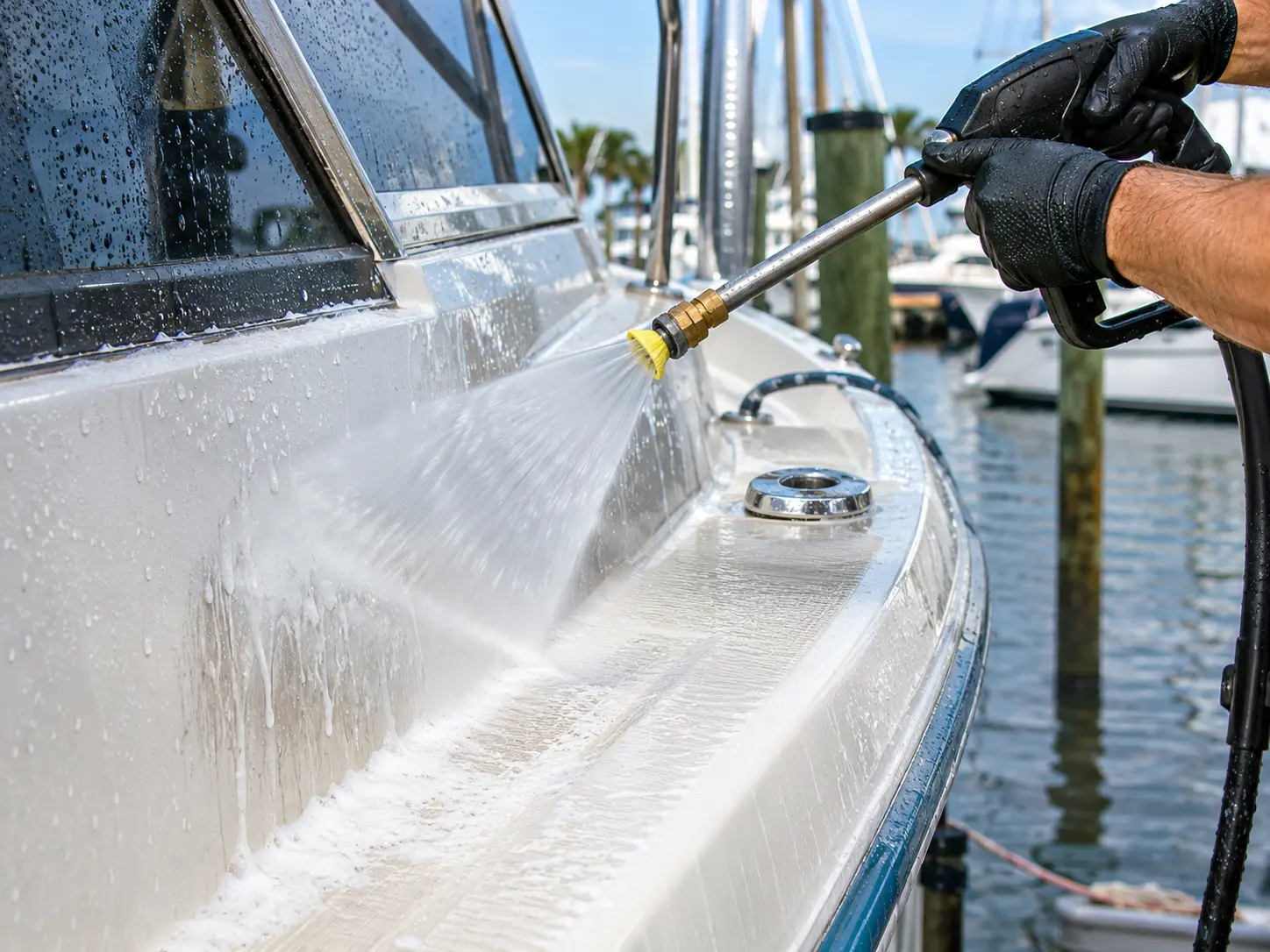
Boat and RV Areas You Should Never Spray Directly With High Pressure
Certain boat and RV components can be damaged even when the surrounding surface appears strong. Concentrated water spray may loosen adhesives, damage seals, or force water into hidden openings. Contractors should identify these areas during the initial inspection and use gentle manual cleaning methods when necessary.
Avoid directing high-pressure water at:
- Window and Door Seals: Water can enter gaps and damage interior materials.
- Electrical Connections: Direct spray may damage exposed electrical components.
- Vents and Openings: Water may enter through ventilation systems.
- Loose Decals and Graphics: Concentrated pressure can lift or peel adhesive edges.
- Caulking and Exterior Joints: High-pressure water may damage seals or force water behind panels.
- Marine Electronics: Sensitive equipment requires protection from direct water spray.
- RV Roof Membranes and Awnings: Use the cleaning method approved by the material manufacturer.
Wastewater Management and Environmental Safety
Boat and RV pressure washing produces wastewater containing detergents, oil, dirt, and other pollutants. Contractors should prevent contaminated water from entering storm drains or waterways without proper authorization. Always check local wastewater regulations and disposal requirements before starting a cleaning job.
At marinas and boatyards, use designated washing areas with suitable wastewater collection systems when required.
For commercial RV washing, check whether runoff must be contained, recovered, or directed to an approved disposal system.
Important practices include:
- Keep contaminated wash water out of storm drains and waterways.
- Use approved wastewater containment or recovery equipment where required.
- Follow marina and facility cleaning restrictions.
- Handle detergent and collected waste according to local requirements.
- Confirm disposal arrangements before accepting the cleaning job.
Common Boat and RV Pressure Washing Mistakes to Avoid
Professional cleaners can damage boats and RVs when equipment settings or cleaning methods do not match the surface. These mistakes may lead to damaged finishes, water leaks, costly repairs, or customer complaints.
- Using Excessive Pressure: High-pressure spray can damage gelcoat, paint, seals, and decals. Use only approved settings.
- Choosing the Wrong Detergent: Harsh or incompatible cleaning products may damage protective coatings and finishes.
- Spraying Sensitive Components: Avoid direct high-pressure spray near windows, vents, electrical fittings, and exterior joints.
- Skipping Surface Inspections: Check for damage before cleaning to prevent making existing problems worse.
- Ignoring Wastewater Requirements: Confirm runoff control and disposal procedures before cleaning at marinas, boatyards, or commercial wash sites.
Commercial Pressure Washing Equipment at Pressure King
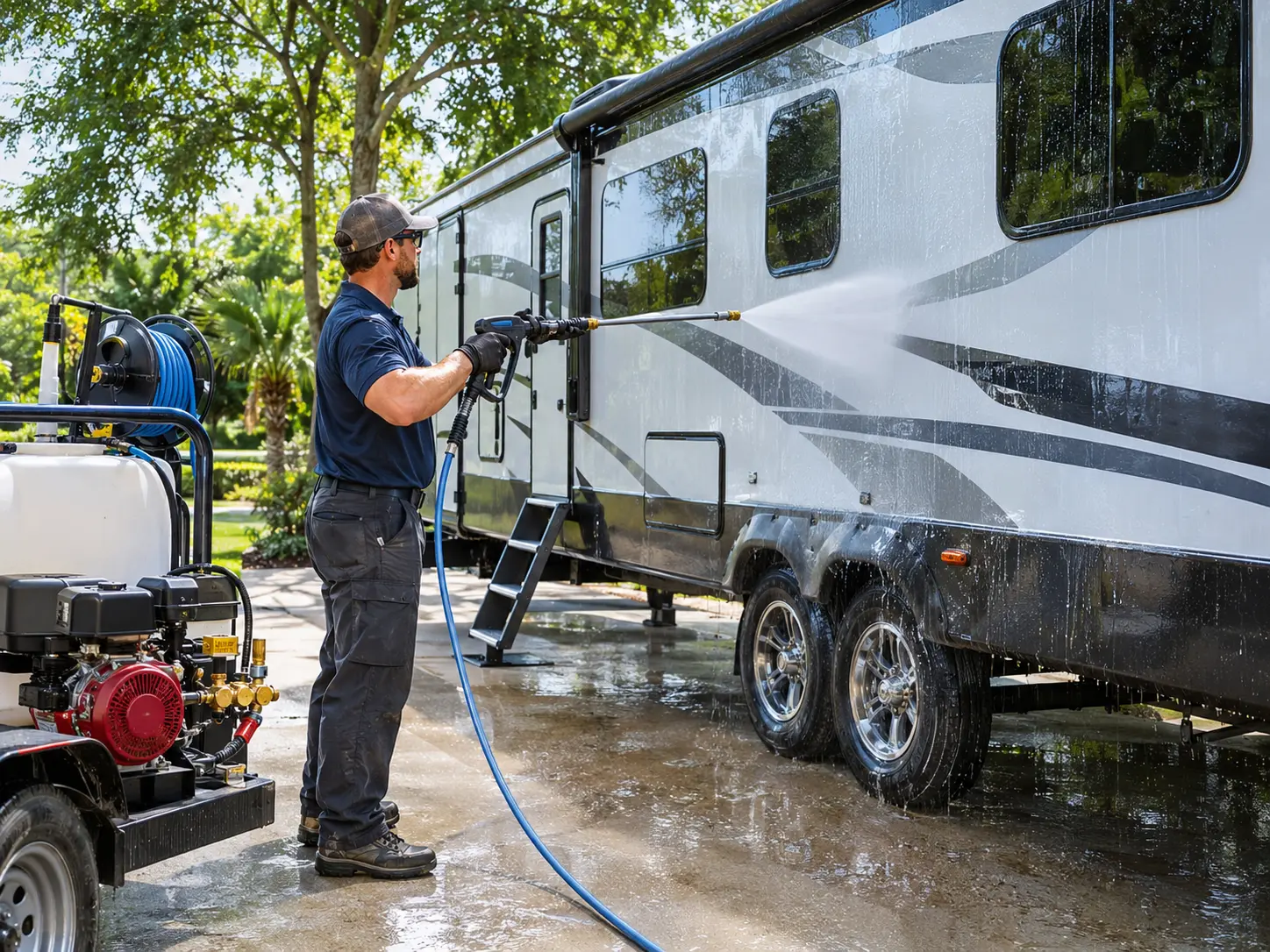
Pressure King Inc. supplies commercial and industrial pressure washing equipment for professional cleaning contractors. Based in Closter, New Jersey, the company offers pressure washers and related cleaning accessories for different commercial applications.
Contractors looking for boat and RV pressure washing equipment should compare machines based on:
- Adjustable or suitable operating pressure
- Water flow and rinsing requirements
- Electric or gas-powered operation
- Compatible hoses and spray nozzles
- Detergent application options
- Equipment portability and maintenance needs
Choosing the right pressure washer depends on the surfaces being cleaned and the manufacturer’s restrictions. A commercial machine with high maximum PSI is not automatically suitable for delicate boat or RV finishes.
Conclusion
Boat and RV pressure washing requires proper equipment, careful surface inspection, and suitable cleaning techniques. Contractors should understand the differences between boat and RV materials before selecting pressure, nozzles, and detergents.
Using controlled cleaning methods helps reduce the risk of damaged coatings, water leaks, and expensive repairs. Proper wastewater management is also important for professional cleaning operations.
Looking for commercial pressure washing equipment in New Jersey? Explore Pressure King Inc. or call 201-768-1911 to discuss pressure washers, accessories, and equipment options for your cleaning business.
Frequently Asked Questions
Can you use a pressure washer on a fiberglass boat?
Yes, some fiberglass boats can be pressure washed when the manufacturer allows it. Contractors should use suitable equipment, controlled pressure, and approved cleaning products. Damaged gelcoat, fittings, and seals require extra care.
What PSI is safe for washing a boat or RV?
There is no single PSI suitable for every boat or RV. Safe pressure depends on the material, coating, nozzle, spray distance, and manufacturer’s instructions. Some RV manufacturers advise against pressure washing entirely. Always follow the relevant product guidance.
Can pressure washing damage RV seals and decals?
Yes. Concentrated water pressure can loosen decals, damage sealants, and force water through windows or exterior joints. Contractors should avoid direct high-pressure spray on these components and use approved gentle cleaning methods.
What type of detergent should be used for boat and RV cleaning?
Use detergents approved for the specific surface and compatible with the cleaning equipment. Boat cleaners should suit the marine finish, while RV cleaners should match the vehicle’s paint, fiberglass, decals, or other materials. Follow product instructions and wastewater rules.
Is an electric or gas pressure washer better for mobile boat and RV cleaning?
Both may work when the surface manufacturer permits pressure washing. Electric models offer quieter operation and are convenient where suitable electricity is available. Gas models offer more flexibility at locations without electrical access but must operate outdoors. Choose equipment based on cleaning needs, portability, and available utilities.

Michael Adeniran is the CEO of Pressure King Inc. He has been dealing in commercial cleaning equipment for many years. He is one of the leading specialists and experts in commercial cleaning products.


