


Complete Guide to Cleaning Equipment for Waste Management Facilities
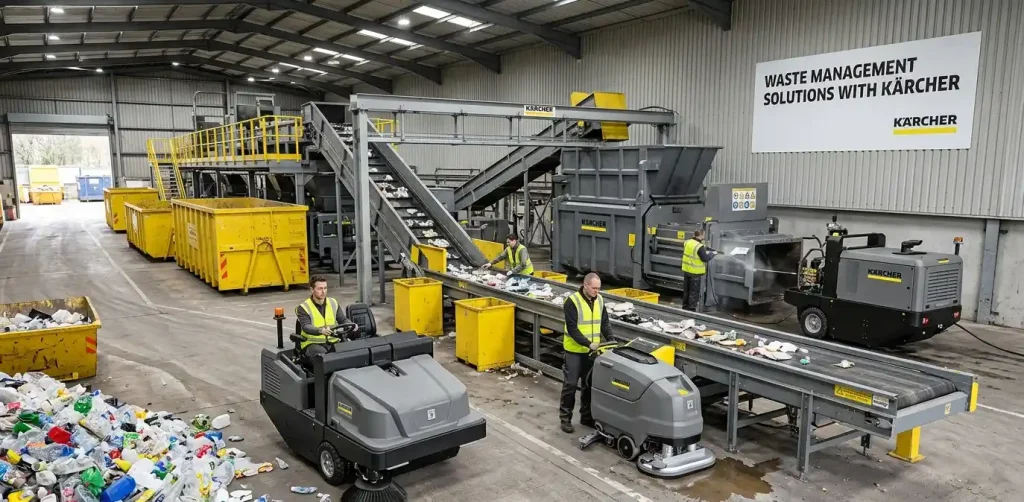

Key Takeaways
- Match equipment to your facility’s cleaning needs.
- Use scrubbers for heavily soiled floors.
- Choose sweepers for dust and dry debris.
- Use hot water pressure washers for grease and organic waste.
- Combine equipment for efficient facility-wide sanitation.
Waste management facilities operate in some of the toughest sanitation environments in the industrial sector. Recycling plants, transfer stations, landfill operations, and waste processing facilities deal with constant exposure to dirt, organic waste, grease, liquids, and airborne debris. Maintaining clean and safe working conditions in these environments is essential not only for operational efficiency but also for worker safety and regulatory compliance.
Traditional cleaning methods such as manual washing, basic hoses, or manual sweeping are often inefficient and time-consuming. As facilities grow larger and operational demands increase, waste management companies require specialized commercial cleaning equipment capable of handling heavy-duty sanitation challenges.
Waste management operations also face increasing pressure to comply with stricter environmental regulations and workplace safety requirements. Investing in industrial cleaning equipment, commercial sanitation equipment, and heavy-duty floor cleaning machines helps facility managers reduce downtime, improve cleaning consistency, and extend the service life of valuable infrastructure and equipment.
This guide explains the essential cleaning machines used in waste management facilities and how the right equipment can help organizations improve efficiency, reduce operational risks, and maintain higher sanitation standards.
Cleaning Challenges in Waste Management Facilities
Waste management operations generate a unique combination of sanitation challenges that require specialized cleaning solutions. These environments frequently experience heavy contamination from organic waste, grease buildup, dust, sludge, and liquids. Floors, equipment surfaces, containers, and processing areas can quickly accumulate residues that create safety hazards and operational disruptions.
Recycling plants and transfer stations often deal with airborne dust, paper fragments, plastics, and debris that spread throughout facilities. Tipping floors and loading zones may become slippery due to moisture, waste liquids, and oils. Without proper cleaning systems, these conditions can lead to workplace accidents, equipment damage, and compliance issues during inspections.
Another major challenge involves maintaining sanitation for waste containers, compactors, trucks, and processing equipment. Organic waste residues can produce strong odors and bacterial buildup, making regular deep cleaning essential for hygiene and environmental standards.
To address these challenges effectively, waste management companies rely on a combination of industrial cleaning machines designed specifically for heavy-duty environments.
Common Cleaning Challenges & Recommended Equipment
The following are some cleaning challenges and recommended equipment.
| Cleaning Challenge | Operational Impact | Recommended Equipment |
| Organic waste buildup | Odors & bacterial growth | Hot water pressure washers, steam cleaners |
| Dust & airborne debris | Poor air quality | Industrial sweepers, wet & dry vacuums |
| Grease & oil | Slip hazards | Floor scrubbers, commercial pressure washers |
| Waste liquids & sludge | Safety risks | Wet & dry industrial vacuums |
| Heavy debris | Equipment wear | Ride-on sweepers & pressure washers |
Essential Cleaning Equipment for Waste Management Facilities
Modern waste management facilities use several types of commercial cleaning equipment to maintain sanitation across different areas of their operations. Each type of machine plays a specific role in controlling dirt, debris, and contamination.
Rather than relying on a single cleaning machine, most facilities develop a complete industrial cleaning system that combines scrubbers, sweepers, vacuums, pressure washers, and steam cleaners. Using multiple machines together allows operators to address different contaminants while maintaining higher sanitation standards throughout the facility.

Floor Scrubbers for Waste Facility Floors
Floor scrubbers are one of the most important cleaning machines for waste processing plants and recycling facilities. These machines use rotating brushes and cleaning solution to scrub dirt and contaminants from concrete surfaces while simultaneously collecting dirty water through a vacuum system.
Waste facilities typically use floor scrubbers to clean tipping floors, loading docks, warehouse areas, and indoor processing zones. Walk-behind scrubbers are ideal for medium-sized areas and tighter spaces, while ride-on scrubbers allow operators to clean large facilities quickly and efficiently.
Using a scrubber dryer significantly reduces cleaning time compared to manual mopping or washing. The machines remove grease, residue, and waste liquids in a single pass while leaving floors dry and safe for workers and equipment traffic.
For larger recycling centers and transfer stations, ride-on floor scrubbers improve productivity by covering significantly more floor space in less time. Many modern scrubbers also include eco-mode settings that reduce water and detergent consumption while maintaining effective cleaning performance.
Industrial Sweepers for Dust and Debris Control
Dust and debris are constant challenges in recycling and waste processing facilities. Industrial sweepers are designed to remove loose waste materials such as paper fragments, plastic particles, dirt, and dust from floors and outdoor surfaces.
These machines are commonly used in recycling plants, waste sorting areas, and landfill service yards. Ride-on sweepers allow operators to clean large outdoor areas efficiently, while walk-behind models work well in smaller indoor spaces.
Industrial sweepers also help control airborne dust, which is important for maintaining air quality and protecting equipment from contamination. By removing debris before it spreads throughout the facility, sweepers contribute to safer and cleaner working environments.

Industrial Vacuum Systems for Wet and Dry Waste
Waste processing environments often produce a mixture of dry debris, fine dust, and liquid waste. Industrial wet and dry vacuum cleaners provide powerful suction to remove these materials quickly and effectively.
These systems are used to collect liquids, sludge, dust, and debris from processing lines, sorting equipment, maintenance areas, and facility floors. Heavy-duty industrial vacuums are particularly useful for cleaning around recycling conveyors and machinery where debris accumulates.
Vacuum systems also improve workplace safety by reducing dust exposure and preventing buildup that could interfere with equipment performance.
Selecting a wet and dry industrial vacuum with HEPA filtration can further improve indoor air quality by capturing fine airborne particles before they circulate throughout the facility. This is especially beneficial for recycling operations that process paper, plastics, and other lightweight materials.
High-Pressure Washers for Equipment and Vehicle Cleaning
High-pressure cleaning systems are widely used in waste management operations to remove stubborn dirt, grease, and organic residue from equipment and facility surfaces.
Cold water pressure washers are effective for routine washing tasks such as cleaning concrete surfaces, waste containers, loading docks, and garbage trucks. These systems provide strong water pressure to dislodge dirt and debris without damaging equipment coatings or structural materials.
Hot water pressure washers offer even greater cleaning power by using heated water to break down grease, oils, and organic contaminants. This makes them particularly useful for cleaning compactors, dumpsters, and waste handling equipment where organic residue accumulates quickly.

Steam Cleaners for Deep Sanitation
Steam cleaning systems provide an additional level of sanitation by using high-temperature steam to dissolve grease and eliminate bacteria. These machines are ideal for applications where hygiene and odor control are especially important.
Waste management facilities often use steam cleaners to sanitize waste containers, processing equipment, and areas where organic materials accumulate. Because steam cleaning requires minimal chemicals, it can also reduce chemical usage while improving sanitation results.
Modern commercial steam cleaners are particularly valuable in waste facilities that prioritize environmentally responsible cleaning practices. By relying on high-temperature steam instead of excessive chemical cleaners, these machines help reduce chemical runoff while effectively removing biofilm, bacteria, grease, and odor-causing contaminants from hard surfaces.
How the Right Cleaning Equipment Improves Waste Facility Operations
Investing in professional cleaning equipment provides several operational benefits for waste management companies.
First, industrial machines significantly increase cleaning efficiency. Large areas can be cleaned quickly, reducing labor time and allowing staff to focus on other operational tasks.
Second, modern cleaning systems improve workplace safety. Removing waste residue, liquids, and debris helps prevent slip hazards and reduces the risk of workplace injuries.
Third, proper cleaning equipment helps protect infrastructure and machinery. Regular cleaning prevents corrosion, buildup, and contamination that can shorten the lifespan of facility assets.
Finally, maintaining clean environments helps waste management companies meet sanitation and safety standards required by regulators and industry inspections.
How to Choose the Right Cleaning Equipment for Your Facility
Selecting the right cleaning machines depends on several factors related to facility operations.
Equipment Selection Guide
| Consideration | Recommended Equipment |
| Large facilities | Ride-on floor scrubbers and ride-on sweepers |
| Small facilities | Walk-behind scrubbers and sweepers |
| Organic waste | Hot water pressure washers and steam cleaners |
| Dry recycling materials | Industrial sweepers and vacuums |
| Liquid spills | Wet & dry industrial vacuums |
| Mixed cleaning applications | Combination of scrubbers, sweepers, vacuums, and pressure washers |
Facility size plays a major role in determining equipment type. Large facilities typically benefit from ride-on scrubbers and sweepers that can cover extensive areas quickly, while smaller operations may rely on compact walk-behind machines.
The type of waste being processed also affects cleaning requirements. Facilities that handle organic waste or grease may require hot water pressure washers or steam cleaners for deeper sanitation.
Indoor and outdoor cleaning needs should also be considered. Outdoor yards and landfill areas often require sweepers and pressure washers, while indoor processing areas may rely more heavily on scrubbers and vacuum systems.
Understanding these operational factors helps facility managers select cleaning equipment that delivers the best performance and long-term value.
Why Waste Management Companies Choose Pressure King
Waste management professionals rely on trusted equipment providers that understand the unique challenges of sanitation operations.
Pressure King Inc. offers a comprehensive range of commercial cleaning equipment designed for industrial environments, including:
- Floor scrubbers and ride-on scrubber dryers
- Industrial sweepers for indoor and outdoor cleaning
- Wet and dry industrial vacuum systems
- High-pressure cold and hot water cleaning machines
- Steam cleaners for deep sanitation
- Professional detergents & chemicals, and accessories
In addition to equipment sales, Pressure King also provides rental options, repair services, and maintenance support to ensure cleaning systems continue operating efficiently in demanding environments.
Improve Waste Facility Sanitation with the Right Equipment
Maintaining clean and safe waste management facilities requires more than basic cleaning tools. Industrial cleaning equipment provides the power, efficiency, and reliability needed to manage heavy contamination and demanding sanitation conditions.
By investing in the right combination of scrubbers, sweepers, vacuums, pressure washers, and steam cleaning systems, waste management companies can improve operational efficiency, protect infrastructure, and maintain compliance with sanitation standards.
To find the right equipment for your facility, contact the team at Pressure King Inc. and explore customized commercial cleaning solutions designed specifically for waste management operations.
Choosing the Right Cleaning Equipment by Waste Facility Type
Not every waste management operation has identical cleaning requirements. The most effective industrial cleaning equipment depends on the type of waste processed, contamination levels, facility size, and daily cleaning demands.
| Facility Type | Primary Cleaning Challenge | Recommended Equipment |
| Recycling Centers | Dust, paper, plastics | Industrial sweepers, wet & dry vacuums |
| Transfer Stations | Mud, waste residue | Ride-on scrubbers, commercial pressure washers |
| Landfills | Dirt, leachate, heavy mud | Industrial pressure washers, sweepers |
| Waste Processing Plants | Grease, organic buildup | Hot water pressure washers, steam cleaners |
| Composting Facilities | Organic residue, odors | Steam cleaners, floor scrubbers |
Selecting equipment based on facility operations improves cleaning efficiency while reducing unnecessary operating costs and equipment wear
Best Practices for Cleaning Waste Management Facilities
Using the right equipment is only part of an effective sanitation program. Establishing consistent cleaning procedures helps improve safety, maintain compliance, and maximize equipment performance.
Some recommended best practices include:
- Create daily, weekly, and monthly cleaning schedules.
- Remove loose debris before pressure washing or scrubbing.
- Select detergents designed for grease, organic waste, or industrial soils.
- Inspect hoses, brushes, filters, and vacuum systems regularly.
- Train operators on proper equipment use and preventive maintenance.
- Schedule routine servicing to reduce unexpected downtime.
Conclusion
Waste management facilities operate under demanding conditions where cleanliness directly affects worker safety, equipment reliability, operational efficiency, and regulatory compliance. Investing in the right commercial cleaning equipment allows facilities to control contamination, improve productivity, and create safer working environments.
Whether your operation requires industrial floor scrubbers, ride-on sweepers, wet and dry industrial vacuums, hot water pressure washers, or commercial steam cleaners, selecting equipment that matches your facility’s needs will provide long-term value and lower operating costs.
Pressure King offers a complete range of industrial cleaning equipment, replacement parts, professional detergents, equipment rentals, repair services, and technical support to help waste management companies maintain reliable, high-performance cleaning operations.
Frequently Asked Questions
What cleaning equipment is commonly used in waste management facilities?
Most facilities use a combination of floor scrubbers, industrial sweepers, wet and dry industrial vacuums, commercial pressure washers, and steam cleaners to remove dirt, debris, grease, liquids, and organic waste from processing areas.
Why are ride-on floor scrubbers recommended for large waste facilities?
Ride-on scrubbers clean large floor areas faster than walk-behind models while scrubbing and recovering dirty water in a single pass. This improves productivity and minimizes disruption to daily operations.
Are hot water pressure washers better than cold water models?
Yes. Hot water pressure washers are generally more effective for removing grease, oils, organic residue, and stubborn contaminants commonly found in waste processing facilities. Cold water models remain suitable for routine dirt and debris removal.
How often should waste management facilities perform deep cleaning?
Cleaning frequency depends on the type of waste handled and facility activity. High-traffic processing areas are typically cleaned daily, while deep cleaning of equipment, containers, and processing zones is often performed weekly or as part of scheduled maintenance programs.
What factors should be considered when purchasing industrial cleaning equipment?
Important considerations include facility size, waste type, cleaning frequency, machine capacity, operating costs, maintenance requirements, available power sources, and operator productivity. Selecting equipment based on operational needs typically provides better long-term value than choosing solely on purchase price.
Does Pressure King provide equipment rentals and repair services?
Yes. Pressure King supplies commercial cleaning equipment along with equipment rentals, repair services, preventive maintenance, replacement parts, detergents, and technical support for waste management facilities and other industrial operations.
What is the best cleaning solution for recycling facilities?
Most recycling facilities benefit from combining industrial sweepers for dust control, ride-on floor scrubbers for concrete floors, wet and dry vacuums for loose debris, and commercial pressure washers for cleaning equipment, loading areas, and waste containers.
How can industrial cleaning equipment reduce operating costs?
Regular use of professional cleaning equipment reduces manual labor, minimizes equipment downtime, extends the lifespan of facility assets, improves workplace safety, and lowers long-term maintenance expenses by preventing excessive dirt and residue buildup.

Michael Adeniran is the CEO of Pressure King Inc. He has been dealing in commercial cleaning equipment for many years. He is one of the leading specialists and experts in commercial cleaning products.


