

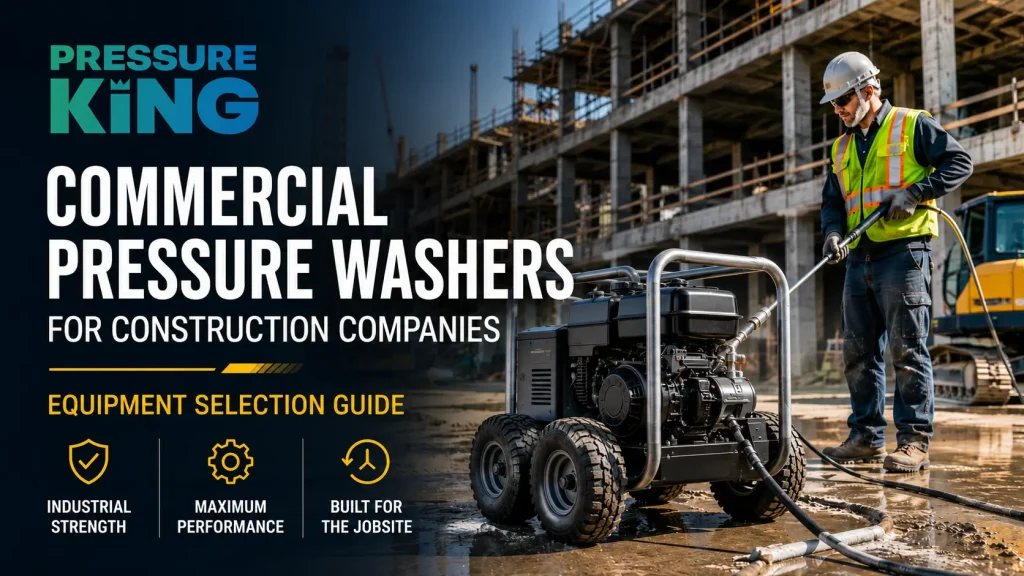
Commercial Pressure Washers for Construction Companies: Equipment Selection Guide

Key Takeaways
- Choose a commercial pressure washer based on the cleaning application and workload.
- Match PSI and GPM to the surface and type of contamination.
- Hot-water models are effective for grease, oil, and heavy equipment.
- Consider mobility, accessories, and maintenance requirements.
- The right equipment can improve cleaning efficiency and reduce downtime.
Construction companies deal with some of the toughest cleaning challenges in the commercial industry. Job sites create constant exposure to concrete dust, mud, dirt, paint residue, equipment grease, construction debris, and other materials that can quickly build up on surfaces and machinery.
Keeping construction sites clean is important for safety, productivity, and maintaining professional standards. Contractors need equipment that can handle demanding environments, operate for extended periods, and deliver consistent cleaning results.
A commercial pressure washer for construction companies provides the power and reliability needed for job site cleaning, equipment maintenance, concrete washing, and surface preparation. However, selecting the right machine requires understanding PSI, GPM, water temperature, fuel type, and accessories.
This guide explains how construction companies use commercial pressure washers, what specifications matter most, and how contractors can choose equipment that matches their daily cleaning requirements.
Why Construction Companies Need Commercial Pressure Washers
Construction environments create cleaning problems that ordinary equipment cannot handle. Residential pressure washers are usually designed for occasional homeowner tasks, while construction companies require machines capable of handling frequent and heavy-duty applications.
Construction sites commonly deal with wet and dried mud, concrete residue, cement dust, paint and coating buildup, oil and grease from machinery, dirt from heavy equipment, and road debris. Without proper cleaning, these contaminants can affect equipment performance, create unsafe working conditions, and make project completion more difficult.
Commercial pressure washers help contractors maintain cleaner job sites by providing faster cleaning, stronger performance, and equipment durability for professional use.
Common Construction Applications for Commercial Pressure Washers
Construction companies use pressure washers across different stages of a project. From preparing surfaces before installation to cleaning equipment after daily operations, pressure washing plays an important role in maintaining efficient workflows.
Some common applications include:
- Concrete cleaning
- Heavy equipment washing
- Job site cleanup
- Building exterior cleaning
- Surface preparation
- Removing construction residue
The right equipment allows contractors to complete these tasks faster while reducing manual labor.
Cleaning Construction Equipment and Heavy Machinery
Construction equipment operates in harsh conditions and regularly collects mud, soil, grease, and debris. Excavators, loaders, skid steers, cranes, and other machinery require regular cleaning to maintain appearance and support preventive maintenance.
A pressure washer for construction equipment can remove packed mud, hydraulic oil residue, dirt buildup, and construction materials from machinery. Clean equipment is also easier to inspect because leaks, cracks, and mechanical issues can become more visible after dirt and grease are removed.
Pressure Washer for Concrete Cleaning
Concrete cleaning is one of the most common applications for commercial pressure washers in construction. Contractors may need to remove concrete dust, clean sidewalks, prepare surfaces, remove construction residue, and wash newly completed areas.
A pressure washer for concrete should provide enough cleaning power for the surface without causing unnecessary damage. Older, cracked, or damaged concrete may require a more controlled approach, while durable commercial concrete can generally tolerate stronger cleaning methods.
For large slabs, sidewalks, parking areas, and other expansive surfaces, a surface cleaner attachment can help produce more consistent results than using a spray wand alone.
Concrete and Surface Cleaning Applications
Concrete cleaning is one of the most common uses for commercial pressure washers in construction.
Contractors use pressure washers for:
- Removing concrete dust
- Cleaning sidewalks
- Preparing surfaces
- Removing construction residue
- Washing newly completed areas
The correct PSI is important because concrete surfaces vary. Older or damaged concrete may require lower pressure, while strong commercial concrete surfaces can handle higher cleaning power.
Job Site Cleanup and Final Construction Cleaning
Before handing over a completed project, contractors often need to remove remaining dirt, dust, and construction residue. Pressure washers can help clean building entrances, exterior walls, walkways, parking areas, and other durable surfaces.
Professional cleanup improves the final appearance of a project and helps contractors maintain quality standards. It can also reduce the amount of manual labor required for large outdoor cleaning tasks.
Best Pressure Washer for Construction Equipment
Choosing the best pressure washer for construction equipment depends on the machinery being cleaned, the type of contamination, and how frequently the equipment is washed.
For routine mud and dirt removal, a commercial cold-water pressure washer may provide sufficient cleaning power. When machinery is covered with oil, grease, or heavy residue, a hot-water pressure washer can be a better choice because heat helps loosen oily contaminants.
Contractors should also consider mobility. Construction companies working across multiple job sites may benefit from gas-powered or trailer-mounted equipment that can operate where electrical access is limited.
Choosing the Right Kärcher Pressure Washer for Construction Work
Construction companies need equipment that can handle long working hours and demanding applications. Kärcher commercial pressure washers are designed for professional cleaning environments where reliability and performance are important.
When selecting equipment, contractors should consider cleaning frequency, job site conditions, required mobility, available power sources, and the type of contamination being removed.
Common configurations include hot-water pressure washers, cold-water pressure washers, gas-powered models, diesel-powered systems, and trailer-mounted units. The best choice depends on the contractor’s specific workload and cleaning requirements.
What PSI Is Best for Construction Cleaning?
PSI measures the force of water hitting the surface. Construction applications often require stronger cleaning power because materials such as concrete residue, mud, and grease can be difficult to remove.
| Construction Application | Recommended PSI |
|---|---|
| General site cleaning | 2,000–3,000 PSI |
| Concrete cleaning | 2,500–3,500 PSI |
| Heavy equipment washing | 3,000–4,000 PSI |
| Grease and oil removal | 3,000+ PSI |
| Industrial cleanup | 4,000+ PSI |
Higher PSI is not always better. Contractors should select enough pressure to remove contamination without damaging surfaces, equipment finishes, or coatings.
Why GPM Is Important for Construction Pressure Washing
While PSI provides cleaning force, GPM determines how much water flows through the machine. For construction applications, water flow is important because job sites often involve large areas and heavy debris.
Higher GPM can help rinse surfaces faster, remove loosened material, and increase overall cleaning productivity. For contractors managing multiple projects, finding the right balance between PSI and GPM can improve cleaning efficiency.
Hot Water vs Cold Water Pressure Washers for Construction
Construction companies often choose between hot and cold water systems depending on their cleaning needs.
Cold Water Pressure Washers
Cold-water pressure washers can be effective for mud removal, dirt cleaning, concrete washing, and general job site cleanup. They are practical for routine maintenance where grease and oil are not the primary contaminants..
Hot Water Pressure Washers
A hot water pressure washer provides additional cleaning power for difficult contaminants such as grease, oil, and heavy industrial residue. Heat helps break down oily buildup, making it easier to remove with pressure.
Hot-water systems can be particularly useful for contractors who regularly clean heavy equipment, work trucks, machinery, and other equipment exposed to grease and oil.
Best Pressure Washer Types for Construction Companies
Construction companies often require different equipment depending on project requirements.
Gas-Powered Pressure Washers
Gas-powered units are useful for outdoor construction sites because they provide mobility without requiring electrical access. They can be practical for equipment washing, remote job sites, and general outdoor cleaning.
Diesel-Powered Pressure Washers
Diesel-powered systems are designed for demanding applications that require extended operation. They can be suitable for large construction companies, industrial sites, and heavy equipment cleaning.
Electric Pressure Washers
Electric models can work well where reliable electrical power is available. They may be suitable for indoor construction areas, smaller projects, and controlled environments.
Trailer-Mounted Pressure Washers
Trailer-mounted systems provide contractors with a mobile cleaning solution that can be transported between job sites. They can be useful for companies managing multiple projects and needing equipment readily available at different locations.
Essential Pressure Washer Accessories for Construction
The right accessories can make a commercial pressure washer considerably more useful on construction sites. A surface cleaner helps contractors clean large concrete areas more evenly, while turbo nozzles can help tackle stubborn buildup on durable surfaces.
Heavy-duty hoses are important for frequent movement around demanding job sites. Contractors may also benefit from professional spray guns, extension wands, hose reels, and appropriate cleaning detergents.
Choosing accessories according to the cleaning application can improve productivity and reduce unnecessary manual work.
Step-by-Step Construction Site Pressure Washing Process
The following is the step-by-step process of construction site pressure washing.
Step 1: Inspect the Surface or Equipment
Before cleaning, identify the surface type, existing damage, sensitive components, and areas with heavy contamination. This helps determine the appropriate pressure, nozzle, and cleaning method.
Step 2: Remove Loose Debris
Clear large pieces of dirt, construction material, and other loose debris before pressure washing. This can make the cleaning process more efficient.
Step 3: Apply Cleaning Solution
When necessary, apply an appropriate detergent for grease, oil, concrete residue, or heavy dirt. Always use cleaning products according to their instructions and equipment compatibility.
Step 4: Select Correct Pressure Settings
Adjust PSI and the spray pattern according to the surface and cleaning requirements. Avoid using excessive pressure simply because the machine is capable of producing it.
Step 5: Clean From a Safe Distance
Maintain an appropriate distance between the nozzle and surface. This helps provide effective cleaning while reducing the risk of surface or equipment damage.
Step 6: Rinse and Inspect
After cleaning, rinse away remaining residue and inspect the surface or equipment. Additional cleaning may be necessary if heavy contamination remains.
Common Mistakes Construction Companies Should Avoid
Avoid the following mistakes in pressure washer selection, PSI, mobility, and maintenance.
Choosing Residential Equipment
Consumer pressure washers are generally intended for lighter and less frequent workloads. Construction companies that operate equipment regularly should consider commercial equipment designed for professional applications.
Selecting Only Based on PSI
Cleaning performance depends on more than PSI. GPM, water temperature, accessories, cleaning technique, and the type of contamination all influence the final result.
Ignoring Equipment Mobility
Many contractors work across multiple job sites, making mobility an important consideration. A portable or trailer-mounted system may be more practical than equipment designed for a fixed location.
Skipping Maintenance
Poor maintenance can lead to reduced performance and unexpected downtime. Regular inspections and manufacturer-recommended servicing help keep commercial pressure washing equipment ready for demanding jobs.
Pressure Washer Maintenance for Construction Businesses
Commercial pressure washers used on construction sites should be inspected and maintained regularly. Hoses, connections, pumps, filters, oil levels, and heating components should be checked according to the manufacturer’s recommendations.
Keeping the machine clean after demanding jobs and addressing worn components early can help maintain consistent performance. For contractors working throughout New Jersey and New York, Pressure King Inc provides Kärcher commercial pressure washing equipment, accessories, parts, repair services, and technical support.
How Pressure Washing Helps Construction Companies Improve Efficiency
Professional cleaning equipment helps contractors complete projects more efficiently.
Benefits include:
- Faster job site cleanup
- Cleaner equipment
- Improved inspections
- Better project presentation
- Reduced manual labor
For construction companies, pressure washing is not just a cleaning task. It is part of maintaining equipment, improving safety, and delivering professional results.
Conclusion
A commercial pressure washer for construction companies provides the cleaning power and reliability needed for demanding job site applications. From equipment washing and concrete cleaning to final project cleanup, the right pressure washer helps contractors improve efficiency and maintain professional standards.
For construction companies throughout New Jersey and New York, Pressure King Inc provides Kärcher commercial pressure washers, accessories, hoses, and cleaning solutions designed for professional applications. Choosing the right equipment setup helps contractors reduce downtime, protect machinery, and complete cleaning tasks more effectively.
Frequently Asked Questions
What is the best commercial pressure washer for construction companies?
The best pressure washer depends on job size, cleaning frequency, contamination type, and mobility requirements. Commercial Kärcher pressure washers provide solutions for different construction applications.
What PSI is needed for construction equipment cleaning?
Most construction equipment cleaning applications require 2,500–4,000 PSI depending on the machinery and contamination level.
Is hot water better for construction equipment cleaning?
Yes. Hot water is especially useful for removing grease, oil, and heavy industrial residue.
Can pressure washers remove concrete residue?
Yes, commercial pressure washers can help remove concrete residue when the correct PSI, accessories, and cleaning methods are used.
Do construction companies need trailer-mounted pressure washers?
Trailer-mounted systems are useful for contractors who need mobile cleaning equipment across multiple job sites.

Michael Adeniran is the CEO of Pressure King Inc. He has been dealing in commercial cleaning equipment for many years. He is one of the leading specialists and experts in commercial cleaning products.


