Commercial Pressure Washer for Farm Equipment Cleaning: Complete Guide for Agricultural Operations
Agricultural operations depend on heavy machinery, vehicles, and equipment that work in challenging outdoor environments every day. Tractors, combines, loaders, trailers, and other farm equipment are constantly exposed to mud, soil, fertilizer residue, grease, plant material, and weather conditions. Keeping this equipment clean is an important part of farm maintenance. Dirt and buildup can make inspections more difficult, hide mechanical issues, and contribute to premature wear of equipment components.
A commercial pressure washer for farm equipment cleaning provides farmers and agricultural businesses with an efficient solution for removing tough buildup while reducing manual cleaning time. With the right PSI, GPM, water temperature, and accessories, pressure washing helps maintain equipment performance and improve overall farm operations.
This guide explains how commercial pressure washers are used in agriculture, what specifications matter most, and how farmers can choose the right cleaning equipment for their needs.
Why Farms Need Commercial Pressure Washing Equipment
Farm environments create some of the toughest cleaning conditions for machinery. Unlike regular vehicles, agricultural equipment operates through dirt, moisture, plants, soil, and other materials that quickly accumulate on machinery. Common contaminants include mud, soil, fertilizer residue, grease, oil, plant debris, animal waste, and dust. If these materials remain on equipment for extended periods, they can make inspections and routine maintenance more difficult.
Commercial pressure washers help farmers remove stubborn buildup faster and reduce the amount of manual labor required for equipment cleaning. Regular cleaning also makes it easier to inspect machinery for leaks, damaged components, and other maintenance concerns. Professional equipment is especially valuable for farms operating multiple machines or large agricultural facilities. A reliable pressure washer can help maintenance teams clean tractors, trailers, equipment pads, and other areas more efficiently.
Common Agricultural Applications for Pressure Washers
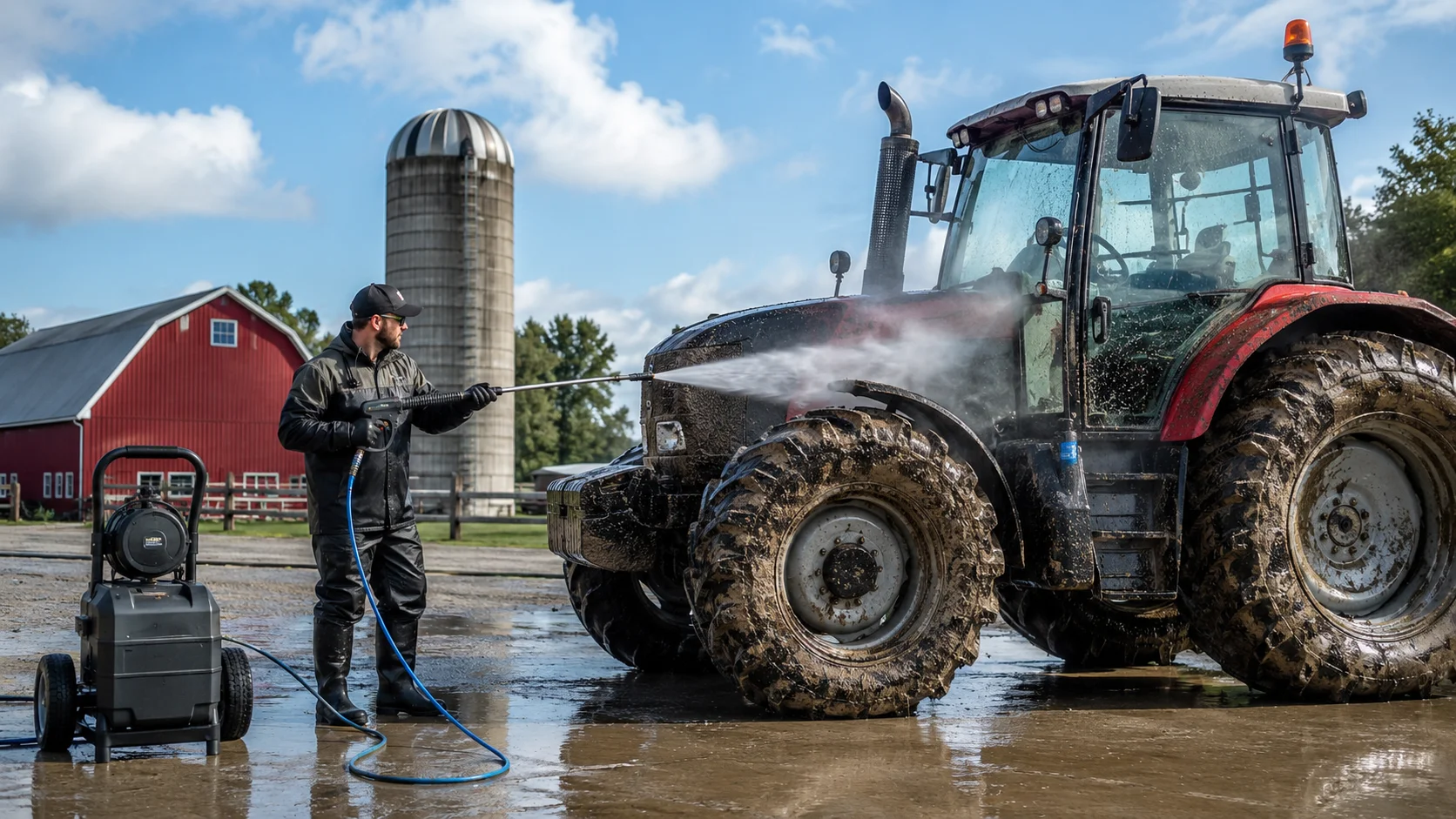
Pressure washers can be used throughout farming operations for a variety of cleaning tasks. The appropriate pressure and cleaning method depend on the equipment, surface, and type of contamination.
Tractor and Machinery Cleaning
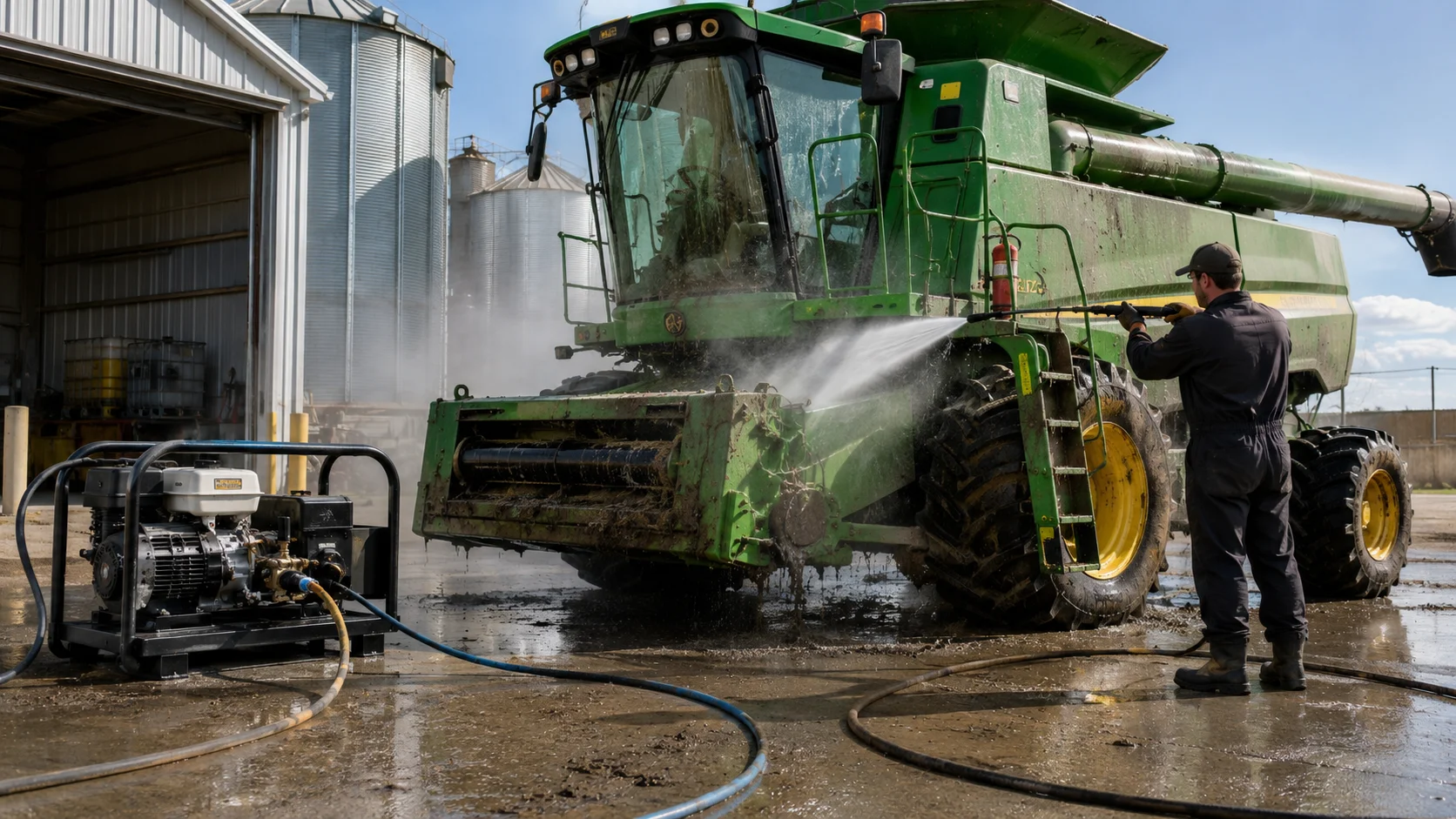
Tractors and heavy equipment regularly collect mud, soil, grease, and crop residue. These materials can accumulate around wheels, undercarriages, attachments, and other exposed areas. Regular pressure washing helps remove this buildup and makes it easier for operators and maintenance teams to inspect the machinery. Cleaning can also help reveal leaks or damaged areas that may otherwise be hidden beneath layers of dirt and residue.
Operators should avoid directing excessive pressure toward sensitive seals, electrical components, bearings, and other areas that may be vulnerable to water intrusion.
Combine and Harvest Equipment Cleaning
Harvesting equipment can collect large amounts of plant material, dust, and crop residue during operation. If this material is allowed to remain on the machine, it can make post-season maintenance and inspection more difficult. Cleaning combines and harvesting equipment after use helps remove accumulated residue and prepares machinery for storage or future operation. A thorough cleaning routine can also give operators an opportunity to inspect the equipment before the next season.
Livestock Facility Cleaning
Livestock operations require regular cleaning because animal areas can accumulate dirt, organic waste, and other residue during daily operations. Pressure washing can help maintain cleaner working areas when appropriate equipment and cleaning procedures are used. Facility operators should select cleaning methods based on the surface, type of contamination, drainage requirements, and surrounding environment.
Agricultural Transport Vehicles
Farm trucks, trailers, and equipment carriers collect road dirt, mud, soil, and agricultural debris during transportation. Commercial pressure washing helps keep these vehicles cleaner and ready for continued use. Regular cleaning can also make it easier to inspect trailers and transport equipment for damage, corrosion, or other maintenance concerns.
How Kärcher Pressure Washers Support Agricultural Cleaning
Farms require reliable equipment that can handle frequent and demanding cleaning applications. Agricultural operations may need to clean large machinery, multiple vehicles, concrete areas, and equipment storage spaces. Kärcher commercial pressure washers provide solutions for agricultural users through different configurations, including hot water, cold water, gas-powered, diesel-powered, and mobile trailer-mounted systems.
The correct choice depends on equipment size, cleaning frequency, location, available power sources, and the type of contamination being removed. For example, a small farm with reliable electrical access may have different requirements from a large agricultural operation that needs mobile equipment for cleaning machinery in multiple locations.
What PSI Is Needed for Farm Equipment Cleaning?
The correct PSI depends on the equipment type and contamination level. Using excessive pressure can damage paint, decals, seals, or sensitive components.
| Agricultural Cleaning Application | Recommended PSI |
|---|---|
| Light tractor cleaning | 1,500–2,500 PSI |
| General farm equipment | 2,500–3,000 PSI |
| Heavy machinery cleaning | 3,000–4,000 PSI |
| Mud and residue removal | 2,500+ PSI |
A balanced approach using the correct pressure, water flow, and cleaning technique provides better results than simply choosing the highest PSI machine.
Why GPM Matters for Farm Equipment Washing
Agricultural equipment often has large surfaces that require significant rinsing capacity. While PSI affects cleaning force, GPM determines how much water moves through the system and contributes to coverage and rinsing speed. Higher GPM equipment can help move loosened dirt, mud, and residue away from machinery faster. This can be particularly useful when cleaning large tractors, combines, trailers, and other agricultural equipment.
For large farms with multiple pieces of equipment, water flow becomes an important consideration when selecting a commercial pressure washer. The right combination of PSI and GPM can help reduce cleaning time without relying on excessive pressure.
Hot Water vs Cold Water Pressure Washers for Agriculture
The right water temperature depends on the cleaning challenge. Farms may need cold water for routine mud and soil removal and hot water for heavier grease, oil, or residue. Pressure King offers both hot water pressure washers and cold water systems for different commercial cleaning applications.
Cold Water Pressure Washers
Cold water systems work well for mud removal, soil cleaning, dust removal, and general equipment washing. They are practical for routine farm maintenance where the primary contamination consists of dirt, mud, dust, and plant debris. Cold water equipment can also be suitable for cleaning large outdoor areas where grease and oil are not the primary concern.
Hot Water Pressure Washers
Hot water systems provide additional cleaning power for grease, oil, fertilizer residue, and heavy machinery contamination. Heat helps break down oily buildup and can make stubborn residue easier to remove. This can reduce the amount of manual scrubbing required and improve cleaning efficiency on suitable equipment and surfaces. For farms with large equipment fleets or machinery that regularly accumulates grease and oil, hot water pressure washers can be a valuable addition to the maintenance program.
Best Pressure Washer Types for Agricultural Operations
Different farms have different cleaning requirements. Equipment selection should consider the size of the operation, where cleaning will take place, how frequently the equipment will be used, and the availability of power or fuel.
Electric Pressure Washers
Electric units are suitable for barn areas with reliable power access, indoor facilities, and smaller agricultural operations. They can provide quieter operation and simple startup, making them practical for locations where electrical access is readily available. However, the available power supply should be compatible with the pressure washer’s requirements.
Gas-Powered Pressure Washers
Gas-powered pressure washers provide greater mobility for outdoor farm applications. They are useful for field equipment, remote cleaning locations, and large machinery where electrical access may be limited. Their mobility allows operators to move between different areas of the farm without depending on a fixed electrical connection.
Diesel-Powered Pressure Washers
Diesel systems are suitable for heavy-duty applications that require extended operating periods. They can be useful for large farms, commercial agricultural operations, and demanding equipment cleaning tasks. The right diesel-powered system should be selected based on the required PSI, GPM, operating duration, and cleaning environment.
Trailer-Mounted Pressure Washers
Mobile pressure washing systems are valuable for farms with multiple cleaning locations. Trailer-mounted pressure washers allow operators to transport the cleaning system between different parts of a large agricultural property. This setup can be particularly useful when tractors, trailers, and other machinery need to be cleaned away from a central maintenance building.
Important Pressure Washer Accessories for Farm Cleaning
Accessories can improve cleaning efficiency and make pressure washing easier across large agricultural properties. The right accessories depend on the equipment being cleaned and the type of contamination present.
Heavy-Duty Pressure Washer Hoses
Agricultural environments require durable hoses that can withstand frequent movement, pressure, and outdoor conditions. A suitable commercial hose provides reliable water delivery while allowing operators to move around large pieces of equipment. Hoses should also be inspected regularly for cuts, leaks, abrasion, and other signs of wear.
Spray Guns and Wands
Professional spray guns and wands provide better control when cleaning large machinery. They allow operators to direct water toward difficult areas and adjust their cleaning technique based on the surface. Using an appropriate nozzle and maintaining a safe distance is particularly important when cleaning equipment with sensitive components.
Turbo Nozzles
Turbo nozzles can help remove stubborn mud and buildup from durable surfaces. Their concentrated cleaning action can make them useful for heavily soiled areas. However, they should be used carefully. Operators should avoid using concentrated spray patterns on sensitive equipment surfaces, seals, decals, or components that could be damaged by aggressive cleaning.
Surface Cleaners
Surface cleaners are useful for concrete farm areas, barn floors, equipment pads, and other large flat surfaces. They provide more consistent coverage than a standard spray wand and can reduce streaking across suitable surfaces. For larger agricultural facilities, surface cleaners can make routine concrete maintenance faster and more uniform.
Cleaning Chemicals
Agricultural cleaning chemicals can help remove grease, oil, organic buildup, and other stubborn contamination. The appropriate detergent should be selected according to the surface and type of residue. Using the right cleaning solution can loosen contamination before pressure washing and reduce the amount of mechanical cleaning required.
Step-by-Step Process for Cleaning Farm Equipment
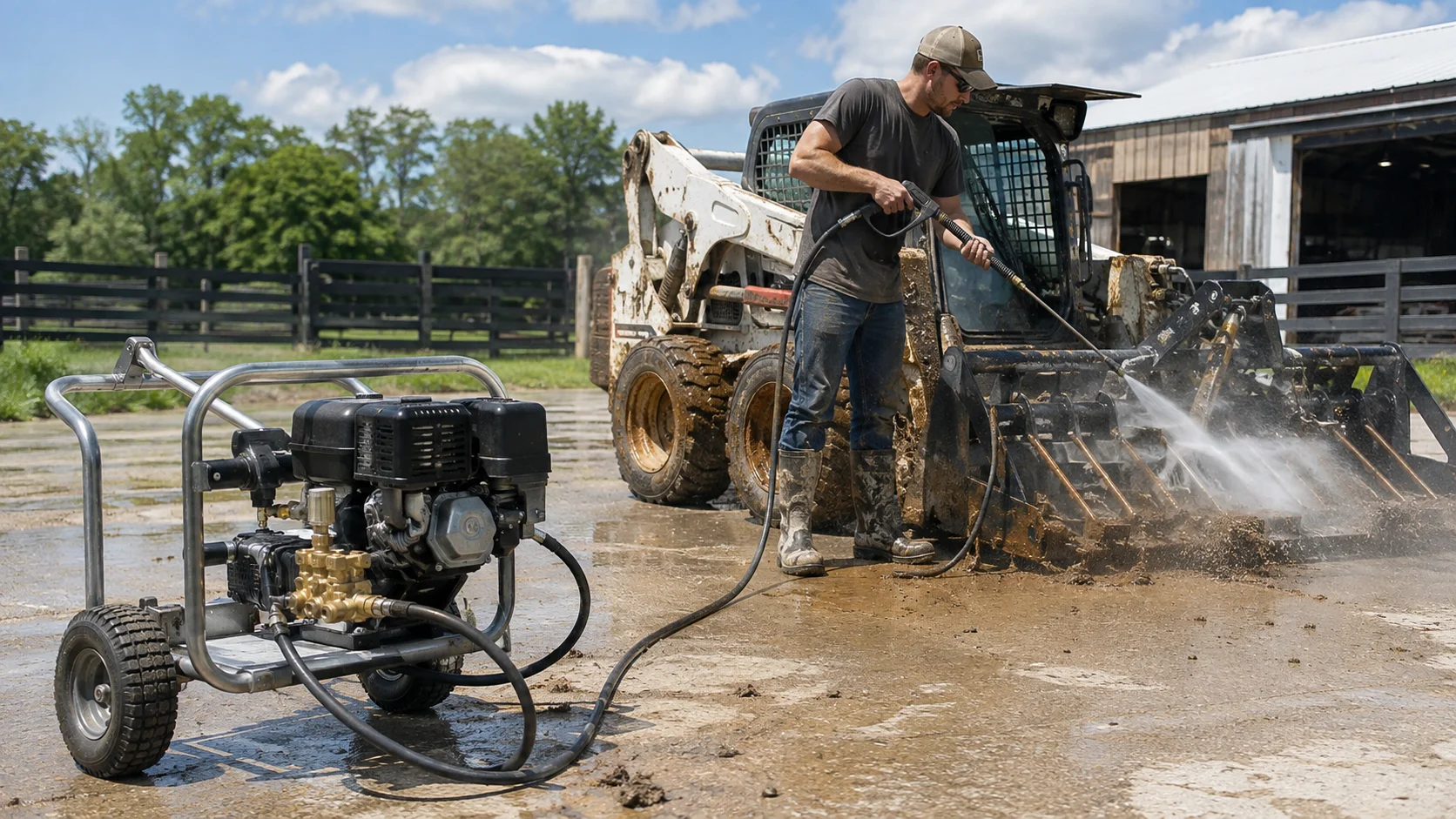
A structured cleaning process helps farmers achieve consistent results while protecting valuable machinery. Because agricultural equipment contains sensitive components, cleaning should be approached carefully rather than relying on maximum pressure.
Step 1: Inspect the Equipment
Before cleaning, inspect the equipment and identify sensitive areas such as electrical components, hydraulic connections, seals, bearings, and other parts that may require additional care. Look for existing damage, leaks, loose components, or exposed electrical connections. Identifying these areas before pressure washing helps operators determine where lower pressure or alternative cleaning methods may be necessary.
Step 2: Remove Loose Dirt
Remove large debris, plant material, loose soil, and other accumulated material before pressure washing. This allows the pressure washer to focus on bonded dirt and residue instead of simply moving loose debris around the equipment. Pre-cleaning can also make the pressure washing stage faster and more controlled.
Step 3: Apply Cleaning Solution
Use an appropriate detergent when the equipment contains grease, oil, fertilizer residue, or stubborn buildup. Apply the cleaning solution evenly and allow it to work according to the manufacturer’s instructions. Proper contact time can help loosen contamination before high-pressure rinsing begins.
Step 4: Choose the Correct Pressure Setting
Start with a moderate pressure setting and adjust it according to the surface and level of contamination. Avoid using maximum PSI across the entire machine. High pressure may damage paint, decals, seals, electrical components, or other sensitive areas. Testing a small section first can help determine the appropriate cleaning approach.
Step 5: Clean From a Safe Distance
Maintain an appropriate distance between the spray nozzle and equipment surface. Use controlled movements rather than holding the spray in one location for an extended period. Pay particular attention to sensitive areas. Avoid directing high-pressure water directly at electrical components, seals, bearings, hydraulic connections, or other vulnerable parts unless the equipment manufacturer specifically permits it.
Step 6: Rinse and Dry Equipment
Complete the process with a thorough rinse to remove loosened dirt, detergent, and remaining residue. After rinsing, allow the equipment to dry properly before returning it to service or placing it into storage. Inspect the machine again after cleaning to identify leaks, damaged components, or areas that may require additional maintenance.
Common Mistakes Farmers Should Avoid
These are some very common mistakes. Avoiding these can produce better results.
Using Too Much Pressure
Excessive pressure can damage equipment surfaces and components. More pressure does not always mean better cleaning, especially when machinery contains sensitive parts. Operators should select PSI based on the specific equipment and contamination instead of automatically using the highest available setting.
Ignoring Equipment Sensitivity
Agricultural machinery contains electrical, hydraulic, mechanical, and sealed components that may require careful cleaning. Operators should identify sensitive areas before starting and adjust the pressure, nozzle, and spray distance accordingly. Following the equipment manufacturer’s cleaning recommendations is also important.
Using Small Residential Machines
Consumer pressure washers may not be designed for the operating demands of large agricultural operations. Farms that clean multiple tractors, combines, trailers, and other machinery may require commercial equipment capable of handling longer cleaning periods and demanding applications.
Skipping Maintenance
Poor pressure washer maintenance can lead to reduced performance and unexpected downtime. Regular inspection of hoses, pumps, filters, connections, and other components helps identify problems before they interrupt equipment cleaning operations.
Maintenance Tips for Agricultural Pressure Washers
Regular maintenance helps agricultural pressure washers operate reliably, reduce downtime, and extend equipment life in demanding farm environments.
- Inspect hoses and connections regularly for leaks or damage.
- Clean filters and nozzles to maintain proper water flow.
- Check the pump and pressure system for performance issues.
- Replace worn or damaged parts promptly.
- Follow the manufacturer’s recommended maintenance schedule.
- Store the pressure washer properly after use to prevent damage.
Pressure King Inc helps agricultural businesses throughout New Jersey and New York select commercial Kärcher pressure washers, accessories, and cleaning equipment designed for demanding applications.
How Regular Pressure Washing Supports Farm Equipment Life
Regular cleaning helps farmers identify mechanical issues earlier because leaks, cracks, damaged components, and other problems are easier to see on clean equipment. Removing accumulated soil, grease, plant residue, and other contaminants also makes routine maintenance easier. Clean machinery can be inspected more efficiently before and after demanding periods such as planting and harvesting.
For commercial farms, pressure washing is therefore not only about appearance. It can be an important part of equipment maintenance and operational management.
Conclusion
A commercial pressure washer for farm equipment cleaning helps agricultural businesses maintain cleaner machinery, reduce maintenance challenges, and improve operational efficiency. Choosing the right PSI, GPM, temperature, and accessories ensures effective cleaning while protecting valuable equipment.
For farms and agricultural operations throughout New Jersey and New York, Pressure King Inc provides Kärcher commercial pressure washers, hoses, accessories, and professional cleaning solutions designed for heavy-duty applications. The right pressure washing system helps farmers protect their equipment investment and keep daily operations running efficiently.
Frequently Asked Questions
What is the best pressure washer for farm equipment cleaning?
The best pressure washer depends on equipment size, contamination level, and cleaning frequency. Commercial Kärcher pressure washers provide options for different agricultural applications.
What PSI is needed to clean tractors?
Most tractors can be cleaned effectively with approximately 2,000–3,500 PSI depending on dirt buildup and surface condition.
Is hot water better for farm machinery cleaning?
Hot water is better for removing grease, oil, and heavy residue from agricultural equipment.
Can pressure washing damage farm equipment?
Yes, excessive pressure or incorrect cleaning methods can damage sensitive components. Proper technique is important.
Do farms need commercial pressure washers?
Large farms and agricultural businesses benefit from commercial equipment because it is designed for frequent and demanding use.

Michael Adeniran is the CEO of Pressure King Inc. He has been dealing in commercial cleaning equipment for many years. He is one of the leading specialists and experts in commercial cleaning products.