How to Sanitize Food Processing Facilities with Commercial Pressure Washers
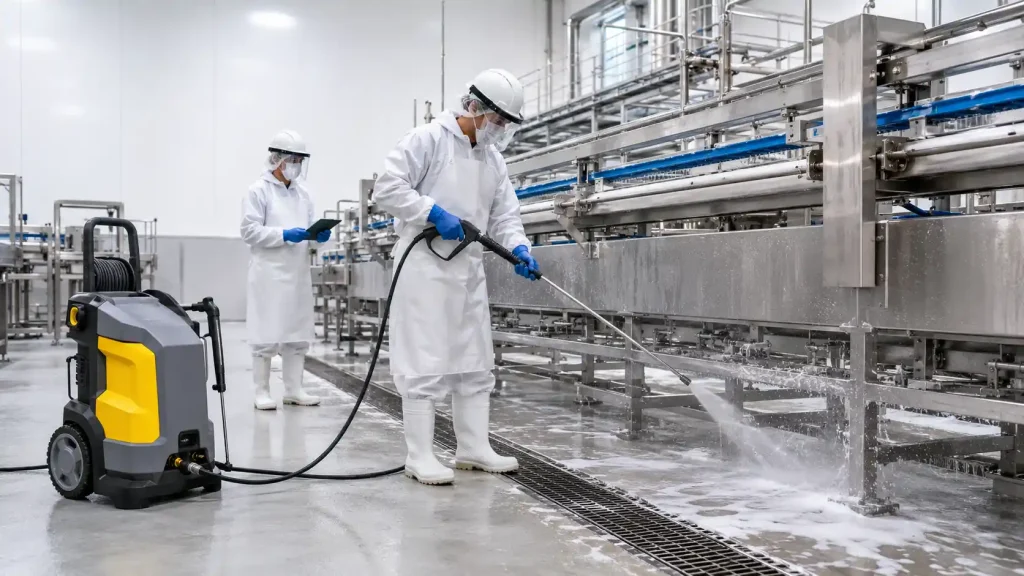
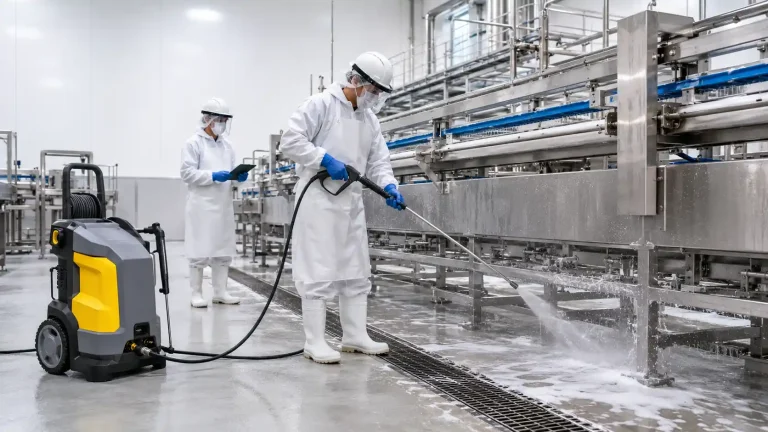
Food processing facilities require some of the highest cleaning standards in the commercial industry. Manufacturing plants, food production areas, packaging facilities, and commercial kitchens deal with constant exposure to food residue, grease, oils, organic materials, and moisture. Keeping these environments clean is essential for maintaining safe operations, protecting equipment, and supporting sanitation requirements. Traditional cleaning methods may not provide the deep cleaning performance needed for large food production areas.
A commercial pressure washer for food processing facilities provides an efficient solution by combining high-pressure water, heat, and professional cleaning chemicals to remove stubborn contamination from floors, equipment, walls, and production areas.
In this guide, we will explain how pressure washers are used in food processing environments, why hot water systems are often preferred, how to choose the right PSI and GPM, and what equipment features businesses should consider.
Why Food Processing Facilities Need Professional Cleaning Equipment
Food production environments experience continuous contamination because ingredients, oils, fats, proteins, and other materials can accumulate during daily operations. Production traffic, packaging activities, forklifts, transportation areas, and moisture can add dirt and other contaminants to floors and surrounding surfaces.
Common cleaning challenges include food particles, grease, oil residue, sugar deposits, protein-based contamination, packaging residue, and dirt tracked in from exterior or loading areas. If these materials are not addressed through an appropriate sanitation program, they can contribute to odors, difficult-to-remove buildup, and an overall decline in facility cleanliness.
Professional cleaning equipment helps maintenance teams handle large areas more efficiently. Commercial pressure washers can provide the water pressure, flow, and temperature needed for demanding cleaning applications while reducing the amount of manual scrubbing required.
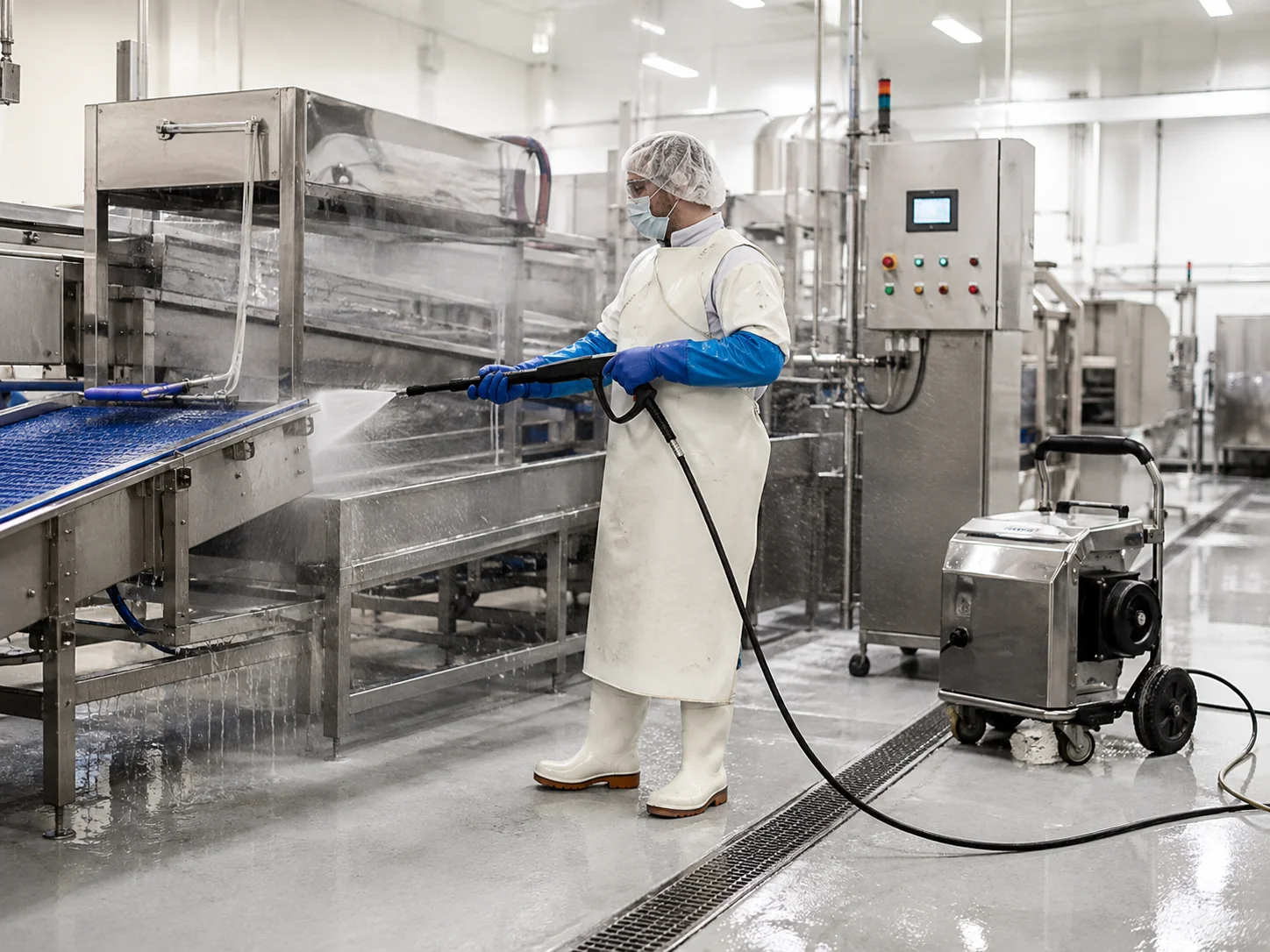
How Pressure Washers Help Clean Food Processing Facilities
Pressure washing uses a controlled stream of water to loosen and remove contamination from appropriate surfaces. In food processing environments, equipment may be used for floors, walls, loading areas, storage spaces, drainage zones, equipment exteriors, and other suitable hard surfaces. Cleaning performance depends on more than PSI alone. Water temperature, GPM, detergent selection, nozzle type, spray distance, surface material, and cleaning technique all influence the final result. A properly balanced system can help remove contamination efficiently without applying unnecessary pressure to sensitive surfaces.
For facilities handling heavy grease or oily residue, heated pressure washing can provide additional cleaning power. For general dirt and debris, a properly selected cold-water machine may be sufficient.
Why Hot Water Pressure Washers Are Ideal for Food Facilities
Hot water pressure washers are often valuable in food processing environments because heat can help loosen and break down grease, oils, fats, and sticky food residue. This can reduce the amount of mechanical effort needed to remove contamination from suitable surfaces.
Cold water can handle many general cleaning tasks, but heated water can be particularly useful where oily or greasy contamination is a recurring problem. This makes hot-water equipment relevant to food production areas, commercial kitchens, processing environments, loading zones, and other areas where difficult residue accumulates.
Pressure King offers commercial hot water pressure washers for demanding cleaning applications. The appropriate machine should be selected according to the facility’s cleaning requirements, available utilities, surface materials, and operating conditions.
Hot Water vs Cold Water Pressure Washers for Food Processing
Both hot- and cold-water pressure washers can have a place in a food facility. The better choice depends on the type of contamination, cleaning frequency, surface material, and overall sanitation process.
Cold Water Pressure Washers
Cold-water pressure washers can be effective for removing loose dirt, dust, mud, debris, and other general contamination. They may be suitable for routine floor cleaning, exterior areas, loading zones, parking areas, and other applications where grease and oil are not the primary concern. For facilities with diverse cleaning requirements, a cold-water system can provide a practical solution for general maintenance. Pressure King also provides commercial cold water pressure washers in different configurations for professional cleaning applications.
Hot Water Pressure Washers
Hot-water systems are particularly useful when cleaning involves grease, oil, fat, food residue, and other substances that respond well to heat. The additional thermal energy can help loosen difficult contamination and improve the effectiveness of the overall cleaning process.
Food manufacturers, commercial kitchens, meat processing operations, and other facilities with grease-heavy environments may benefit from heated equipment. However, the machine should still be matched to the surface and cleaning procedure because higher temperature and pressure are not automatically appropriate for every application.
What PSI Is Needed for Food Processing Facility Cleaning?
The correct PSI depends on the surface and cleaning application. Using excessive pressure can damage equipment, flooring, or protective coatings.
| Cleaning Application | Recommended PSI |
|---|---|
| General floor cleaning | 1,500–2,500 PSI |
| Food production areas | 2,000–3,000 PSI |
| Heavy grease removal | 2,500–3,500 PSI |
| Industrial food facilities | 3,000+ PSI |
A professional cleaning system should balance pressure with water flow, temperature, and detergent selection.
Why GPM Matters in Food Facility Cleaning
GPM, or gallons per minute, determines the amount of water flowing through the pressure washer. While PSI provides cleaning force, GPM plays an important role in rinsing and overall productivity. Large food processing facilities can contain extensive floor areas and production spaces that need to be cleaned within defined maintenance windows. Adequate water flow can help move loosened contamination away from surfaces and improve rinsing efficiency.
When choosing equipment, businesses should therefore evaluate PSI and GPM together rather than focusing on pressure alone. A machine with an appropriate balance of pressure and flow can provide better productivity for large-scale cleaning operations.
Best Kärcher Pressure Washer Features for Food Processing
Kärcher commercial pressure washers are available in configurations designed for different professional cleaning requirements. Food processing facilities should evaluate equipment based on their surface types, contamination levels, cleaning frequency, available power source, water supply, and operating environment.
Hot-water capability can be valuable for grease-heavy applications, while cold-water equipment may be sufficient for general dirt and debris. Businesses should also consider portability, hose length, accessories, operating pressure, flow rate, and maintenance requirements. Pressure King is an authorized Kärcher supplier and provides commercial pressure washing equipment for professional applications. Its commercial pressure washer selection allows businesses to compare different machine configurations based on their cleaning needs.
Important Accessories for Food Facility Pressure Washing
The pressure washer itself is only one component of an efficient cleaning system. Appropriate accessories can improve coverage, operator control, reach, and cleaning consistency.
Surface Cleaner Attachments
Surface cleaners are useful for large, relatively flat areas such as concrete floors and other suitable hard surfaces. Their enclosed design and rotating spray action can help provide more consistent cleaning than manually moving a single spray wand across a large floor. For food processing facilities with extensive floor areas, a suitable surface cleaner can also improve productivity. The accessory must be compatible with the pressure washer’s PSI and GPM specifications.
Commercial Pressure Washer Hoses
Hoses are exposed to frequent movement, pressure, chemicals, and demanding working conditions. A commercial-quality hose that is properly matched to the machine can improve reliability and operator safety. Pressure King provides commercial pressure washer hoses and accessories for different pressure washing applications. Selecting the correct hose length, pressure rating, fittings, and compatibility is important for reliable operation.
Spray Guns and Wands
Spray guns and wands provide operators with control when cleaning equipment exteriors, walls, corners, edges, and other areas that may not be suitable for a surface cleaner. Different nozzles can also change the spray pattern and cleaning characteristics. Operators should select the appropriate nozzle and maintain a safe working distance to avoid damaging surfaces or equipment.
Cleaning Chemicals
Water pressure alone may not remove every type of contamination. Appropriate detergents can help loosen grease, food residue, oils, organic buildup, and other substances before pressure rinsing. Food facilities should select cleaning chemicals according to their sanitation procedures, surface materials, and types of contamination. Chemical compatibility is particularly important because inappropriate products can damage equipment surfaces or leave unwanted residues.
Pressure King offers commercial and industrial cleaning chemicals that can be used with compatible pressure washing equipment and cleaning applications. Facilities should always follow the chemical manufacturer’s instructions and their own approved sanitation procedures.
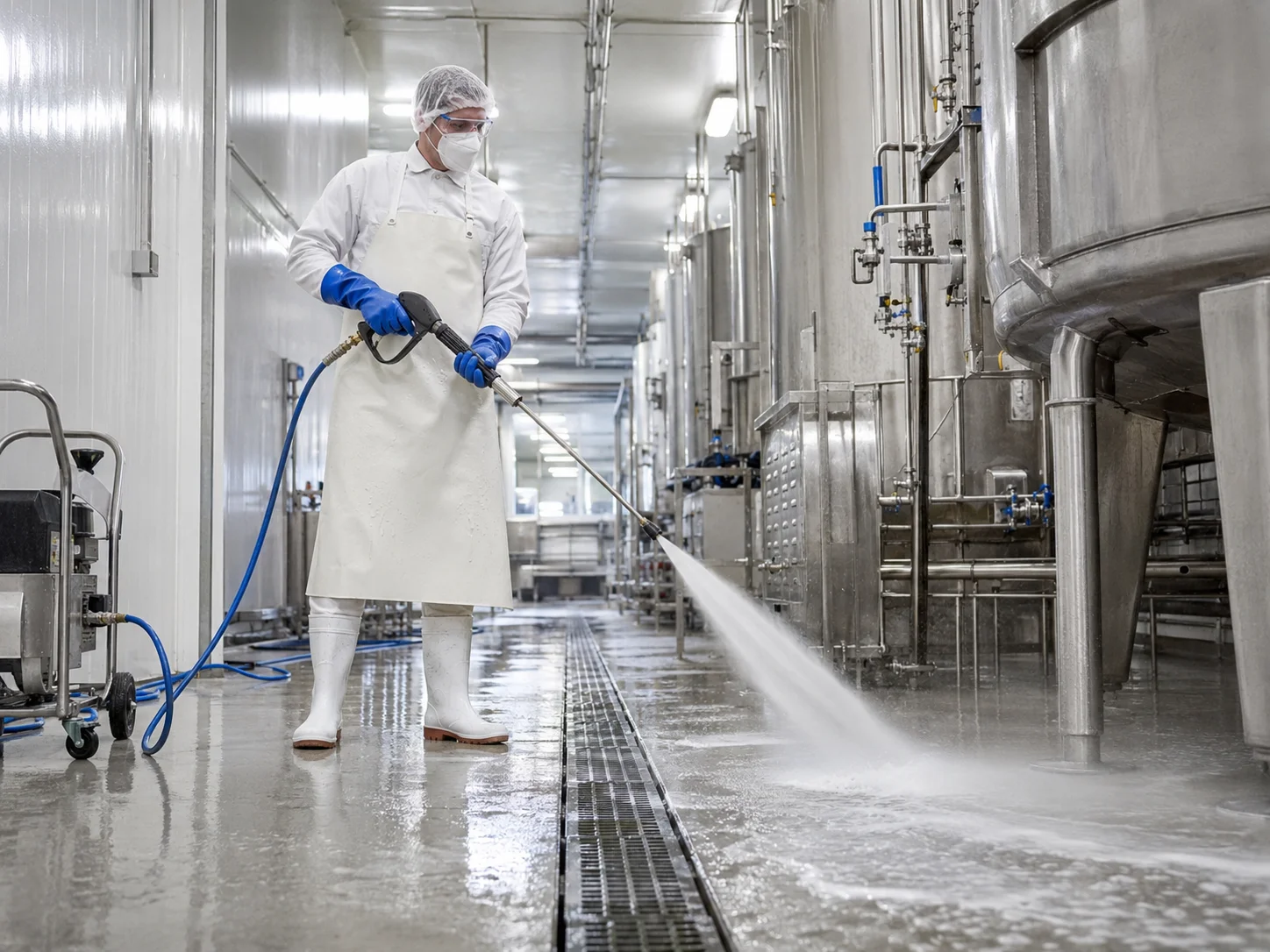
Step-by-Step Process for Cleaning Food Processing Facilities
A consistent cleaning process can help maintenance teams achieve more predictable results. Before pressure washing begins, operators should understand the facility’s sanitation procedures, identify sensitive equipment, confirm drainage arrangements, and prepare the area appropriately.
Step 1: Prepare the Cleaning Area
Remove movable objects and loose debris from the cleaning area. Protect sensitive components and electrical equipment from inappropriate water exposure, and confirm that wastewater can be managed properly. Preparation is especially important in food production environments because uncontrolled water can spread contamination or enter areas that are not intended for wet cleaning.
Step 2: Apply Cleaning Solution
Apply a compatible cleaning solution when the contamination requires chemical assistance. Allow the detergent to work for the manufacturer’s recommended dwell time without allowing it to dry on the surface. The chemical should be appropriate for the surface and cleaning application. Facilities should also follow their established sanitation procedures for chemical use, concentration, contact time, and rinsing.
Step 3: Select Correct Pressure Settings
Choose pressure based on the surface material, equipment sensitivity, and contamination level. Begin with an appropriate setting and adjust only when necessary. Sensitive equipment surfaces may require significantly different treatment from durable concrete floors. Operators should avoid directing high-pressure water into bearings, electrical components, seals, controls, or other areas that are not designed for direct water exposure.
Step 4: Use Hot Water When Needed
For grease, oil, fat, and sticky food residue, heated water can improve cleaning efficiency. The appropriate temperature depends on the equipment, surface, cleaning chemicals, and sanitation procedure.
Hot water should never be assumed to be appropriate for every surface or component. Operators should follow equipment and chemical manufacturer recommendations.
Step 5: Rinse Thoroughly
After the cleaning solution has loosened contamination, rinse the surface thoroughly. The objective is to remove detergent, loosened food residue, grease, and other contaminants from the cleaned area. Adequate GPM can be particularly useful during this stage because water flow helps carry loosened material toward the appropriate drainage system.
Step 6: Inspect the Area
After cleaning, inspect floors, equipment exteriors, walls, drains, and other treated surfaces. Look for remaining contamination or areas that require additional attention. Inspection provides an opportunity to confirm that the cleaning process has achieved the required result before the area returns to production.
Common Mistakes When Cleaning Food Processing Facilities
Avoiding common cleaning mistakes helps food processing facilities maintain hygiene, protect equipment, and reduce contamination risks.
Using Excessive Pressure
More pressure does not always mean better cleaning. Excessive pressure can damage flooring, coatings, equipment surfaces, seals, and other components. Operators should match PSI and nozzle selection to the application rather than automatically using the highest pressure available.
Choosing the Wrong Detergent
An unsuitable cleaning chemical can damage surfaces, create unwanted residue, or interfere with the facility’s sanitation procedures. Cleaning products should be selected based on the contaminant, surface, equipment manufacturer’s requirements, and established facility procedures.
Ignoring Equipment Maintenance
A pressure washer that is not properly maintained may experience reduced performance, inconsistent pressure, heating problems, leaks, or unexpected downtime. Regular inspections and preventive maintenance help keep commercial equipment ready for demanding cleaning schedules.
Using Residential Pressure Washers
Consumer pressure washers may not be designed for the frequency, durability, flow, temperature, and operating demands of large commercial food facilities. Commercial equipment is generally better suited to repeated professional use and can provide configurations designed around demanding cleaning requirements.
Pressure Washer Maintenance for Food Industry Applications
Commercial pressure washers require routine maintenance to remain dependable. Operators should follow the manufacturer’s maintenance schedule and inspect components such as hoses, connections, filters, pumps, nozzles, burners, heating systems, and other wear components. Hot-water machines require additional attention to heating-related components because the heating system is an important part of their operation. Regular maintenance can help identify problems before they cause equipment downtime during scheduled cleaning.
Pressure King provides pressure washer repair and service for commercial equipment, helping businesses address equipment issues and maintain reliable cleaning operations. It helps businesses throughout New Jersey and New York select and maintain commercial Kärcher pressure washing equipment for professional applications.
How Pressure Washing Supports Food Facility Efficiency
An appropriately designed pressure washing system can help food processing facilities manage large cleaning areas more efficiently. Instead of relying entirely on manual scrubbing, operators can combine pressure, water flow, heat, detergents, and suitable accessories to address different contamination types.
This can help reduce the time required for certain cleaning tasks while providing consistent coverage across floors, production areas, loading zones, and other appropriate surfaces. The greatest benefit comes when equipment selection and cleaning procedures are matched to the facility’s actual requirements.
Commercial pressure washing should complement, rather than replace, the facility’s established sanitation and food safety procedures. Businesses should always follow applicable regulations, manufacturer requirements, chemical instructions, and internal sanitation protocols.
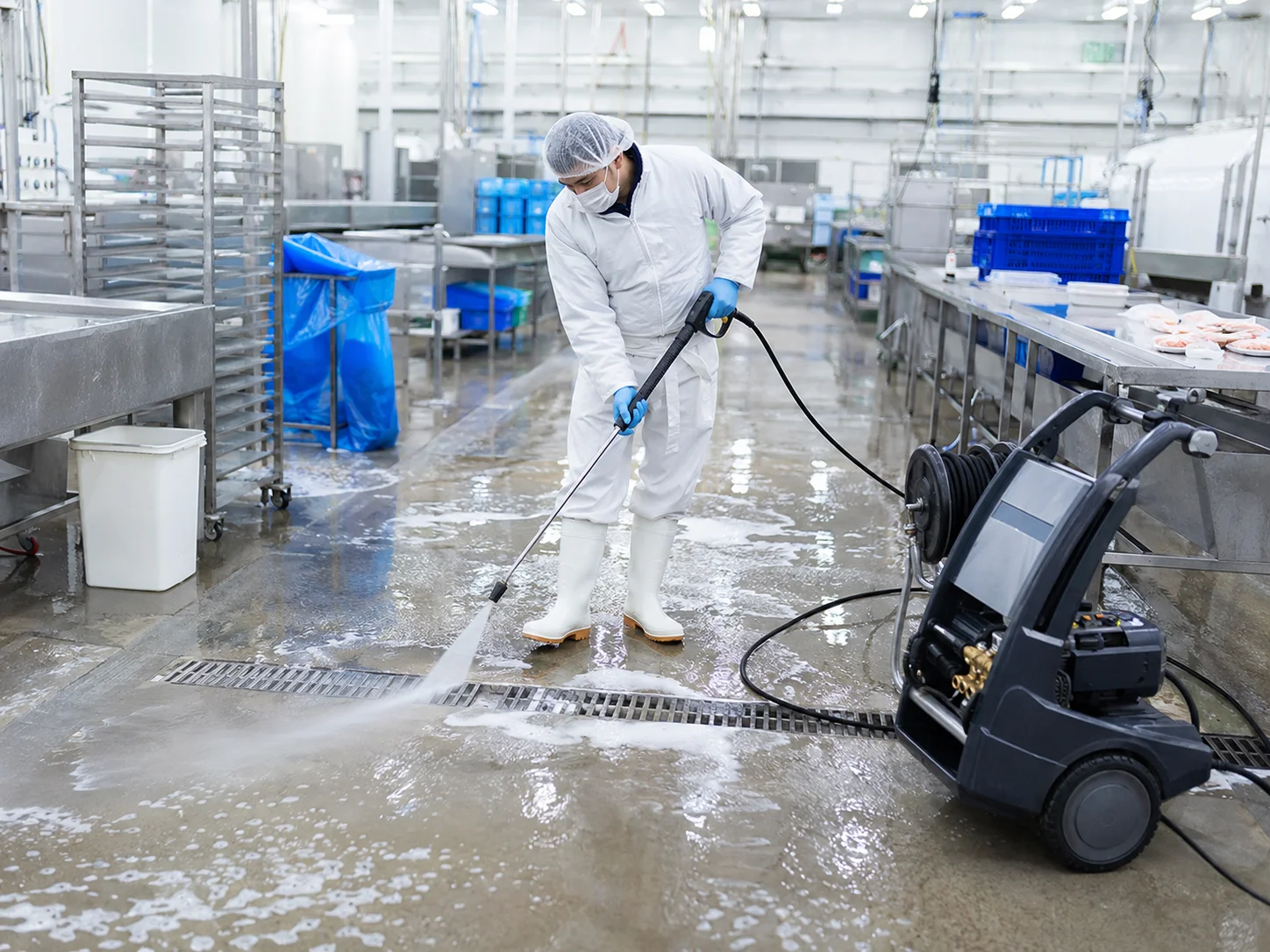
How to Choose a Commercial Pressure Washer for a Food Facility
Before purchasing equipment, businesses should evaluate the size of the facility and the types of surfaces that require regular cleaning. A small commercial kitchen may have different requirements from a large food manufacturing plant with extensive processing floors and multiple production zones. Water temperature is another important consideration. Facilities dealing with substantial grease, fat, oil, or sticky residue may benefit from hot-water equipment, while facilities primarily dealing with dirt and loose debris may find cold-water equipment sufficient.
PSI and GPM should also be evaluated together. Businesses should consider cleaning speed, available water supply, power source, required accessories, hose length, mobility, maintenance requirements, and frequency of operation before selecting a machine.
Conclusion
A commercial pressure washer for food processing facilities provides an efficient solution for removing grease, food residue, and industrial contamination from demanding environments. The combination of proper PSI, GPM, hot water, detergents, and accessories allows businesses to maintain cleaner and safer facilities.
For food manufacturers, processing plants, and commercial kitchens throughout New Jersey and New York, Pressure King Inc provides Kärcher commercial pressure washers, accessories, hoses, and cleaning solutions designed for professional sanitation applications. The right equipment helps businesses improve cleaning efficiency while maintaining reliable daily operations.
Frequently Asked Questions
What is the best pressure washer for food processing facilities?
The best pressure washer depends on facility size, cleaning requirements, contamination level, and operating conditions. Commercial hot water pressure washers are commonly used for food-related cleaning.
Why are hot water pressure washers better for food facilities?
Hot water can help loosen and break down grease, oils, fats, and sticky food residue. This can make certain cleaning applications more efficient than using cold water alone.
What PSI is recommended for food processing cleaning?
The appropriate PSI depends on the surface and contamination. Many applications may fall within approximately 1,500 to 3,500 PSI, but operators should follow equipment, surface, and cleaning procedure requirements rather than relying on a single universal pressure setting.
Can pressure washers clean food production equipment?
Pressure washers can be used on suitable equipment surfaces when the correct pressure, temperature, chemical, nozzle, and cleaning procedure are followed. Sensitive electrical components, bearings, seals, controls, and other water-sensitive areas may require special protection.
Do food facilities need commercial pressure washers?
Large food processing facilities can benefit from commercial equipment because these machines are designed for demanding and repeated professional cleaning applications. The right equipment can improve productivity and provide greater durability than equipment designed for occasional residential use.

Michael Adeniran is the CEO of Pressure King Inc. He has been dealing in commercial cleaning equipment for many years. He is one of the leading specialists and experts in commercial cleaning products.