

How Municipalities Use Commercial Pressure Washers for Public Cleaning

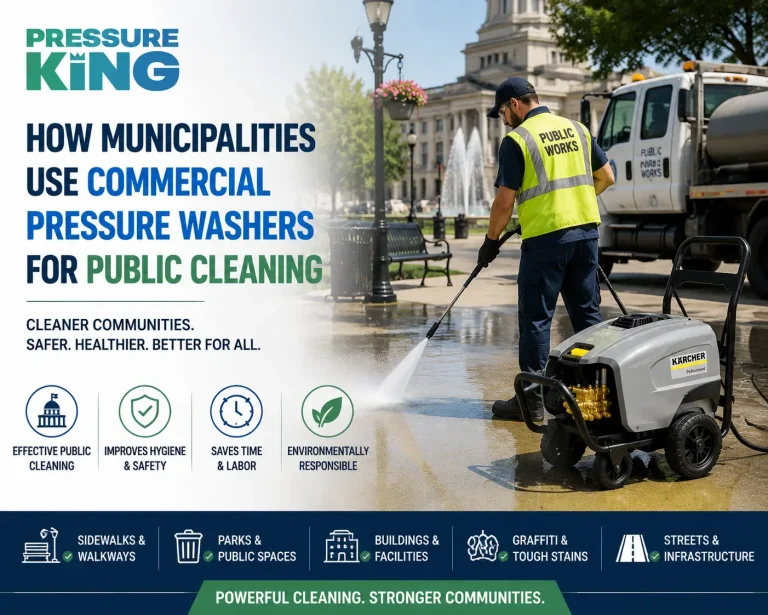
Municipalities and government facilities are responsible for maintaining clean, safe, and welcoming public spaces. Sidewalks, parks, streets, government buildings, transportation areas, and recreational facilities require regular cleaning to remove dirt, stains, graffiti, organic growth, and environmental buildup. For city maintenance teams, standard cleaning methods are often not enough. Large public areas require equipment that can handle frequent use, large surfaces, and demanding outdoor conditions.
A commercial pressure washer for municipal cleaning provides local governments and public organizations with an efficient solution for maintaining infrastructure and public spaces. Municipal crews can choose from a range of commercial pressure washers based on PSI, GPM, power source, and cleaning requirements. With the right equipment, accessories, and cleaning methods, pressure washers help remove difficult contamination while improving maintenance efficiency.
This guide explains how municipalities use commercial pressure washers, what applications they are best suited for, and how public maintenance teams can choose the right equipment.
Why Municipalities Need Commercial Pressure Washing Equipment
Public areas experience constant exposure to weather, traffic, and daily use. Over time, sidewalks, parking areas, buildings, and recreational spaces can collect dirt, oil, gum, mold, mildew, algae, bird waste, road salt, and other environmental contaminants. These issues can affect the appearance of public spaces and may create maintenance or safety concerns. Regular pressure washing gives municipal crews a practical way to address stubborn buildup before it becomes more difficult to remove.
Commercial pressure washers are particularly useful because municipal teams may need to clean large areas regularly. Professional equipment can help crews complete demanding projects more efficiently while maintaining consistent cleaning results.
Common Municipal Applications for Commercial Pressure Washers
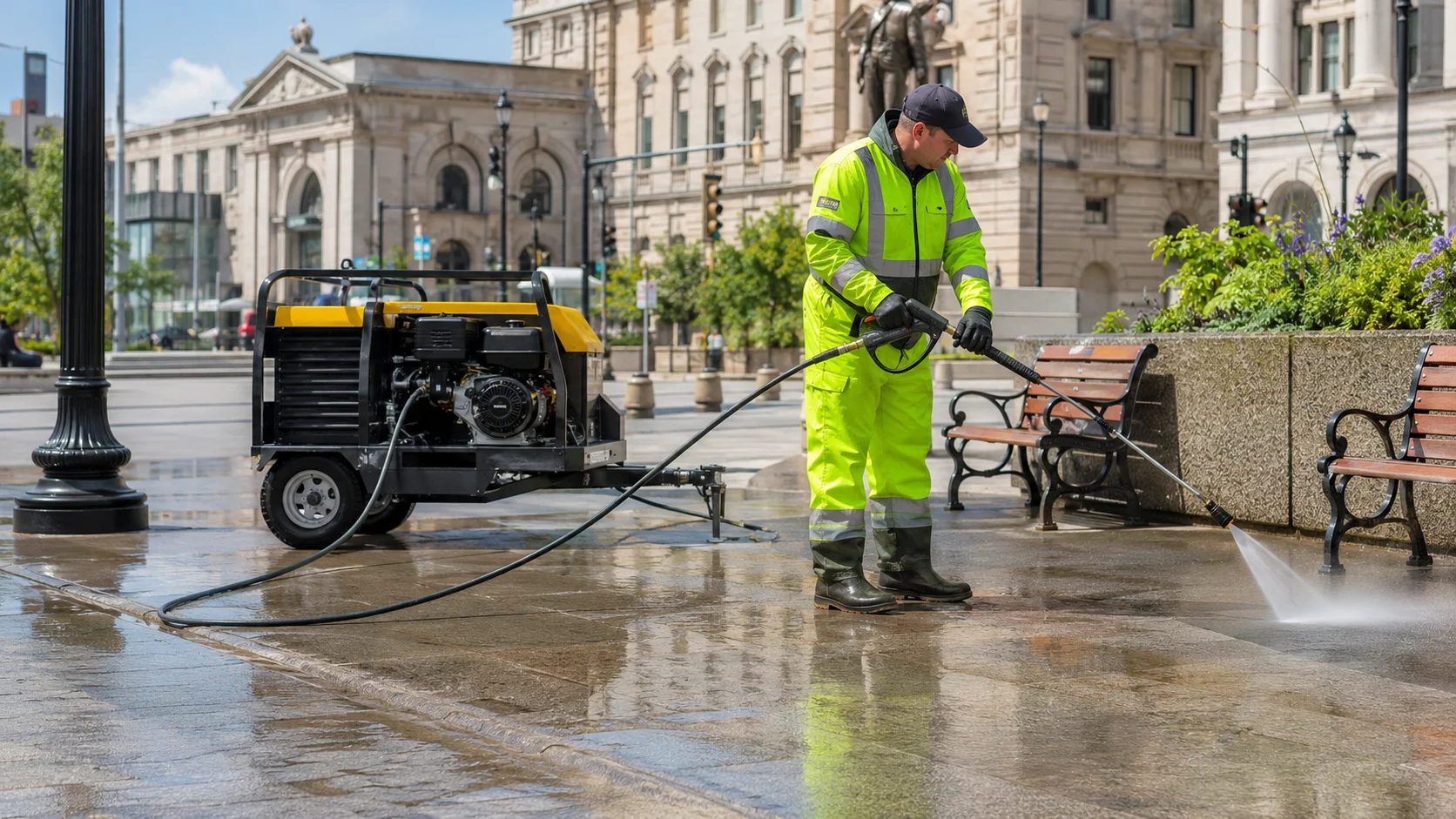
Cities and public organizations use commercial pressure washers across a wide range of maintenance applications. The cleaning method should always be adjusted according to the surface material, contamination, and surrounding environment.
Sidewalk and Walkway Cleaning
Sidewalks collect dirt, gum, oil stains, organic growth, and weather-related buildup. Because these areas receive constant pedestrian traffic, contamination can accumulate quickly. Regular pressure washing helps maintain cleaner walkways and improves the overall appearance of public areas. Surface cleaners for pressure washers can be particularly useful for larger concrete walkways because they provide more consistent coverage than a standard spray wand.
Park and Recreation Area Maintenance
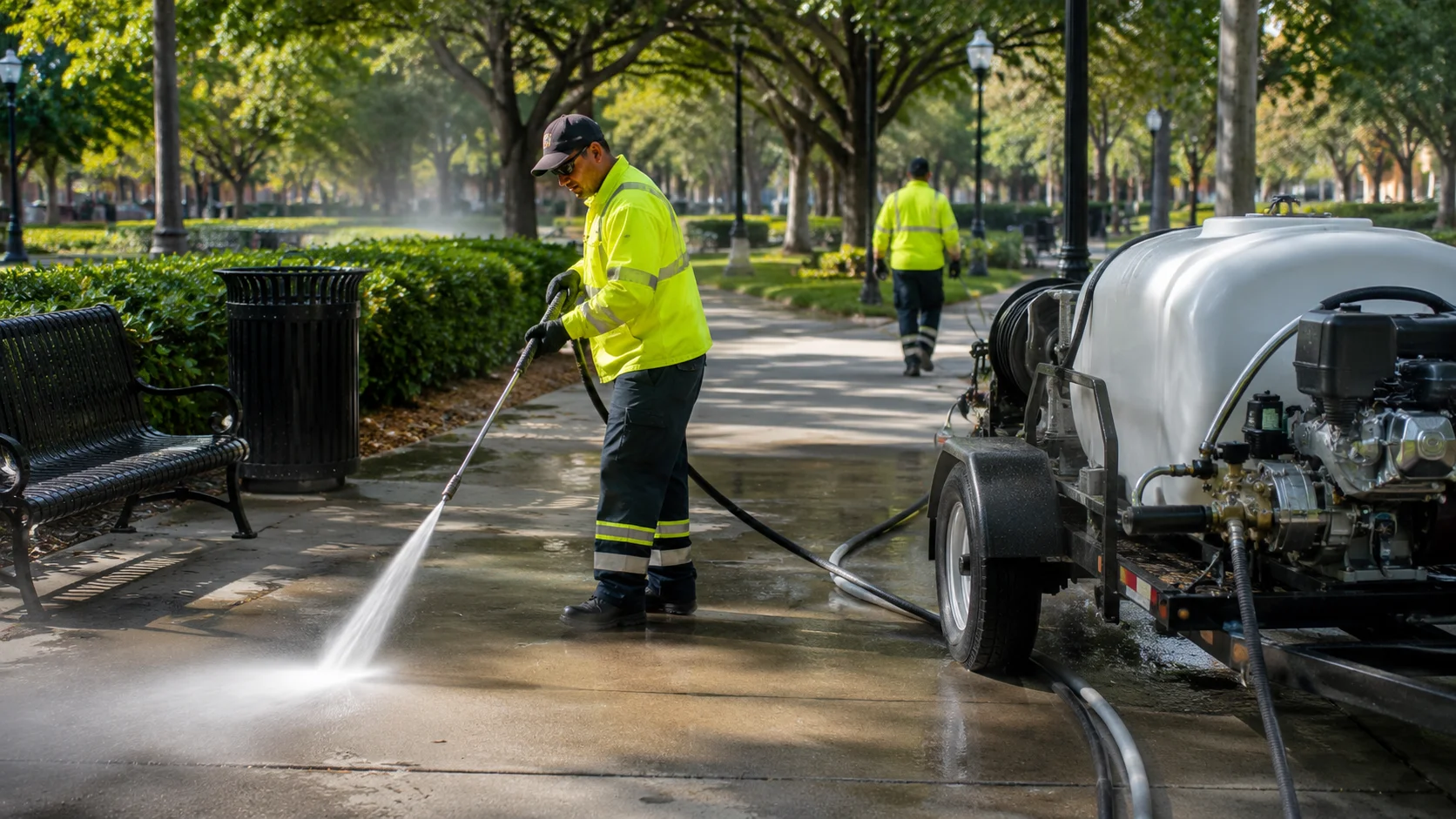
Parks contain walking paths, picnic areas, playground surroundings, benches, concrete surfaces, and outdoor structures that are exposed to weather and daily public use. Pressure washing can remove dirt, mud, organic buildup, and other suitable contaminants from durable surfaces. Municipal crews should select pressure and cleaning solutions carefully around painted, decorative, or sensitive surfaces.
Public Building Maintenance
Government facilities and public buildings often require regular exterior maintenance. Building entrances, concrete areas, loading zones, walls, and other exterior surfaces can collect dirt and weather residue. Maintaining these areas helps create a cleaner and more professional appearance for residents, employees, and visitors. Pressure washing can also support routine building maintenance by removing buildup before it becomes more difficult to address.
Graffiti Removal
Graffiti can quickly affect the appearance of public spaces and buildings. Pressure washing, combined with appropriate cleaning chemicals and suitable equipment settings, can help remove graffiti from compatible surfaces. The cleaning method should be selected according to the surface because aggressive pressure or chemicals can damage masonry, paint, coatings, or decorative materials.
For difficult oil, grease, and other heavy contamination, municipalities may also benefit from hot water pressure washers. Heated water can help loosen certain stubborn contaminants and improve cleaning efficiency.
Parking Areas and Transportation Facilities
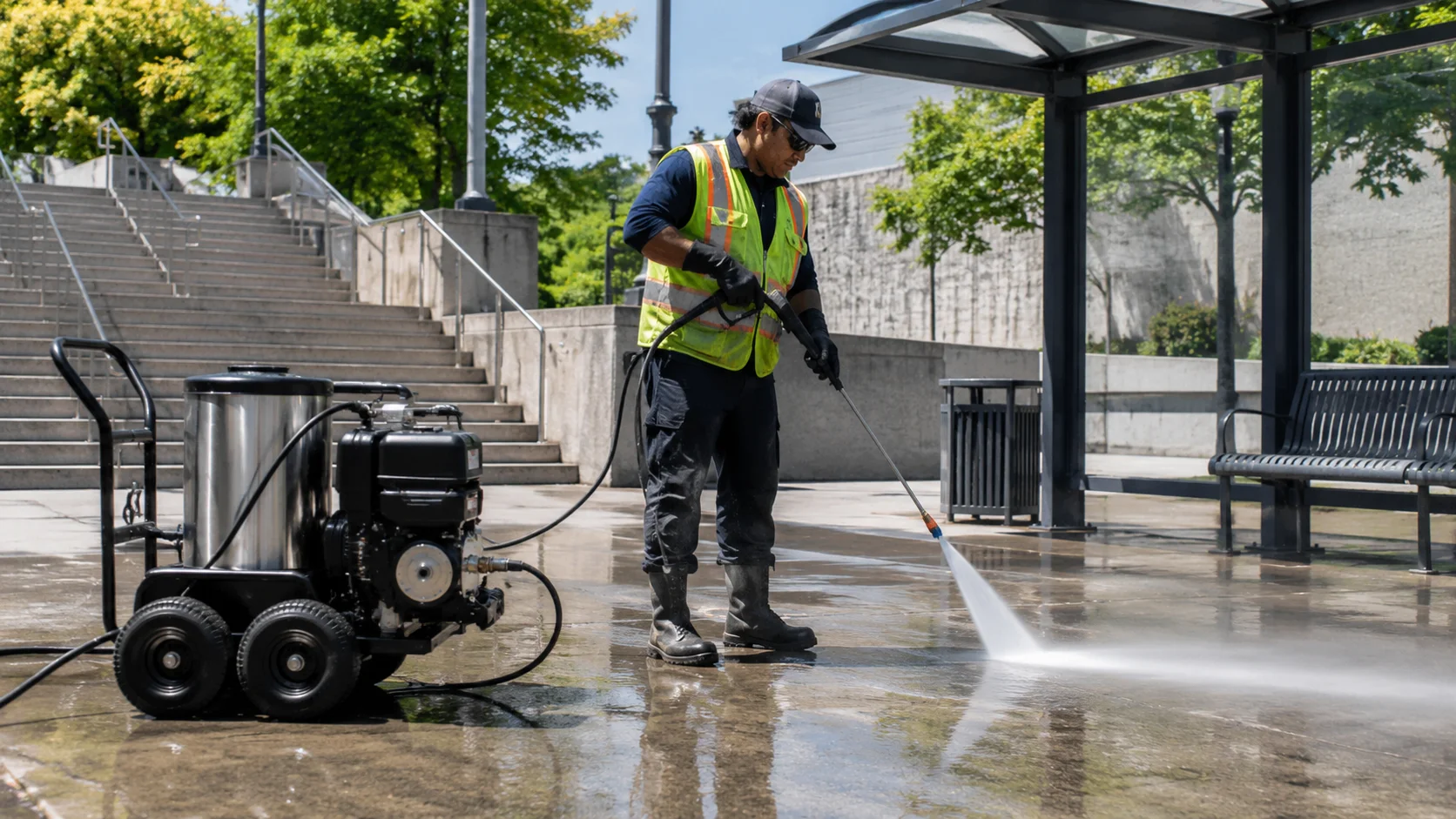
Municipal parking lots, garages, bus areas, and other transportation facilities experience constant vehicle and pedestrian traffic. These locations can accumulate vehicle fluids, dirt, road salt, tire marks, and other contaminants. Commercial pressure washers provide the cleaning power needed for these demanding environments. Regular cleaning can help municipal teams maintain cleaner transportation areas while making heavy stains and surface problems easier to identify.
How Kärcher Pressure Washers Support Municipal Cleaning
Municipal maintenance teams need equipment that provides reliability, durability, and flexibility. Cleaning requirements can vary significantly between a small public facility and a large city maintenance department. Kärcher pressure washers are available in configurations designed for different professional applications. Options include hot water and cold water systems and electric-powered and fuel-powered units, as well as mobile pressure washing solutions.
The right equipment depends on the cleaning location, frequency of use, available power sources, mobility requirements, and type of contamination. Municipal teams should consider the complete cleaning application rather than selecting equipment based on pressure alone.
Choosing the Right PSI for Municipal Cleaning
The correct PSI depends on the surface and cleaning application. Using excessive pressure can damage concrete, brick, paint, or other public infrastructure.
| Municipal Cleaning Application | Recommended PSI |
|---|---|
| Sidewalk cleaning | 2,000–3,000 PSI |
| Park surfaces | 1,500–2,500 PSI |
| Parking lots | 2,500–3,500 PSI |
| Graffiti removal | 2,500–4,000 PSI |
| Heavy public infrastructure cleaning | 3,000+ PSI |
Municipal teams should focus on selecting equipment that provides enough power without causing surface damage.
Why GPM Matters for City Maintenance Teams
Large public cleaning projects require efficient equipment. While PSI affects cleaning force, GPM determines water flow and contributes to surface coverage and rinsing speed. A pressure washer with suitable GPM can help maintenance crews move loosened dirt and cleaning residue away from large surfaces more efficiently. This becomes particularly important when crews are responsible for extensive sidewalks, parking areas, public facilities, or other large municipal properties.
For cities managing multiple facilities, productivity and reliability are important factors when selecting equipment. The right combination of PSI and GPM can help crews complete projects within practical maintenance windows.
Hot Water vs Cold Water Pressure Washers for Municipal Applications
The best water temperature depends on the cleaning requirement. Municipalities may need cold water for routine dirt removal and hot water for oil, grease, graffiti, or other difficult contamination.
Cold Water Pressure Washers
Cold water pressure washers are effective for sidewalk cleaning, park maintenance, dirt removal, and general outdoor cleaning. They are practical for routine maintenance where the primary contaminants are dirt, dust, mud, and ordinary outdoor debris. For many regular municipal cleaning tasks, cold water equipment can provide sufficient cleaning performance.
Hot Water Pressure Washers
Hot water systems are useful for graffiti removal, oil stains, parking garages, and heavy contamination. Heat can help break down oily or stubborn materials, making them easier to remove from suitable surfaces. For municipalities handling different types of contamination, hot water equipment can provide greater flexibility. However, crews should still select appropriate detergents, pressure settings, and cleaning techniques for each application.
Trailer-Mounted Pressure Washers for Municipal Fleets
Many municipalities need equipment that can move between different locations. A cleaning crew may work at a park one day and a transportation facility, public building, or street maintenance area the next. Pressure washer trailers provide a mobile solution that can be transported to different work sites. This setup can reduce the need for permanently installed equipment and give public works teams greater flexibility.
Mobile systems can be particularly useful for parks departments, street maintenance teams, and public works departments responsible for cleaning multiple locations.
Essential Accessories for Municipal Pressure Washing
The right accessories can improve cleaning efficiency, coverage, and operator control. Municipal crews should select accessories based on the surface, cleaning area, and type of contamination.
Surface Cleaners
Surface cleaners are useful for sidewalks, concrete areas, parking lots, and other large flat surfaces. They allow operators to clean broad areas with more consistent coverage than a standard spray wand. For municipalities responsible for extensive concrete surfaces, surface cleaners can also help reduce operator fatigue and improve the consistency of finished results.
Extension Wands
Extension wands help operators reach elevated building exteriors and difficult areas without relying solely on a standard spray wand. They can be useful for certain exterior maintenance tasks, but operators should always maintain appropriate control and follow safe practices when cleaning elevated surfaces.
Commercial Hoses
Heavy-duty pressure washer hoses are important for frequent municipal use. A durable hose can withstand repeated movement and demanding operating conditions while providing reliable water delivery. Municipal crews should select hoses that are compatible with the pressure washer’s operating pressure and intended application. Regular inspection can help identify wear before it becomes a larger problem. Pressure King lists professional hose options and other pressure washer accessories for commercial applications.
Cleaning Chemicals
Professional detergents can help remove graffiti, oil, organic stains, and heavy buildup. The correct chemical should be selected according to the contamination and surface. Using an appropriate detergent can loosen stubborn material before pressure washing, allowing the operator to achieve better results without relying solely on increased pressure.
Step-by-Step Municipal Pressure Washing Process
A structured pressure washing process helps municipal crews achieve consistent cleaning results while protecting public surfaces. Because public spaces often remain accessible to pedestrians and vehicles, planning is also important for maintaining a controlled and organized work area.
Step 1: Inspect the Area
Begin by inspecting the entire cleaning area. Identify the surface material, existing damage, drainage points, traffic patterns, and nearby structures that could be affected by water or cleaning chemicals. Look for cracks, loose materials, damaged coatings, sensitive surfaces, and areas requiring special attention. This inspection helps crews determine the appropriate pressure, nozzle, detergent, and cleaning method before starting.
Step 2: Remove Loose Debris
Remove leaves, trash, loose dirt, branches, and other large debris before pressure washing. Pre-cleaning prevents loose material from being pushed across the area or into drainage systems. It also allows the pressure washer to focus on bonded dirt, stains, and other contamination that requires more cleaning power.
Step 3: Apply Appropriate Cleaning Solution
Select a cleaning solution based on the type of contamination. Oil, graffiti, organic buildup, and general dirt may require different detergents or treatment methods. Apply the solution evenly and allow sufficient contact time according to the manufacturer’s instructions. Proper pretreatment can help loosen stubborn contamination before pressure washing begins.
Step 4: Select Correct Pressure Settings
Adjust the PSI according to the surface and contamination. Avoid automatically using the highest available pressure because excessive force can damage public infrastructure. When working on an unfamiliar surface, it is better to begin with a lower setting and increase pressure gradually if necessary. This approach helps crews find an effective cleaning level while reducing the risk of damage.
Step 5: Clean With Controlled Passes
Use steady, controlled passes across the surface while maintaining a consistent distance between the nozzle and the cleaning area. Slightly overlap each pass to prevent missed sections and uneven results. On large surfaces, working systematically in sections can help crews track progress and maintain consistent cleaning coverage.
Step 6: Rinse and Inspect
Complete the process by thoroughly rinsing away loosened dirt, detergent, and remaining residue. Pay particular attention to corners, edges, drainage areas, and locations where cleaning chemicals may collect. After rinsing, inspect the area to determine whether the desired cleaning result has been achieved and whether any sections require additional treatment.
Common Mistakes Municipalities Should Avoid
Municipalities should avoid using incorrect pressure settings, unsuitable cleaning chemicals, and poorly maintained equipment to prevent surface damage and unnecessary costs.
Using Incorrect Pressure
Using too much pressure can damage concrete, brick, paint, coatings, and other public surfaces. Municipal crews should match pressure to the specific surface instead of assuming that maximum PSI will produce better results. A controlled approach often provides effective cleaning while reducing the risk of surface damage.
Choosing Equipment Based Only on PSI
PSI is only one part of pressure washer performance. GPM, water temperature, nozzle selection, detergent, and cleaning technique also affect results. Municipalities should evaluate the complete cleaning application before selecting equipment. A machine with suitable water flow and accessories may perform better than a higher-PSI machine that does not match the application.
Ignoring Equipment Mobility
Public works teams frequently clean multiple locations, making mobility an important consideration. If equipment needs to move between parks, sidewalks, parking areas, and public facilities, a mobile or trailer-mounted system may provide greater flexibility than a stationary setup.
Skipping Maintenance
Poor maintenance can reduce equipment performance and lead to unexpected downtime. Regular inspections of hoses, pumps, filters, connections, heating components, and accessories help municipal teams identify wear before it interrupts cleaning operations.
Maintenance Tips for Municipal Pressure Washers
Public maintenance equipment often operates frequently, making maintenance essential.
Important steps include:
- Inspecting hoses
- Checking pumps
- Cleaning filters
- Maintaining heating systems
- Replacing worn accessories
If equipment develops performance problems, municipal teams can also use professional pressure washer repair services to address issues before they result in extended downtime. Pressure King Inc supports municipalities and commercial organizations throughout New Jersey and New York with Kärcher pressure washers, accessories, and professional cleaning equipment solutions.
How Pressure Washing Improves Public Spaces
Clean public spaces provide benefits beyond appearance. Regular pressure washing helps municipalities maintain sidewalks, parks, transportation facilities, public buildings, and other infrastructure in better condition. Removing dirt, organic growth, oil, and other buildup can improve the appearance of public areas while helping maintenance teams identify surface issues more easily. Consistent cleaning also contributes to a more welcoming environment for residents and visitors.
For municipalities, professional cleaning equipment is therefore an important part of routine property and infrastructure maintenance. A well-planned pressure washing program can help public works teams manage cleaning tasks more efficiently across multiple locations.
Conclusion
A commercial pressure washer for municipal cleaning helps cities, public works departments, and government facilities maintain cleaner and safer public spaces. From sidewalks and parks to parking areas and public buildings, professional pressure washing equipment improves efficiency and reduces maintenance challenges.
For municipalities and public organizations throughout New Jersey and New York, Pressure King Inc provides Kärcher commercial pressure washers, pressure washer trailer systems, accessories, and cleaning solutions designed for professional applications. The right equipment allows maintenance teams to keep public spaces cleaner while improving operational efficiency.
Frequently Asked Questions
What is the best pressure washer for municipal cleaning?
The best pressure washer depends on the cleaning application, location, and frequency of use. Commercial Kärcher pressure washers provide multiple options for public maintenance needs.
What PSI is needed for sidewalk cleaning?
Most sidewalks can be cleaned effectively with 2,000–3,000 PSI depending on surface condition.
Are hot water pressure washers useful for cities?
Yes. Hot water systems are useful for removing graffiti, oil, and heavy contamination.
Why do municipalities need commercial pressure washers?
Commercial pressure washers are designed for frequent use, larger areas, and demanding cleaning applications.
Can pressure washers remove graffiti?
Yes, with the correct pressure, temperature, and cleaning chemicals, pressure washers can help remove graffiti from suitable surfaces.

Michael Adeniran is the CEO of Pressure King Inc. He has been dealing in commercial cleaning equipment for many years. He is one of the leading specialists and experts in commercial cleaning products.


