How to Choose the Right Floor Scrubbers for Hospitals and Healthcare Facilities
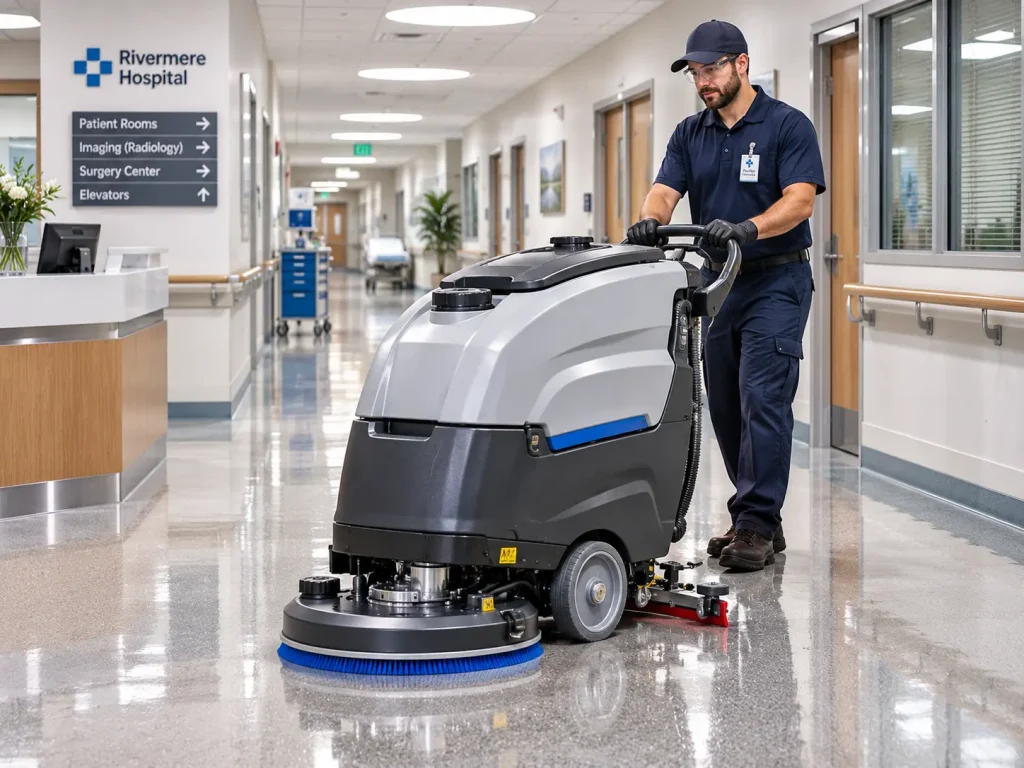
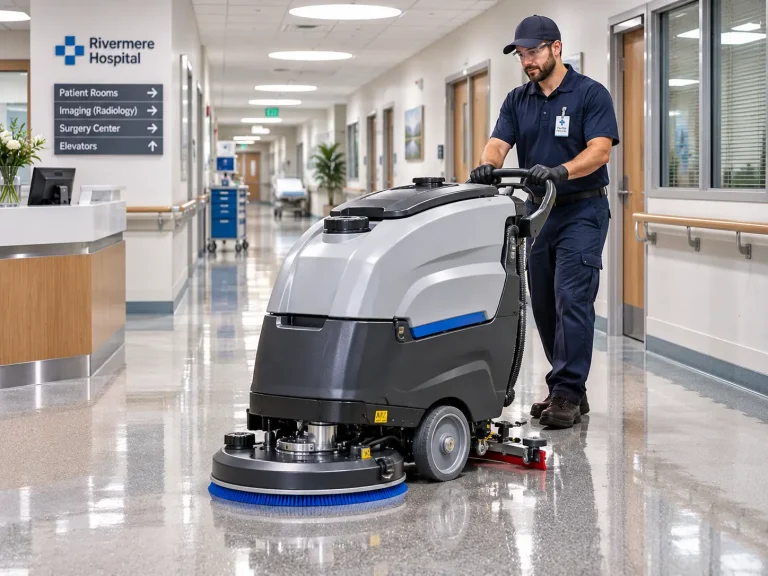
Hospitals need clean floors throughout the day. Busy hallways, patient rooms, waiting areas, and medical facilities experience constant foot traffic. Keeping these spaces clean can be difficult, especially when cleaning teams must work around patients, visitors, and healthcare staff.
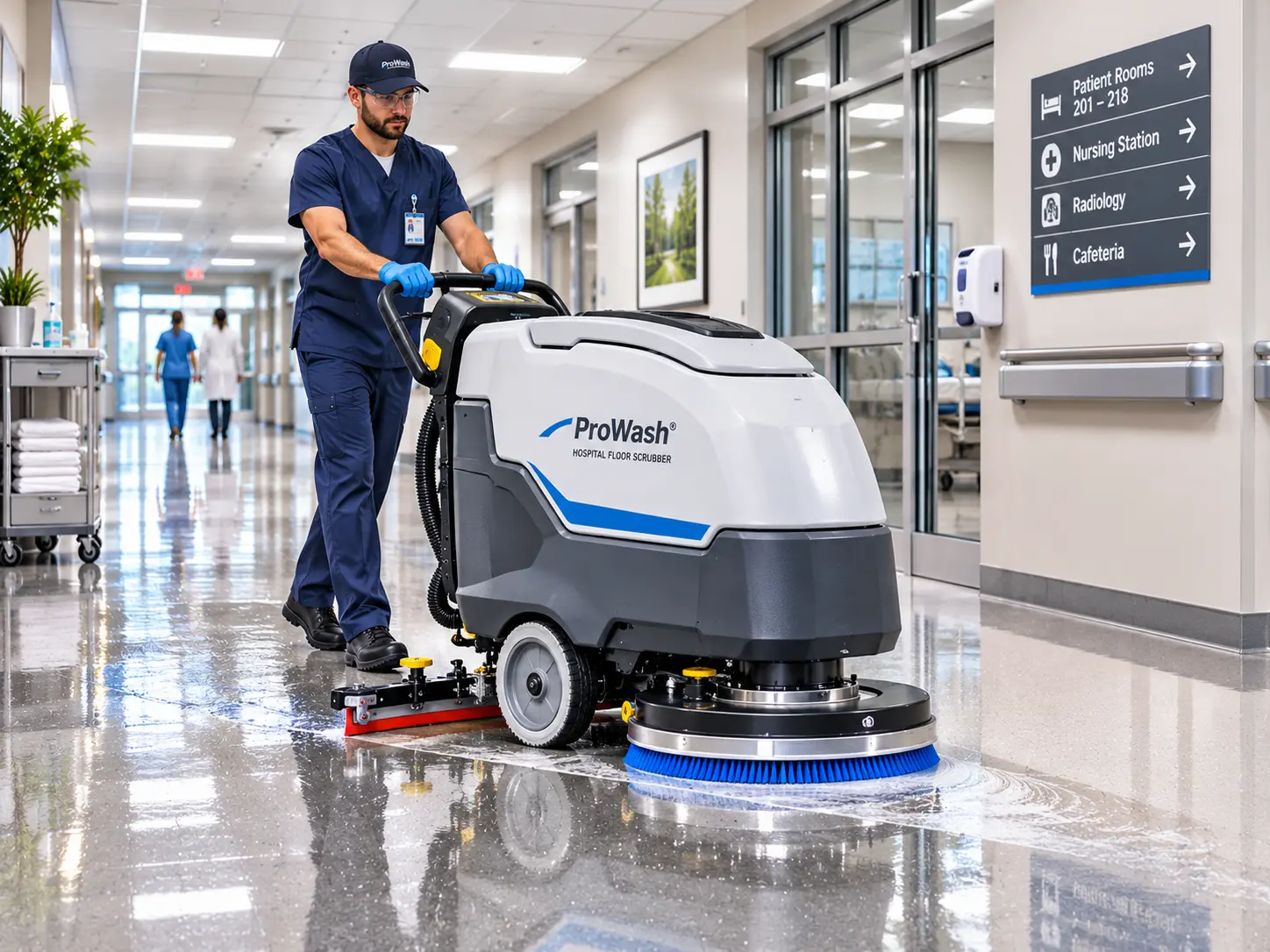
Choosing the right floor scrubbers for hospitals can make daily cleaning easier and more efficient. These machines scrub hard floors and collect dirty water, helping cleaning teams maintain floors with less manual work.
However, not every floor scrubber is suitable for every healthcare environment. Machine size, noise, cleaning performance, floor compatibility, and water recovery all matter.
This guide explains how to choose a hospital floor scrubber that meets your facility’s cleaning needs, budget, and daily operations.
Why Choosing the Right Floor Scrubber Matters in Healthcare Facilities
Hospitals and healthcare facilities have different cleaning needs from offices, warehouses, and retail stores. Floors must be cleaned regularly, often while people continue moving through the building. Using equipment that is too large, noisy, or difficult to maneuver can interrupt daily activities and make cleaning more challenging.
The right hospital floor scrubber helps cleaning teams work efficiently while supporting established cleaning procedures. It should fit the available space, work safely on the flooring material, and collect dirty water effectively.
Important benefits include:
- Efficient floor cleaning: Clean larger areas with less manual scrubbing.
- Better water recovery: Collect dirty water and reduce the amount left on the floor.
- Reduced physical effort: Limit repetitive manual mopping across large spaces.
- Consistent cleaning: Maintain a regular cleaning process across suitable floor areas.
- Improved workflow: Help staff complete scheduled cleaning tasks with fewer interruptions.
- Floor protection: Use suitable brushes and pads to avoid unnecessary surface wear.
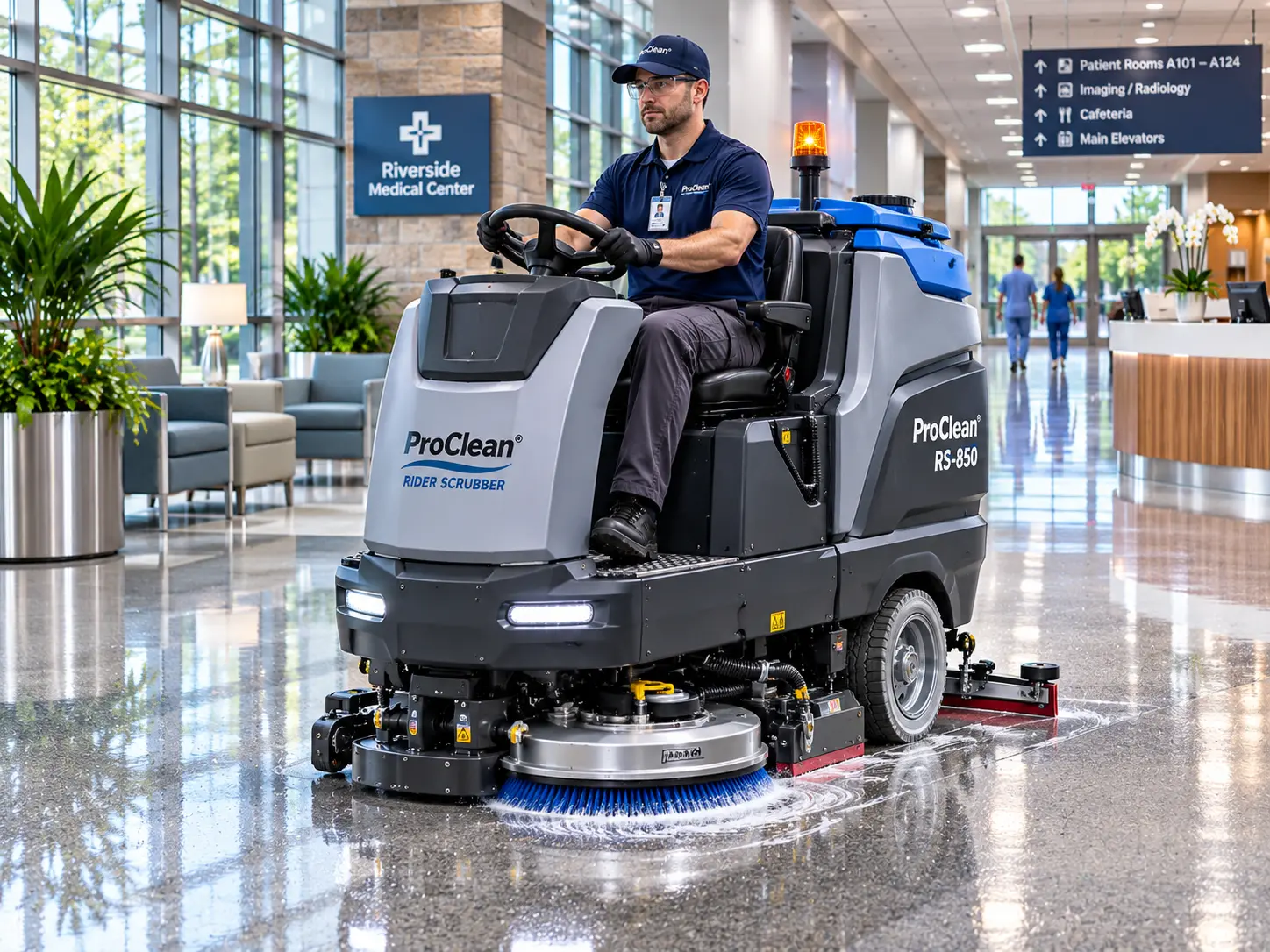
Walk-Behind vs. Ride-On Floor Scrubbers: Which Is Better for Hospitals?
Two common types of commercial floor scrubbers are walk-behind and ride-on models. Both use brushes or pads to scrub hard floors and recovery systems to collect dirty water. However, their size, cleaning coverage, and maneuverability differ.
For healthcare facilities, the best choice depends on the amount of floor space, hallway width, patient traffic, and available storage. Smaller machines offer better access to restricted areas, while larger machines can cover open spaces more efficiently.
Walk-Behind Floor Scrubbers
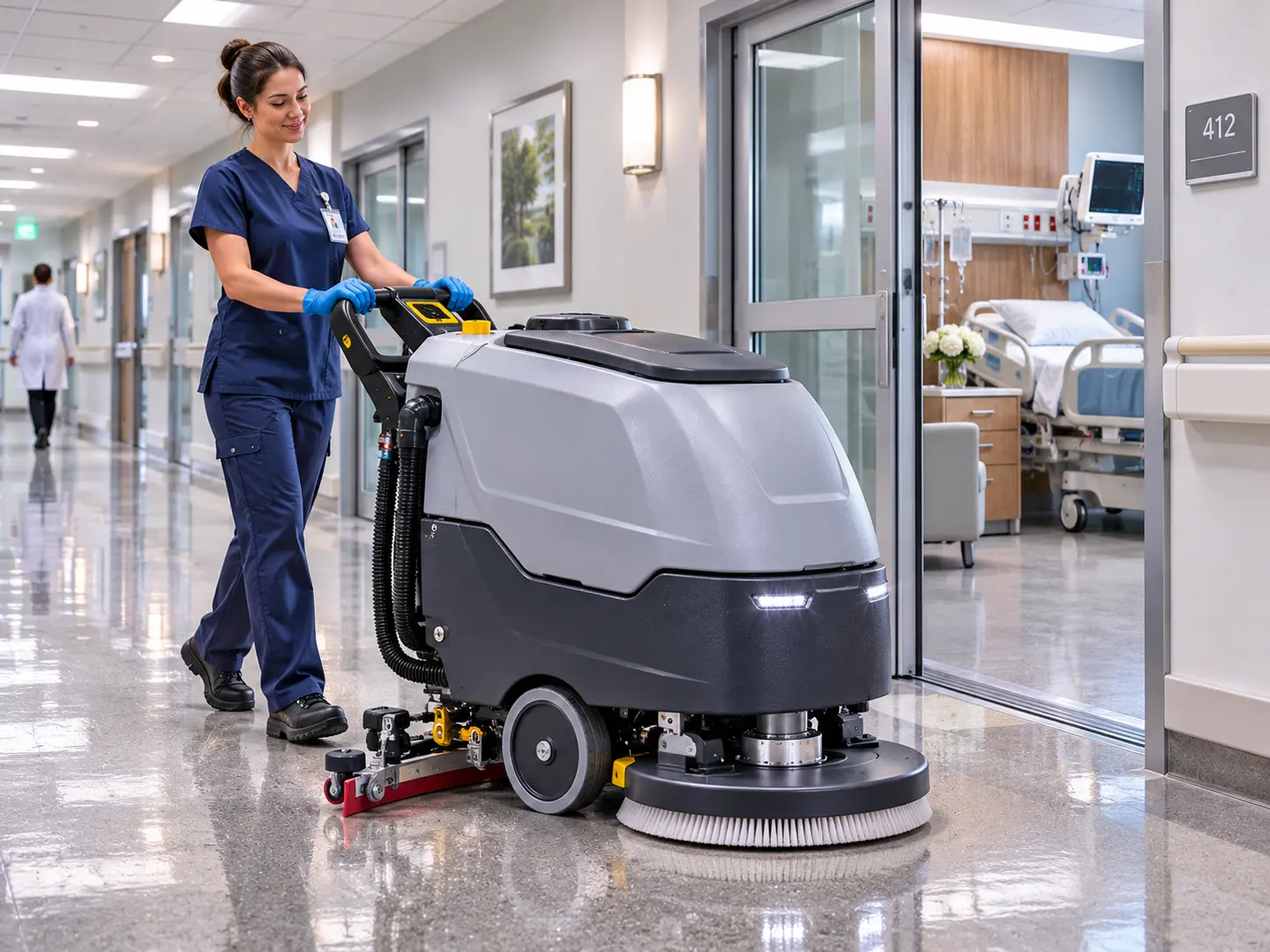
A walk-behind floor scrubber is operated by a person walking behind the machine. These scrubbers come in different sizes, including compact models designed for tighter spaces.
They can be a practical choice for healthcare facilities that need to clean corridors, waiting areas, and smaller rooms where machine use is approved.
Key benefits include:
- Easier movement through narrow hallways
- Better control around furniture and obstacles
- Compact storage requirements
- Suitable cleaning options for small and medium spaces
- Less equipment space required than larger ride-on models
Walk-behind scrubbers are useful for many healthcare cleaning tasks, but their cleaning width and tank capacity can affect how quickly operators cover larger areas.
Ride-On Floor Scrubbers
A ride-on floor scrubber allows the operator to sit on the machine while cleaning. These models are generally larger and are designed to cover wide floor areas with fewer passes.
Hospitals with spacious lobbies, long service corridors, or large open areas may benefit from ride-on equipment where traffic, access, and facility procedures allow its use.
Key benefits include:
- Wider cleaning paths on many models
- Reduced walking during long cleaning shifts
- Larger tank options
- Efficient cleaning of open floor areas
- Comfortable operation for extended cleaning tasks
Ride-on scrubbers require more turning space and storage. They may not be suitable for crowded patient areas, narrow hallways, or rooms with limited access.
Walk-Behind vs. Ride-On Floor Scrubber: Quick Comparison
| Feature | Walk-Behind Floor Scrubber | Ride-On Floor Scrubber |
| Machine size | Compact to medium | Generally larger |
| Maneuverability | Good for tight spaces | Better for open areas |
| Cleaning coverage | Small to medium areas | Medium to large areas |
| Storage | Usually less space required | More space required |
| Operator position | Walking | Seated |
| Common hospital use | Corridors and smaller approved areas | Wide hallways and large lobbies |
| Initial cost | Often lower | Often higher |
6 Key Features to Look for in a Hospital Floor Scrubber
Choosing the right hospital floor scrubber requires more than checking its size or speed. Look for a machine that works well on different floor types, collects water effectively, operates quietly, and is easy to use and maintain. These six features can help you select equipment that meets your facility’s daily cleaning needs.
1. Cleaning Performance and Floor Compatibility
Hospitals often have several types of flooring, including vinyl, tile, rubber, and other resilient surfaces. Not every brush, pad, or cleaning solution works safely on every material.
Choose a floor scrubber with cleaning tools that match your flooring manufacturer’s maintenance instructions. Adjustable cleaning settings can also be useful when working with different floor surfaces.
Avoid overly aggressive pads or brushes that may damage protective floor finishes.
2. Water Recovery and Floor Drying
Water recovery is an important feature of floor scrubbers for hospitals. Floors that remain wet can create slipping hazards for patients, visitors, and staff.
Look for machines with effective vacuum suction, well-designed squeegees, and reliable recovery tanks. These components help collect dirty water during cleaning.
Before purchasing, test how much moisture remains after the scrubber passes over the floor. Continue using appropriate wet-floor signs and access controls.
3. Low Noise Levels for Patient Comfort
Hospitals operate throughout the day and night. Loud cleaning equipment can disturb patients, medical staff, and visitors, particularly near recovery rooms and other quiet areas.
Consider floor scrubbers with low-noise operating modes. Battery-powered equipment may also avoid some of the noise associated with other power systems, although noise levels vary by model.
Ask about the machine’s stated operating noise and, where possible, test it in a suitable area before buying.
4. Machine Size and Maneuverability
Hospitals contain narrow hallways, doorways, elevators, medical equipment, and furniture. A floor scrubber that works well in a large lobby may be difficult to operate in smaller spaces.
Check the machine’s width, turning radius, and overall dimensions. Make sure it can move through the required doors and storage entrances.
Compact floor scrubbers can be useful for approved smaller areas, while larger machines are generally better suited to open spaces.
5. Battery Runtime and Charging Requirements
Battery-powered floor scrubbers allow operators to clean without managing a long power cord. This can be helpful in busy healthcare environments where cords may interfere with pedestrian movement.
However, battery runtime must be sufficient for the planned cleaning shift. Compare operating time, charging requirements, and battery maintenance before purchasing.
Also confirm that your facility has a suitable charging and storage location that meets the equipment manufacturer’s safety instructions.
6. Tank Capacity and Maintenance Access
Floor scrubbers use solution tanks for cleaning water and recovery tanks for collecting dirty water. Larger tanks can reduce refill stops, but they also increase machine size and weight.
Choose a tank capacity that matches your cleaning area and available space. For smaller hospitals, a compact machine may provide enough capacity without creating storage problems.
Look for accessible filters, removable squeegees, easy-to-clean tanks, and replaceable brushes. These features make routine maintenance simpler for cleaning staff.
How to Choose a Floor Scrubber for Different Hospital Areas
Different hospital areas require different cleaning approaches. A large floor scrubber may work efficiently in an open lobby but may not be suitable for a patient room filled with medical equipment. Similarly, a compact machine may be easy to maneuver but take longer to clean a large hallway.
Before selecting equipment, divide the facility into cleaning areas and review each location’s floor type, available space, traffic, and approved cleaning procedures. The environmental services and infection prevention teams should approve where equipment can be used.
| Hospital Area | Equipment to Consider | Important Buying Factors |
| Main lobbies | Walk-behind or ride-on scrubber | Coverage, traffic, water recovery |
| Wide corridors | Walk-behind or compact ride-on scrubber | Noise, maneuverability, cleaning width |
| Patient rooms | Compact scrubber where approved | Access, noise, cleaning protocols |
| Emergency departments | Compact or walk-behind scrubber where approved | Traffic, water recovery, safe operation |
| Waiting areas | Quiet walk-behind scrubber | Noise, size, drying performance |
| Kitchens and service areas | Suitable commercial scrubber | Floor compatibility, cleaning solution, soil type |
| Specialized clinical areas | Facility-approved equipment and methods | Infection-control requirements |
Hospital Floor Scrubber Cleaning and Infection-Control Considerations
Cleaning equipment plays an important role in maintaining healthcare facilities, but floor scrubbers must be used correctly. Hospitals have established procedures for handling soil, spills, contaminated materials, and cleaning products.
A floor scrubber helps remove dirt from suitable hard surfaces. However, the machine itself does not automatically disinfect floors. Cleaning teams must follow the facility’s environmental cleaning policies and use approved products and methods when disinfection is required.
Cleaning vs. Disinfecting Hospital Floors
Cleaning removes dirt and other material from a surface. Disinfection uses an appropriate product or process to address microorganisms when required by the cleaning protocol.
For routine patient-area floors, regular cleaning is generally appropriate unless the area or contamination risk requires disinfection. A hospital floor scrubber can support the cleaning process, but it should not be treated as a replacement for required disinfection.
If a disinfectant is used, follow its label instructions, approved applications, dilution, and required wet contact time. A scrubber that immediately collects the solution may not allow enough contact time for disinfection.
Preventing Cross-Contamination Between Areas
A floor scrubber collects dirty water, which means its tanks, hoses, brushes, and squeegees require proper cleaning.
Staff should empty recovery tanks at approved disposal locations and clean machine components according to the manufacturer’s instructions and hospital procedures.
Equipment used in different hospital zones may require additional cleaning or dedicated accessories. Always follow the facility’s infection-prevention guidance before moving machines between areas.
Safe Operation Around Patients and Staff
Patients, staff, and visitors may continue moving through the hospital while cleaning takes place. Operators should plan cleaning routes to reduce disruption and avoid unnecessary hazards.
Use wet-floor signs, keep access routes clear, and operate machines at appropriate speeds. Cleaning should also be scheduled around patient care whenever possible.
Staff must receive training on machine controls, safe handling, approved cleaning products, and the facility’s cleaning procedures.
How Much Does a Hospital Floor Scrubber Cost?
The cost of a hospital floor scrubber depends on the machine’s size, cleaning width, battery system, tank capacity, and additional features. Compact scrubbers generally have lower purchase costs than larger ride-on machines, although prices vary between manufacturers and models.
Operating costs also matter. Hospitals should consider replacement brushes, squeegees, batteries, cleaning solutions, and routine maintenance. Choosing equipment that is easy to service can help reduce unnecessary downtime and keep daily cleaning schedules on track.
Labor is another important factor. A machine that covers more floor space efficiently may reduce cleaning time, but only if it can move through the facility without frequent interruptions. Larger equipment is not always the most economical choice for smaller or crowded areas.
When comparing floor scrubber prices, focus on the total cost of ownership rather than the initial purchase price. Consider equipment life, maintenance requirements, replacement-part availability, and the actual cleaning workload before making a decision.
Common Mistakes to Avoid When Buying Hospital Floor Scrubbers
Buying the wrong floor scrubber can lead to cleaning delays, unnecessary maintenance expenses, and equipment that staff find difficult to operate. Some facilities focus on machine size or price without checking whether the equipment suits their floors and working conditions.
Before purchasing, review your cleaning requirements and test the equipment where possible. The following mistakes are worth avoiding:
- Choosing an oversized machine: Large scrubbers may struggle in narrow corridors and crowded spaces.
- Ignoring flooring compatibility: Incorrect pads or brushes can damage flooring.
- Overlooking noise levels: Loud equipment may disrupt patients and staff.
- Ignoring water recovery: Poor suction can leave floors unnecessarily wet.
- Selecting insufficient battery runtime: Frequent charging can interrupt cleaning schedules.
- Forgetting maintenance costs: Replacement parts and servicing affect long-term expenses.
- Assuming cleaning means disinfection: A scrubber does not automatically meet disinfection requirements.
Find the Right Floor Scrubber for Your Healthcare Facility at Pressure King Inc.
Choosing the right cleaning equipment can help hospitals maintain cleaner floors while making daily maintenance easier for staff. Whether your facility needs a compact machine for smaller spaces or a larger scrubber for open areas, selecting suitable equipment is important.
Pressure King Inc. offers commercial floor cleaning equipment, including walk-behind floor scrubbers and other cleaning solutions for different business environments.
Hospitals and healthcare facilities can explore available equipment based on cleaning width, machine size, floor compatibility, and daily cleaning needs.
Contact Pressure King Inc. to discuss commercial floor scrubber options for your healthcare facility.
Conclusion
Choosing the right floor scrubbers for hospitals requires careful consideration of floor types, machine size, noise levels, water recovery, and cleaning requirements. Walk-behind scrubbers can be practical for smaller areas, while ride-on models may suit larger open spaces.
The best hospital floor scrubber is one that fits your facility’s daily cleaning needs, works safely with your flooring, and supports approved cleaning procedures.
Before purchasing, compare the available features, operating costs, and maintenance requirements. If you need help selecting healthcare floor cleaning equipment, explore the available options at Pressure King Inc.
Frequently Asked Questions
What type of floor scrubber is best for hospitals?
Walk-behind floor scrubbers are often practical for hospital corridors and smaller cleaning areas because they are easier to maneuver. Compact models can also be useful in approved restricted spaces. Ride-on scrubbers may be suitable for larger lobbies and wide hallways. The right choice depends on the facility’s layout, flooring, and cleaning procedures.
Are walk-behind or ride-on floor scrubbers better for healthcare facilities?
Walk-behind scrubbers are generally better suited to smaller spaces and areas with obstacles. Ride-on scrubbers can be useful for covering larger open areas efficiently. Hospitals should compare machine dimensions, noise levels, water recovery, and cleaning coverage before deciding.
Can floor scrubbers be used in hospital patient rooms?
Some compact floor scrubbers may be used in patient rooms when approved by the facility’s environmental services and infection prevention teams. Their suitability depends on floor type, available space, cleaning procedures, and equipment hygiene. Specialized areas may require dedicated equipment or alternative cleaning methods.
Do hospital floor scrubbers disinfect floors?
Not automatically. Floor scrubbers primarily remove dirt and collect dirty water. Disinfection requires an appropriate product or approved process and compliance with the required contact time. Hospitals should follow their infection-control policies and disinfectant label instructions whenever disinfection is necessary.
What features should a healthcare floor scrubber have?
Important features include effective water recovery, suitable brushes or pads, manageable operating noise, easy maneuverability, sufficient battery runtime, and accessible maintenance components. Machine size and tank capacity should also match the facility’s cleaning area and storage space.
How often should hospital floor scrubbers be cleaned and maintained?
Operators should follow the manufacturer’s instructions and the facility’s equipment cleaning procedures. Recovery tanks, brushes, and squeegees generally need attention after use, while batteries, filters, and mechanical components require scheduled inspections. Equipment used in higher-risk areas may need additional cleaning procedures.

Michael Adeniran is the CEO of Pressure King Inc. He has been dealing in commercial cleaning equipment for many years. He is one of the leading specialists and experts in commercial cleaning products.