

Eco-Friendly Floor Cleaning Machines: Best Green Solutions for Businesses
When companies are going greener, cleaning equipment is one aspect that they tend to ignore. Conventional scrubbers and other floor cleaners may use too much water, emit, or even become largely dependent on chemical cleaning agents. However, it was a lucky twist of events because many new eco friendly models of floor scrubbers are readily available in the market today, representing an ample opportunity to reduce the ecological load without losing the quality of performance. Ranging from water-saving technologies, battery-driven ones, and chemical-free automated solutions, there is a green solution that would serve facilities of any size.
In this blog, we discuss eco-friendly floor scrubbers, the importance of green cleaning, the most suitable features and types of floor cleaning machines that could be purchased, and how to make a proper decision when it comes to selecting the right one to fit your commercial facility. No matter whether you run an office building, a warehouse, a hospital, or a school, you can consider changing to green cleaning equipment as an efficient way to minimize waste and lower costs and help meet sustainability initiatives of a corporation.
Why Eco-Friendly Floor Cleaning Matters for Businesses
The move to green cleaning equipment is not just a good gesture to the environment, but a good idea as a profit-making mechanism. Green cleaning machines will consume less water and chemicals, lower energy expenditure, and in many cases tend to be less maintenance intensive with an increased life time. These are efficiencies that reduce the operation costs and assist businesses in achieving corporate social responsibility (CSR) standards. Also, numerous clients and customers are more likely to work or cooperate with companies that seem to be sustainability-oriented.
Other certifications that you can get based on green practices include LEED, which can help make your facility more marketable. With the help of industries like healthcare, education, and hospitality, there is an advantage that the use of eco-conscious equipment in indoor air improves safer health conditions and reduces exposure to toxic materials. With the provision of eco-friendly floor scrubber solutions, your company will be at a competitive advantage over other companies and you will have a cleaner and healthier environment to both the workers and visitors to your business. To make it short, sustainable cleaning is beneficial not only to the environment but also to the profit.

Reducing Water Consumption
Water use is an important consideration for facilities with large floor areas. Machines with controlled water dispensing and efficient recovery systems can help reduce unnecessary water consumption while maintaining consistent cleaning performance. Using only the amount of solution required for a particular floor can also reduce wastewater generation.
Lowering Chemical Consumption
Reducing dependence on cleaning chemicals can help facilities control supply costs and minimize chemical residues. Some floor cleaning technologies can operate with reduced chemical use depending on the floor type, soil level, and machine configuration. Businesses should always select cleaning methods that meet the hygiene requirements of their specific facility.
Improving Indoor Cleaning Conditions
Sustainable cleaning equipment can also support indoor environments by reducing noise, chemical exposure, and unnecessary water use. This can be particularly valuable in schools, healthcare facilities, offices, and other occupied spaces where cleaning may need to take place while employees, patients, students, or visitors are present.
Key Features of Eco-Friendly Cleaning Machines
Modern eco-friendly floor scrubber machines incorporate innovative features that drastically reduce environmental impact:
Low-Water Usage
- On-demand water dispensing systems
- Smart flow control to reduce runoff
- Auto shut-off to prevent waste
Battery-Powered Operation
- Zero emissions
- Quiet operation for noise-sensitive environments
- Long runtime lithium-ion or AGM batteries
Chemical-Free Cleaning
- Orbital scrubbing or steam technology
- Use of deionized or ionized water
- Eliminates harmful fumes and residues
These technologies not only promote sustainability but also improve health and safety for operators. Using less water means floors dry faster, reducing the risk of slips. Quiet, battery-powered machines are perfect for 24/7 operations and sensitive areas like hospitals or schools. Choosing machines with these green features helps reduce your facility’s carbon footprint without sacrificing cleaning power.
Types of Eco-Friendly Floor Cleaning Machines
There are several categories of green cleaning equipment tailored for different facility sizes and flooring types:
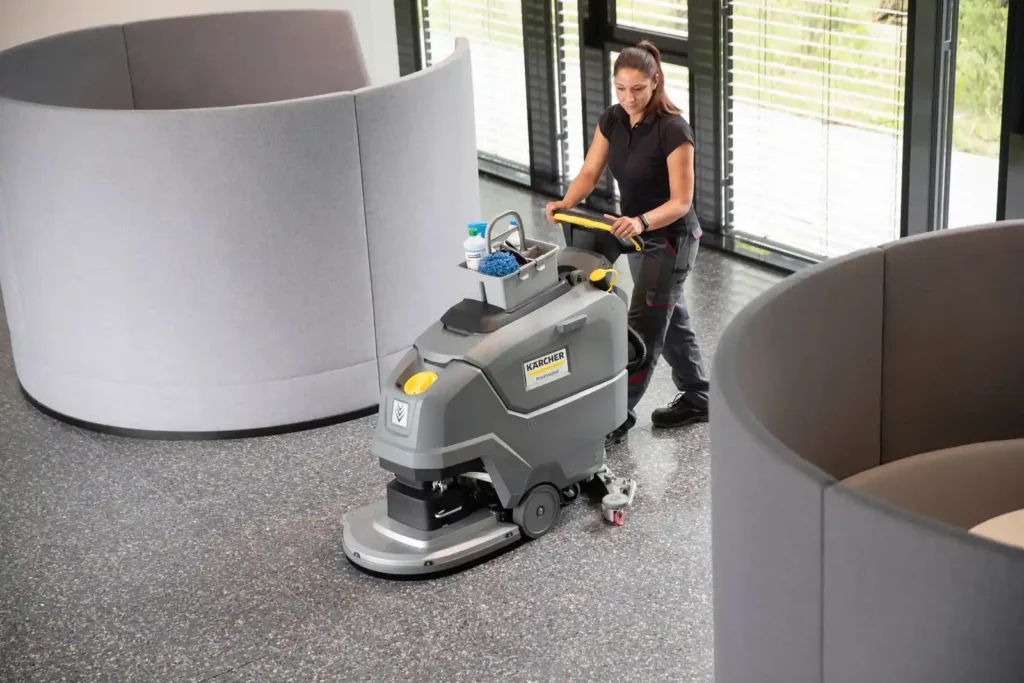
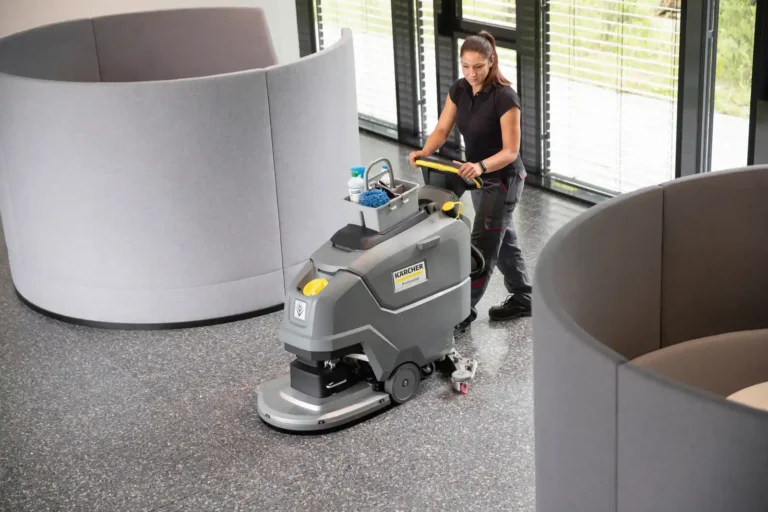
Walk-Behind Scrubbers
- Compact and easy to maneuver
- Ideal for small to medium commercial spaces
- Often feature water-saving and energy-efficient modes
Ride-On Scrubbers
- High productivity for large floor areas
- Advanced eco modes for battery and water efficiency
- Comfortable for long cleaning shifts
Low-Moisture Carpet Extractors
- Require less water per square foot
- Reduce carpet drying time dramatically
Steam Floor Cleaners
- Rely on heat, not chemicals
- Perfect for sanitation in food, medical, or childcare facilities
These machines are not just effective—they help your team clean smarter, faster, and greener. With so many sizes and styles available, there’s an eco-friendly floor scrubber suitable for every commercial need.

How Eco-Friendly Floor Cleaning Machines Reduce Operating Costs
Sustainable cleaning equipment can reduce ongoing operating expenses by using less water, energy, and cleaning chemicals. For facilities that clean large floor areas regularly, even small reductions in resource consumption can add up over time. Lower consumption can also reduce the frequency of supply purchases and help cleaning teams work more efficiently.
The actual savings depend on the machine, facility size, cleaning frequency, floor condition, and operating practices. Businesses should evaluate total operating costs rather than relying only on the purchase price when comparing green cleaning equipment.
Water and Chemical Savings
Machines designed for controlled water flow can reduce the amount of solution used during each cleaning cycle. Reduced chemical consumption can provide additional savings, particularly for facilities with frequent floor-cleaning requirements.
Energy and Labor Efficiency
Efficient cleaning machines can also help reduce energy use and labor time. Features such as battery operation, optimized cleaning settings, and higher productivity can allow operators to cover the required area with fewer interruptions.
Top Recommended Green Floor Cleaning Machines
Here are some top-performing models known for sustainability and cleaning power:
- Kärcher B 40 W Bp – Battery-operated walk-behind scrubber with eco-efficiency mode and smart water management
- Tennant T7AMR – Autonomous ride-on scrubber with minimal chemical usage and advanced battery technology
- IPC CT51 – Features low water consumption and silent operation for sensitive environments
- Cleanfix RA 431 IBC – Ideal for small areas; uses less water and offers chemical-free options
All these models come with green certifications such as ENERGY STAR, EcoLogo, or CRI approval. When selecting your green cleaning equipment, always look for these third-party certifications to ensure you’re making a genuinely sustainable investment.
What to Look for in Sustainable Floor Cleaning Equipment
Sustainability claims can vary between machines, so businesses should compare measurable features before making a purchase. Look at water consumption, battery performance, chemical requirements, cleaning productivity, maintenance needs, and expected service life.
It is also useful to consider the machine’s recovery system and replacement-part availability. A durable machine that can be maintained and repaired over a longer service period may provide better long-term value than equipment that requires frequent replacement.
Water Efficiency and Recovery
Check how much water the machine uses during normal operation and how effectively it recovers used solution. Efficient water management can reduce wastewater while helping floors dry more quickly.
Battery Performance
For battery-powered machines, compare expected runtime, charging requirements, battery type, and replacement costs. The right battery capacity should match the facility’s cleaning schedule to avoid unnecessary interruptions.
Maintenance and Serviceability
Easy access to routine maintenance points can help operators keep the machine performing efficiently. Businesses should also consider the availability of replacement parts and technical support when selecting commercial cleaning equipment.
Cost vs. Sustainability: What to Expect
While eco-friendly floor scrubber machines may have a higher upfront cost, their long-term savings make them a wise investment. Here’s what you can expect:
- Lower water and electricity bills
- Reduced chemical costs
- Fewer replacement parts due to better build quality
- Fewer operator injuries and less sick time due to better air quality
Businesses that invest in green machines often see a return on investment (ROI) within 1–3 years, depending on usage and maintenance practices. Plus, the marketing value of promoting your sustainable cleaning practices can help attract environmentally conscious clients. Think of this investment not just in terms of cleaning, but as part of your broader sustainability strategy.
How to Choose the Right Green Cleaning Equipment
Choosing the right green cleaning equipment starts with evaluating your facility’s needs:
- Size of the area: Larger spaces benefit from ride-on models
- Type of flooring: Tile, concrete, carpet, or vinyl each require different brush types and moisture levels
- Frequency of use: Daily use demands long battery life and durable parts
- Noise requirements: Hospitals and schools need quiet machines
Also, consider machines with programmable settings, eco-modes, and compatibility with green-certified cleaning solutions. Consult with suppliers who specialize in eco-friendly floor scrubber equipment and request a demo or trial to ensure the machine suits your operational flow. Don’t just go by price—invest in performance, support, and sustainability.

Consider Facility Size and Layout
The size and layout of the facility should guide the machine’s cleaning path, maneuverability, and productivity requirements. Large open warehouses may benefit from ride-on equipment, while smaller or divided spaces may be easier to clean with compact walk-behind machines.
Match the Machine to the Floor Type
Different surfaces require different cleaning approaches. Before purchasing equipment, consider whether the facility has concrete, tile, vinyl, carpet, or another flooring material. Brush type, cleaning pressure, moisture level, and machine configuration should be suitable for the surface.
Evaluate Daily Cleaning Requirements
Cleaning frequency and operating hours also affect equipment selection. Facilities that clean several times a day may need longer battery runtime, larger solution and recovery tanks, and durable components designed for frequent use.
Going Beyond Equipment: Green Cleaning Best Practices
Green cleaning isn’t only about the machines—it’s about a holistic approach. To maximize your investment in eco-friendly floor scrubber equipment:
- Use biodegradable, non-toxic cleaners approved by environmental agencies
- Train staff on efficient use of water and energy-saving settings
- Schedule routine maintenance to ensure optimal machine performance
- Integrate green cleaning protocols into your janitorial SOPs
- Track and report cleaning metrics for internal audits or LEED certifications
By establishing green practices across your cleaning operations, you reinforce your commitment to sustainability. It also builds a cleaner, healthier, and more reputable brand image in the eyes of employees, clients, and stakeholders.
Final Thoughts
Purchasing an eco friendly floor scrubber can be an effective strategy in regards to the environmentally friendly operations of a company. As environmental benchmarking is getting higher and as more pressure is put on maintaining a clean operation without creating waste through it, the use of green cleaning equipment doesn’t just make ethical good sense or ethical right sense, it also makes financial sense as well. The machines produced today do more with less: with less water, power, and chemicals. Whether in a healthcare facility, a retail store or in an industrial setting, the green floor cleaning alternative takes you through a smarter, cleaner, safer future. Whether you want to replace your current fleet or add sustainability to your facility management plan, it is high time you go green.
For businesses in New Jersey looking for commercial floor cleaning equipment, Pressure King can help you evaluate machines based on facility size, floor type, cleaning frequency, and sustainability goals. Choosing equipment that matches your actual cleaning requirements can help balance environmental performance with long-term operating value.
Frequently Asked Questions (FAQs)
What makes a floor cleaning machine eco-friendly?
An eco-friendly floor cleaning machine is designed to reduce water, energy, or chemical consumption while maintaining effective cleaning performance. Features such as controlled water flow, efficient recovery systems, battery operation, and eco-cleaning modes can support more sustainable cleaning.
Are eco-friendly floor scrubbers effective for commercial cleaning?
Yes. Eco-friendly floor scrubbers can provide effective cleaning for offices, warehouses, hospitals, schools, retail stores, and other commercial facilities. The right machine depends on the floor type, facility size, cleaning frequency, and level of soil.
Do eco-friendly floor scrubbers use less water?
Many modern floor scrubbers are designed with water-saving features such as controlled solution dispensing, smart flow systems, and efficient recovery technology. These features can help reduce water consumption compared with less efficient cleaning methods.
Can green floor cleaning machines work without chemicals?
Some cleaning technologies can reduce or eliminate the need for conventional cleaning chemicals in specific applications. Orbital scrubbing, steam cleaning, and certain water-based technologies may provide chemical-reduction options, depending on the floor and cleaning requirements.
Are battery-powered floor scrubbers better for the environment?
Battery-powered scrubbers can reduce direct emissions during operation and eliminate the need for power cords. Their overall environmental impact also depends on factors such as battery type, charging practices, machine lifespan, maintenance, and electricity sources.
Are eco-friendly floor cleaning machines more expensive?
Some eco-friendly machines have a higher initial purchase price because of their technology and efficiency features. However, reduced water, chemical, energy, and labor consumption can help lower operating costs over time.
How do I choose the best eco-friendly floor scrubber for my business?
Consider your facility size, floor type, cleaning frequency, available storage space, noise requirements, battery runtime, water consumption, and maintenance needs. Walk-behind machines may suit smaller spaces, while ride-on models are often better for large open areas.
How can businesses make floor cleaning more sustainable?
Businesses can combine efficient cleaning equipment with responsible operating practices. Using appropriate water and chemical settings, training operators, maintaining machines regularly, and tracking resource consumption can help reduce waste and improve cleaning efficiency.
Are eco-friendly floor scrubbers suitable for hospitals and schools?
Yes. Quiet, battery-powered machines with controlled water and chemical use can be useful in hospitals, schools, and other occupied facilities. Equipment should still be selected according to the facility’s cleaning, hygiene, floor-care, and operational requirements.
Do eco-friendly floor scrubbers help reduce operating costs?
They can. Reduced consumption of water, cleaning chemicals, energy, and labor can lower ongoing operating expenses. Actual savings depend on the machine, facility size, cleaning frequency, floor conditions, and how the equipment is operated.

Michael Adeniran is the CEO of Pressure King Inc. He has been dealing in commercial cleaning equipment for many years. He is one of the leading specialists and experts in commercial cleaning products.


