


Using Hot Water Pressure Washers to Clean Commercial Kitchen Floors
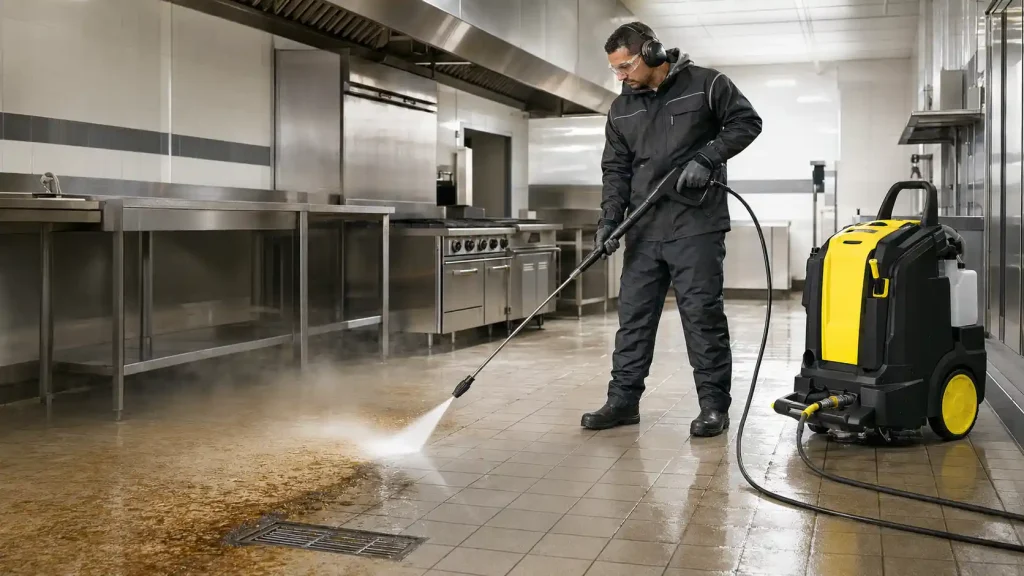

Commercial kitchens operate in some of the most demanding cleaning environments. Restaurants, hotels, cafeterias, food processing facilities, and commercial cooking areas deal with grease, oil, food residue, spills, and sanitation concerns every day. Traditional mopping methods often struggle to remove heavy buildup, especially in areas with constant cooking activity.
A hot water pressure washer for commercial kitchen floors provides a more effective cleaning solution by combining high-pressure water with heat to break down grease and stubborn contamination. Unlike cold water cleaning, heated pressure washing helps dissolve oily residue faster, reducing manual scrubbing and improving overall cleaning efficiency.
In this guide, we will explain how hot water pressure washers work for commercial kitchen cleaning, why temperature matters, what PSI and GPM are needed, which accessories improve results, and how businesses can choose the right equipment for food service environments.
Why Commercial Kitchens Need Professional Pressure Washing Equipment
Commercial kitchen floors face constant exposure to substances that are difficult to remove. Grease from cooking areas, food particles, oil spills, and beverage residue can quickly build up on floors and create safety concerns. Regular cleaning is essential because dirty kitchen floors can contribute to slip hazards, unpleasant odors, difficult-to-remove stains, increased maintenance requirements, and a less professional facility appearance. While traditional cleaning methods may work for light maintenance, commercial kitchens often require stronger equipment to handle heavy contamination.
A commercial pressure washer provides the power and efficiency needed for deeper cleaning, especially when combined with hot water and appropriate cleaning chemicals. Selecting equipment according to the floor type and level of contamination also helps prevent unnecessary wear on surfaces.
How Does a Hot Water Pressure Washer Work?
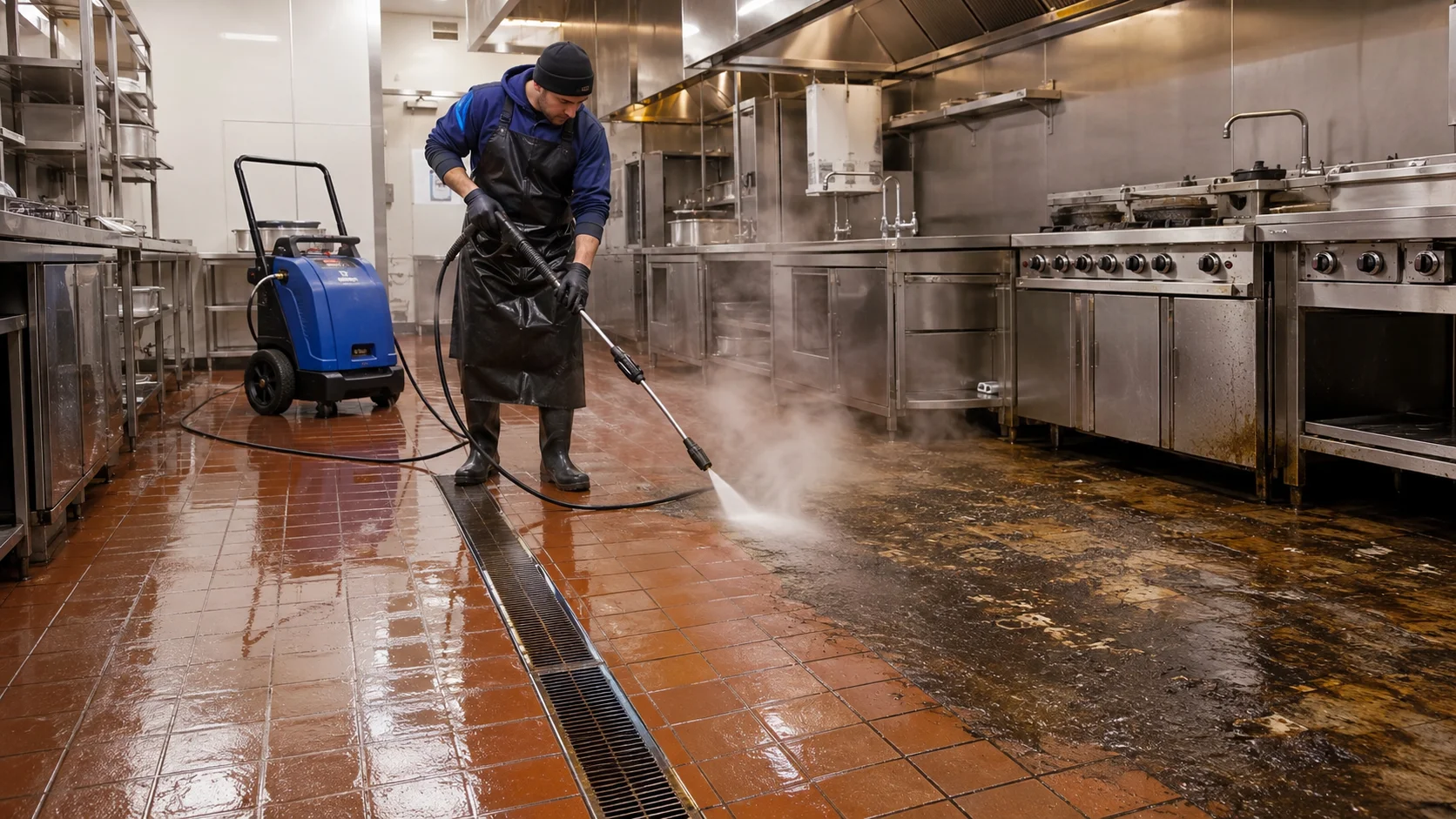
A hot water pressure washer uses heated water combined with high-pressure spray to remove difficult contaminants. The heating system increases cleaning effectiveness by helping break down materials that do not easily dissolve in cold water.
Pressure
Pressure helps remove dirt, residue, and buildup from the surface. The correct pressure setting depends on the flooring material and the type of contamination being removed.
Water Flow
GPM determines how quickly water moves through the system and carries loosened contaminants away. Higher flow can improve rinsing and help operators cover larger areas more efficiently.
Heat
Hot water helps dissolve grease, oil, and food-related residue faster. Heat works together with pressure and detergent to reduce the amount of manual scrubbing required during demanding cleaning jobs. The combination of these factors allows commercial kitchens to clean more effectively while maintaining a more consistent cleaning process.
Why Hot Water Is Better for Grease and Oil Removal
Grease is one of the biggest challenges in commercial kitchen cleaning. Cold water can remove surface dirt, but it often struggles with oily substances because grease can remain sticky and difficult to break apart. Hot water improves cleaning performance because heat softens and loosens grease, allowing pressure and detergents to remove it more effectively. This makes heated pressure washing particularly useful in areas where cooking activity produces frequent grease buildup.
A hot water pressure washer is especially useful for restaurant kitchen floors, cooking areas, food preparation spaces, exhaust cleaning areas, food processing facilities, and commercial dishwashing areas. For businesses dealing with regular grease buildup, heated pressure washing can reduce cleaning time and improve results.
Benefits of Using a Hot Water Pressure Washer for Commercial Kitchen Floors
Commercial kitchens require reliable cleaning solutions that can keep up with daily operations. A properly selected hot water pressure washer can support faster cleaning while reducing the effort required for heavy grease and residue removal.
Faster Grease Removal
The biggest advantage of hot water cleaning is improved grease removal. Heat helps break down oily residue faster compared with cold water systems, allowing cleaning teams to spend less time scrubbing and more time maintaining the facility.
Better Cleaning Results
Hot water combined with pressure and detergents provides deeper cleaning by helping remove grease, oil, food residue, dirt, and stains. This creates a cleaner and more professional kitchen environment while making routine floor maintenance easier.
Reduced Chemical Dependence
Because heat improves cleaning power, businesses may be able to reduce the amount of detergent required for certain applications. Using the correct balance of heat, pressure, and chemicals creates a more efficient cleaning process without relying on excessive chemical use.
For grease-heavy applications, businesses can also review commercial cleaning chemicals and detergents to select products suited to professional cleaning equipment and specific surfaces.
Improved Workplace Safety
Greasy floors can become dangerous in commercial kitchens. Regular pressure washing helps reduce slippery buildup and supports a safer workplace for employees. Cleaning schedules should still account for proper drainage, drying time, and the flooring manufacturer’s recommendations.
What PSI Do You Need for Commercial Kitchen Floor Cleaning?
The correct PSI depends on the floor material, level of contamination, and cleaning frequency. For most commercial kitchens, pressure washers between 1,500 and 3,000 PSI are commonly suitable.
| Cleaning Application | Recommended PSI |
|---|---|
| Light kitchen floor cleaning | 1,500–2,000 PSI |
| Restaurant grease removal | 2,000–3,000 PSI |
| Food facility cleaning | 2,500–3,500 PSI |
| Heavy industrial kitchen areas | 3,000+ PSI |
The right PSI should be combined with proper temperature, detergents, and cleaning accessories. Using excessive pressure is not always better. Too much force can damage floor coatings, grout, or sensitive surfaces.
How GPM Affects Commercial Kitchen Cleaning
GPM determines how much water flows through the pressure washer system. In commercial environments, water flow plays an important role because it affects rinsing speed and productivity. Higher GPM can help remove loosened grease faster, cover larger areas, improve rinsing efficiency, and reduce overall cleaning time. For busy restaurants and food facilities, choosing equipment with the right balance of PSI and GPM can improve daily cleaning operations without relying on excessive pressure.
Choosing Between Hot Water and Cold Water Pressure Washers
Both hot and cold water pressure washers have their place, but they are designed for different cleaning needs. The main consideration is the type of contamination and the surface being cleaned.
Cold Water Pressure Washers
Cold water pressure washers work well for general dirt removal, outdoor cleaning, and light surface washing. They may be suitable for areas where grease and oil buildup are limited. For businesses that need equipment primarily for general dirt and outdoor applications, cold water machines can provide an efficient option without the added heating system.
Hot Water Pressure Washers
Hot water pressure washers are recommended for restaurant kitchens, food processing facilities, grease-heavy environments, and industrial cooking areas. The added heat provides better cleaning performance where oil and grease are common problems. For commercial kitchens, a hot water system can be a strong long-term option because it handles demanding cleaning conditions efficiently and can reduce the amount of manual scrubbing required.
Best Accessories for Commercial Kitchen Pressure Washing
The right accessories improve cleaning results and make the process easier. Businesses should select attachments based on floor size, cleaning frequency, hose requirements, and the level of contamination.
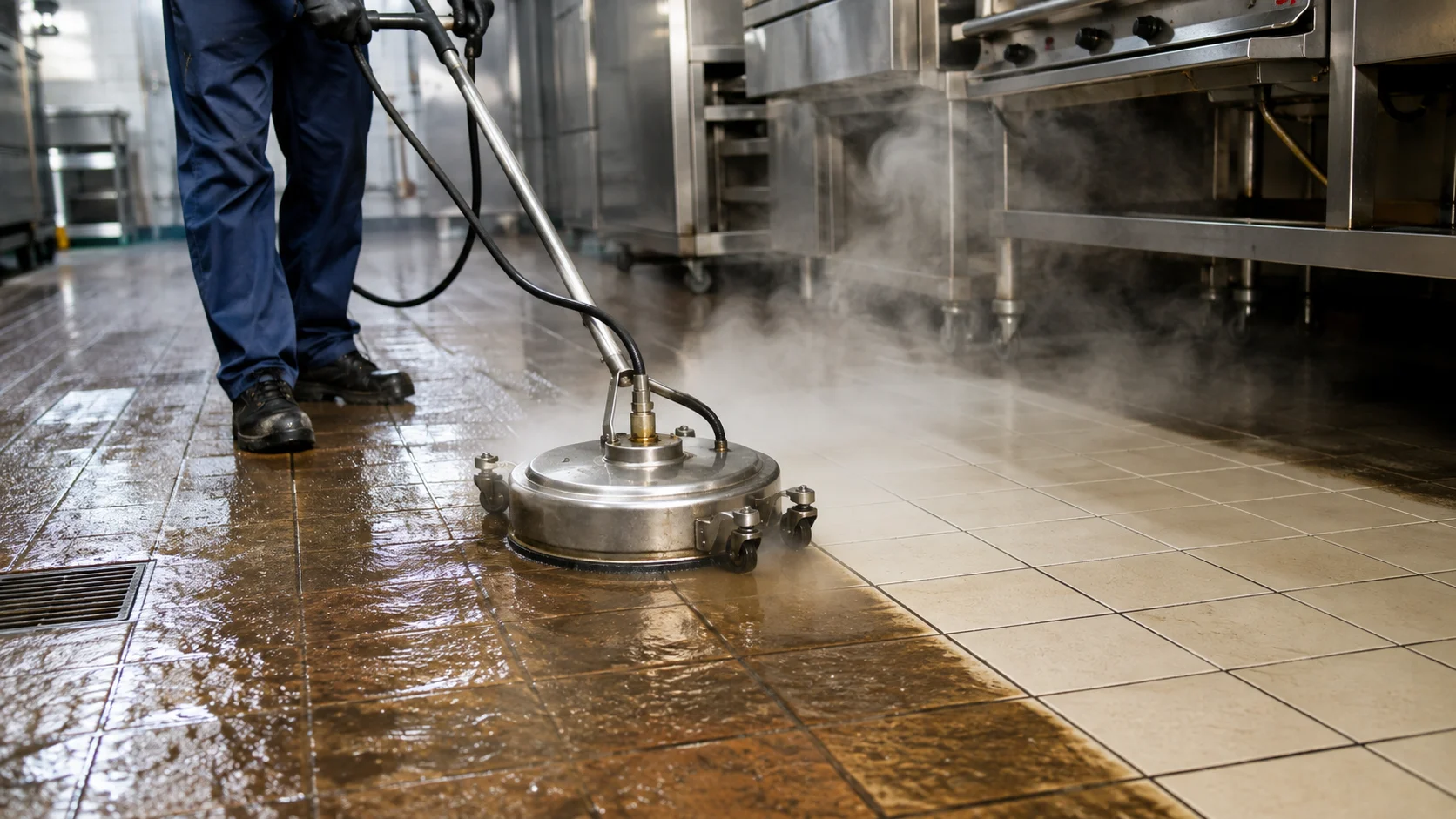
Surface Cleaner Attachments
Surface cleaners are useful for large kitchen floors because they provide even cleaning coverage, reduce streaking, and speed up floor maintenance. They help operators clean larger areas more consistently compared with using only a spray wand. Pressure King offers a range of pressure washer accessories that can support different commercial cleaning applications, including surface cleaners, nozzles, wands, guns, and hoses.
Commercial Spray Guns and Wands
Professional spray guns provide better control and comfort during longer cleaning sessions. They allow operators to adjust cleaning pressure based on different surfaces and areas, which can make detailed cleaning around equipment and edges easier.
Pressure Washer Hoses
Commercial kitchen cleaning requires durable hoses that can handle frequent use and high-pressure operation. A quality hose improves safety, reliability, and equipment performance. When a hose becomes worn, cracked, or damaged, replacing it promptly can help prevent leaks and unnecessary downtime. Businesses can review commercial pressure washer hoses when selecting replacement options.
Cleaning Chemicals and Detergents
The right detergent helps remove grease and food residue more effectively. Commercial cleaning chemicals are often used with hot water systems to improve results while reducing cleaning time. Operators should always follow the detergent manufacturer’s instructions and confirm that the product is appropriate for the floor surface and pressure washer.
Step-by-Step Guide: Cleaning Commercial Kitchen Floors with a Hot Water Pressure Washer
These are the key steps for using a hot water pressure washer to remove grease, oil, food residue, and buildup from commercial kitchen floors.
Step 1: Prepare the Cleaning Area
Before pressure washing, remove movable equipment, protect electrical components, clear loose debris, and ensure proper drainage. Preparation helps prevent damage, keeps water from collecting in unwanted areas, and improves cleaning efficiency.
Step 2: Apply Degreasing Solution
For grease-heavy areas, apply a suitable commercial detergent and allow enough dwell time for the solution to break down buildup. Avoid letting the chemical dry on the surface unless the product instructions specifically allow it.
Step 3: Select the Correct Pressure Setting
Start with moderate pressure and adjust based on the floor condition. Avoid using excessive pressure on coated or sensitive flooring because high PSI can cause surface damage without necessarily improving cleaning results.
Step 4: Use Hot Water Effectively
Set the temperature according to the cleaning requirement. Higher temperatures are useful for grease removal but should always match the surface and equipment guidelines.
Step 5: Clean Using Controlled Passes
Move the spray evenly across the floor and maintain a consistent distance from the surface. Avoid staying in one area too long because concentrated pressure and heat can damage some flooring materials.
Step 6: Rinse Thoroughly
Remove all detergent and loosened residue before allowing the floor to dry. Proper rinsing helps prevent leftover chemical buildup and leaves the surface ready for normal kitchen operations.
Common Mistakes When Pressure Washing Commercial Kitchen Floors
Avoid common pressure washing mistakes that can damage kitchen floors, spread contaminants, waste water, or create safety hazards during commercial cleaning.
Using Only Cold Water for Heavy Grease
Cold water may not effectively break down thick grease buildup. For heavy oil and grease, hot water can help soften the residue and make the cleaning process more efficient.
Choosing Too Much Pressure
Excessive PSI can damage flooring and does not always improve cleaning. Operators should begin with an appropriate pressure setting and increase it only when the surface and equipment allow it.
Ignoring Drainage
Commercial kitchens need proper drainage planning before pressure washing. Standing water can interfere with operations and create additional slip concerns, so operators should confirm that wastewater can be removed safely.
Using Incorrect Chemicals
The wrong cleaning chemical can damage surfaces or create unwanted residue. Always choose products according to the flooring material, type of contamination, and pressure washer manufacturer’s guidance.
Maintenance Tips for Commercial Hot Water Pressure Washers
These maintenance tips cover pumps, hoses, filters, and heating systems to help ensure reliable performance and reduce unexpected downtime for commercial hot water pressure washers.
- Inspect hoses and fittings regularly for leaks, wear, or damage.
- Check pumps for leaks, pressure issues, or unusual performance.
- Clean filters to maintain proper water flow and equipment efficiency.
- Inspect heating systems on hot water pressure washers.
- Replace worn components before they cause equipment failure.
- Keep commonly needed pressure washer parts available for routine repairs.
- Use professional pressure washer repair services for leaks, pump problems, hose issues, and other mechanical faults.
Pressure King Inc helps businesses in New Jersey and New York select and maintain commercial Kärcher pressure washing equipment designed for professional applications.
How Kärcher Pressure Washers Help Commercial Kitchen Cleaning
Kärcher is known for professional cleaning solutions designed for demanding commercial environments. A Kärcher commercial pressure washer can help businesses manage grease removal, food facility cleaning, restaurant maintenance, and other demanding cleaning applications.
Choosing the right Kärcher equipment depends on cleaning requirements, operating conditions, floor surfaces, and frequency of use. Businesses should consider the required PSI, GPM, water temperature, accessories, and available maintenance support before selecting a machine.
Conclusion
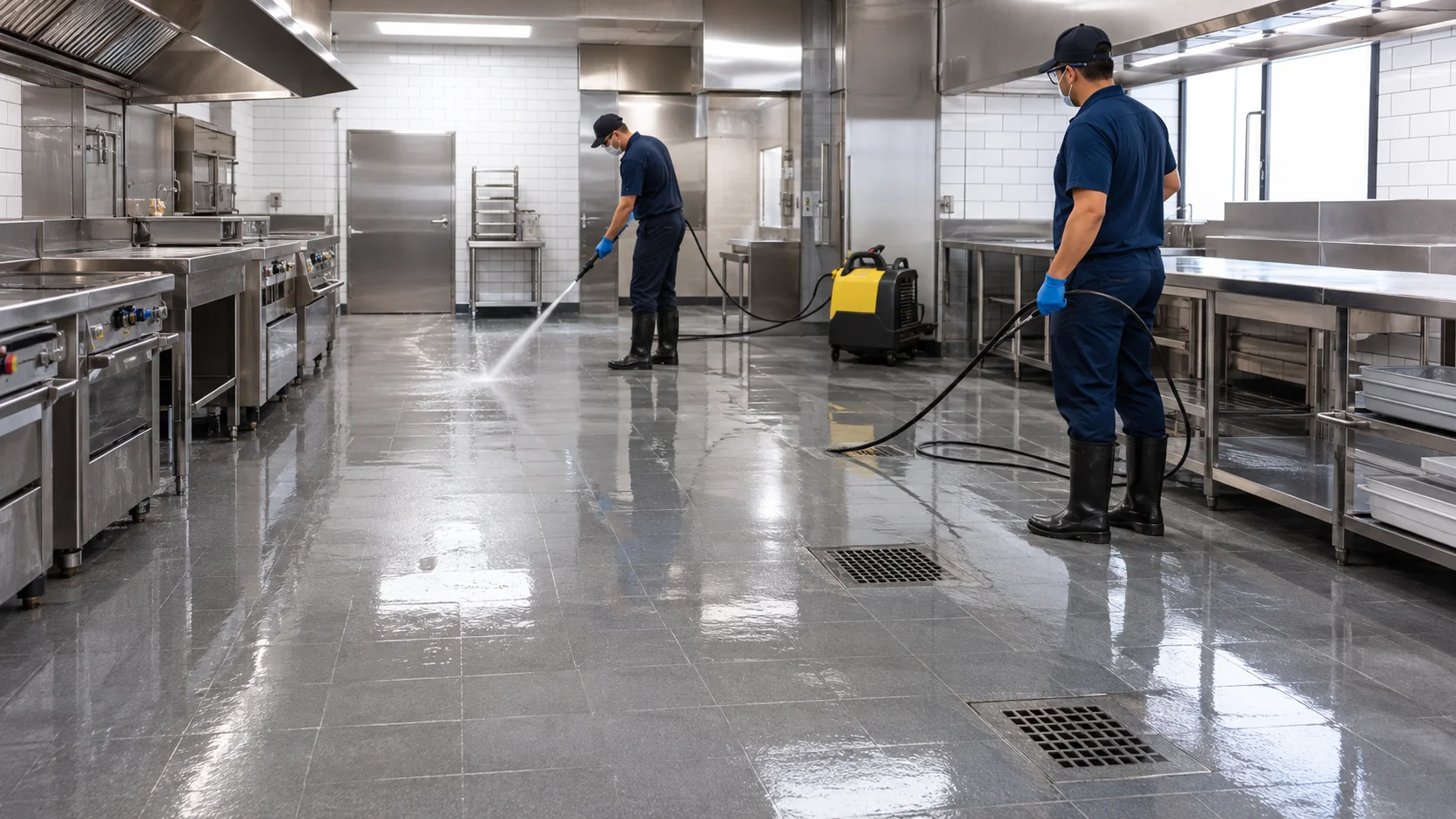
A hot water pressure washer for commercial kitchen floors provides an efficient solution for removing grease, oil, food residue, and tough contamination from demanding environments. The combination of heat, pressure, water flow, and proper cleaning chemicals allows businesses to maintain cleaner and safer kitchen spaces.
For restaurants, food facilities, and commercial kitchens in New Jersey and New York, Pressure King Inc provides Kärcher commercial pressure washers, accessories, and cleaning solutions designed for professional cleaning requirements. Choosing the right equipment helps businesses improve cleaning efficiency, reduce maintenance time, and maintain consistent facility standards.
Frequently Asked Questions
What is the best pressure washer for commercial kitchen floors?
A hot water commercial pressure washer is usually a strong option because it removes grease and food residue more effectively than cold water systems. The final choice should still consider floor material, contamination levels, required PSI and GPM, and cleaning frequency.
How much PSI do I need to clean restaurant floors?
Many commercial kitchen floors can be cleaned effectively with 1,500–3,000 PSI depending on contamination and surface type. Operators should avoid selecting pressure based only on the highest available PSI because excessive force can damage some surfaces.
Why is hot water better for grease removal?
Hot water helps soften and break down grease and oil faster, allowing pressure and detergents to remove buildup more efficiently. This is particularly useful in commercial kitchens where grease accumulates frequently.
Can pressure washers damage kitchen floors?
Yes. Excessive pressure, high temperatures, or incorrect cleaning methods can damage coatings and surfaces. Proper PSI selection, controlled cleaning passes, and suitable detergents are important for protecting kitchen floors.
Are Kärcher pressure washers good for commercial kitchens?
Kärcher offers professional cleaning equipment designed for commercial and industrial applications. The appropriate model depends on the kitchen’s cleaning requirements, operating conditions, and frequency of use.

Michael Adeniran is the CEO of Pressure King Inc. He has been dealing in commercial cleaning equipment for many years. He is one of the leading specialists and experts in commercial cleaning products.


