


How To Clean Hardwood Floors – Using a Vacuum Cleaner


The use of hardwood floors in industrial settings, e.g., warehouses, manufacturing companies, corporate offices, showrooms, healthcare centers, and large business buildings, is an excellent investment. Such areas have high pedestrian traffic, machinery handling, and dust and debris exposure. Unless the floors are adequately cleaned, they can lose their lustre, become scratched, and their long-term function is compromised.
The conventional cleaning procedure can no longer be used in factories. Professional vacuum cleaners for hardwood floors are necessary in this. This guide will provide information on how to clean hardwood floors with the use of vacuum cleaners, why vacuum cleaning is better than sweeping in industrial locations, and how to select the best vacuum cleaner to use to clean hardwoods and carpet, industrial floor cleaning equipment comparisons, warehouse floor maintenance costs, and workplace safety considerations that most guides skip.
Understanding Hardwood Floors in Industrial Environments
Manufactured hardwood flooring is a complete contrast to residential flooring. They are mounted to manage more weight, movement, and use of time. Nevertheless, being durable, they remain susceptible to fine dust, grit, and metal particles, as well as the chemical leftovers and moisture, which are typical of industrial space.
The vacuum cleaners of Pressure King are designed to cover large square areas, heavy debris, and drive over usage without damaging the floor. The greatest threat is the fine particles. They are sandpaper when left unattended, and the wear and tear of the protective finish is gradually removed by the foot traffic and machinery wheels. In the long run, it causes dullness, superficial scratches, and structural damage.
This is why knowing how to clean hardwood floors using vacuum cleaners is critical. The industrial vacuuming is used to clean up the debris at a micro-specific level and keeps the finish of the floor intact, and it maintains a clean and professional atmosphere.
Can You Vacuum Hardwood Floors in Industrial Areas?
A common question facility managers ask is Can You Vacuum Hardwood Floors safely, especially in large commercial spaces?” The answer is yes, and not only can you vacuum them, but you should.
Modern industrial vacuum cleaners are designed with:
- Soft brush rolls
- Non-abrasive suction heads
- Adjustable suction power
- Anti-scratch wheels
These characteristics make sure that hardwood floors are cleaned properly without leading to the damages of the surface. Vacuum cleaners remove debris instead of spreading it around the floor as is the case with brooms.
Vacuuming is the least damaging and least time-consuming yet the most effective cleaning technique in factory conditions where dust is deposited due to constant movements. Pressure King’s professional vacuum solutions, available through their floor cleaning machine lineup, deliver consistent performance, durability, and hardwood-safe operation, making vacuuming the gold standard for hardwood floor maintenance.
Can One Commercial Vacuum Clean Hardwood Floors and Carpet?
A commercial vacuum for hardwood floors and carpet can serve both surfaces when it has suitable attachments and settings. Check the exact model rather than assuming that every commercial vacuum can switch safely between them.
For hardwood, choose a compatible hard-floor attachment and follow the flooring care instructions. For carpet, use the attachment recommended for that carpet type. Shaw’s wood floor guidance recommends a hard-floor attachment rather than a beater bar.
Changing attachments also gives staff a chance to inspect the contact surfaces. Remove trapped grit from the head and wheels before moving onto hardwood. A suitable attachment can still mark the finish if it carries abrasive debris from another area.
For New Jersey offices and showrooms with mixed flooring, compare the time needed to change tools with the size of each cleaning zone. One machine may suit smaller sites. Larger facilities may find dedicated attachments or separate machines easier to manage. Base the decision on the actual layout and cleaning workload.
Vacuum Cleaner vs Floor Scrubber: Which Wins for Industrial Hardwood?
Facility teams researching industrial floor cleaning equipment often compare a vacuum against a wet floor scrubber machine. For hardwood, the two are not interchangeable.
- Vacuum cleaners—dry operation, safe for daily use on hardwood and engineered wood, no risk of swelling or warping planks.
- Floor scrubbers — built for sealed concrete, epoxy, or vinyl composite tile; standing water and rotating pads can strip hardwood finishes and force moisture into seams.
If your facility has mixed flooring (hardwood in offices or showrooms and concrete in the warehouse), the smartest approach is a dual-fleet strategy: a scrubber for the concrete zones and a dedicated commercial vacuum cleaner for warehouse and office hardwood. Running the wrong machine on the wrong surface is the single most common cause of early refinishing costs.
Is It Better to Vacuum or Sweep Hardwood Floors?
Many industrial cleaning teams still rely on sweeping, but is it better to vacuum or sweep hardwood floors? For industrial areas, vacuuming is clearly the superior option.
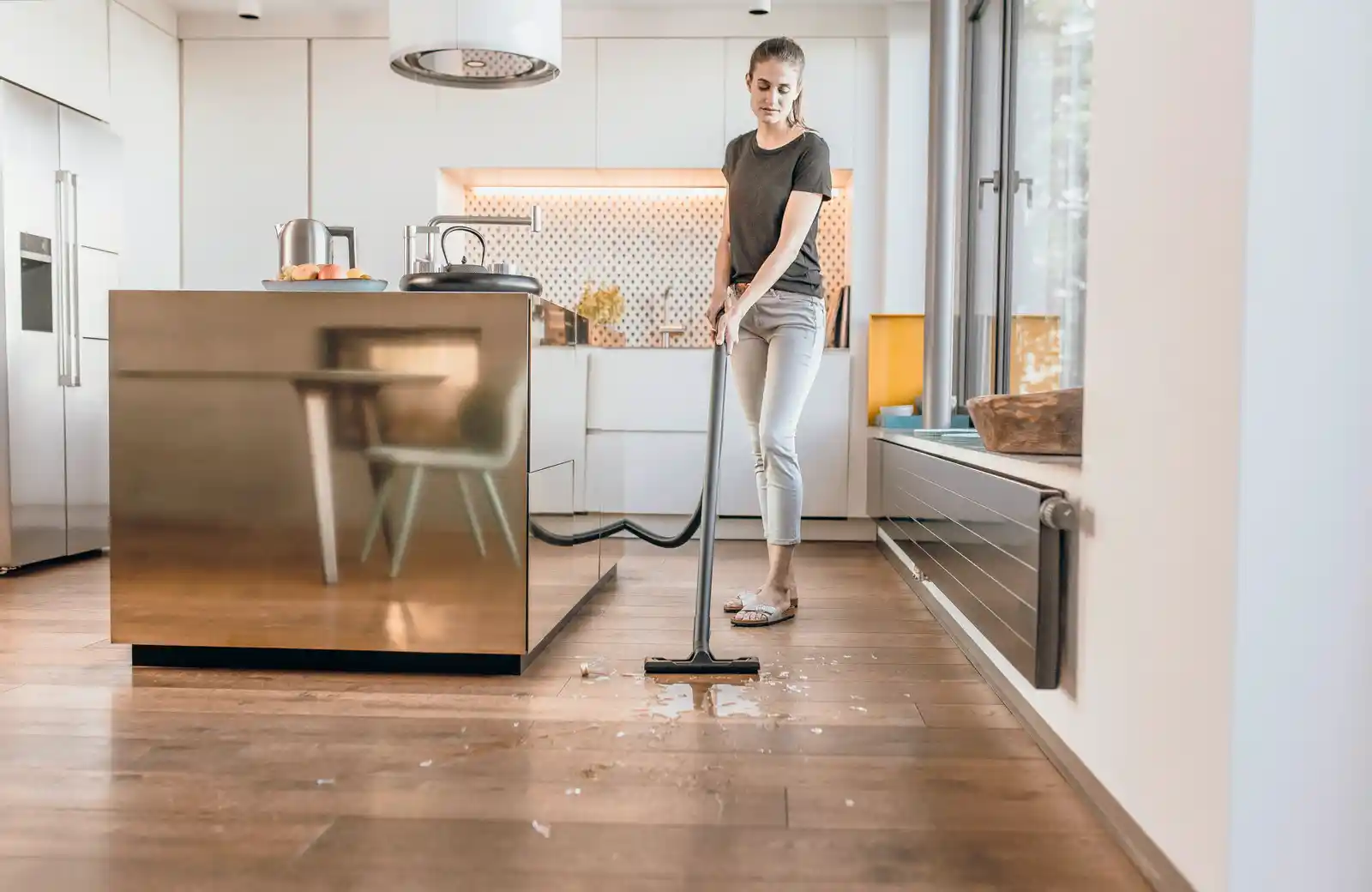
Sweeping Limitations
- Pushes fine dust into corners
- Misses microscopic particles
- Causes airborne dust (poor air quality)
- Requires more labor and time
Vacuuming Advantages
- Removes fine dust and grit completely
- Improves indoor air quality with HEPA filtration vacuum system
- Prevents scratches caused by dragged debris
- Covers large areas efficiently
In the case of industrial hardwood floors, vacuuming minimizes maintenance expenses and will increase the life time of the floor. Sweeping may still be done occasionally, but it should never be substituted with the work of a true vacuum cleaner.
Why Hardwood Floors May Still Look Dirty After Vacuuming
Vacuuming removes loose dirt, but it does not necessarily remove sticky spills, tracked-in residue, or marks attached to the finish. If the floor still looks dirty, first identify what remains. Repeated vacuum passes will not solve every surface problem.
When planning hardwood floor cleaning after vacuuming, check the floor manufacturer’s care instructions. Use the recommended cleaner and application method where permitted. Shaw recommends an approved hard-surface cleaner and warns against wet mops, steam mops, and harsh chemicals.
Avoid adding more cleaner simply because a mark remains. Test the permitted method in a small, less visible area first. If the surface feels sticky after cleaning, review the product instructions and previous treatments before applying another product.
A dull patch may also be worn finish rather than dirt. If cleaning does not improve it, have the flooring contractor assess the area. This helps the facility decide whether it needs cleaning, finish maintenance, or repair.
How To Clean Hardwood Floors Using Vacuum Cleaners—Step-by-Step Guide
The maintenance of hardwood floors in factories has to be damage-free and systematic. Unlike the residential premises, the industrial areas are characterized by the large number of people, the movement of machinery, fines, metallic particles, and debris that could easily destroy the floor finish when not managed properly. This is a professional step-by-step procedure that guarantees good cleaning without damaging the hardwood surfaces.
Step 1: Prepare and Inspect the Floor Area
The first step is to empty the workspace of any movable objects that include carts, pallets, chairs, or lightweight equipment. Check the hardwood floor to see whether it contains sharp material, loose screws, metal debris, or spilled materials. By eliminating these dangers prior to vacuuming, one avoids scratches on the surfaces, and the parts of the vacuum cleaners get safeguarded. This measure is particularly necessary in factories, warehouses, and production centers where abrasive particles are prevalent.
Step 2: Select the Right Vacuum Cleaner for Hardwood Floors
Always use a vacuum for hardwood floors designed for industrial use. The machine must have adjustable suction, soft brush rollers or bare-floor options, and non-marking wheels. Use only those vacuums that can have aggressive beater bars removed completely. When the correct vacuum is used, it results in a complete cleanup of the debris without dulling or scratching the hardwood finish.
Step 3: Adjust Suction and Floor Settings
Industrial hardwood floors vary in thickness and finish. Set the vacuum to medium suction for standard cleaning and increase it slightly in high-traffic zones. Activate the hardwood or bare-floor mode to prevent unnecessary friction. Proper adjustment allows you to follow best practices for How To Clean Hardwood Floors using vacuum cleaners safely and efficiently.
Step 4: Vacuum in Controlled, Systematic Passes
Work in straight, overlapping lines rather than fast or random movements. Slow, controlled passes allow the vacuum to lift fine dust and grit trapped between planks. This method is far more effective than sweeping and answers the common question, Is it better to vacuum or sweep hardwood floors, especially in industrial settings?.
Step 5: Focus on High-Traffic and High-Debris Zones
Be particularly observant of doors, loading docks, assembly lines, corridors and machine space. These areas receive the greatest amount of dirt and abrasive particles. Several vacuum passes in such places decrease the surface damage and avoid long term damages of hardwood flooring.
Step 6: Clean Edges, Corners, and Under Equipment
Use vacuum attachments to reach floor edges, corners, and tight spaces under machinery. Dust buildup in these areas often goes unnoticed but can spread back onto clean surfaces. Detailed edge cleaning ensures complete floor hygiene and improves indoor air quality.
Step 7: Final Inspection and Spot Cleaning
Vacuum after checking the floor physically to ensure that there are no leftovers or dullness. Blot problem spots with dry microfiber tools, where needed. In the case of layered flooring facilities, this approach is also the perfect choice of the facilities that are curious how to clean the engineered hardwood floors without damaging them with moisture.
Step 8: Establish a Routine Cleaning Schedule
Hardwood floors used in industries have to be taken care of regularly. Vacuuming of all busy areas daily and full-area cleaning schedules occurrences as they do not accumulate and save on maintenance costs. provide efficiency, durability, and consistency in the outcome, one should use professional Vacuum Cleaners.
Pressure King offers professional floor sweepers designed with non-abrasive brushes and smooth wheels that protect hardwood surfaces.
How to Clean Engineered Hardwood Floors in Industrial Settings
Many industrial facilities use engineered hardwood due to its stability and moisture resistance. However, how to clean engineered hardwood floors requires special care.
Engineered hardwood has a layered construction, making it sensitive to excessive moisture and harsh cleaning tools. Vacuuming is the safest cleaning method for these floors.
Best Practices:
- Use dry vacuum cleaning only
- Avoid steam or wet mopping
- Use soft brush attachments
- Maintain consistent cleaning schedules
Our vacuum cleaners are specifically engineered to handle engineered hardwood floors, ensuring deep cleaning without affecting the floor’s layered structure.
Building a Preventive Floor Maintenance Checklist
A written preventive floor maintenance checklist turns Step 8 above into something your team can actually follow every shift, not just when the floor looks dirty. A simple version includes:
Daily: vacuum high-traffic lanes, entrances, and loading dock approach zones.
Weekly: full-floor vacuum pass including under fixed equipment and along baseboards.
Monthly: inspect the finish for dullness or micro-scratching in high-wear zones and log findings.
Quarterly: review whether a deep clean or partial recoat is needed before wear becomes visible damage.
Facilities that track this on a shared checklist typically delay costly hardwood floor refinishing by years compared with reactive, as-needed cleaning.
Why Industrial Areas Need Specialized Vacuum Cleaners
Residential vacuums are not built for industrial demands. Industrial hardwood floors require machines that can handle:
- Continuous operation
- Heavy dust loads
- Large surface areas
- Mixed debris types
Our Vacuum Cleaners for Hardwood Floors are designed with high-performance motors, durable components, and advanced filtration systems. These machines clean faster, last longer, and deliver consistent results in demanding environments.
Pressure King’s vacuum cleaners are engineered to handle large square footage, heavy debris, and continuous use without compromising floor protection. These machines feature hardwood-safe wheels, precision brush systems, and powerful suction for embedded dust removal.
Match the Vacuum to the Dust, Not Just the Floor
A hardwood-safe floor head does not establish that a vacuum is suitable for every material found in a factory or warehouse. Before selecting equipment, identify what staff will collect. Ordinary tracked-in grit, production dust, metal particles, and liquid spills can require different collection systems.
Wood dust and certain metal dusts can present combustible dust hazards. OSHA guidance calls for vacuum equipment approved for the dust collection task. A machine’s industrial label or strong suction alone does not establish that suitability.
If the facility produces potentially combustible dust, have its safety team assess the material and work area before choosing a vacuum. Provide the equipment supplier with the dust type and relevant process information. Request written confirmation of the machine’s intended application rather than relying only on a filter description.
Also check permitted debris size and whether the machine supports liquid collection. Keep unknown chemical spills out of routine floor cleaning until staff identify the material and follow the site’s spill procedure
Workplace Safety: Why Clean Hardwood Floors Matter Beyond Appearance
Clean hardwood isn’t only a cosmetic issue; it’s a workplace floor safety issue. Dust, grit, and fine debris left on hardwood reduce surface traction and contribute to slip and fall prevention failures, one of the most common causes of workplace injury claims in warehouses and corporate facilities alike. A consistent vacuuming schedule does double duty: it protects the finish and reduces liability risk from slick, debris-covered walkways, loading zones, and corridors.
Cost of Neglecting Industrial Hardwood Floor Maintenance
Skipping regular vacuuming doesn’t just dull the finish; it drives up long-term costs. Facilities that rely only on irregular sweeping typically face hardwood floor refinishing cost increases 2–3x sooner than facilities on a structured vacuum schedule, plus added downtime while crews sand and recoat sections that could have been protected. Factor in production interruptions, temporary flooring protection, and the labor cost of an emergency deep clean, and a modest investment in the right industrial floor cleaning machine pays for itself well before the first refinishing cycle would otherwise be due.
Maintenance Tips for Industrial Hardwood Floors
Industrial hardwood floors are built to withstand heavy use, but without proper maintenance, even the most durable surfaces can quickly lose their finish and structural integrity. Constant foot traffic, machinery movement, airborne dust, and abrasive debris place continuous stress on these floors.
Vacuuming alone isn’t enough. Follow these maintenance tips to extend floor life:
- Vacuum daily in high-traffic areas
- Clean spills immediately
- Avoid dragging heavy equipment
- Use floor mats at entrances
- Schedule deep cleaning periodically
Regular vacuuming reduces the need for refinishing and minimizes downtime in industrial operations.
Troubleshooting Scratches, Poor Pickup, and Dust Trails
If a vacuum begins leaving marks or debris behind, stop and inspect it before continuing across the floor. Increasing suction or making more passes may leave the underlying problem unresolved.
| Problem | What to check | Next action |
| New scratches along the cleaning path | Trapped grit, damaged wheels, worn attachment edges, or incorrect brush setting | Remove the debris or replace the damaged part before restarting |
| Grit remains after a pass | Full collection container, blocked hose, unsuitable attachment, or restricted airflow | Follow the manual to clear restrictions and check the collection system |
| Dust appears behind the machine | Loose connections, damaged seals, incorrectly fitted bag, or filter problems | Inspect the assembly and replace faulty components as instructed |
| Floor head is difficult to move | Attachment suitability, suction setting, or debris caught underneath | Check the head and adjust settings within the manufacturer’s guidance |
| Marks remain despite good pickup | Attached residue or finish wear | Assess the floor using its approved care procedure |
Final Thoughts
Hardwood floors in industrial areas demand a professional cleaning approach. Sweeping is no longer enough, and improper cleaning methods can lead to costly repairs. Understanding how to clean hardwood floors, knowing whether it is better to vacuum or sweep hardwood floors, and following proper vacuuming techniques make all the difference.
By using the right vacuum for hardwood floors, you ensure:
- Cleaner surfaces
- Longer floor lifespan
- Improved workplace hygiene
- Reduced maintenance costs
If you’re looking for the best vacuum cleaner for hardwood floors and carpet, our industrial-grade solutions are designed to meet your needs today and scale with your business tomorrow. We stand out for performance, reliability, and expert support. Explore our full cleaning solutions at Pressure King and elevate your hardwood floor maintenance strategy.
Frequently Asked Questions
Can you use a vacuum cleaner on hardwood floors?
Yes, you can safely use a vacuum cleaner on hardwood floors when it has a bare-floor or hardwood setting. Vacuums with soft brush rolls and adjustable suction remove dust and debris effectively without scratching or damaging the floor surface.
What is the best thing to clean hardwood floors with?
The best way to clean hardwood floors is by using a hardwood-safe vacuum cleaner combined with regular dry maintenance. Vacuuming removes fine dust and grit that cause scratches, keeping floors clean without introducing moisture or harsh chemicals.
Is it better to vacuum or sweep hard floors?
Vacuuming is better than sweeping hard floors because it removes fine dust and debris completely instead of pushing it around. Vacuum cleaners also improve air quality by capturing particles, making them ideal for high-traffic and industrial environments.
What vacuum setting for hardwood floors?
Use the bare-floor or hardwood setting on your vacuum cleaner. This setting disables the beater bar and uses gentle suction, preventing scratches while effectively lifting dust, dirt, and debris from hardwood floor surfaces.
How often should industrial hardwood floors be vacuumed?
High-traffic zone entrances, loading docks, and corridors should be vacuumed daily. Lower-traffic office or showroom hardwood can typically move to a 2–3 times per week schedule, with a full-facility deep-vacuum pass at least monthly.
Can a wet floor scrubber be used on hardwood?
No. Wet scrubbers are built for sealed concrete, epoxy, or vinyl composite tile. Standing water and rotating pads can strip the finish and warp planks. Stick to dry vacuuming for hardwood and engineered hardwood floors.
Should You Vacuum Entrance Mats Before Hardwood Floors?
Clean entrance mats as part of the same routine so dirt does not immediately return to the floor. Before moving from the mat to hardwood, change to the correct attachment and inspect the head and wheels for trapped grit. Follow the mat manufacturer’s cleaning instructions.
What Should You Test Before Buying a Commercial Hardwood Floor Vacuum?
Request a demonstration on a representative section of your floor. Check debris pickup, maneuverability, noise, edge access, and whether the attachment leaves marks. Include doorways and furniture in the trial. Ask Pressure King or the equipment supplier to confirm the model’s permitted debris types, attachments, replacement filters, and maintenance requirements.

Michael Adeniran is the CEO of Pressure King Inc. He has been dealing in commercial cleaning equipment for many years. He is one of the leading specialists and experts in commercial cleaning products.


