


How to Start a Power Washing Business: Complete Guide


Starting a power washing business can be a practical way to enter the cleaning industry without making the massive investment required for many other businesses. You can begin as a solo operator, serve residential customers, and gradually move into larger commercial projects as your experience and customer base grow. However, buying a pressure washer alone isn’t enough to create a profitable company. You need a clear plan, suitable equipment, proper insurance, competitive pricing, and a reliable way to find customers.
If you’re planning to start in New Jersey, understanding your local market and business requirements is especially important. New Jersey has residential neighborhoods, commercial properties, warehouses, industrial facilities, and other potential customers that regularly need exterior and equipment cleaning. With the right preparation, you can build a pressure washing business that starts small and expands as demand increases.
What You Need to Start a Power Washing Business
The first step is deciding which power washing services you want to offer and who you want to serve. A new company could focus on house washing, driveways, patios, decks, fences, commercial buildings, parking areas, fleet cleaning, or equipment washing. Starting with a focused service list makes it easier to choose equipment, calculate costs, develop marketing materials, and train yourself to deliver consistent results. You should also research competitors in your service area to understand their services, customer reviews, and pricing.
Once you know your market, establish the business properly before accepting paid jobs. Choose a business structure, register the company where required, obtain appropriate insurance, establish a business bank account, and create a system for estimates and invoices. You should also develop basic safety procedures because high-pressure water and cleaning chemicals can damage property or cause injuries when handled incorrectly. A professional setup from the beginning can help you build customer trust and avoid expensive mistakes.

How to Start a Power Washing Business Step by Step
A structured launch makes it easier to control your costs and avoid common mistakes. Instead of purchasing equipment first and figuring out the business later, work through the following sequence.
1. Research Your Local Market
Determine who your potential customers are and which services they need. Residential customers may need house washing, driveway cleaning, and deck cleaning, while commercial customers may require parking-lot, building, fleet, or equipment cleaning. Research the demand for these services in your target area and identify the types of customers most likely to hire a new business.
2. Choose Your Services
Start with services you can perform safely and consistently. You can later add specialized services that require different equipment, chemicals, or training. Consider your available equipment, experience, and the types of customers you want to target when selecting your initial services.
3. Choose a Business Name
Select a professional name that’s easy to remember and suitable for your service area. Check its availability before investing in signs, uniforms, vehicle graphics, or other branding. Choose a name that clearly relates to your cleaning services without limiting future business expansion. You should also check whether the name is available for a website domain and relevant online business profiles.
4. Register the Business
Choose an appropriate business structure and complete the registrations required in your location. Requirements can vary by state and municipality, so don’t assume that registration in one jurisdiction automatically satisfies every local requirement. Research the specific registration, tax, licensing, and permit requirements that apply to your business and service area.
5. Get Business Insurance
Pressure washing involves water, high pressure, chemicals, vehicles, and customers’ property. General liability insurance can help protect the business against covered claims involving property damage or bodily injury. You may also need other types of coverage depending on your employees, vehicles, equipment, and business structure.
6. Purchase the Core Equipment
Match your equipment to your services instead of buying based solely on the highest PSI number. Pump performance, gallons per minute, water temperature, durability, portability, and available accessories can all affect productivity. Consider the types of surfaces you will clean and the amount of work you expect to handle when selecting your pressure washer.
7. Set Your Pricing
Calculate your operating costs before setting prices. Consider labor, fuel, water, chemicals, equipment depreciation, insurance, vehicle expenses, maintenance, travel time, marketing, and taxes. Research what other pressure washing businesses in your area charge to keep your rates competitive.
8. Build Your Online Presence
Create a professional website and business profile where potential customers can see your services, service area, contact information, and previous work. Use high-quality photos, customer reviews, and clear calls to action to build trust with potential customers. Keep your online profiles updated and make it easy for customers to request a quote or schedule a service.
9. Start Generating Leads
Use local search, referrals, social media, direct outreach, networking, and other appropriate marketing channels. Before spending heavily on advertising, determine which customer segment produces the best return.
10. Deliver Consistent Service
Professional communication and reliable work are essential for generating reviews and referrals. Take before-and-after photos, protect surrounding surfaces, communicate clearly with customers, and leave the property clean when the job is finished.
Power Washing Business Plan
A power washing business plan gives you a practical roadmap for launching and operating the company. It should identify your target customers, service area, services, pricing strategy, equipment needs, startup expenses, ongoing costs, marketing methods, and revenue goals. You don’t need an unnecessarily complicated document, but you should know how much money you need to start and how many jobs you must complete each month to cover your expenses. A clear plan also makes it easier to recognize which services are actually profitable.
Your plan should separate one-time startup expenses from recurring operating costs. Equipment purchases, business registration, initial branding, and some setup expenses may occur before your first customer, while fuel, insurance, chemicals, maintenance, advertising, and vehicle expenses continue throughout the year. Build some working capital into your budget because equipment repairs and slow periods can happen unexpectedly. If you’re targeting commercial clients, also consider longer sales cycles and the possibility of recurring contracts.
Power Washing Business Start-Up Cost
The power washing business startup cost can vary substantially depending on whether you already own a suitable vehicle, what type of pressure washer you purchase, whether you buy or rent equipment, and whether you’re targeting residential or commercial customers.
One 2026 estimate places a lean startup around $1,500–$3,500 when the owner already has a suitable vehicle and keeps the initial service offering narrow, while a more serious setup can exceed $6,000–$10,000.
| Startup category | What it covers |
|---|---|
| Pressure washer | Main cleaning machine |
| Hoses and reels | Water delivery and organization |
| Surface cleaner | Faster flat-surface cleaning |
| Nozzles | Different cleaning applications |
| Chemicals | Detergents and specialized cleaning solutions |
| Vehicle/trailer | Equipment transportation |
| Insurance | Protection against covered business risks |
| Registration | Business formation and local requirements |
| Marketing | Website, signs, advertising, and branding |
| Working capital | Fuel, supplies, repairs, and early operating expenses |
If you’re unsure about purchasing expensive equipment immediately, renting can be a useful way to test different machines and complete jobs before committing to a major equipment purchase. Pressure King offers commercial pressure washer rentals in New Jersey, including hot-water, cold-water, electric, and trailer-mounted options.
What Services Can a Power Washing Business Offer?
A pressure washing business can provide many different cleaning services, but you don’t need to offer all of them when you’re starting. Focus on services that match your equipment, skills, and target customers. As your experience and customer base grow, you can gradually add specialized services that create new revenue opportunities.
Residential Pressure Washing Services
Offer services such as house washing, driveway cleaning, patios, sidewalks, decks, and fences. These services can be a practical starting point for new operators. Regular residential cleaning can also help you build repeat customers and generate referrals within the local community.
Commercial Building Cleaning
Commercial properties may need exterior wall cleaning, sidewalks, entrances, loading areas, and parking spaces cleaned regularly. These jobs can also create recurring service opportunities. Developing relationships with property managers and business owners can help create consistent long-term contracts.
Fleet and Vehicle Washing
Pressure washing businesses can clean company vehicles, trucks, trailers, and fleets. This service may require suitable equipment and wastewater management practices. Offering scheduled fleet cleaning can provide businesses with a convenient way to maintain clean and professional-looking vehicles.
Industrial Equipment Cleaning
Warehouses and industrial facilities may require cleaning for machinery, equipment, floors, and work areas. These jobs often require more powerful equipment and specialized cleaning solutions. Operators should also follow appropriate safety procedures and facility requirements when working around industrial equipment.
Construction and Heavy Equipment Cleaning
Contractors may need pressure washing for construction equipment, concrete surfaces, buildings, and job sites. Operators can explore construction cleaning equipment suited to these demanding applications.
Power Washing Business Equipment
Choosing the right pressure washing business equipment is one of the most important decisions you’ll make. Your equipment should match the types of cleaning jobs you plan to handle and the workload you expect. Investing in reliable, commercial-grade equipment can improve cleaning efficiency and help reduce unexpected downtime as your business grows.
Hot Water Pressure Washers
Hot water pressure washers combine high-pressure water with heated water to remove grease, oil, grime, and other stubborn contaminants. They are especially useful for commercial, industrial, automotive, and equipment-cleaning applications.
Cold Water Pressure Washers
Cold water pressure washers use pressurized water without heating it. They are suitable for general cleaning tasks such as removing dirt, mud, dust, and surface debris from buildings, driveways, sidewalks, and other surfaces.
Diesel-Powered Pressure Washers
Diesel-powered pressure washers use diesel engines to operate the pump and provide high-pressure cleaning power. They are well suited for demanding commercial and industrial applications where durability and extended operation are important.
Electric-Powered Pressure Washers
Electric-powered pressure washers use electricity to operate the machine and are generally suitable for locations with reliable electrical access. They can be a practical choice for indoor or commercial cleaning applications where emissions from gas or diesel engines are not desirable.
Gas-Powered Pressure Washers
Gas-powered pressure washers use gasoline engines to provide the power needed for pressure washing. Their mobility makes them useful for outdoor residential, commercial, construction, and other cleaning jobs where electrical access may be limited.
Surface Cleaners
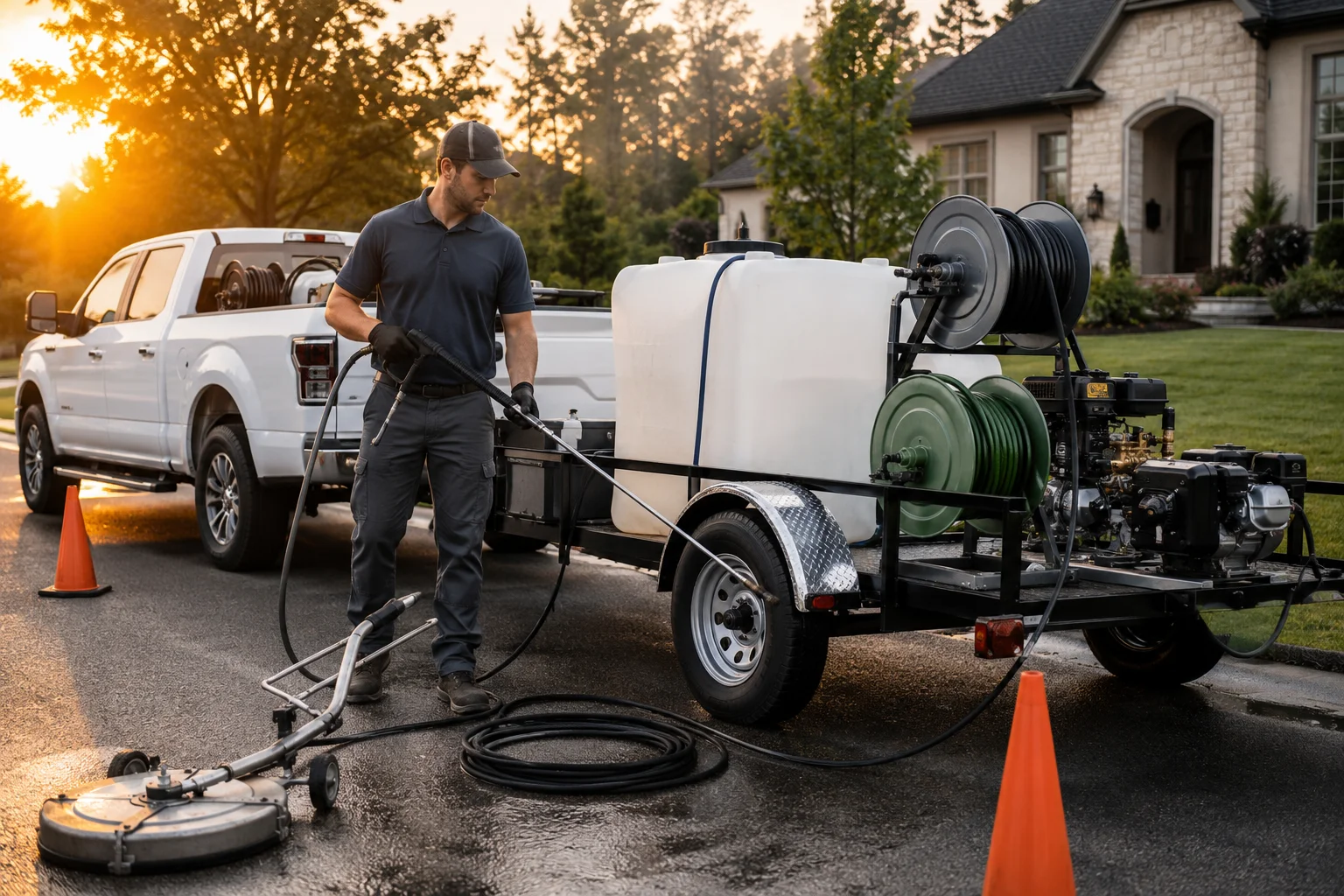
Surface cleaners are pressure-washing attachments designed to clean large, flat surfaces more efficiently than a standard spray wand. They are commonly used for driveways, sidewalks, patios, parking areas, and concrete surfaces.
Pressure Washer Trailers
Pressure washer trailers provide a mobile cleaning setup that can transport pressure washing equipment and other necessary components between job sites. They are particularly useful for professional operators handling commercial or larger-scale cleaning projects.
Refurbished Pressure Washers
Refurbished pressure washers provide an alternative for businesses that want professional cleaning equipment at a potentially lower initial cost. These machines can be suitable for operators who are building their equipment setup while keeping startup expenses under control.
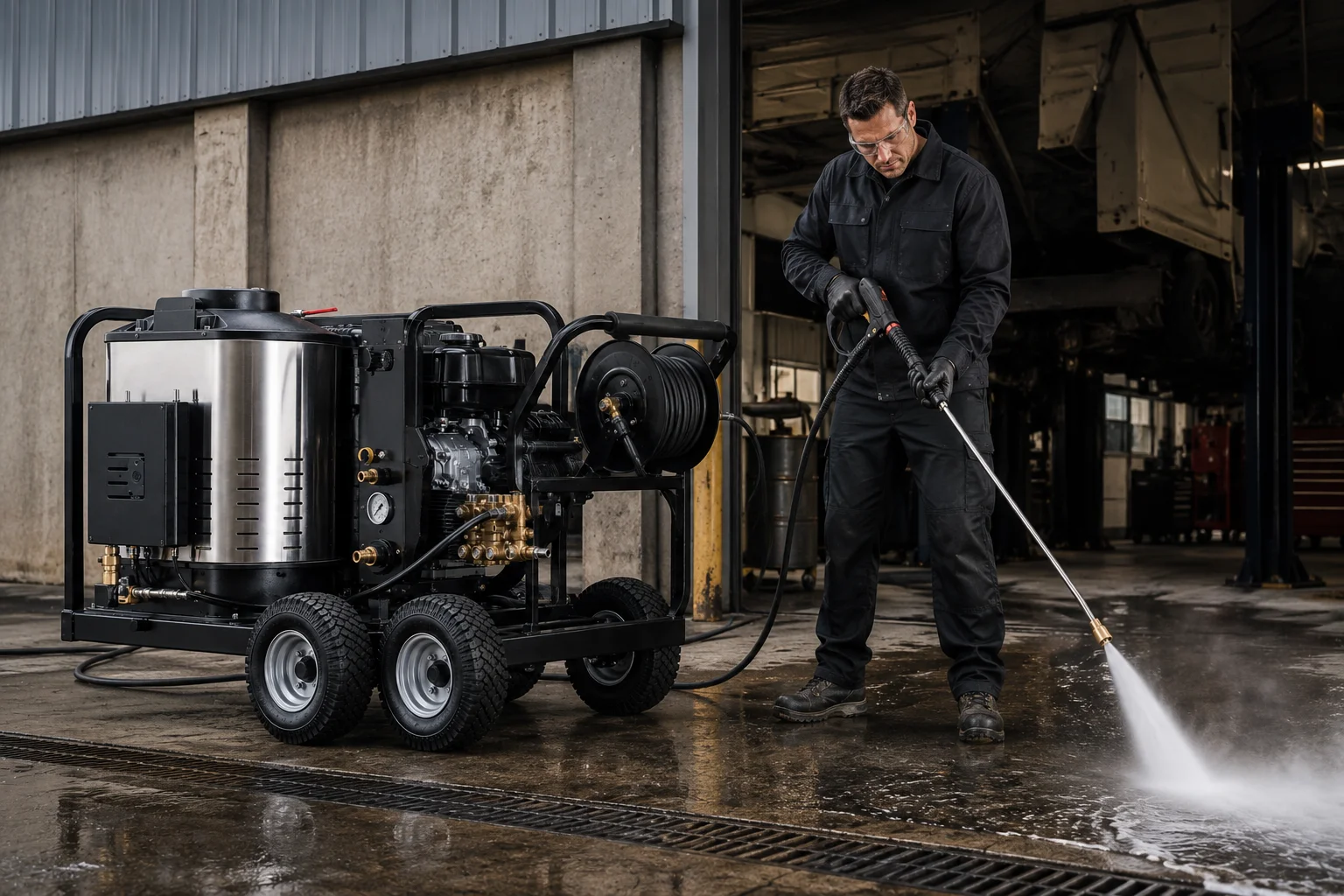
How to Find Your First Power Washing Customers
Find your first customers through referrals, local SEO, online listings, direct outreach, before-and-after photos, and recurring service opportunities.
Ask for Local Referrals
Tell friends, family, neighbors, and previous customers about your pressure washing services. Encourage satisfied customers to recommend your business to others in their neighborhood or local network. Referrals can help you get your first jobs without spending heavily on paid advertising.
Build a Local Online Presence
Create a professional website and business profile that clearly list your services and service area. Add your phone number, contact details, genuine customer reviews, and photos of completed projects. A strong online presence can help local customers find and trust your business.
Use Before-and-After Photos
Take clear before-and-after photos whenever you complete a pressure washing project. Show the difference your cleaning service makes on driveways, siding, patios, decks, and other surfaces. These photos provide visual proof of your work and can encourage potential customers to contact you.
Contact Local Businesses
Reach out to property managers, contractors, restaurants, warehouses, automotive businesses, and retail properties. Explain how regular pressure washing can help keep their buildings, equipment, parking areas, and surrounding spaces clean.
Offer Recurring Services
Encourage one-time customers to schedule regular pressure washing for their homes or commercial properties. You can offer monthly, quarterly, or seasonal cleaning plans based on the customer’s needs. Recurring clients can provide steadier revenue and help you build long-term customer relationships.
Power Washing Business Insurance and Legal Requirements
Before accepting customers, research the business registration, licensing, insurance, environmental, tax, and other requirements that apply to your location. Pressure washing involves high-pressure equipment, chemicals, vehicles, and customer property, so appropriate insurance is an important part of responsible business planning. General liability coverage can help protect a business against covered claims involving property damage or bodily injury. Requirements can differ between states and municipalities, so don’t rely on assumptions based on another location.
In New Jersey, business owners should check both state-level requirements and local municipal rules before operating. A current 2026 New Jersey-focused guide reports a $125 LLC filing fee and a $75 annual report fee, while noting that local business licensing requirements can vary by municipality. You should verify current requirements directly with the relevant New Jersey and local authorities because rules, fees, permits, and environmental requirements can change.
How to Start a Power Washing Business in New Jersey
Learning how to start a power washing business in New Jersey requires attention to both business fundamentals and local operating requirements. Begin by choosing the communities and customer types you want to serve, then research the registrations, licenses, insurance, taxes, and environmental rules that apply. New Jersey offers potential customers across residential, commercial, industrial, automotive, construction, and municipal markets. A focused service area can help you reduce travel time while building a recognizable local presence.
Equipment selection is also important for an NJ-based operator because different customers require different cleaning capabilities. A residential operator might start with portable cold-water equipment, while commercial customers may require higher flow, hot water, trailer-mounted equipment, or specialized accessories. Pressure King serves businesses throughout New Jersey with commercial pressure washer sales, rentals, repair, maintenance, parts, and equipment support. Renting equipment can also help new operators handle larger jobs while determining which equipment makes financial sense to purchase.
Common Mistakes to Avoid When Starting a Power Washing Business
New operators can avoid many problems by planning their services, pricing, equipment, and daily operations carefully. Here are some common mistakes to watch for:
- Buying the Wrong Equipment: Choose equipment based on your services instead of buying the most powerful machine available.
- Underpricing Your Services: Include labor, fuel, chemicals, maintenance, insurance, and other costs before setting your prices.
- Offering Too Many Services: Start with services you can perform safely and efficiently before adding specialized cleaning.
- Ignoring Equipment Maintenance: Regular inspections and maintenance help prevent unexpected breakdowns and costly downtime.
- Poor Customer Communication: Confirm schedules, explain the work clearly, and keep customers informed throughout the job.
- Skipping Property Protection: Protect windows, plants, vehicles, electrical components, and other vulnerable areas before cleaning.
- Competing Only on Price: Focus on reliable service, professional results, and customer satisfaction instead of being the cheapest option.
How to Grow a Power Washing Business
Once you have established consistent demand, growth should focus on increasing profitable revenue rather than simply taking every available job. You can expand your service area, add complementary cleaning services, target commercial accounts, develop recurring contracts, or hire additional workers. Before adding a new service, determine the equipment, training, insurance, labor, and marketing requirements associated with it. Growth should improve your capacity without creating expenses that exceed the additional revenue.
Equipment should also grow according to actual business needs. If you’re repeatedly turning down larger commercial projects because your current equipment lacks sufficient capacity, upgrading may make financial sense. Pressure King provides commercial pressure washer repair services in New Jersey, along with maintenance support designed to help reduce equipment downtime.
Conclusion
Knowing how to start a power washing business gives you the foundation for entering a potentially profitable service industry, but long-term success depends on how well you manage the business after launch. Start with a clear service offering, realistic startup budget, suitable equipment, proper insurance, competitive pricing, and a reliable customer acquisition strategy. Avoid unnecessary purchases until you understand what your customers actually need.
If you’re operating in NJ, pay particular attention to local business requirements and equipment suited to the properties and cleaning applications you plan to target. As your workload grows, Pressure King can support your operation with commercial pressure washer sales, rentals, repairs, maintenance, parts, accessories, and equipment guidance, giving you options to build your equipment setup as your business develops.
FAQs
How much should I charge to power wash a 2000 sq ft house?
A 2,000 sq ft house may cost around $250–$600, depending on its condition and location. Consider labor, fuel, chemicals, travel, and equipment costs when setting your price.
How much does it cost to start a power wash business?
A small power washing business can start with around $1,500–$3,500 with basic equipment. Larger commercial operations may require $6,000–$10,000 or more for equipment and other expenses.
Do I need a license for a power washing business?
Licensing requirements vary by state and municipality, so check your local regulations before starting. In New Jersey, you should verify business licensing, insurance, and environmental requirements.
How hard is it to start a power washer business?
Starting a power washing business is relatively simple, but building a profitable company takes planning and consistent marketing. Start with basic services, control your costs, and expand as your customer base grows.

Michael Adeniran is the CEO of Pressure King Inc. He has been dealing in commercial cleaning equipment for many years. He is one of the leading specialists and experts in commercial cleaning products.


