Karcher vs Briggs and Stratton Power Washer for Commercial Use
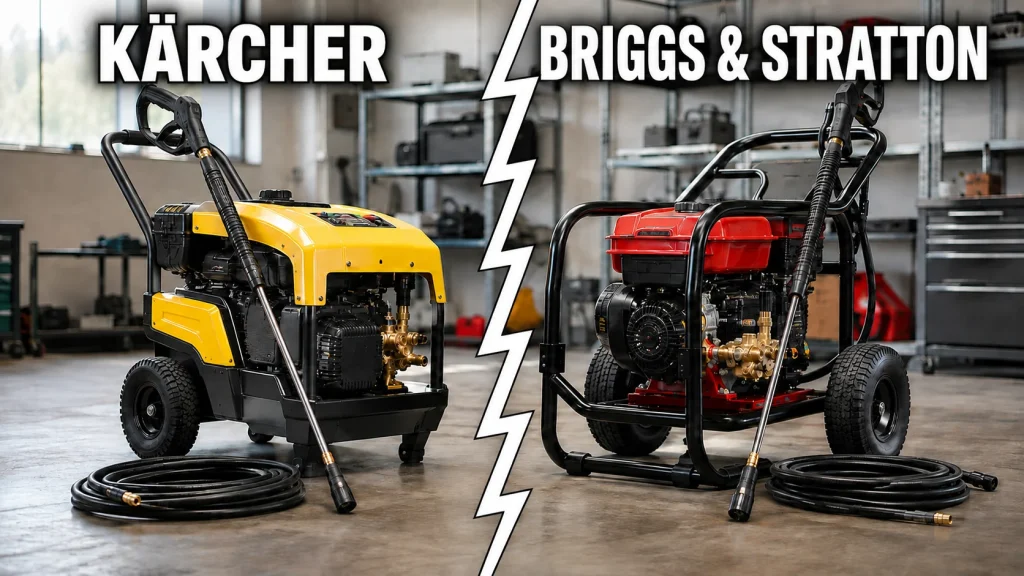
Choosing between Karcher vs Briggs and Stratton power washers requires more than looking at the highest PSI listed on a product page. Commercial buyers should consider pressure, water flow, pump design, water temperature, power source, operating frequency, mobility, and the type of contamination they need to remove.
Both brands offer pressure washers capable of demanding cleaning work, but their product ranges take different approaches. Briggs & Stratton’s pressure washer lineup includes gas-powered models designed for high-pressure outdoor cleaning. Its Elite 4000, for example, delivers up to 4,000 PSI and 4.0 GPM through a commercial-grade triplex pump and a 420cc Briggs & Stratton engine.
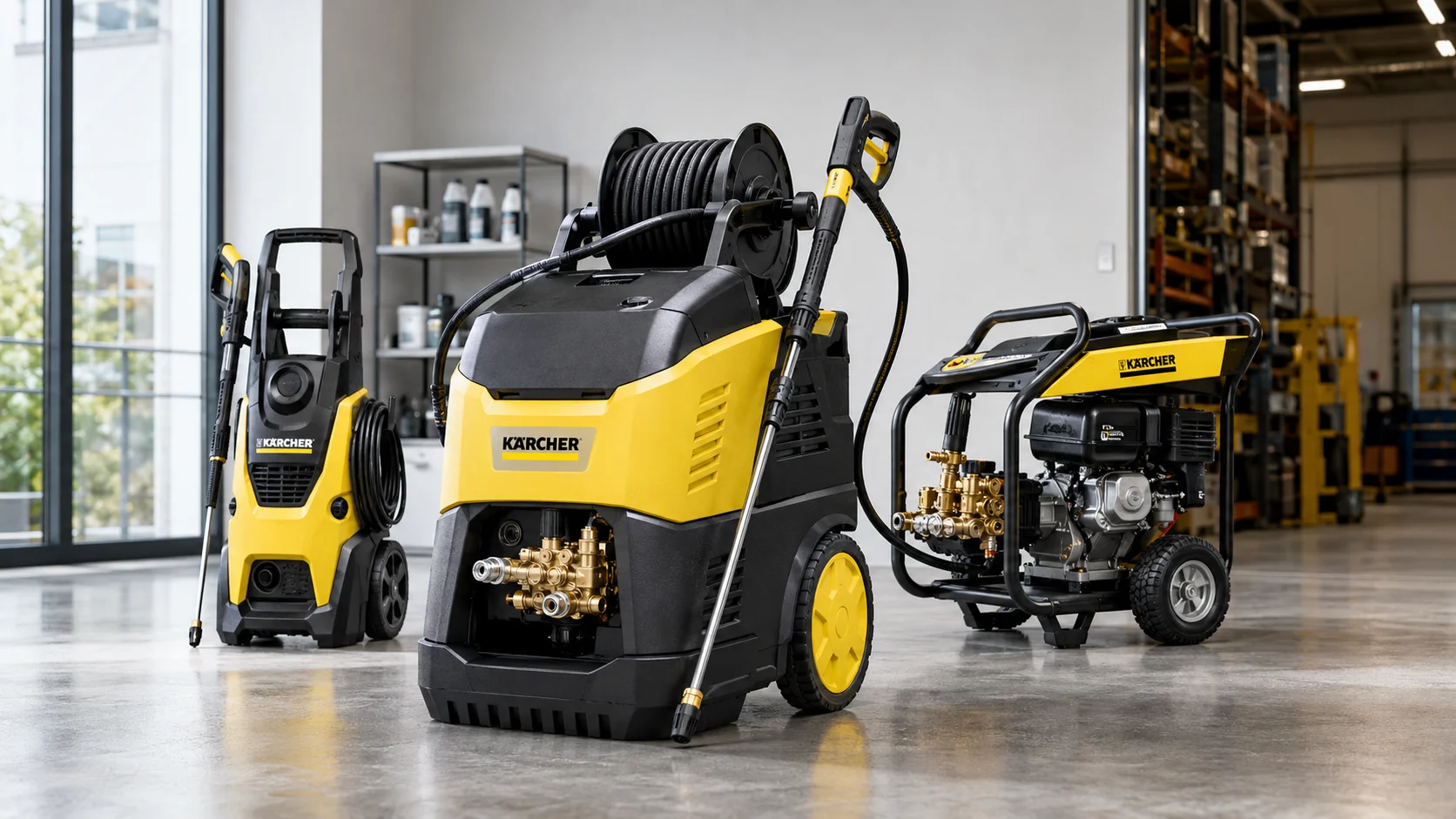
Kärcher has a much broader selection of commercial pressure washers, including cold-water and hot-water systems, electric and gas-powered models, and specialized configurations. Pressure King offers a wide range of commercial pressure washers, including 4000 PSI pressure washers and hot-water pressure washers for demanding cleaning applications.
For businesses in New Jersey and New York, the right choice depends on the cleaning application. Pressure King Inc supplies Kärcher commercial pressure washers in different configurations, including cold-water gas machines, electric models, and hot-water systems.
What Businesses Should Consider Before Choosing a Pressure Washer
Choosing the right pressure washer for business use requires more than comparing two brands. Commercial cleaning tasks vary significantly, and the equipment that works well for occasional outdoor maintenance may not provide the performance needed for daily professional cleaning.
Before purchasing a pressure washer, businesses should consider important factors such as cleaning frequency, surface types, required pressure levels, water flow rate, portability, and maintenance requirements. A machine used for cleaning commercial buildings, vehicles, equipment, or industrial areas needs to provide consistent performance and handle demanding workloads.
The right equipment can improve cleaning efficiency, reduce downtime, and help businesses complete jobs faster. Whether you operate a cleaning company, manage a commercial property, or maintain industrial equipment, understanding your specific cleaning requirements will help you choose a pressure washer that provides long-term value.
Briggs & Stratton vs. Karcher Pressure Washers: Quick Comparison
| Feature | Briggs & Stratton | Kärcher |
|---|---|---|
| Hot Water Pressure Washers | Limited/less prominent | Extensive range |
| Cold Water Pressure Washers | Yes | Extensive range |
| Diesel-Powered Pressure Washers | Not a major B&S pressure-washer category | Yes |
| Electric-Powered Pressure Washers | Yes | Yes |
| Gas-Powered Pressure Washers | Strong category | Yes |
| Surface Cleaners | Accessories/compatible equipment rather than core B&S washer category | Dedicated Kärcher options |
| Pressure Washer Trailers | Not a major B&S category | Available |
| Refurbished Pressure Washers | Not a manufacturer category | Not a manufacturer category |
The comparison shows that both brands can provide strong pressure-washing performance. Briggs & Stratton is particularly relevant for buyers looking for a powerful gas pressure washer, while Kärcher provides a wider selection of pressure washer configurations for commercial and specialized applications.
Kärcher vs Briggs & Stratton Pressure Washers: Key Differences
When comparing Kärcher and Briggs & Stratton pressure washers, businesses should look beyond brand names and evaluate how each option fits their cleaning needs. Both brands offer reliable equipment, but their designs and applications may suit different types of users.
Kärcher is recognized for professional cleaning solutions and offers pressure washers designed for commercial environments where reliability and frequent use are important. Its equipment lineup includes solutions for businesses that require efficient cleaning performance across different applications.
Briggs & Stratton pressure washers are commonly known for gas-powered models that provide strong cleaning performance and portability. They can be useful for outdoor cleaning tasks where mobility and powerful water pressure are important factors.
The key differences businesses should evaluate include:
Cleaning Performance
Pressure output and water flow determine how effectively a machine removes dirt, grease, stains, and buildup. Commercial users should select equipment based on the type of cleaning work they perform regularly.
Durability and Daily Usage
Businesses often use pressure washers for extended periods, making durability an important factor. Equipment designed for professional workloads can help reduce interruptions and maintain consistent cleaning results.
Maintenance Requirements
Regular maintenance plays an important role in equipment lifespan. Businesses should consider service availability, replacement parts, and overall maintenance needs before making a purchase decision.
Application Compatibility
The ideal pressure washer depends on the job. Cleaning a commercial building exterior, washing vehicles, removing industrial buildup, and maintaining equipment may require different features and performance levels.
Which Pressure Washer Is Better for Commercial Cleaning?
The best pressure washer for commercial cleaning depends on your business requirements, cleaning environment, and expected workload. Instead of choosing based only on brand reputation, businesses should focus on selecting equipment that matches their daily operations.
Kärcher pressure washers are often suitable for businesses that require professional cleaning solutions and dependable equipment for regular use. They are commonly used in environments where efficiency, reliability, and specialized cleaning capabilities are important.
Briggs & Stratton pressure washers can be a suitable option for businesses that need portable cleaning power, especially for outdoor maintenance tasks and general-purpose cleaning applications.
Before selecting a machine, businesses should consider:
- How frequently the pressure washer will be used
- The surfaces and materials being cleaned
- Required PSI and GPM levels
- Whether hot or cold water cleaning is needed
- Equipment mobility requirements
- Available repair and maintenance support
Choosing the right pressure washer ensures better cleaning results while helping businesses control operating costs over time.
Briggs & Stratton Pressure Washers
Briggs & Stratton offers pressure washers across several performance levels, including high-output gas models. These machines can be useful for contractors, property maintenance teams, equipment cleaning, concrete cleaning, vehicles, and other outdoor applications where high pressure and mobility are important.
The Elite 4000 is one of the strongest examples in the lineup. It is rated at 4,000 MAX PSI and 4.0 MAX GPM and uses a 420cc 2100 Series OHV engine with a commercial-grade triplex pump. The machine also includes adjustable pressure regulation, five spray nozzles, a 50-foot hose, detergent injection, and a thermal relief valve.
Kärcher Professional Pressure Washers
Kärcher takes a broader approach to professional pressure washers. Its commercial and industrial lineup includes cold-water and hot-water machines, electric and gas-powered systems, mobile equipment, stationary machines, and trailer-mounted configurations. Kärcher states that its commercial range includes more than 200 pressure washer models designed for different cleaning requirements.
This range gives commercial users more choices when the cleaning application goes beyond basic cold-water pressure washing. For example, Kärcher offers cold-water pressure washers for cleaning vehicles, buildings, machinery, and large surfaces. Its hot-water range is designed for difficult contaminants such as grease and oil.
PSI and GPM: Which Brand Has More Cleaning Power?
PSI and GPM should always be evaluated together when comparing pressure washers. PSI, or pounds per square inch, measures water pressure and determines the force available to break dirt and contamination from a surface. GPM, or gallons per minute, measures water flow and affects how quickly loosened dirt can be rinsed away. Looking at both ratings provides a better understanding of a machine’s overall cleaning performance.
Briggs & Stratton’s Elite 4000 delivers up to 4,000 PSI at 4.0 GPM, while Kärcher also offers commercial models with the same maximum rating, including HD 4.0/40 configurations. However, maximum PSI alone does not determine performance. Buyers should match the right PSI and GPM combination to the application, surface type, and cleaning requirements.
Hot-Water vs. Cold-Water Pressure Washers
Cold-water pressure washers are effective for removing mud, dust, dirt, loose debris, and other common contaminants from buildings, vehicles, equipment, concrete, and sidewalks. Hot-water pressure washers add heat to tackle tougher substances such as grease, oil, and fats, which can be loosened and removed more efficiently.
Kärcher has an advantage in this area, offering a wide range of hot-water pressure washers with electric, gas, and diesel power options. Briggs & Stratton focuses mainly on gas-powered cold-water machines, such as the Elite 4000, rather than commercial hot-water systems.
Gas vs. Electric Pressure Washers
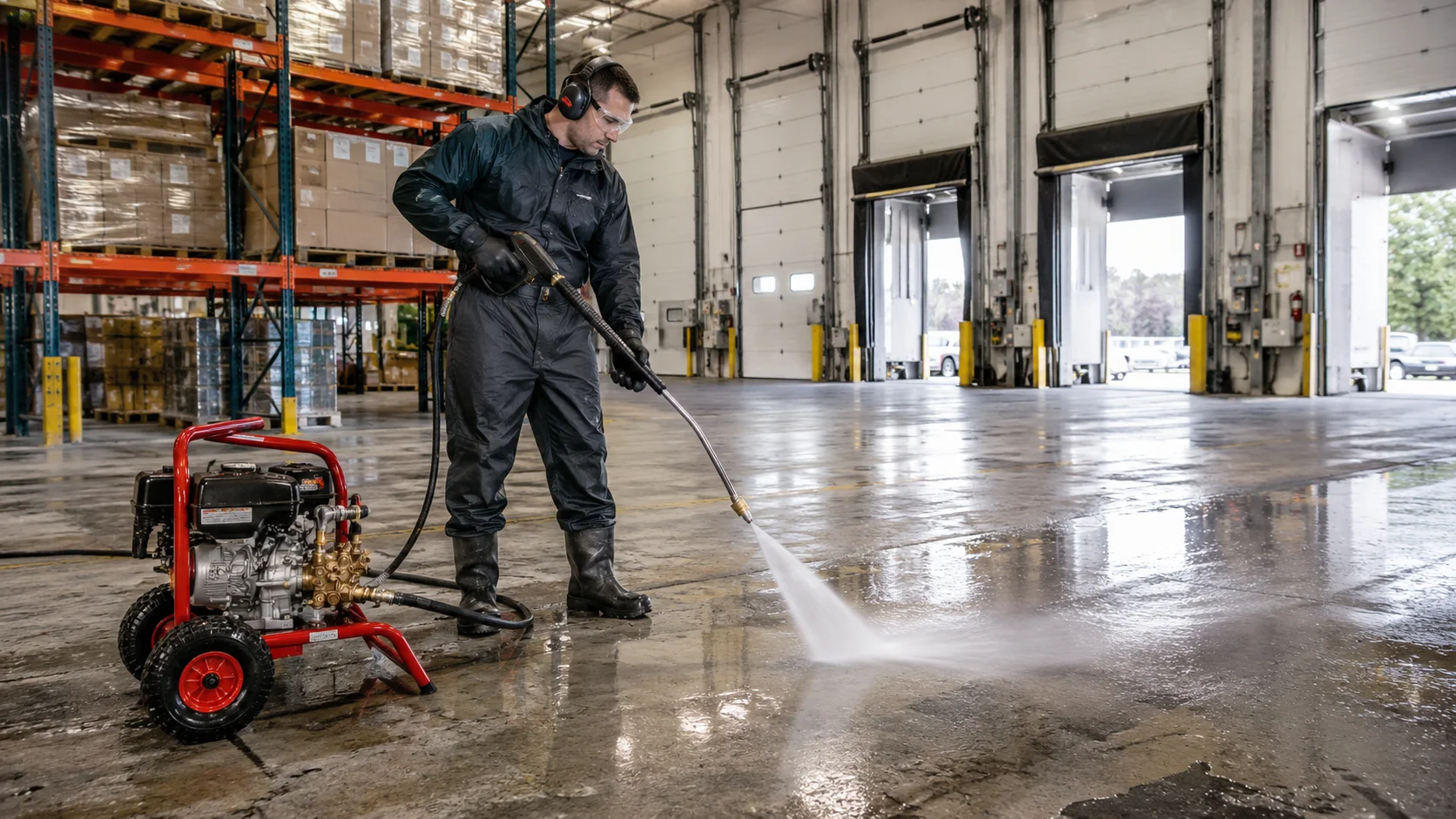
Power source is an important factor when comparing pressure washers. Briggs & Stratton’s Elite 4000 uses a 420cc gasoline engine, providing strong mobility and high-output cleaning without relying on an electrical outlet. Kärcher also offers gas and diesel models for demanding outdoor applications such as construction sites, farms, fleet yards, and municipal properties.
Kärcher’s professional lineup also includes electric pressure washers for locations with reliable access to electricity. Electric models are well suited for indoor commercial cleaning because they produce no engine exhaust, operate more quietly, and typically require less maintenance. The best option depends on the work environment and cleaning requirements.
Diesel-Powered Pressure Washers
This should be a standalone Kärcher-focused topic rather than a direct Kärcher vs. Briggs & Stratton comparison. Kärcher offers a strong range of commercial diesel-powered pressure washers designed for demanding cleaning applications that require high performance, durability, and reliable operation.
Briggs & Stratton does not have a comparable diesel pressure washer range, making a direct brand comparison less relevant. The article should instead focus on Kärcher’s diesel models, their performance, commercial applications, key features, and benefits for heavy-duty cleaning.
Pressure Washer Trailers
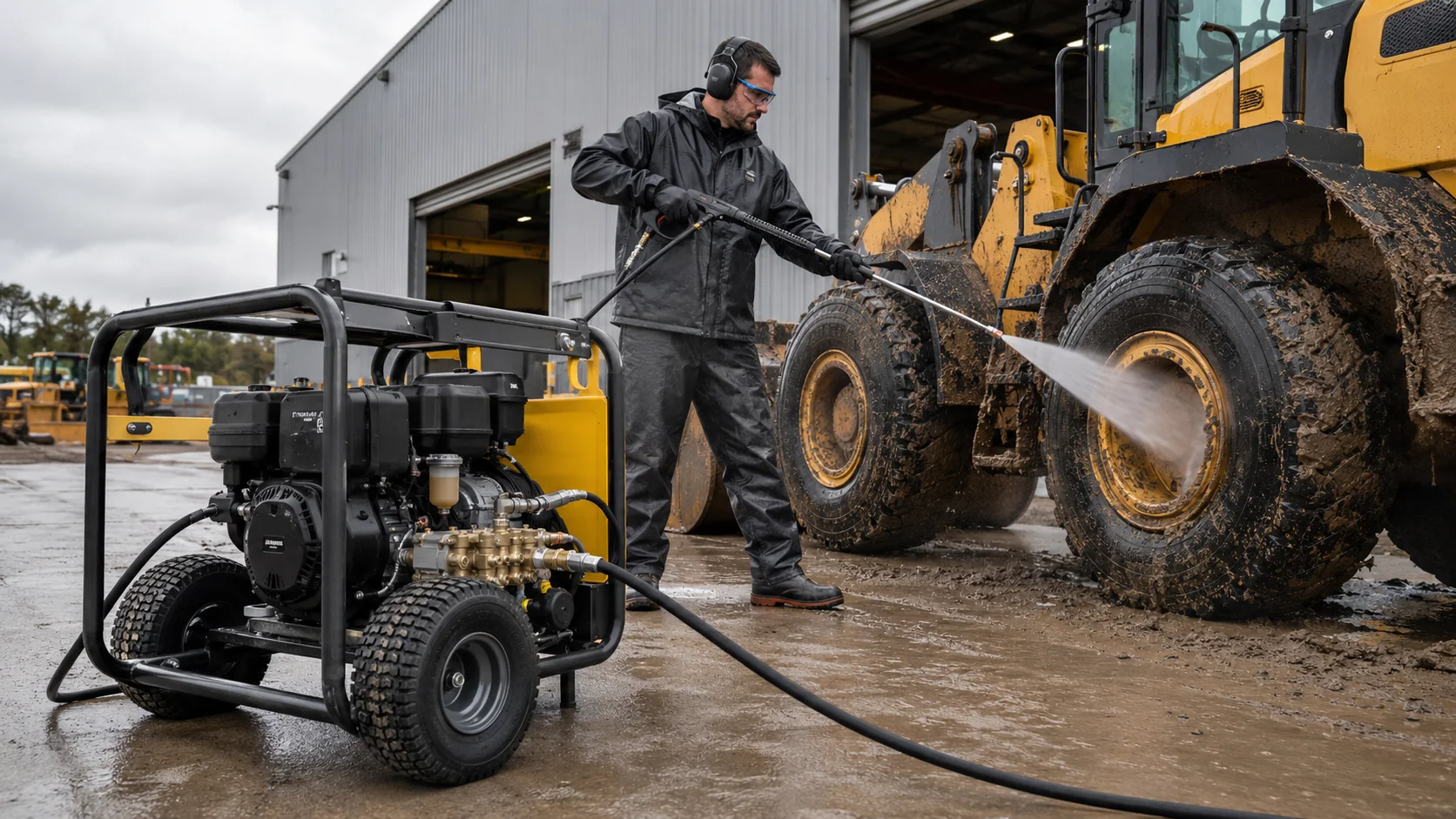
A direct Kärcher vs. Briggs & Stratton comparison would not be suitable for pressure washer trailers because the two brands do not have comparable offerings in this category. Kärcher provides commercial trailer-mounted pressure-washing systems designed for demanding and mobile cleaning applications.
This topic would work better as a standalone commercial pressure washer trailer guide. The content can focus on trailer-mounted systems, mobility, water and fuel capacity, cleaning performance, commercial applications, and the key factors businesses should consider before choosing a trailer setup.
Power and Heating Options
Kärcher offers a much broader selection of commercial pressure washers, including electric, gas, and diesel-powered models, as well as hot-water and cold-water configurations. These options allow businesses to choose equipment based on mobility, cleaning temperature, operating environment, and the type of contamination being removed.
Briggs & Stratton focuses more heavily on gas-powered cold-water pressure washers, making its lineup simpler but less diverse. For businesses requiring heated water, diesel power, or specialized commercial configurations, Kärcher has a clear advantage.
Pump Design and Heavy-Duty Use
The pump is one of the most important components in a commercial pressure washer because it converts the power supplied by the engine or motor into high-pressure water. Briggs & Stratton’s Elite 4000 uses a commercial-grade triplex pump and includes features such as adjustable pressure regulation, a thermal relief valve, and Easy Start pump technology. These features can help operators manage pressure and support reliable performance during demanding cleaning tasks.
Kärcher offers several pump and drive configurations across its professional pressure washer range. Its belt-drive systems can help reduce stress on the engine and operate at lower temperatures, making them suitable for frequent or heavy-duty use. Direct-drive systems are more compact and have fewer moving parts, which can make them a practical choice for less demanding applications. Businesses should consider expected operating hours and workload when deciding between direct-drive and belt-drive equipment.
Which Brand Is Better for Commercial Cleaning?
There is no single answer for every commercial user because the right pressure washer depends on the cleaning application, operating environment, and workload. Briggs & Stratton can be a strong choice for businesses that need a gas-powered pressure washer for outdoor cleaning, especially when high pressure, mobility, and a straightforward cold-water system are priorities. The Elite 4000 demonstrates the brand’s high-output capability with up to 4,000 PSI, 4.0 GPM, a 420cc engine, and a commercial-grade triplex pump.
Kärcher can be a stronger choice for businesses that need greater flexibility across different cleaning applications. Its professional pressure washer range includes hot- and cold-water systems, electric and gas-powered options, belt-drive configurations, and equipment designed for frequent commercial use. These options can be useful for businesses dealing with grease, oil, heavy dirt, or demanding cleaning schedules.
Kärcher also offers stationary and specialized pressure washer configurations, along with a wide range of commercial accessories and cleaning detergents. This makes it a practical option for businesses with diverse cleaning needs. The best choice ultimately depends on PSI, GPM, water temperature, power source, usage frequency, and the type of contamination.
Briggs & Stratton vs. Kärcher for Different Applications
Briggs & Stratton and Kärcher serve different cleaning needs, with their pressure washers suited to applications ranging from general outdoor cleaning to demanding commercial and industrial tasks.
Vehicle and Fleet Cleaning
Both brands can be suitable for vehicle cleaning when the pressure, flow, nozzle, and detergent are matched to the vehicle surface. For basic dirt, mud, and road grime, a cold-water pressure washer may be sufficient. Businesses dealing with grease and oily contaminants may benefit from a Kärcher hot-water machine.
Construction Equipment Cleaning
Construction equipment often accumulates mud, dust, concrete residue, grease, and other difficult contaminants. A high-pressure gas machine can provide the mobility required around large jobsites. Briggs & Stratton offers strong gas-powered options, while Kärcher provides gas-powered cold-water machines as well as hot-water systems for applications involving heavy grease and oil.
Industrial Cleaning
Industrial environments can place greater demands on pressure washer equipment because machines may operate frequently and encounter difficult contaminants. Kärcher has an advantage when industrial users need specialized configurations, hot water, belt-drive systems, stationary equipment, or higher-flow options. Its professional lineup is specifically designed for a wide range of commercial and industrial cleaning applications.
Concrete and Surface Cleaning
Concrete cleaning often benefits from a combination of appropriate PSI and high water flow. Both brands offer machines capable of high-pressure cleaning. However, operators should avoid assuming that maximum pressure is always best. The correct pressure depends on the concrete condition, surface age, contamination, and cleaning method.
Maintenance and Operating Considerations
Maintenance is an important factor when choosing a commercial pressure washer. Gas-powered machines require regular oil, fuel, filter, and engine maintenance, while pumps, hoses, fittings, nozzles, and connections should be inspected for wear, leaks, or damage. Regular servicing helps maintain cleaning performance and reduce unexpected downtime.
Briggs & Stratton provides manuals, maintenance guidance, troubleshooting resources, and replacement parts for its pressure washers. Kärcher also offers professional accessories, replacement components, and cleaning products. Pressure King supplies Kärcher pressure washers, pressure washer parts, and accessories, helping commercial users keep their equipment reliable and ready for demanding cleaning jobs.
How to Choose Between Karcher vs Briggs And Stratton
Start by identifying the specific cleaning tasks the pressure washer will perform. If your primary requirement is mobile, high-pressure outdoor cleaning and you prefer a gas-powered machine, a Briggs and Stratton model such as the Elite 4000 can provide substantial cleaning performance with up to 4,000 PSI and 4.0 GPM. It can be a practical option for applications where high pressure, water flow, and mobility are important.
Kärcher may be a better fit when your business requires greater flexibility across different cleaning applications. Its commercial pressure washer range includes cold- and hot-water systems, electric and combustion-powered machines, mobile and stationary equipment, and specialized configurations. This variety allows businesses to select equipment based on their specific operating environment and cleaning requirements.
Before purchasing, evaluate the following factors:
- Required PSI and GPM
- Cold-water or hot-water requirements
- Electric or gas power source
- Direct-drive or belt-drive pump
- Expected daily operating hours
- Mobility and transportation requirements
- Type and severity of contamination
- Available water supply
- Available electrical or fuel supply
- Replacement parts, maintenance, and technical support
Why Professional Pressure Washer Selection Matters
Selecting the right pressure washer can have a direct impact on cleaning performance, productivity, and long-term costs. A machine that does not match your business requirements may require more time, frequent repairs, or additional effort to complete cleaning tasks.
Businesses should consider the total value of equipment, including durability, maintenance needs, cleaning efficiency, and available support. Investing in the right pressure washer helps reduce downtime and allows teams to complete cleaning jobs more effectively.
At Pressure King, we help businesses understand different pressure washer options and choose equipment that fits their specific cleaning requirements. Whether you need equipment for commercial maintenance, property care, or industrial applications, selecting the right solution helps achieve reliable results.
Conclusion: Briggs & Stratton Vs Karcher Pressure Washers
Briggs & Stratton and Kärcher both offer capable pressure washers for demanding cleaning applications, but they are not identical in their approach. Briggs & Stratton stands out for high-output gas pressure washers. The Elite 4000 delivers up to 4,000 PSI and 4.0 GPM and combines that output with a 420cc engine and commercial-grade triplex pump.
Kärcher stands out for the breadth of its professional pressure washer selection. Its lineup includes cold-water and hot-water equipment, electric and gas-powered systems, mobile and stationary configurations, belt-drive options, accessories, and detergents.
For a straightforward high-pressure outdoor cleaning requirement, Briggs & Stratton can be a capable option. For businesses that need greater flexibility across cleaning temperatures, power sources, pump configurations, and commercial applications, Kärcher offers a broader selection.
For businesses in New Jersey and New York, Pressure King Inc provides access to Kärcher commercial pressure washers, including cold-water gas machines, electric pressure washers, and hot-water systems. Its current selection includes Kärcher models ranging from compact commercial equipment to 4,000 PSI and higher-flow configurations.
The best pressure washer is ultimately the one that matches the job. Compare PSI, GPM, temperature, pump design, power source, operating frequency, and maintenance requirements before making the final decision.
Frequently Asked Questions
Is Kärcher better than Briggs & Stratton pressure washers?
Neither brand is automatically better for every application. Briggs & Stratton offers powerful gas pressure washers, while Kärcher provides a broader range of professional pressure washer configurations. The better option depends on the cleaning requirements.
Which brand has a 4,000 PSI pressure washer?
Both brands offer pressure washers reaching 4,000 PSI. Briggs & Stratton’s Elite 4000 is rated at 4,000 MAX PSI and 4.0 MAX GPM. Pressure King also lists several Kärcher 4,000 PSI pressure washers, including HD 4.0/40 configurations.
Are Briggs & Stratton pressure washers suitable for commercial use?
Selected models are suitable for demanding cleaning work. The Elite 4000 features a commercial-grade triplex pump, a 420cc engine, 4,000 MAX PSI, and 4.0 MAX GPM.
Does Kärcher make hot-water pressure washers?
Yes. Kärcher offers a broad range of professional hot-water pressure washers powered by electric motors and combustion engines.
Which pressure washer is better for grease and oil?
A hot-water pressure washer is generally better suited to grease and oil than a cold-water machine. Kärcher offers dedicated hot-water commercial pressure washers designed for difficult oily and greasy contamination.
Is higher PSI always better?
No. Excessive pressure can damage some surfaces. PSI should be considered alongside GPM, water temperature, nozzle selection, surface type, and contamination.
Is GPM important when buying a commercial pressure washer?
Yes. GPM determines water flow and plays an important role in rinsing and covering larger areas efficiently. A pressure washer’s PSI and GPM should be evaluated together.
Which is better for industrial pressure washing, Briggs & Stratton or Kärcher?
Kärcher has an advantage for businesses that need a wider range of professional configurations, including hot-water systems, belt-drive machines, stationary equipment, and specialized pressure washers. Briggs & Stratton can be a strong option for high-pressure gas-powered outdoor cleaning.
Where can I buy Kärcher commercial pressure washers?
Businesses can purchase Kärcher commercial pressure washers through authorized dealers and suppliers. Pressure King Inc offers Kärcher commercial pressure washers in multiple configurations, including hot-water, cold-water, electric, and gas-powered equipment.
What pressure washer is best for commercial cleaning?
The best commercial pressure washer depends on the type of work being performed. Businesses should consider PSI, GPM, water temperature options, durability, and usage frequency before choosing equipment.
Should I choose a hot water or cold water pressure washer?
Hot water pressure washers are useful for removing grease, oil, and heavy buildup, while cold water models are effective for general dirt removal and outdoor cleaning applications.
How often should commercial pressure washers be serviced?
Maintenance frequency depends on equipment type and usage level. Regular inspections, cleaning, and servicing help extend equipment life and prevent unexpected performance issues.

Michael Adeniran is the CEO of Pressure King Inc. He has been dealing in commercial cleaning equipment for many years. He is one of the leading specialists and experts in commercial cleaning products.