

Pressure Washer Leaking From the Housing? Causes and Fixes

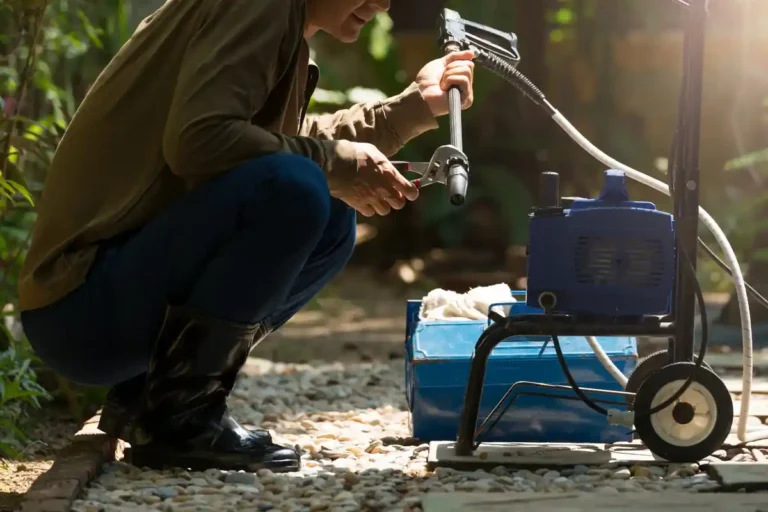
A pressure washer leaking from its housing may have a damaged seal, loose fitting, cracked pump component, or freeze-related damage. Although the water may appear beneath the machine, the housing itself is not always the source. Water can travel from a hose connection, pump head, inlet, or thermal relief valve before collecting under the unit.
Stop using the equipment until you identify where the leak begins. Continuing to operate a leaking machine can reduce pressure, damage internal components, and create electrical or high-pressure injection hazards.
This guide explains why a pressure washer housing leaks, how to locate the source, which parts can be replaced, and when professional pressure washer repair is the safer option.
Why Your Pressure Washer Housing Sprung a Leak
If your pressure washer housing sprang a leak, it’s important to understand the underlying cause. Several factors can lead to a pressure washer leaking:
- Cracked or Damaged Housing: The constant high-pressure output stresses the unit. Over time, this wear can cause the housing to split, leading to a pressure washer leaking water visibly from the casing.
- Freeze Damage: Leaving water inside during cold weather causes it to expand, cracking the pump or casing. This is one of the most common reasons for the bottom of the washer leaking water.
- Worn-Out Seals and Gaskets: Rubber parts inside your pressure washer naturally degrade. As they weaken, leaks form at joints or internally, often making your Karcher pressure washer leak water from inside.
- Rust and Corrosion: Storing your washer in damp areas corrodes metal parts, creating weak spots where leaks can begin.
- Overuse or Incorrect PSI Settings: Using a washer beyond its rated pressure or with improper nozzles places excess stress on the housing. This is why many users find their honda pressure washer housing sprung a leak after years of tough cleaning jobs.
By pinpointing the cause, you can determine if a quick repair such as a pressure cleaner hose repair is enough, or if the entire housing needs replacement.

Signs That Your Pressure Washer Is Leaking
Leaks don’t always start as dramatic cracks, you’ll often spot early warning signs if you know what to look for. If you notice your pressure washer leaking water, here are the most common symptoms:
- Visible Cracks or Dripping Water: If water is escaping from the housing itself, this clearly means the Pressure Washer Housing Sprung A Leak.
- Sudden Loss of Pressure: Internal leaks divert water flow, weakening cleaning power. This often happens when the karcher pressure washer leaking water from inside affects the pump’s ability to build pressure.
- Strange Vibrations or Unusual Noises: When the bottom of washer leaking water, the pump may vibrate or sound rough as it works harder to maintain pressure.
- Pooling Water Beneath the Washer: A telltale sign of a deeper crack or failed gasket. If your unit sits in a puddle after running, you’re likely dealing with more than just a loose connection.
- Brand-Specific Cases: A honda pressure washer housing sprung a leak often shows visible cracks on the outer body, while a karcher pressure washer leaking water from inside tends to drip gradually until performance drops.
Spotting these signs early allows you to decide whether you need a quick fix power washer hose, a new gasket, or a full housing replacement. Or replace old parts with high-quality pressure washer wands for maximum reach and pressure.
Where Is the Water Coming From?
Before removing the housing, dry the machine and inspect it while the water supply is connected. Do not place your hands near a suspected high-pressure leak. Use visual inspection to determine where the water first appears.
| Leak Location | Likely Cause | Recommended Action |
| Garden-hose inlet | Loose connection, damaged washer or cracked inlet | Tighten the connection or replace the washer |
| High-pressure hose connection | Damaged O-ring or loose fitting | Replace the correct seal and inspect the fitting |
| High-pressure hose | Cut, bulge, abrasion or pinhole | Stop using and replace the hose |
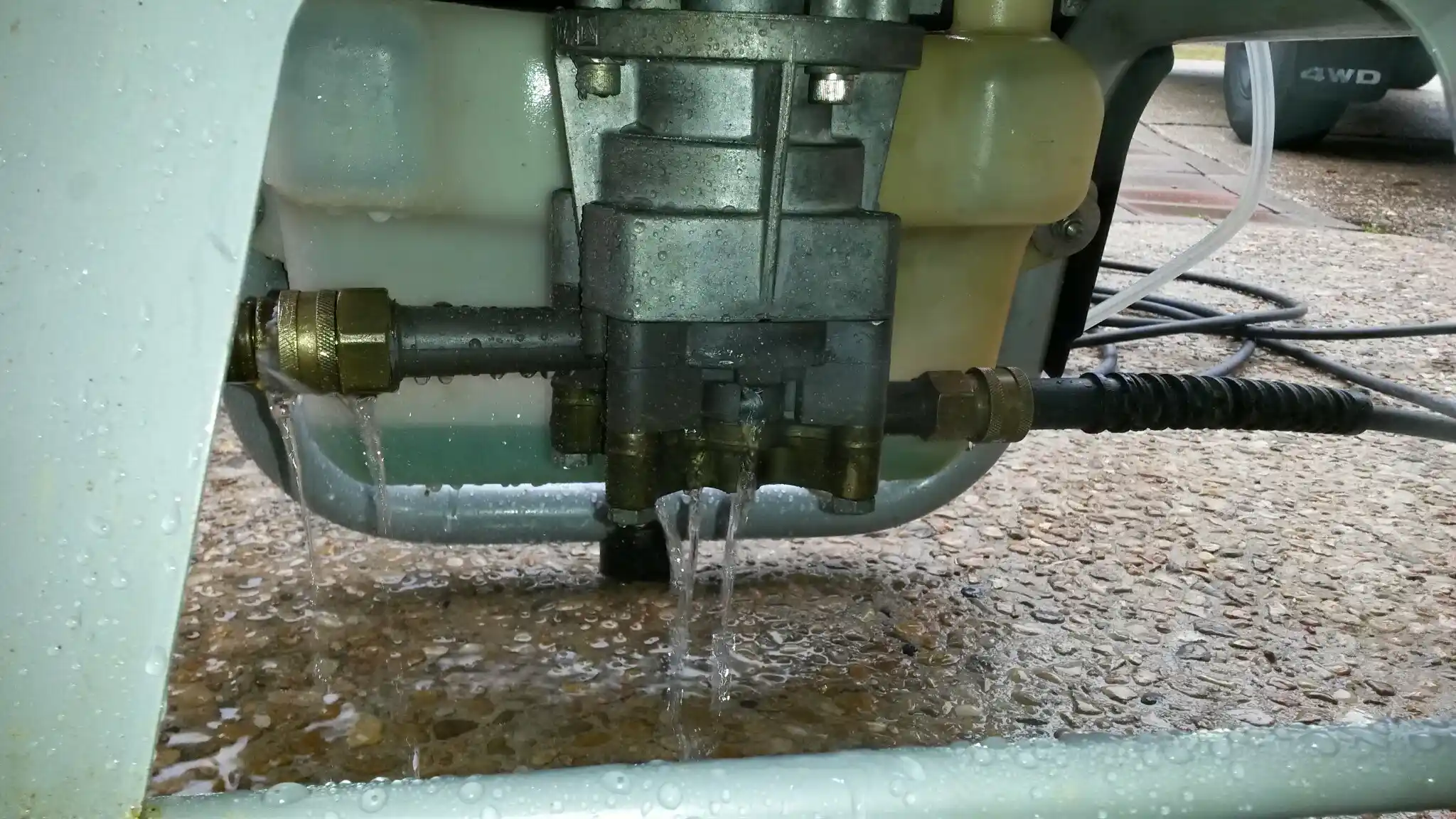
| Pump head | Damaged seal, cracked manifold or freeze damage | Arrange pump inspection or replacement |
| Thermal relief valve | Overheating or worn valve | Let the machine cool and inspect the valve |
| Detergent system | Loose or cracked siphon tube | Reconnect or replace the tube |
| Spray gun or wand | Worn seal, fitting or cracked body | Replace the seal or damaged component |
| Bottom of the machine | Water traveling from another component | Remove covers only after shutting down safely |
This section should come before “Can You Repair a Pressure Washer Housing Leak?” because readers must identify the actual source before choosing a repair.
Can a Leaking Pressure Washer Housing Be Repaired?
The correct solution depends on what the article calls the “housing.” An exterior plastic cover may protect the internal equipment without carrying pressurized water. However, the pump manifold, pump head, and high-pressure fittings contain pressurized water and should not be patched with ordinary epoxy or waterproof adhesive.
A leaking inlet washer, O-ring, detergent tube, or threaded connection may only require the correct replacement part. By contrast, a cracked pump head, damaged manifold, or leaking internal pump seal usually requires professional repair or component replacement.
Never operate the pressure washer while a protective cover is removed. Also, do not attempt to locate a high-pressure pinhole leak with your hand.
Can You Repair a Pressure Washer Housing Leak?
The good side is the fact that not all leaks require the purchase of a new device. A pressure washer leaking water may be fixed in most situations depending on the level of damage. When your Pressure Washer is all Sprang Housing, you can temporarily fix some cracks or pinholes with some epoxy or adhesives of industrial strength. This is a form of patch-up that buys time, but might not work when the pressure is sustained over the long term.
A quick solution is to install a pressure cleaner hose or a simple fix power washer hose in place of the hoses or a housing problem, and get your house going once again. Likewise, replacing static seals and gaskets is cheap and is often used to fix issues such as a karcher pressure washer spilt inside with water. But even in extensive cases such as when the bottom of washer leaking water displays a visible housing crack, there is no better chance than replacing the entire part. A honda pressure washer housing sprung a leak is a typical sign of excessive use that cannot be repaired with a patch but with a replacement of the entire housing.
Step-by-Step Guide: How to Fix a Leaking Pressure Washer Housing
Fixing a pressure washer leaking water may seem intimidating, but with the right steps, many homeowners can handle it themselves. Follow this structured process to safely and effectively deal with a Pressure Washer Housing Sprung A Leak.
Step 1: Turn Off and Depressurize the Washer
Safety comes first. Go out and turn off your machine, and remove all electric connections (in electric models) or the fuel valve (in gas models). Take a squeeze of the trigger to empty out any rest of the pressure in the hose. This helps to avoid spraying of water when examining a pressure washer leaking problem.
Step 2: Identify the Source of the Leak
A pressure washer leaking water can come from several places: the housing, gaskets, or hoses. Check for visible cracks, dripping joints, or water pooling at the bottom of washer leaking water. If you experience a pressure washer leaking water from inside, leaks often occur around seals, while a leak usually shows cracks along the pump housing.
Step 3: Clean and Dry the Area Thoroughly
Before applying any sealant or replacing parts, clean off dirt, grease, or leftover detergent. A dry, clean surface ensures that epoxy, waterproof adhesive, or new seals stick properly. Skipping this step can cause temporary fixes to fail, especially if you’re trying a quick patch to fix a hole.
Step 4: Determine Whether the Part Can Be Safely Replaced
Do not apply epoxy or household sealant to a cracked pump housing, manifold, high-pressure fitting, or hose. These components operate under significant pressure, and a temporary patch may fail unexpectedly.
If the leak comes from a replaceable O-ring, washer, inlet connector, or low-pressure detergent tube, install the manufacturer-approved replacement. A cracked pump component or pressurized housing should be inspected and replaced by a qualified technician.
Step 5: Replace Damaged Hoses, Seals, or Pump Components
If the leak comes from a connection, inspect the O-ring, washer, and fitting for wear. Replace these parts with components that match the machine’s model and pressure rating.
A damaged high-pressure hose should be removed from service and replaced, not cut, taped, glued, or joined with a general-purpose repair kit. Manufacturer manuals warn against repairing high-pressure hoses because a failed repair can expose the operator to pressurized water.
If the pump leaks from its seals, manifold, or head, use Pressure King’s guide to pressure washer pump repair to understand possible causes, then arrange professional service when internal disassembly is required.
Step 6: Replace the Housing if Severely Damaged
If cracks are large or the bottom of washer leaking water heavily, patching won’t work. In these cases, replacing the housing is the only long-term solution. For example, a honda pressure washer housing sprung a leak from a deep crack almost always requires a new housing to restore proper function.
Patching will not help in case cracks are huge or the green bottom of the washing instance is leaking water profusely. Replacement of the housing is the only long run solution in such scenarios. Using the above as an example, a broken hole due to a deep crack nearly always needs a new casing to go back to normal functioning.
Step 7: Reassemble and Test the Washer
Once repairs or replacements are complete, reassemble your unit carefully. Reconnect hoses, tighten fittings, and refill if necessary. Run the washer at a low setting first to check for leaks before moving to full pressure. If no water escapes, your pressure washer leaking issue has been successfully fixed.
Wondering how much your pressure washer repair will cost? Get a quick, transparent estimate today and avoid surprises. Find the best repair solution that fits your budget and start your pressure washer repair cost check now!

Repair or Replace: Which Option Makes More Sense?
| Condition | Repair May Make Sense | Replacement May Be Better |
|---|---|---|
| Loose inlet connection | ✓ | |
| Replaceable O-ring or washer | ✓ | |
| Worn thermal relief valve | ✓ | |
| Damaged high-pressure hose | ✓ | |
| Cracked pump manifold | ✓ | |
| Repeated freeze damage | ✓ | |
| Several worn components | ✓ | |
| Repair cost approaches machine value | ✓ |
A newer commercial machine may justify a pump repair, while replacing an older residential unit may be more practical when several major components have failed.
How Freeze Damage Causes Pressure-Washer Leaks
Water left inside a pump can freeze, expand, and crack the manifold, valves, fittings, or pump head. The damage may not become visible until the pressure washer is connected and operated again.
Before New Jersey temperatures fall below freezing, disconnect the water supply, release system pressure, drain the hoses, and follow the manufacturer’s winterization instructions. Use an approved pump-protection product when recommended for the equipment.
Store the pressure washer in a dry location protected from freezing temperatures. Proper winterization is especially important for rental equipment, trailer-mounted systems, and machines stored in unheated garages or service vehicles.
Preventing Future Leaks in Your Pressure Washer
Although the restoration of the machine performance can be achieved through the repair, it is better to prevent rather than restore. When your pressure washer housing sprang a leak one time, you will be interested in doing everything to prevent similar problems.
- Winterize Properly: Always drain your washer completely before storing in cold climates. This ensures that trapped water does not get to expand and make the bottom of the washer spurt out water.
- Regular Maintenance: Inspect hoses, gaskets, and seals frequently. Early detection of wear will perhaps prevent the karcher pressure washer from leaking internally in the future.
- Use Correct Settings: Stick to the recommended PSI and GPM. Having too much load in the washer is one of the highest causes of a honda pressure washer housing leaking.
- Dry, Safe Storage: Have your machine stored in a dry area as this would lead to corrosion and rusting which are major causes of leakage of products in a pressure washer.
- Timely Repairs: Small issues like a fix power washer hose or a quick gasket replacement can stop leaks from escalating into major housing failures. From turbo tips to adjustable, find the perfect pressure washer nozzle to boost efficiency and cut cleaning time today!
By adopting these simple practices, you’ll significantly reduce the risk of your pressure washer leaking water again and keep your machine working at peak performance for years.
Pressure-Washer Parts and Repair Support in New Jersey
A persistent leak may require a new hose, O-ring, pump seal, inlet fitting, manifold, spray gun, or wand. The replacement component must match the machine’s model, connection type, temperature rating, and maximum operating pressure.
Pressure King supplies pressure-washer hoses, wands, nozzles, replacement parts, and repair support for residential, commercial, and industrial equipment in New Jersey.
If the machine continues leaking after basic connection and seal checks, stop operating it until the pump and high-pressure components have been inspected.
Conclusion
When your pressure washer housing sprung a leak, it’s not just a minor inconvenience—it’s a sign that your machine needs immediate attention. It makes no difference whether it is due to a broken hose of quick fix power washer, or its pressure cleaner hose repair or even a complete change of its housing, when it is necessary to do it within a short period of time, the quicker the better it is the better it remains in quality condition.
On brand-specific problems such as a honda pressure washer housing burst a leak or a karcher pressure washer began leaking water internally, knowing what actions to take will save you some time and money. With regular maintenance, proper storage, and timely fixes, you can prevent the bottom of washer leaking water and keep your machine performing like new for years.
Don’t let dirt, grime, or leaks slow you down. Choose Pressure King for reliable performance, expert solutions, and durable pressure washer parts. Order today and experience the cleaning power you deserve!
Get Help With a Leaking Pressure Washer
Unsure whether your pressure washer needs a seal, hose, pump component, or complete replacement? Pressure King can help identify suitable parts and repair options for customers across New Jersey.
Review the expected pressure-washer repair cost or contact Pressure King for equipment support.
Frequently Asked Questions (Faqs)
How do I stop my pressure washer from leaking?
In order to prevent a pressure washer leaking, one should first know its point of leakage that may be hose, pump or housing. Clamp fittings, install new O-rings or apply hose patching kits. In case of acute problems, make a replacement of damaged components or enlist the service of a professional to avoid additional water leaking and destruction.
How to fix a leak in a pressure washer hose?
In order to repair the power washer hose, depressurize and switch off the unit. Loosen the damaged part with the help of a cutter, and afterwards, stick the hose of the pressure cleaner repair kit with connectors and clamps. Make sure that it is tight fitting to ensure that no more out pouring.
How to fix a leaking pressure washer?
Upon continuing to have a problem with your pressure washer dripping water, inspect O-rings, loose lids, or broken casing. Install or replace damaged gaskets or hoses. In the case of leaks in pumps, repair kits can be used or serve the pump with the help of a professional. Routine service lowers the frequency of the leakage and increases the circuitry of the machine.
How to fix a leaking pressure washer hose?
To fix a leaking pressure washer and it is leaking at the end of the hose, cut the damaged part after which you should reunite it with a hose repair kit. Make sure that connectors are tight. Taping and gluing are not advisable because of the high pressure that will destroy the repair in a short period of time.
How to fix a leaking pressure washer pump?
To fix a leaking pressure washer and it is leaking at the end of the hose, cut the damaged part after which you should reunite it with a hose repair kit. Make sure that connectors are tight. Taping and gluing are not advisable because of the high pressure that will destroy the repair in a short period of time.
What is the most common cause for a leaking pressure washer line?
The problem with leaking the line of a pressure washer is the most prevalent being an old hose. Cracks could accumulate with time due to exposure to high pressure, UV rays, and kink. Inspection and the provision of timely repair of pressure cleaner hose assists with the prevention of line failure.
Why is my pressure washer leaking from underneath?
When a bottom of washer has leakage of water the most likely cause is a wrong seal to the pump, breakage, or looseness of fittings. Check the pump assembly, O-ring, and tighten all the contact. When constant dripping appears, the pump can either require servicing or changing.
Can you seal a hole in a pressure washer hose?
Harboring a pressure washer with a leaking hose using glue or tape will break soon because of the higher pressure. Rather, remove the damaged part and apply a correct pressure cleaner hose repair kit, which has a safe lasting solution.
How to stop a pressure washer wand from leaking?
In case the pressure washer wand is in a leaking state, check the O-rings or seals within the connectors of the wand and change by inserting the connector replacement. Install fittings off. In case the wand body has literally cracks, it can best be replaced so as to restore the performance and safety.
How do you fix a leaking pressure washer pump?
First, determine whether the leak comes from the inlet, thermal relief valve, pump seals, or a cracked manifold. Replace accessible seals only when the manufacturer permits it. Cracked or internally damaged pump components generally require professional repair or replacement.
Can a leaking high-pressure washer hose be repaired?
A damaged high-pressure hose should not be patched with tape, glue, or a general-purpose connector. Stop using the machine and replace the hose with one that meets or exceeds the pressure and temperature ratings required by the equipment.

Michael Adeniran is the CEO of Pressure King Inc. He has been dealing in commercial cleaning equipment for many years. He is one of the leading specialists and experts in commercial cleaning products.


