


Choosing the Right PSI and GPM for Heavy-Duty Construction Equipment Cleaning
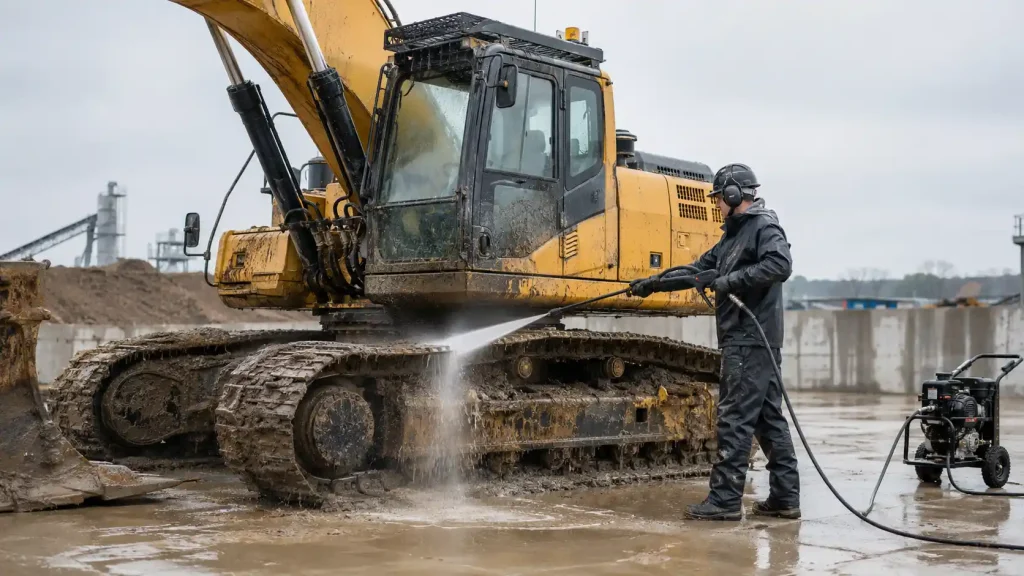
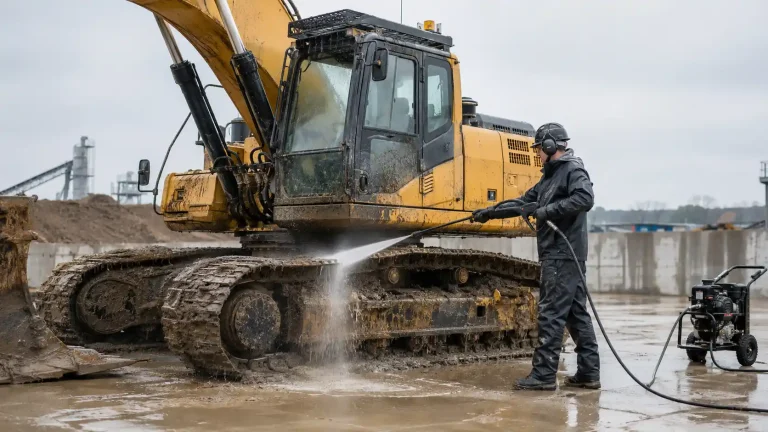
Construction equipment works in some of the harshest environments. Excavators, skid steers, loaders, bulldozers, cranes, and other heavy machinery are constantly exposed to mud, dust, concrete residue, grease, oil, and job site debris. Without regular cleaning, this buildup can affect equipment inspections, maintenance schedules, and overall machine performance.
Choosing the correct PSI and GPM for construction equipment cleaning is essential for getting professional results without damaging expensive machinery. Many buyers focus only on pressure rating, but effective equipment cleaning depends on the right balance between PSI, GPM, water temperature, detergents, and accessories.
In this guide, we will explain how PSI and GPM affect cleaning performance, what pressure washer specifications are suitable for heavy equipment, and how contractors can choose the right commercial pressure washer for their needs.
Why Construction Equipment Requires Professional Cleaning Equipment
Heavy construction machinery collects more than normal dirt. Equipment operating on job sites often accumulates wet and dried mud, concrete residue, hydraulic oil, grease, dust, sand, asphalt residue, and other industrial contaminants. These materials can become difficult to remove when they are allowed to dry or build up over time.
Small residential pressure washers are usually not designed for these applications. They may lack the power, durability, water flow, and operating capacity required for daily equipment cleaning. Commercial pressure washers are built for longer working hours and demanding environments, making them better suited to contractors that clean machinery regularly.
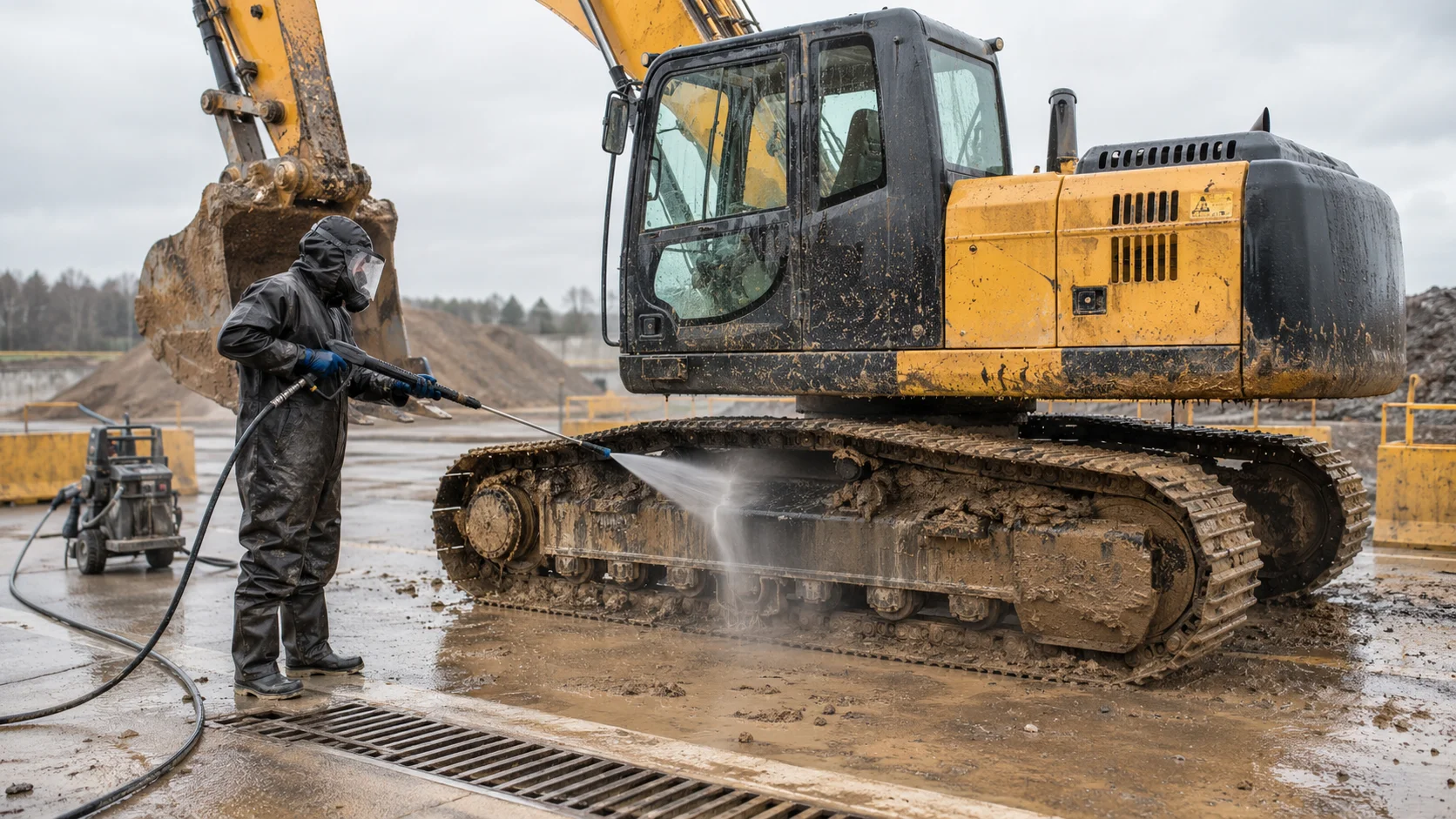
For contractors, proper equipment cleaning helps improve machine inspections, reduce contamination buildup, maintain equipment appearance, support preventive maintenance, and potentially extend equipment service life. A consistent cleaning routine also makes it easier for operators and maintenance teams to identify leaks, damaged components, or other problems before they become larger issues
Understanding PSI and GPM in Pressure Washers
Before choosing a pressure washer for construction equipment cleaning, it is important to understand what PSI and GPM actually mean. These two specifications work together, but they affect cleaning in different ways.
What Does PSI Mean?
PSI stands for pounds per square inch. It measures the force of water hitting the surface. Higher PSI provides more impact, which helps remove stubborn dirt, dried mud, concrete residue, and heavy buildup. However, more PSI does not always mean better cleaning. Excessive pressure can damage sensitive components, remove paint, or force water into areas where it should not enter. The pressure should therefore be selected according to the surface, contamination, and equipment manufacturer’s recommendations.
What Does GPM Mean?
GPM stands for gallons per minute. It measures how much water flows through the pressure washer system. Higher GPM helps with faster rinsing, removing loosened debris, cleaning larger surfaces, and improving overall productivity. For heavy equipment cleaning, GPM is especially important because large machines require significant water volume to remove dirt effectively. A pressure washer with strong PSI but insufficient GPM may loosen contamination without rinsing it away quickly.
PSI vs GPM: Which Matters More for Construction Equipment Cleaning?
Both PSI and GPM are important, but they serve different purposes. PSI provides cleaning power, while GPM improves cleaning speed and rinsing efficiency. For example, a machine with high PSI but low GPM may remove dirt effectively in small areas but take longer to rinse large equipment. A machine with balanced PSI and higher GPM can clean excavators, loaders, and machinery faster.
For construction companies, choosing the right balance improves productivity and reduces labor time. Instead of selecting a machine based only on its maximum PSI rating, contractors should consider the complete cleaning application and the amount of equipment they need to wash.
Recommended PSI and GPM for Construction Equipment Cleaning
The ideal pressure washer specifications depend on the type of machinery and level of contamination.
| Equipment Cleaning Application | Recommended PSI | Recommended GPM |
|---|---|---|
| Light equipment cleaning | 2,000–2,500 PSI | 2–3 GPM |
| General construction machinery | 2,500–3,500 PSI | 3–5 GPM |
| Heavy equipment cleaning | 3,000–4,000 PSI | 4–8 GPM |
| Industrial fleet cleaning | 3,500+ PSI | 5+ GPM |
Most professional contractors benefit from machines in the 3,000 PSI range with adequate GPM because they provide strong cleaning performance without unnecessary risk. The final selection should still account for the equipment being cleaned, the contamination involved, available water supply, and how frequently the pressure washer will be used.
Choosing the Right Pressure Washer for Different Construction Equipment
Different machines require different cleaning approaches. An excavator used in wet soil may have different cleaning requirements from a concrete mixer exposed to hardened concrete residue. Matching the pressure washer to the application helps contractors clean effectively while protecting machinery.
Excavators
Excavators often collect wet soil, mud, hydraulic oil, and concrete residue around tracks, buckets, undercarriages, and other working components. A commercial pressure washer between 2,500 and 3,500 PSI with good water flow is usually suitable for general cleaning. For grease and oil buildup, a hot water pressure washer can provide better results because heat helps loosen oily contamination. Operators should still use appropriate pressure around hydraulic components, electrical connections, and other sensitive areas.
Loaders and Skid Steers
Loaders frequently operate in muddy environments, so their wheels, tracks, undercarriages, and working attachments can collect packed dirt and debris. A higher GPM machine helps rinse large areas faster after the contamination has been loosened. Because these machines are often cleaned between jobs, contractors should prioritize equipment that can handle frequent use without creating unnecessary cleaning downtime.
Concrete Mixers and Trucks
Concrete equipment requires special attention because dried concrete can become extremely difficult to remove. Effective cleaning may require higher PSI, concrete-safe detergents, specialized nozzles, and, where appropriate, hot water systems. Operators should avoid assuming that maximum pressure is always the solution. The correct combination of pressure, water flow, cleaning chemicals, and technique can remove residue while reducing the risk of damaging surfaces.
Bulldozers and Heavy Machinery
Large construction machines require durable cleaning equipment capable of handling long operating periods. Commercial Kärcher pressure washers provide different configurations suitable for demanding industrial applications. For fleets containing several types of machinery, contractors should consider a versatile pressure washer setup that can handle routine dirt removal as well as heavier contamination.
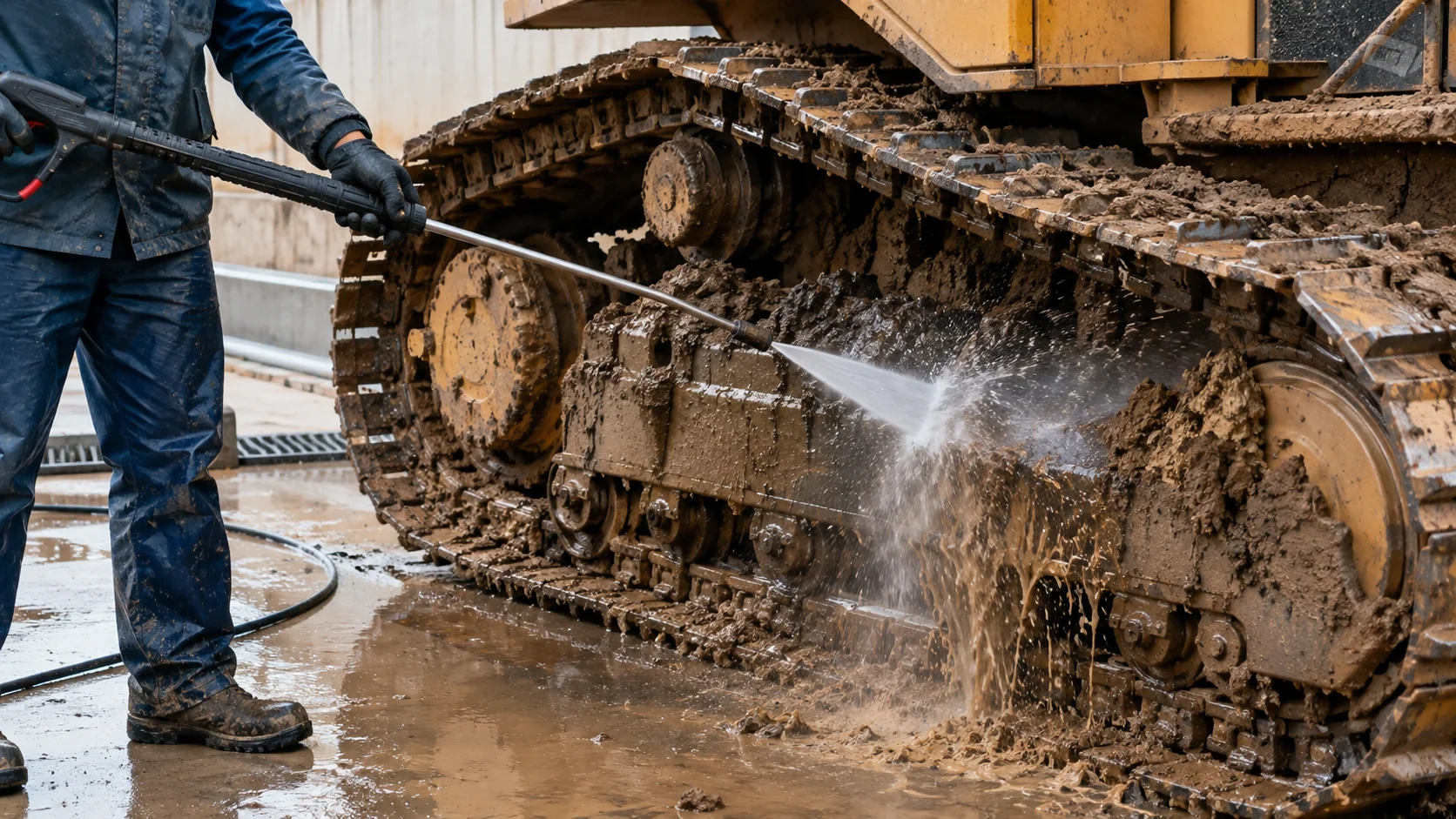
Hot Water vs Cold Water for Equipment Cleaning
The type of contamination determines whether hot or cold water is better. Cold water is often sufficient for mud, dust, and general dirt, while hot water becomes more useful when grease, oil, hydraulic fluid, or industrial contamination is involved.
Cold Water Pressure Washers
Cold water machines work well for mud removal, dust cleaning, dirt buildup, and general equipment washing. They are a practical choice for routine construction cleanup where oily contamination is limited. For contractors primarily dealing with soil and loose debris, cold water equipment can provide effective cleaning without the added complexity of a heating system.
Hot Water Pressure Washers
Hot water pressure washers are better for grease, oil, hydraulic fluid, and industrial contamination. Heat helps break down oily substances, allowing cleaning agents to work more effectively. For companies cleaning heavy machinery regularly, hot water equipment can reduce cleaning time and improve results, particularly when equipment comes into frequent contact with grease and petroleum-based residue.
Why GPM Is Critical for Large Construction Equipment
Large machinery has many surfaces that require thorough rinsing. While PSI breaks contamination loose, GPM carries the debris away. This makes water flow particularly important when contractors need to clean large machines quickly. Higher GPM can reduce cleaning time, cover larger surfaces, improve rinsing efficiency, and reduce operator fatigue. This is especially important for contractors managing multiple machines because faster cleaning means less equipment downtime.
A machine with an appropriate PSI but inadequate GPM may still require excessive passes to rinse away loosened material. Choosing a balanced system can make the entire cleaning process more efficient.
Best Accessories for Construction Equipment Cleaning
The correct accessories improve safety and cleaning performance. Contractors should choose attachments based on the surfaces being cleaned, the type of contamination, and how frequently the equipment is washed.
Pressure Washer Surface Cleaners
Surface cleaners are useful for cleaning concrete pads, equipment areas, and maintenance floors. They provide even cleaning and reduce streaks, making them especially useful when contractors also need to maintain the areas surrounding heavy equipment.
Heavy-Duty Spray Guns and Wands
Professional spray guns provide better control during long cleaning sessions. A suitable wand can help operators reach under equipment, around tracks, and into other difficult areas while maintaining better control over the spray.
Turbo Nozzles
Turbo nozzles provide rotating water impact for difficult areas. They can be useful for heavy dirt, mud buildup, and durable surfaces where additional cleaning impact is appropriate. Operators should still use caution around painted surfaces, seals, electrical components, and other areas that may be sensitive to concentrated spray.
Commercial Hoses
High-quality hoses are essential for safety and consistent performance. Construction applications require hoses designed to handle higher pressure and frequent movement. A durable hose also helps reduce interruptions caused by leaks, kinks, or premature wear. Inspect hoses regularly and replace damaged components before they become a safety or productivity issue.
Detergents and Cleaning Chemicals
Cleaning chemicals help remove grease, oil, and organic buildup. Using the correct detergent can reduce the need for excessive PSI because the chemical helps loosen contamination before pressure is applied. Contractors should select cleaning products according to the type of residue and the surface being cleaned. Chemical instructions should also be followed carefully to avoid surface damage or unwanted residue.
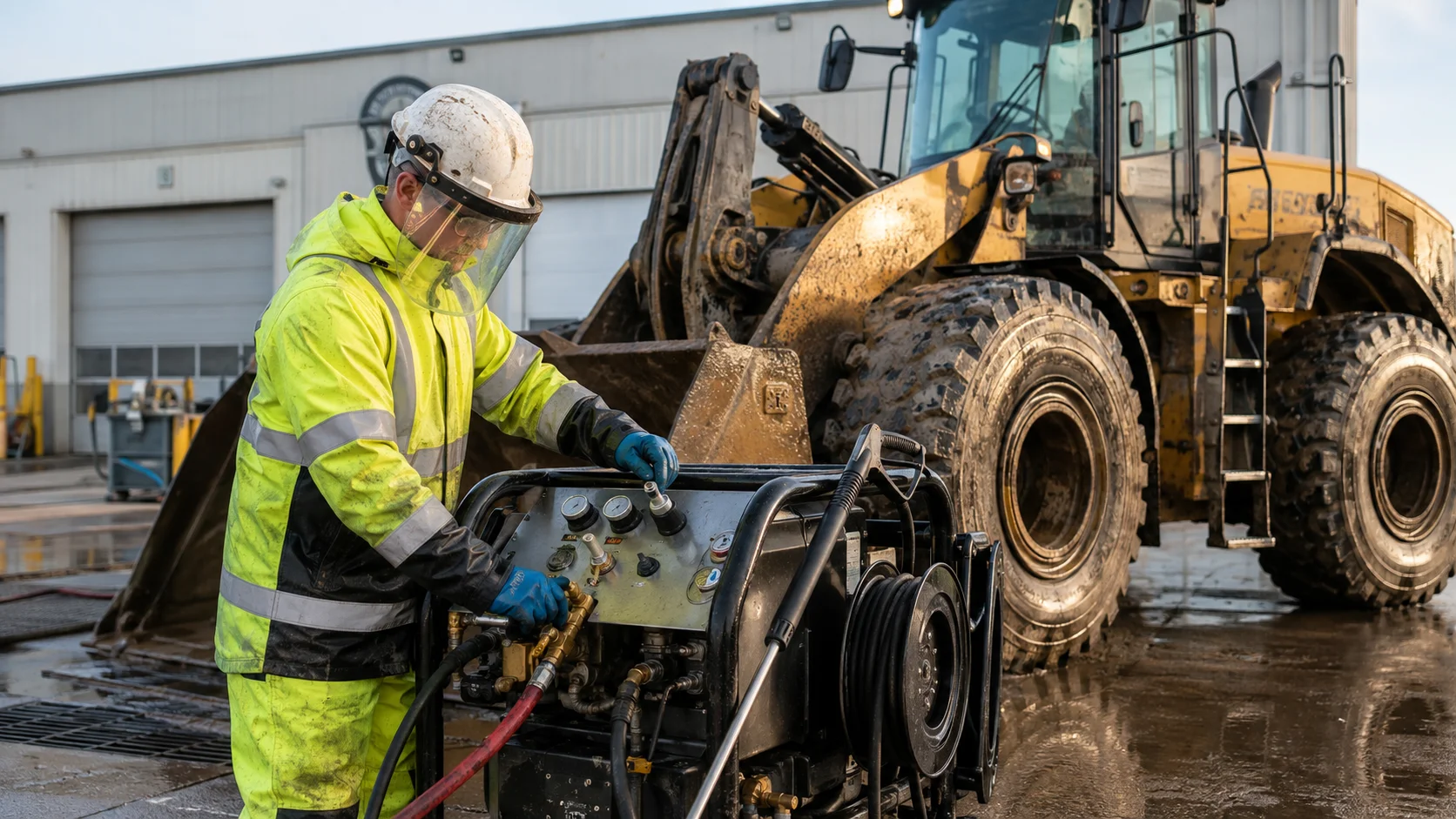
Step-by-Step Process for Cleaning Construction Equipment
These are practical processes for cleaning construction equipment, from removing loose debris and applying detergent to pressure washing, rinsing, and drying.
Step 1: Inspect Equipment Before Washing
Before pressure washing, check sensitive electrical areas, hydraulic components, damaged parts, seals, and other areas that may require lower pressure. Identifying vulnerable components before cleaning helps operators avoid unnecessary damage.
Step 2: Remove Loose Dirt
Remove large debris before pressure washing. This improves cleaning efficiency and reduces unnecessary water usage because the pressure washer does not have to do all of the work of removing loose material.
Step 3: Apply Detergent
Use appropriate cleaning chemicals for grease, oil, or heavy contamination. Allow sufficient time for the detergent to work according to the product instructions before beginning the pressure-washing stage.
Step 4: Select the Correct PSI Setting
Start with moderate pressure and increase only when needed. Avoid using maximum pressure near sensitive components because excessive force can damage equipment without providing better cleaning results.
Step 5: Maintain Proper Distance
Keep the nozzle at a safe distance from the equipment surface. Too much pressure at close range can damage paint or components. Maintain controlled, consistent passes rather than holding the spray in one location for an extended period.
Step 6: Rinse Completely
Remove all detergent and loosened debris before returning equipment to service. A thorough rinse helps prevent chemical residue from remaining on the machine and leaves surfaces ready for inspection and normal operation.
Common Mistakes When Selecting PSI and GPM
Avoid common PSI and GPM selection mistakes that can reduce cleaning efficiency, increase water usage, or cause unnecessary surface damage.
Choosing Only Based on PSI
PSI alone does not determine cleaning performance. A machine with very high pressure may still be inefficient if it does not provide enough water flow for large equipment.
Buying Equipment Too Small
Residential pressure washers may struggle with commercial workloads. Using undersized equipment for frequent construction cleaning can increase cleaning time and place additional strain on the machine.
Ignoring Water Supply Requirements
High-GPM machines require an adequate water supply. Contractors should confirm that their available water source can consistently provide the flow required by the selected pressure washer.
Using Excessive Pressure
Too much pressure can damage equipment, paint, seals, and sensitive components. Contractors should select the lowest pressure that effectively removes the contamination and use proper detergents and accessories to support cleaning performance.
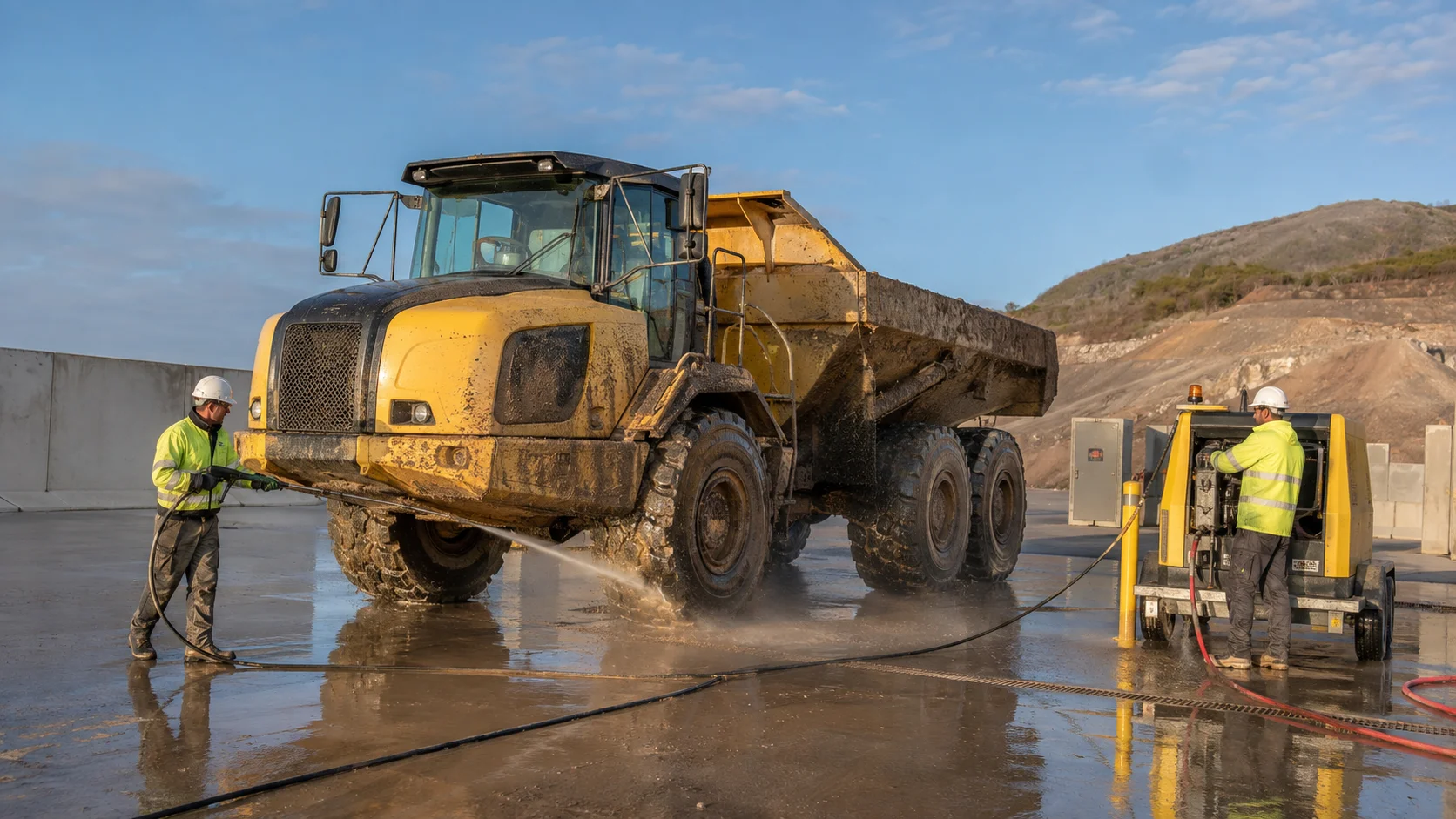
Maintenance Tips for Construction Pressure Washers
These are maintenance practices for construction pressure washers to maintain reliable performance, prevent equipment issues, and reduce downtime.
- Choosing PSI based only on the highest available pressure
- Ignoring GPM when comparing pressure washers
- Using excessive pressure on sensitive surfaces
- Selecting low GPM for large cleaning areas
- Failing to match PSI and GPM to the cleaning application
- Overlooking water supply requirements
- Not testing pressure and flow before full-scale cleaning
Pressure King Inc helps contractors and businesses in New Jersey and New York select, maintain, and support commercial Kärcher pressure washing equipment for demanding applications.
Conclusion
Selecting the correct PSI and GPM for construction equipment cleaning helps contractors achieve better cleaning results while protecting expensive machinery. The right pressure washer should provide enough power to remove dirt and buildup while maintaining safe operation.
PSI provides the impact needed to loosen contamination, while GPM helps rinse loosened material and clean large surfaces efficiently. Contractors should also consider water temperature, detergents, accessories, water supply, and maintenance requirements when selecting equipment.
For construction companies and industrial businesses in New Jersey and New York, Pressure King Inc provides commercial Kärcher pressure washers, accessories, hoses, and cleaning solutions designed for demanding equipment cleaning applications. Choosing the right machine setup improves productivity, reduces downtime, and helps keep heavy equipment operating efficiently.
Frequently Asked Questions
What PSI is best for cleaning construction equipment?
Most construction equipment can be cleaned effectively with 2,500–3,500 PSI. Heavy contamination may require higher pressure combined with proper accessories.
How many GPM do I need for heavy equipment cleaning?
For heavy construction equipment, 3–8 GPM is commonly used depending on equipment size and cleaning requirements.
Is higher PSI better for machinery cleaning?
Not always. The best results come from balancing PSI, GPM, temperature, and cleaning technique.
Should I use hot water for construction equipment?
Hot water is recommended for equipment with grease, oil, and heavy industrial contamination because it breaks down buildup faster.
What is the best pressure washer for construction companies?
The best pressure washer depends on workload, equipment size, cleaning frequency, and available power sources. Commercial Kärcher pressure washers provide multiple configurations for professional applications.

Michael Adeniran is the CEO of Pressure King Inc. He has been dealing in commercial cleaning equipment for many years. He is one of the leading specialists and experts in commercial cleaning products.


