


How to Remove Concrete Residue Safely with a Commercial Pressure Washer
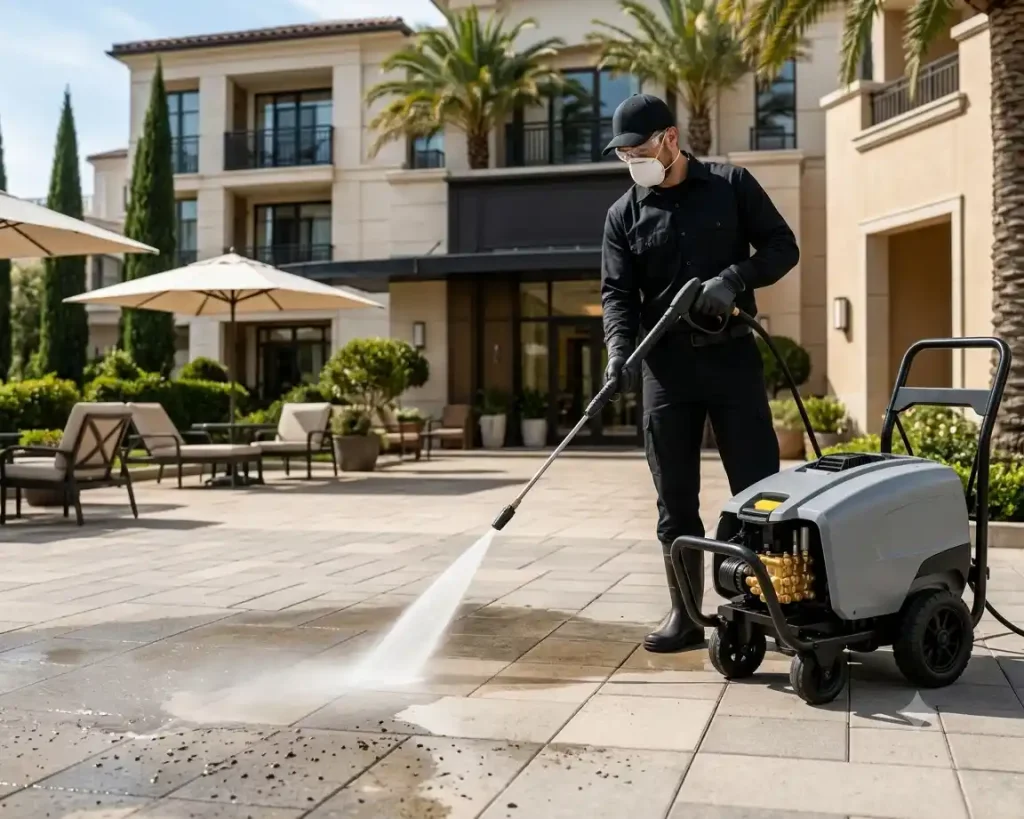
Construction sites often leave behind tough concrete residue, cement dust, mortar splashes, and dried material on floors, equipment, vehicles, and other surfaces. Removing this buildup manually can take hours and may require significant labor. A commercial pressure washer provides a faster and more efficient solution by combining water pressure, proper flow, and the right cleaning accessories.
However, removing concrete residue is not simply about using the highest pressure available. Using excessive PSI, the wrong nozzle, or incorrect cleaning techniques can damage surfaces, remove coatings, or create unnecessary repairs. The right approach depends on the type of residue, surface condition, and equipment being cleaned.
In this guide, we will explain how to remove concrete residue with a commercial pressure washer, what PSI and GPM you need, when to use hot water, which accessories work best, and how construction companies can improve cleanup efficiency.
What Is Concrete Residue and Why Is It Difficult to Remove?
Concrete residue is the leftover material created during construction activities. It may include cement dust, dried concrete splashes, mortar, grout, and other mineral-based deposits that stick to surfaces after construction work.
Unlike normal dirt or mud, concrete residue hardens over time and bonds strongly with surfaces. This makes it difficult to remove using basic cleaning methods. Construction equipment, trailers, floors, and building surfaces often require stronger cleaning methods to restore their original condition.
A commercial pressure washer helps break down this buildup by delivering high-pressure water flow directly onto the affected area. When combined with proper detergents, hot water, and specialized accessories, pressure washing can significantly reduce cleaning time while improving results.
Common Areas Where Concrete Residue Builds Up
Construction companies commonly deal with concrete residue in several areas:
Construction Equipment
Heavy equipment such as excavators, loaders, mixers, and trailers often collect concrete splashes and hardened material during projects.
Regular cleaning helps prevent buildup, protects equipment surfaces, and makes inspections easier.
Concrete Floors and Work Areas
Newly constructed buildings, warehouses, and industrial facilities often require cleaning before final use. Concrete dust, residue, and construction debris can affect appearance and safety.
Trucks and Transportation Equipment
Concrete trucks, trailers, and delivery vehicles frequently need cleaning after transporting concrete materials.
Removing residue regularly prevents excessive buildup and keeps vehicles ready for operation.
Industrial Facilities
Manufacturing plants and warehouses may require post-construction cleanup before operations begin. A commercial pressure washer helps clean large areas efficiently.
Can a Pressure Washer Remove Concrete Residue?
Yes, a commercial pressure washer can remove many types of concrete residue when the correct pressure, nozzle, and cleaning method are used. Fresh concrete splashes and cement dust are usually easier to remove, while hardened concrete deposits may require additional methods such as specialized detergents, scraping, or surface preparation.
The goal is not to use maximum pressure but to use the right combination of water pressure, flow rate, heat, and cleaning agents. A properly selected pressure washer can remove stubborn residue while reducing the risk of damaging the surface underneath.
For construction companies, choosing a professional-grade machine is important because commercial equipment is designed for longer operating periods and more demanding cleaning applications.
What PSI Pressure Washer Do You Need to Remove Concrete Residue?
The required PSI depends on the amount of residue, surface type, and cleaning application.
For general construction cleanup, a pressure washer between 2,500 and 4,000 PSI is commonly suitable. Light cement dust and loose residue may require less pressure, while hardened buildup may need higher pressure combined with the correct accessories.
| Cleaning Application | Recommended PSI Range |
|---|---|
| Concrete dust and light residue | 2,000–2,500 PSI |
| Construction equipment cleanup | 2,500–3,500 PSI |
| Heavy concrete buildup | 3,000–4,000 PSI |
| Industrial concrete cleaning | 3,000+ PSI |
While PSI is important, GPM also plays a major role. A machine with higher water flow can move loosened debris away faster, making cleaning more efficient.
Why GPM Matters for Construction Cleanup
Many buyers focus only on PSI when selecting a pressure washer, but GPM (gallons per minute) is equally important for professional cleaning.
PSI determines the force of the water hitting the surface, while GPM determines how much water moves through the system to carry away dirt and debris.
For large construction sites, a higher GPM commercial pressure washer can often clean faster than a smaller machine with higher PSI but lower water flow.
For example:
- Low GPM machines may take longer to rinse large surfaces.
- Higher GPM machines improve productivity on equipment, floors, and large areas.
- Commercial contractors benefit from machines designed for continuous operation.
When selecting equipment, construction companies should consider both PSI and GPM based on their cleaning requirements.
Hot Water vs Cold Water Pressure Washers for Concrete Residue
Choosing between hot and cold water depends on the type of residue being removed.
Cold Water Pressure Washers
Cold water pressure washers work well for:
- Concrete dust
- Loose dirt
- Mud
- General construction debris
- Outdoor surface cleaning
They are a practical choice for routine cleanup where grease and heavy contamination are not major concerns.
Hot Water Pressure Washers
Hot water pressure washers are better for difficult cleaning situations involving:
- Oil and grease
- Heavy equipment
- Industrial contamination
- Sticky construction materials
- Older hardened residue
Heat helps break down certain materials faster, reducing the need for extremely high pressure.
For construction companies dealing with equipment cleaning, fleet maintenance, or industrial applications, a hot water pressure washer can improve cleaning efficiency.
Best Nozzles for Removing Concrete Residue
The nozzle controls the spray pattern and affects cleaning performance. Using the wrong nozzle can either make cleaning ineffective or increase the chance of surface damage.
15-Degree Nozzle
A 15-degree nozzle provides stronger cleaning power for tougher residue. It works well for durable surfaces such as equipment and unfinished concrete.
25-Degree Nozzle
A 25-degree nozzle is one of the most commonly used options for construction cleanup. It provides a balance between cleaning power and surface protection.
It works well for:
- Concrete floors
- Sidewalks
- Equipment
- General construction cleanup
Turbo Nozzle
A turbo nozzle creates a rotating spray pattern that increases cleaning impact. It can help remove stubborn residue from strong surfaces.
However, it should be used carefully because excessive force can damage softer materials.
Step-by-Step: How to Remove Concrete Residue with a Pressure Washer
Step 1: Inspect the Surface Before Cleaning
Before starting, identify the type of residue and the surface material.
Check whether you are cleaning:
- Fresh concrete residue
- Hardened concrete deposits
- Painted surfaces
- Sealed concrete
- Equipment components
This helps determine the correct pressure and cleaning approach.
Step 2: Remove Loose Debris
Sweep or remove loose construction debris before pressure washing.
Removing loose material first allows the pressure washer to focus on hardened residue instead of wasting water and energy moving debris around.
Step 3: Apply Concrete Cleaning Detergent
For difficult residue, apply an appropriate cleaning chemical before pressure washing.
Detergents help loosen buildup, allowing the pressure washer to remove material more effectively.
Avoid using harsh chemicals without checking surface compatibility.
Step 4: Start With Lower Pressure
Begin with a lower PSI setting and test a small area.
If the residue remains, gradually increase pressure rather than immediately using maximum power.
Step 5: Maintain Proper Spray Distance
Keep the nozzle at a safe distance from the surface.
Holding the nozzle too close can damage concrete, remove coatings, or create uneven marks.
Step 6: Clean Using Consistent Passes
Move the wand evenly across the surface.
Avoid stopping in one place because concentrated pressure can leave visible lines.
For large concrete areas, using a surface cleaner attachment can provide more consistent results.
Common Mistakes When Removing Concrete Residue
Using Too Much Pressure
Higher PSI does not always mean better cleaning. Excessive pressure can damage surfaces and increase repair costs.
Using the Wrong Nozzle
A narrow nozzle may remove residue quickly but can create surface damage if used incorrectly.
Ignoring Detergents
Some residue requires chemical assistance. Relying only on pressure may waste time and water.
Cleaning Without Testing
Always test a small area before cleaning the entire surface.
This prevents unexpected damage to expensive equipment or finished surfaces.
How Construction Companies Can Improve Cleanup Efficiency
Professional construction cleanup requires reliable equipment and proper planning.
Companies can improve efficiency by:
- Choosing commercial-grade pressure washers
- Using the correct accessories
- Maintaining equipment regularly
- Training operators on proper techniques
- Using hot water when needed
- Selecting the correct PSI and GPM
Pressure King Inc helps businesses in New Jersey and New York choose commercial Kärcher pressure washing equipment, accessories, and cleaning solutions designed for demanding applications.
Maintenance Tips After Cleaning Construction Equipment
After removing concrete residue, proper equipment maintenance is important.
Flush the Pressure Washer System
Run clean water through the machine after using detergents or chemicals.
Inspect Hoses and Connections
Check hoses, guns, and fittings for wear or leaks.
Store Equipment Properly
Protect pressure washers from extreme weather and keep accessories organized.
Schedule Regular Maintenance
Commercial pressure washers experience heavy use and benefit from routine inspections and service.
Frequently Asked Questions
What pressure washer PSI is needed to remove concrete residue?
Most concrete residue removal jobs require around 2,500 to 4,000 PSI depending on the surface and buildup. The right PSI should be combined with proper GPM, nozzle selection, and cleaning chemicals.
Can a pressure washer remove dried concrete?
Yes, a commercial pressure washer can remove some dried concrete residue. However, thick or fully hardened concrete may require additional methods such as scraping, specialized chemicals, or mechanical removal.
Is hot water better for removing concrete residue?
Hot water can improve cleaning performance, especially when residue is mixed with grease, oil, or industrial contamination. It helps break down difficult buildup faster.
What is the best commercial pressure washer for construction cleanup?
The best commercial pressure washer depends on the cleaning application. Construction companies should consider PSI, GPM, water temperature, durability, and available accessories.
Can pressure washing damage concrete?
Yes, excessive pressure or incorrect techniques can damage concrete. Always use the correct nozzle, maintain proper distance, and test the surface before full cleaning.
Conclusion
Removing concrete residue from construction sites requires more than simply using the highest-pressure machine available. The best results come from choosing the right combination of PSI, GPM, nozzle type, cleaning chemicals, and equipment.
A commercial pressure washer provides construction companies with a faster and more effective way to clean equipment, floors, and job sites. By following proper cleaning methods and maintaining equipment regularly, businesses can improve productivity and protect their investments.
For construction companies and industrial facilities in New Jersey and New York, Pressure King Inc provides commercial Kärcher pressure washers, hoses, accessories, and cleaning solutions designed for demanding cleanup applications.

Michael Adeniran is the CEO of Pressure King Inc. He has been dealing in commercial cleaning equipment for many years. He is one of the leading specialists and experts in commercial cleaning products.


