

Ride-On vs. Walk-Behind Floor Scrubbers: Which One to Choose?
Key Takeaways
- Walk-behind scrubbers suit small, tight, and crowded spaces.
- Ride-on scrubbers are ideal for large, open facilities.
- Walk-behinds cost less and are easier to store.
- Ride-ons clean faster and reduce operator fatigue.
- Choose based on facility size, layout, and cleaning needs.
Floor scrubbers come into play in the context of cleaning and polishing hard floors and are powerful machines used in cleaning and drying floors in half the time that it may be considered using the traditional methods of cleaning. They aid in keeping up the cleanliness, safety, and even the hygiene standards in warehouses, shopping malls, hospitals, and schools since they are large facilities.
Your selection of the floor scrubber can have a big influence on your cleaning productivity and cost effectiveness, as well as on your general maintenance output. The choice usually comes down to the two main types mentioned as ride-on floor scrubbers and walk-behind floor scrubbers. At Pressure King, we know that every facility has unique cleaning challenges. That’s why we offer a wide range of floor scrubbers to help you find the perfect fit.
The right machine depends on more than the size of your facility. Cleaning frequency, floor layout, labor availability, aisle width, battery runtime, tank capacity, and the amount of dirt being removed can all affect which type delivers better results.
What Is a Walk-Behind Floor Scrubber?

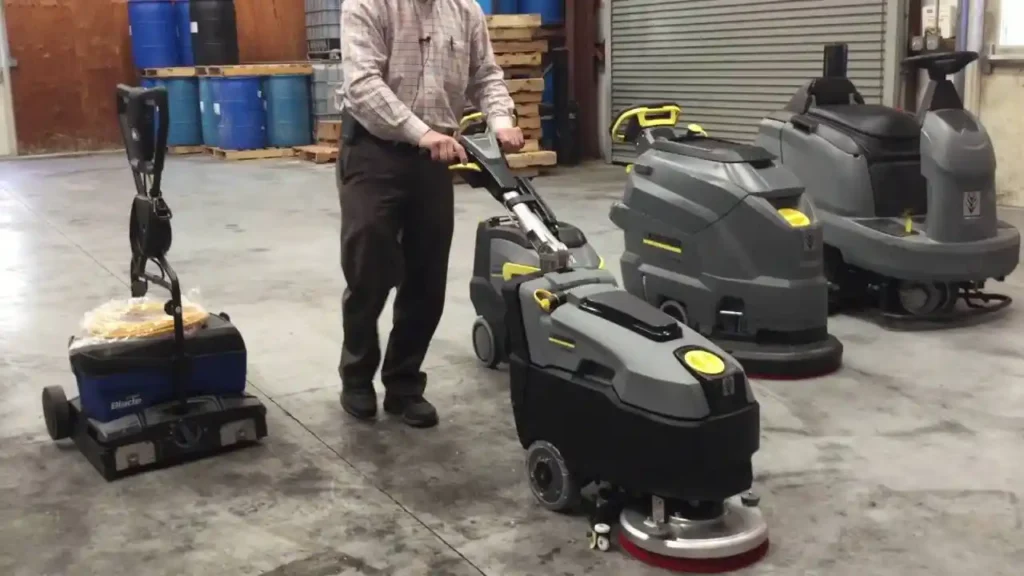
A Walk-Behind Floor Scrubber is one of the automated cleaning machines that makes the consumer drive the machine behind him/her as it scrubs, vacuums as well and dries the floor in a single collection. It is small, maneuverable, and perfect in a smaller space or a more restricted area.
Key Features:
- Mobility: The ability to be more easily moved around obstacles, corners, and tight spaces.
- Manual Control: It is manipulated by pushing or steering, and thus control is more efficient during in-depth cleaning.
- Size & Portability: Comes in small sizes that fit well in retail stores, and there are bigger sizes that are suitable for mid-size facilities.
Types of Walk-Behind Scrubbers:
- Corded: They need a perennial supply of power, which restricts range; the advantage is steadfast power.
- Battery Powered Models: More convenient than standard models and portable, which makes it suitable for medium or large spaces.
- Compact and Large Models: Compact models are most suitable in a cluttered or small spac,e whereas large models are effective and Bigger in open space.
The walk-behind is usually cheaper to obtain, store, and maintain, hence a favorite in small to mid-sized facilities.
When Is a Walk-Behind Scrubber the Better Choice?
A walk-behind floor scrubber can be a practical choice when cleaning areas contain narrow aisles, frequent obstacles, multiple rooms, or tight turns. The operator can control the machine closely around shelving, fixtures, equipment, and other objects that may make larger equipment difficult to maneuver.
It can also make sense when a facility does not require continuous cleaning across thousands of square feet. For smaller commercial spaces, a compact scrubber can provide sufficient cleaning performance without the additional storage space and investment associated with a ride-on machine.
What Is a Ride-On Floor Scrubber?

A Ride-On Floor Scrubber has an operator platform on which the operator sits down, and is meant to cover vast floor spaces in the shortest time possible. It integrates all the cleaning functions plus the comfort of driving, which minimizes the fatigue to operators during long shifts of cleaning tasks.
Key Features:
- Operator Seating: The operator climbs the machine and rides upon the machine using steering controls to regulate the machine’s direction and speed.
- Larger Capacity: They usually have larger tanks in terms of solution and recovery capacity, and thus can be used longer before they require a refill.
- Powered Drive: Propelled by a motor, reducing manual effort and increasing productivity.
Types of Ride-On Scrubbers:
- Mid-Size Models: Made to fit moderate areas such as supermarkets, schools, and offices.
- Industrial Heavy-Duty Models: These models are designed to support huge floor spaces, like at airports, processing plants, and warehouses. These provide strong scrubbing, large capacity tanks, and sturdy build.
Ride-on scrubbers are ideal for facilities with expansive, open floor areas where efficiency and speed are top priorities.
When Is a Ride-On Scrubber the Better Choice?
A ride-on floor scrubber is generally better suited to large facilities where cleaning crews need to cover extensive floor areas on a regular basis. The operator can remain seated while the machine performs scrubbing, water recovery, and drying functions, which can make long cleaning shifts less physically demanding.
Large tanks can also reduce the number of interruptions required for refilling solution or emptying recovery water. This can be especially useful in warehouses, distribution centers, manufacturing facilities, airports, and other environments where cleaning productivity is a major consideration.
From compact walk-behinds to industrial ride-ons, we’ve got solutions that deliver results. Browse our selection of high-performance commercial floor cleaning machines and discover the tools trusted by professionals across industries.
Key Factors to Consider Before Choosing a Floor Scrubber
Following are the key factors that will help you to choose good quality floor scrubbers.
Facility Size and Cleaning Area
Facility size is important, but it should not be the only factor when comparing commercial floor scrubbers. Consider the average cleaning area and the amount of floor space that needs to be covered during each cleaning cycle. A facility with a large total floor area may still benefit from a walk-behind if that area is divided into small rooms or narrow sections.
Floor Layout and Maneuverability
The floor layout can strongly influence your choice. Facilities with obstacles, narrow pathways, tight turns, and frequent changes in direction may place greater value on the maneuverability and compact dimensions of a walk-behind scrubber.
Cleaning Frequency and Productivity
Cleaning frequency and the amount of time available for daily cleaning should also be considered. For facilities that require frequent cleaning across expansive open floors, cleaning speed and tank capacity may become more important because they can help reduce interruptions and improve productivity.
Operator and Storage Requirements
Operator experience and available storage space can also affect the decision. Consider how comfortable employees are with operating the equipment and whether your facility has enough room to store and charge the machine when it is not in use.
Pros and Cons of Walk-Behind Floor Scrubbers
Walk-behind floor scrubbers are a popular choice for facilities with moderate cleaning needs. They offer flexibility and affordability but may require more manual effort.
Pros:
- Lower Upfront Cost: These machines are generally more budget-friendly than ride-on models, making them accessible for small businesses and facilities.
- Compact and Maneuverable in Tight Spaces: Their smaller size allows easy navigation around furniture, shelves, and tight corners.
- Easy Storage and Transport: Lightweight and space-efficient, they can be stored in janitorial closets or transported in smaller service vehicles.
- Great for Small to Medium Areas: Ideal for environments like offices, retail stores, and classrooms where space is limited and precision cleaning is required.
Cons:
- Slower Cleaning Speed: Since they rely on manual guidance, walk-behinds clean slower compared to their ride-on counterparts.
- More Physically Demanding for Operators: Operators must walk and guide the machine, which can lead to fatigue during long shifts or large cleaning tasks.
- Limited Tank and Battery Capacity: Smaller tanks mean more frequent stops to refill or empty, and shorter battery life may interrupt extended cleaning sessions.
Pros and Cons of Ride-On Floor Scrubbers
Ride-on floor scrubbers are designed for high-efficiency cleaning in large commercial and industrial spaces. While they offer significant productivity advantages, they also come with higher costs and spatial requirements.
Pros:
- High Cleaning Productivity: Capable of covering more square footage in less time, making them ideal for large-scale cleaning operations.
- Greater Tank Capacity = Fewer Refills: Large solution and recovery tanks allow for extended cleaning without interruptions.
- Reduced Operator Fatigue: The ride-on design minimizes physical strain, allowing operators to work longer with greater comfort.
- Best for Large-Scale Operations: Perfect for warehouses, airports, manufacturing plants, and other facilities with expansive floor areas.
Cons:
- Higher Initial Investment: The advanced features and larger size come at a higher purchase cost, which may be a barrier for smaller businesses.
- Requires More Space for Operation and Storage: Their size makes them unsuitable for small spaces and more challenging to store.
- Not Ideal for Tight or Obstacle-Heavy Areas: Less maneuverable than walk-behind models, they struggle with complex layouts or areas with many fixtures.
Usage Scenarios: Where Each Type Excels
Choosing the right floor scrubber largely depends on the environment in which it will be used. Let’s explore where each type performs best:
Walk-Behind Ideal For:
- Grocery Stores, Schools, Hospitals, Office Buildings: These facilities often have multiple rooms, tight corridors, and high foot traffic areas that benefit from a maneuverable and quiet machine.
- Facilities with Narrow Aisles or Tight Turns: The compact design of walk-behinds allows operators to clean around shelving units, desks, and medical equipment with precision and ease.
Ride-On Ideal For:
- Warehouses, Logistics Centers, Manufacturing Plants: Large, open spaces demand high-efficiency cleaning. Ride-ons drastically reduce cleaning time while offering longer operation between refills.
- Airports, Stadiums, and Convention Centers: These high-traffic, expansive venues require consistent and efficient cleaning over long distances, making ride-on scrubbers the perfect solution.
Cleaning Productivity and Coverage
When comparing floor scrubber cleaning productivity, consider how much usable floor area the machine can cover during an actual cleaning shift. Theoretical cleaning width and speed do not tell the entire story because refilling tanks, changing batteries, maneuvering around obstacles, and stopping for other tasks can reduce practical productivity.
Ride-on machines generally have an advantage in large, open environments because operators can maintain a consistent cleaning pace with fewer physical demands. Walk-behind machines can remain competitive in smaller or more complicated spaces because their maneuverability can reduce the time spent navigating around obstacles.
Battery Runtime and Charging Requirements
Battery performance is another consideration when selecting a battery-powered floor scrubber. The machine should provide enough runtime to complete the intended cleaning cycle without frequent charging interruptions. Facilities should also consider charging locations, charging time, battery maintenance, and how many cleaning shifts the equipment must support.
A machine with a large battery does not automatically provide the best overall value. Matching battery capacity to the facility’s cleaning schedule can help prevent unnecessary downtime while avoiding equipment specifications that exceed actual requirements.
Cost Comparison Table: Walk-Behind vs. Ride-On Floor Scrubbers
| Feature | Walk-Behind Scrubber | Ride-On Scrubber |
|---|---|---|
| Upfront Cost | $3,000 – $10,000 | $8,000 – $25,000+ |
| Labor Cost | Higher (manual operation) | Lower (faster cleaning, less fatigue) |
| Cleaning Speed | Moderate (ideal for small–medium areas) | High (ideal for large, open areas) |
| Tank Capacity | Smaller (frequent refills) | Larger (fewer interruptions) |
| Maintenance Cost | Lower (simpler build) | Moderate to high (more complex systems) |
| Storage Requirements | Minimal | Requires dedicated space |
| Battery/Power Use | Lower consumption | Higher power needs |
| Total Cost of Ownership | Lower over time in small settings | Lower over time in large-scale operations |
How to Maintain a Floor Scrubber for Better Performance
Regular floor scrubber maintenance helps keep cleaning performance consistent and can reduce unexpected downtime. Operators should empty and rinse solution and recovery tanks after use, clean brushes and pads, inspect squeegees for wear, and check hoses and connections regularly.
Battery-powered machines also require proper charging and battery care according to the manufacturer’s instructions. Keeping the equipment clean and addressing worn components early can help maintain cleaning efficiency and extend the machine’s useful service life.
Conclusion
When it comes to floor scrubbers, there’s no one-size-fits-all solution. Walk-behind scrubbers are ideal for smaller facilities with tight layouts and limited budgets, offering flexibility and ease of use. In contrast, ride-on scrubbers are designed for large-scale operations where speed, efficiency, and operator comfort are top priorities.
Ultimately, the best choice depends on your facility size, cleaning demands, available labor, and budget. By evaluating both immediate needs and long-term value, you can invest in the right floor scrubber that enhances cleanliness, productivity, and cost-efficiency for your space.
For facilities in New Jersey looking to compare commercial floor scrubbers, Pressure King can help you evaluate equipment based on floor area, layout, cleaning frequency, and operational requirements. Selecting the right machine can make routine floor maintenance more efficient while supporting consistent cleaning results.
Need expert guidance or want to see our machines in action? Visit our store or call us now to get personalized recommendations!
Frequently Asked Questions (FAQs)
What’s the main difference between a walk-behind and a ride-on floor scrubber?
A walk-behind requires the operator to guide it from behind, while a ride-on allows the operator to sit and drive it, making it better suited for larger areas.
Which type of floor scrubber is best for small spaces?
Walk-behind scrubbers are ideal for small, tight spaces thanks to their compact size and easy maneuverability.
Are ride-on scrubbers worth the higher cost?
Yes, if you manage a large facility, ride-on models save time, reduce labor fatigue, and increase cleaning efficiency, offering a strong return on investment.
How often do floor scrubbers need maintenance?
Regular maintenance—such as cleaning tanks, inspecting brushes, and checking batteries—should be done weekly. Full servicing depends on usage frequency.
Can I test a floor scrubber before buying?
Absolutely! Pressure King offers product demos so you can evaluate the right model before making a purchase decision.
How do I choose between a ride-on and walk-behind scrubber?
Consider your facility’s floor area, layout, cleaning frequency, labor requirements, storage space, and budget. Walk-behind machines are generally better for smaller or obstacle-heavy areas, while ride-on scrubbers are better suited to large, open facilities where cleaning productivity is a priority.
What size floor scrubber do I need?
The appropriate size depends on the area that needs to be cleaned and the layout of the facility. Compact walk-behind machines can work well in smaller or divided spaces, while larger ride-on machines are generally better for expansive open floors where higher coverage rates are needed.
Are battery-powered floor scrubbers a good option?
Battery-powered floor scrubbers can provide convenient operation without requiring a power cord during cleaning. They are particularly useful when operators need to move freely across large areas. Battery runtime, charging requirements, and the facility’s cleaning schedule should be considered before selecting a model.
What affects the cost of operating a floor scrubber?
Operating costs can include labor, battery charging or electricity, water, cleaning chemicals, routine maintenance, replacement parts, and downtime. A machine with a higher purchase price may still provide better long-term value if it significantly reduces cleaning time and labor requirements.

Michael Adeniran is the CEO of Pressure King Inc. He has been dealing in commercial cleaning equipment for many years. He is one of the leading specialists and experts in commercial cleaning products.


