

Truck vs. Trailer-Mounted Pressure Washers: Which System Is Right for Your Business?
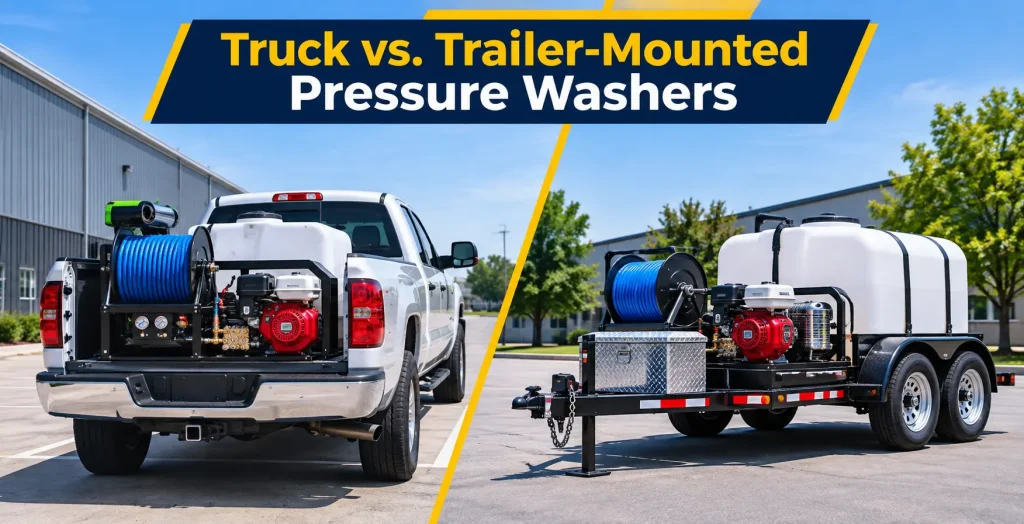
Choosing between a truck-mounted and a trailer-mounted pressure washer can make a big difference in how your cleaning business operates. Both systems let you take professional cleaning equipment directly to a jobsite, but they differ in cost, storage, water capacity, and mobility.
A truck-mounted system keeps your equipment inside or on the truck, while a trailer-mounted system carries it on a separate trailer. Each option has advantages depending on where you work, how often you travel, and the type of cleaning jobs you handle.
This guide compares truck vs. trailer-mounted pressure washers to help you choose a practical setup for your business.
What Is a Truck-Mounted Pressure Washer System?
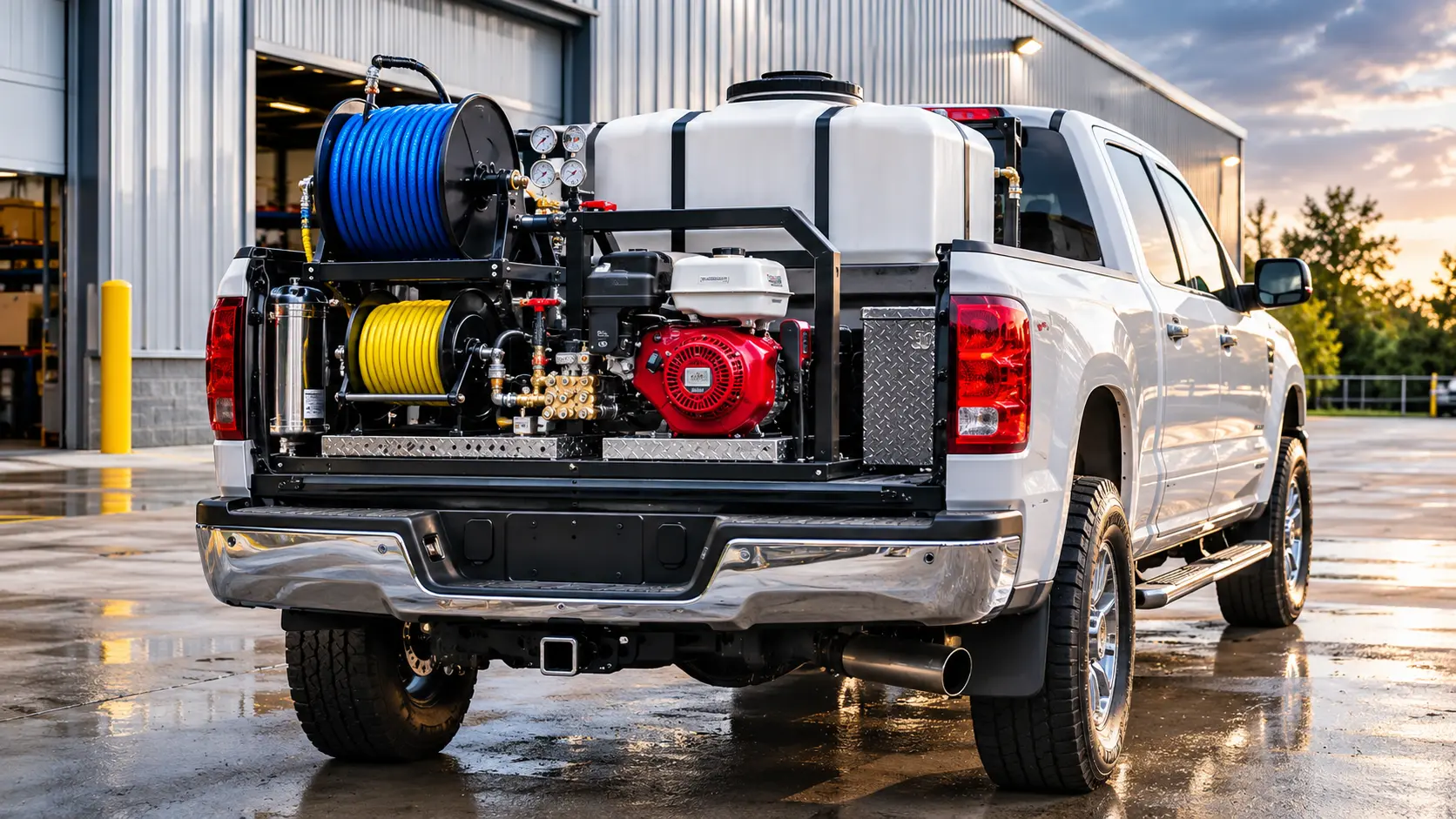
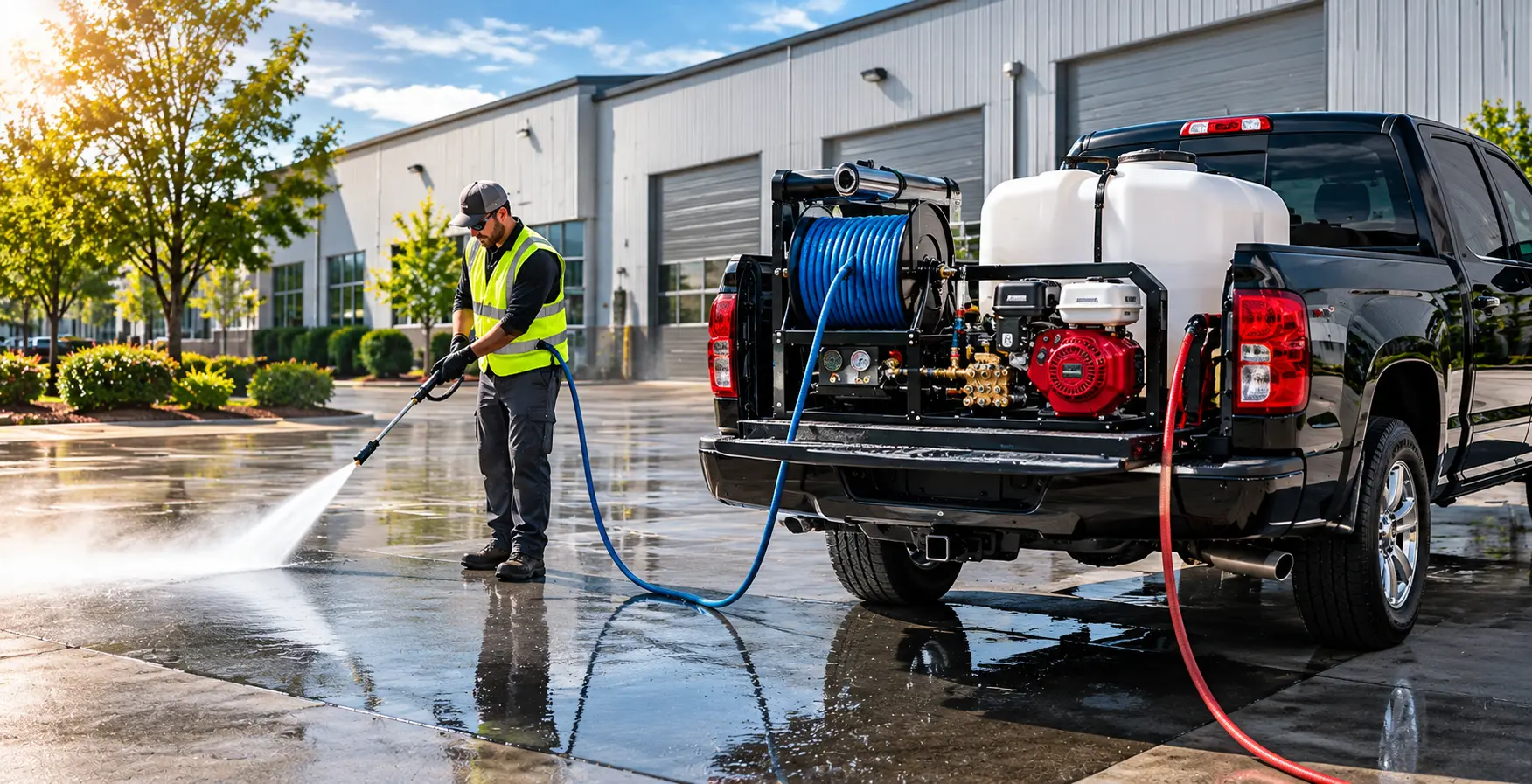
A truck-mounted pressure washer is a mobile cleaning system installed in a pickup truck bed or on a suitable commercial truck. It typically uses a skid-mounted pressure washer secured to the vehicle, along with equipment such as water tanks, hose reels, and cleaning supplies. The size and weight of these components depend on the truck’s available payload capacity.
Because the equipment travels with the truck, operators can move between jobs without towing a separate trailer. This arrangement can be useful for businesses that make frequent stops or work in locations with limited parking space.
Advantages of Truck-Mounted Pressure Washers
- Easier parking: A truck without a trailer may fit into tighter parking areas.
- Convenient transportation: Equipment travels with the vehicle.
- Faster arrival and departure: No trailer needs to be attached or disconnected.
- Compact setup: Suitable for smaller or carefully planned cleaning systems.
- Good for frequent stops: Useful for contractors working at several locations daily.
Limitations of Truck-Mounted Systems
- Water tanks and equipment must fit within the truck’s payload rating.
- Large equipment can take up most of the available truck bed.
- The truck may become dedicated to pressure washing work.
- Equipment installation requires proper mounting and weight distribution.
- Repairs or maintenance involving the truck may affect the cleaning operation.
What Is a Trailer-Mounted Pressure Washer System?
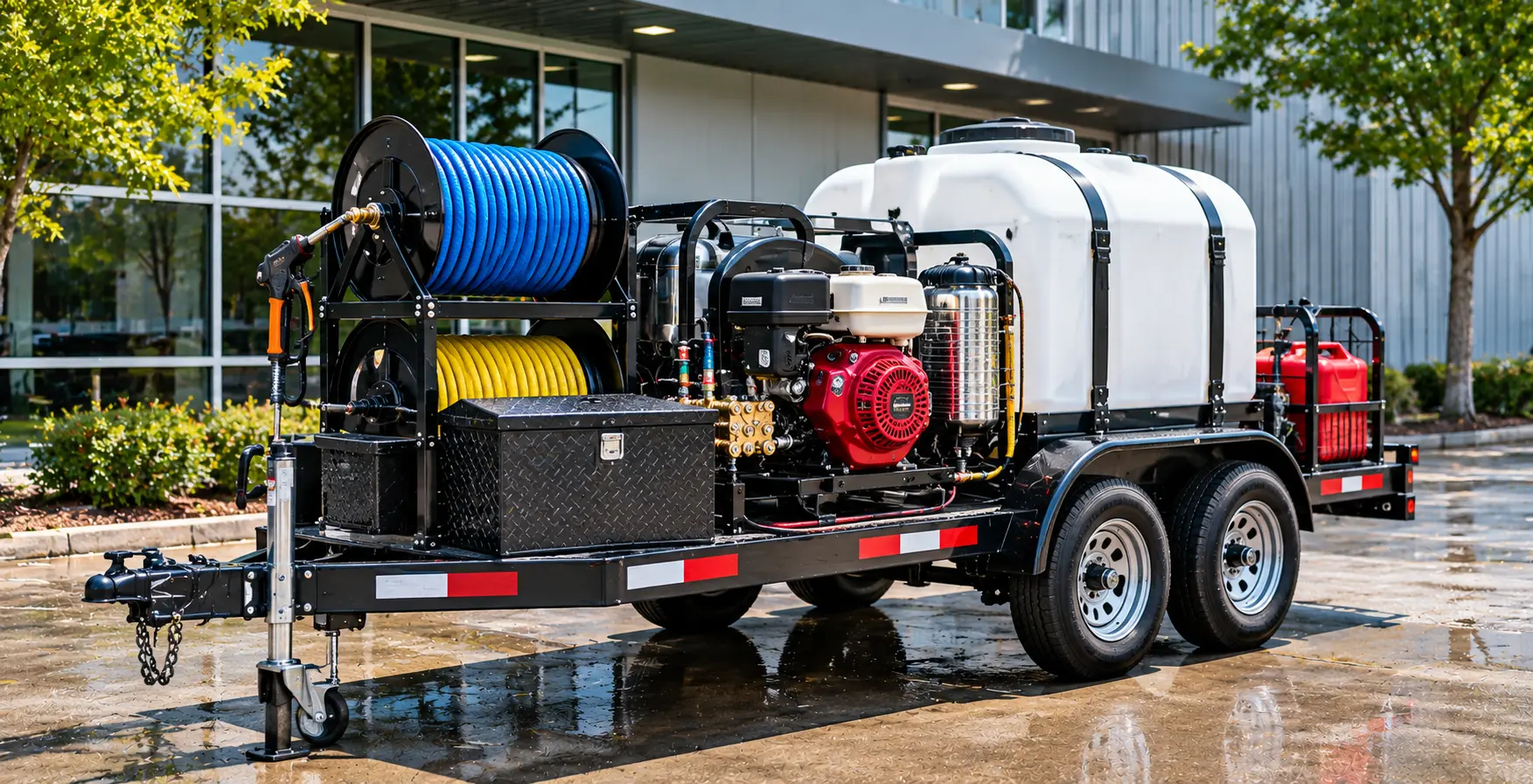
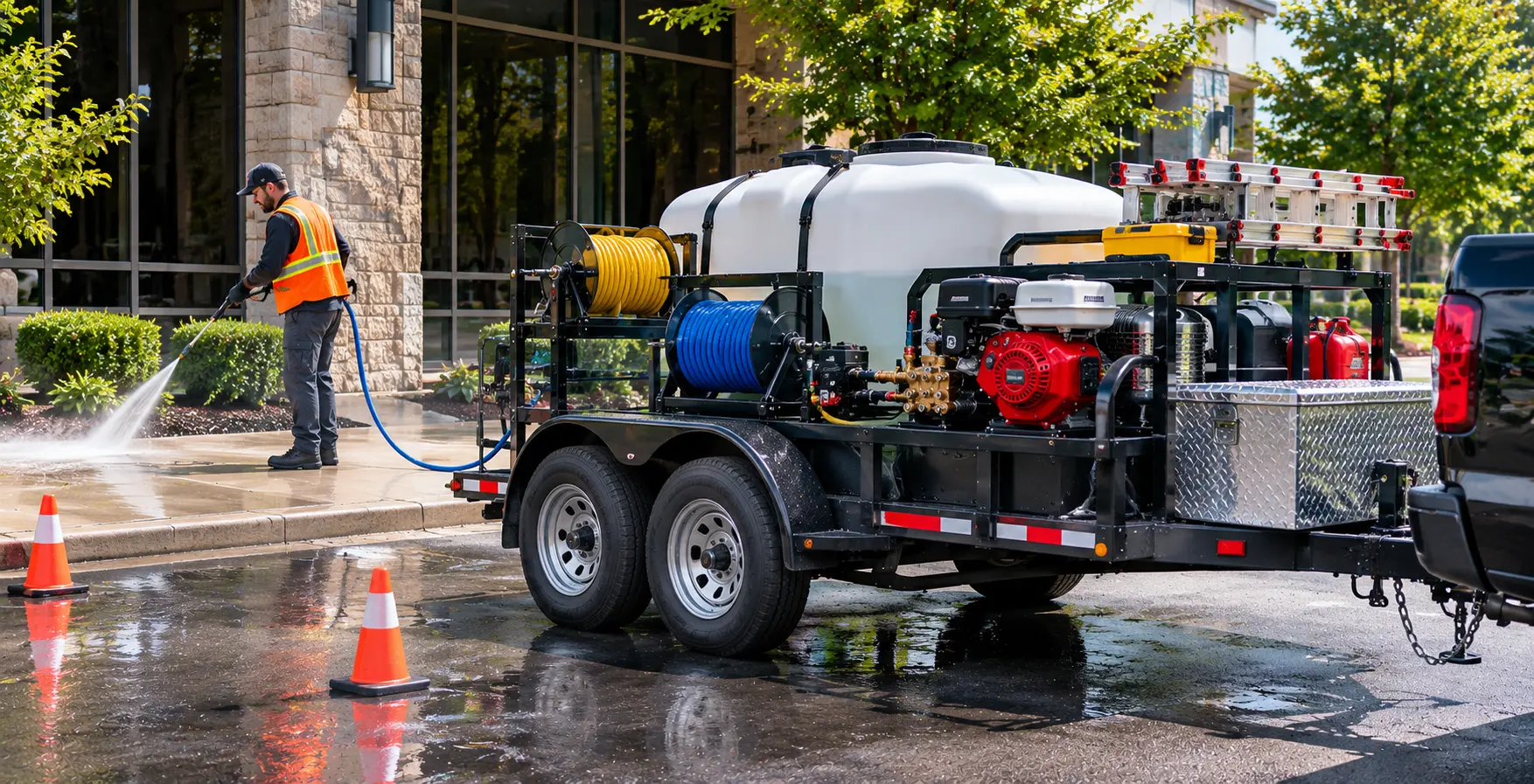
A trailer-mounted pressure washer uses a towable trailer to carry cleaning equipment. Depending on its design, the trailer may include a pressure washer, water tank, hose reels, fuel storage, and other accessories. The system connects to a suitable towing vehicle, allowing contractors to move their equipment between commercial and industrial jobsites.
Trailer-mounted setups are commonly used for fleet washing, construction cleaning, and large outdoor maintenance projects. They can provide more room for equipment, although their actual water capacity and carrying ability depend on the trailer’s weight rating and design.
Advantages of Trailer-Mounted Pressure Washers
- Equipment space: Larger trailers may accommodate multiple accessories and tanks.
- Flexible water storage: Tank sizes can be selected to match the trailer’s rated capacity.
- Separate equipment: The trailer can remain parked while the tow vehicle is used elsewhere.
- Expandable setup: Some trailers provide room for additional hose reels or cleaning tools.
- Suitable for larger jobs: Useful for demanding cleaning operations that require more equipment.
Limitations of Trailer-Mounted Systems
- Requires a suitable towing vehicle.
- Needs additional room for parking and storage.
- Can be difficult to maneuver in narrow streets or crowded properties.
- Adds trailer tires, brakes, lights, and other components to maintain.
- May involve additional registration, insurance, and towing requirements.
Truck vs. Trailer-Mounted Pressure Washers: Key Differences
Both truck-mounted and trailer-mounted pressure washers deliver reliable cleaning performance. The main difference is how they transport and store equipment. Truck-mounted systems are convenient for frequent stops, while trailer-mounted setups offer more space for water tanks and accessories. The table below highlights their key differences.
| Feature | Truck-Mounted Pressure Washer | Trailer-Mounted Pressure Washer |
| Equipment location | Mounted on a truck | Mounted on a towable trailer |
| Transportation | Travels with the truck | Requires a towing vehicle |
| Water capacity | Limited by truck payload and space | Limited by trailer payload and design |
| Parking | Often easier in tight areas | Requires additional parking space |
| Equipment storage | Shares truck bed or chassis space | Separate equipment platform |
| Setup flexibility | Usually tied to the vehicle | Trailer can be detached |
| Maintenance | Truck and pressure washer | Trailer, tow vehicle, and pressure washer |
| Common applications | Mobile detailing and frequent-stop cleaning | Fleet washing, construction, and larger mobile jobs |
Neither system is automatically more powerful. Cleaning performance depends mainly on the pressure washer’s PSI, GPM, water temperature, pump, and accessories, not whether it is mounted on a truck or trailer.
Which Costs More: Truck-Mounted or Trailer-Mounted Pressure Washers?
The cost of a mobile pressure washing system depends on the equipment, installation, and accessories. A truck-mounted pressure washer may cost less if you already own a suitable truck. However, mounting hardware, plumbing, and water tank installation can increase the total expense.
A trailer-mounted pressure washer requires a trailer and a suitable towing vehicle. The initial cost may include a water tank, hose reels, and other cleaning accessories. If you already have a towing vehicle, a trailer setup can be a practical option without modifying your truck.
Both systems require regular maintenance. Truck-mounted setups involve pressure washer servicing and vehicle maintenance, while trailer-mounted systems also need tire, brake, and towing equipment inspections. Fuel, insurance, storage, and repairs can add to the overall operating costs.
When comparing truck-mounted vs. trailer-mounted pressure washers, consider long-term expenses rather than just the purchase price. A truck-mounted setup may suit businesses making frequent stops, while a trailer-mounted system may be better for larger jobs requiring additional equipment and water storage.
Water Tank Capacity and Equipment Storage: Which Setup Is More Practical?
Water storage is one of the most important considerations when choosing a mobile pressure washer. A truck-mounted system must share the vehicle’s payload capacity with the pressure washer, tank, hoses, fuel, tools, and passengers. A trailer can provide more dedicated storage space, but it also has strict weight limits.
For jobs without a reliable water connection, a larger tank can be useful. However, carrying more water adds considerable weight, so tank size should never be selected based on available space alone.
How Much Does Water Weigh?
Water weighs approximately 8.34 pounds per US gallon.
| Water Tank Size | Approximate Water Weight |
| 100 gallons | 834 lbs |
| 200 gallons | 1,668 lbs |
| 300 gallons | 2,502 lbs |
| 500 gallons | 4,170 lbs |
These figures include water only. The weight of the pressure washer, tank, trailer, accessories, and other equipment must also be considered.
Equipment Storage and Accessibility
A truck-mounted system can be convenient when the operator needs only a few essential tools. However, larger tanks and equipment may leave limited room for detergents, surface cleaners, and spare parts.
A trailer-mounted system may provide dedicated storage for additional equipment. This can be useful for contractors who handle different cleaning applications throughout the day.
Good equipment organization helps reduce setup time, prevents damage, and makes routine maintenance easier.
Mobility and Jobsite Access: Truck-Mounted vs. Trailer-Mounted Systems
A mobile pressure washing system should make travel and daily cleaning easier, not create transportation problems. Truck-mounted systems are often easier to handle in residential neighborhoods and busy commercial areas because there is no separate trailer to maneuver. This can be helpful for contractors who visit several smaller properties every day.
Trailer-mounted systems may work better at open industrial sites, construction properties, and fleet yards where parking space is available. However, towing requires additional room for turning, reversing, and parking. Before choosing a setup, consider your regular travel routes, jobsite entrances, available parking, and how much time you spend moving between locations.
When a Truck-Mounted System Makes Sense
A truck-mounted pressure washer may be suitable when your cleaning schedule involves frequent travel between smaller jobsites.
For example, a contractor cleaning storefronts, sidewalks, and smaller commercial properties may prefer keeping the equipment in one vehicle. This can reduce parking difficulties and avoid the need to manage a trailer at every stop.
When a Trailer-Mounted System Makes Sense
A trailer-mounted pressure washer may be suitable when your business needs more dedicated equipment space or works on large properties.
For example, fleet washing companies may need extra hose reels, water storage, and cleaning accessories. A trailer can help organize these components and transport them together.
The trade-off is that towing requires additional space, driving skills, and vehicle capacity. Operators must also follow applicable trailer safety requirements.
Which Pressure Washer Setup Is Best for Your Cleaning Business?
The right pressure washer setup depends on your cleaning needs, job locations, and daily workload. A truck-mounted system may be suitable for businesses making frequent stops, while a trailer-mounted system can provide additional space for water tanks and equipment. Consider your typical jobs before choosing a setup.
For fleet washing and commercial property cleaning, both systems offer practical benefits. Truck-mounted pressure washers are convenient for cleaning vehicles, sidewalks, and smaller commercial areas where parking is limited. Trailer-mounted systems may be better for larger fleet yards, parking lots, and properties that require additional water storage and cleaning accessories.
For construction sites, industrial cleaning, and mobile pressure washing contractors, trailer-mounted systems can provide more room for equipment and supplies. However, truck-mounted systems may be easier to transport between multiple jobsites. The best choice depends on water availability, equipment capacity, jobsite access, and your plans for future business growth.
How to Choose the Right Mobile Pressure Washer System
Before purchasing equipment, review your typical jobs and identify what your current cleaning setup cannot handle. A pressure washer with impressive specifications may still be inconvenient if it is too heavy, difficult to transport, or unsuitable for your normal work locations.
Rather than choosing a truck or trailer based only on appearance or tank size, compare the complete system. This includes its cleaning performance, transportation requirements, safety features, and long-term operating expenses.
Use this checklist before making your decision:
- Check your PSI and GPM requirements. Choose pressure and water flow based on the surfaces and contaminants you clean.
- Evaluate water availability. Determine whether you need onboard water or can connect to a suitable jobsite supply.
- Calculate equipment weight. Include the full water tank, pressure washer, tools, and accessories.
- Review jobsite access. Consider parking, towing space, road conditions, and maneuverability.
- Compare equipment costs. Include installation, accessories, maintenance, and transportation expenses.
- Plan for business growth. Consider whether you may need more water capacity or additional cleaning tools later.
- Choose serviceable equipment. Look for accessible components, reliable parts support, and clear maintenance requirements.
Explore Mobile Pressure Washing Equipment at Pressure King Inc.
Whether you prefer a truck-mounted or trailer-mounted pressure washer, choosing the correct equipment is important for reliable daily cleaning. A system that matches your workload, water requirements, and transportation needs can make commercial cleaning easier and help reduce unnecessary equipment expenses.
Pressure King Inc. supplies commercial and industrial pressure washing equipment for businesses with different cleaning needs. Its product range includes trailer-mounted pressure washer systems and skid-mounted pressure washers designed for suitable mobile installations.
LFT 8.0/30 Skid Pressure Washer
The LFT 8.0/30 Skid Pressure Washer is a hot water pressure washer designed for mobile cleaning operations.
Its main features include:
- 8.0 GPM water flow
- 3,000 PSI cleaning pressure
- Gasoline-powered engine
- Diesel-heated hot water system
- Belt-drive triplex pump
- Skid-mounted design
This model is designed for installation inside a suitable truck bed or trailer. It may be worth considering for businesses that need powerful hot water cleaning equipment at different jobsites.
TRK-6000 Pressure Washer Trailer
The TRK-6000 Pressure Washer Trailer is another option available through Pressure King Inc. It provides a dedicated trailer platform for building a mobile pressure washing system.
Its listed features include:
- Tandem-axle trailer design
- 330-gallon water tank
- Heavy-duty steel construction
- Leaf-spring suspension
- Trailer-mounted water management components
- Compatibility with suitable pressure washer skids
The TRK-6000 can be useful for contractors who need dedicated water storage and a trailer-based cleaning setup. The pressure washer skid and any optional equipment must be selected separately according to the package configuration.
Conclusion
Choosing between truck-mounted and trailer-mounted pressure washers comes down to how you use your equipment. Truck-mounted systems offer convenient transportation and can be easier to manage at jobsites with limited space. Trailer-mounted systems provide a separate equipment platform that may better suit larger water tanks, additional tools, and demanding mobile cleaning work.
Neither setup is the right choice for every business. Compare your cleaning needs, transportation limits, water requirements, and long-term costs before investing.
If you need help exploring available equipment, contact Pressure King Inc. to find a mobile pressure washing system that fits your operation.
Frequently Asked Questions
Is a truck-mounted or trailer-mounted pressure washer better for commercial use?
Both can work well for commercial cleaning. Truck-mounted systems are often easier to park and transport between frequent stops. Trailer-mounted systems can provide more dedicated space for water tanks and accessories. The better choice depends on your cleaning workload, vehicle capacity, jobsite access, and available budget.
How much water can a trailer-mounted pressure washer carry?
Water capacity depends on the trailer’s design, payload, axle ratings, and the weight of the installed equipment. Some commercial systems carry several hundred gallons, but not every trailer supports a large tank. Always check the manufacturer’s weight ratings before selecting a tank or filling it for transportation.
Can a skid-mounted pressure washer be installed in a truck bed?
Yes. Many skid-mounted pressure washers are designed for installation in suitable truck beds or trailers. The equipment must be secured correctly, and the vehicle must have sufficient payload capacity. You should also account for water storage, plumbing, ventilation, and safe access to the equipment.
Are trailer-mounted pressure washers more expensive than truck-mounted systems?
Not necessarily. Costs depend on the pressure washer, trailer, truck, water tank, accessories, and installation requirements. A trailer system adds trailer-related expenses, while truck-mounted equipment may require modifications to the vehicle. Comparing complete equipment and operating costs is more useful than comparing the mounting systems alone.
What PSI and GPM are best for commercial pressure washing?
The right PSI and GPM depend on the cleaning application. PSI measures water pressure, while GPM measures water flow. Large surfaces may benefit from higher water flow, while stubborn contaminants may require suitable pressure, hot water, detergents, or specialized accessories. Always match the equipment settings to the surface being cleaned.
Can I move my truck-mounted pressure washer to a trailer?
Some skid-mounted pressure washers can be transferred from a truck to a compatible trailer. However, the trailer must support the equipment weight, and the mounting, water connections, plumbing, and power requirements may need adjustment. Consult the equipment supplier or a qualified installer before making changes.

Michael Adeniran is the CEO of Pressure King Inc. He has been dealing in commercial cleaning equipment for many years. He is one of the leading specialists and experts in commercial cleaning products.


