

Maintaining Commercial Properties with Pressure Washers: A Facility Manager’s Guide
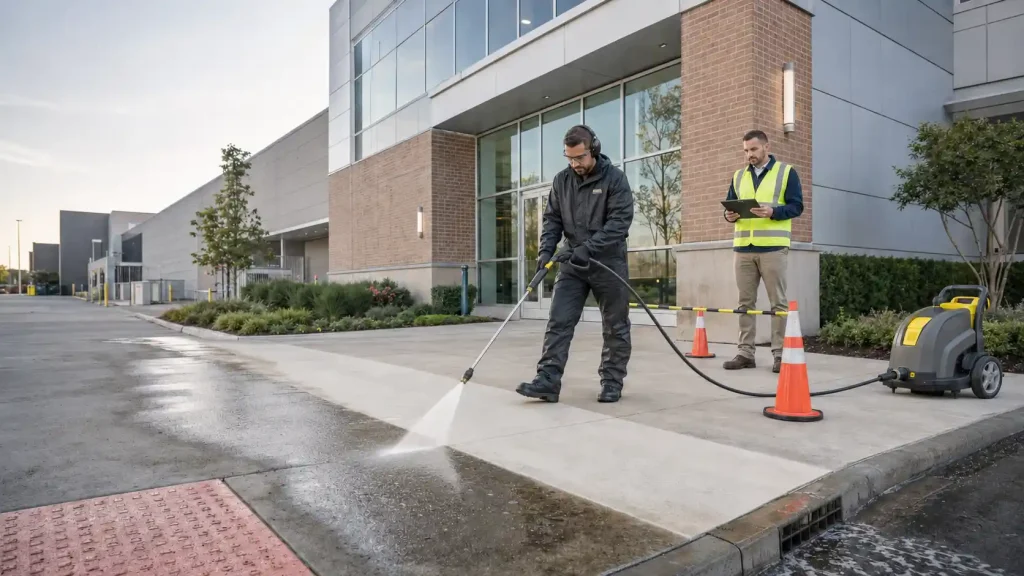
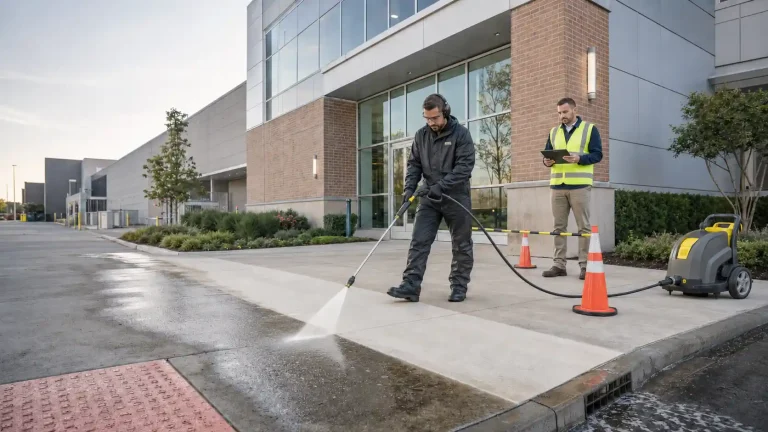
Maintaining a commercial property requires more than basic cleaning. Office buildings, retail centers, apartment complexes, warehouses and distribution centers, and industrial facilities constantly deal with dirt, stains, weather exposure, vehicle traffic, and outdoor buildup that can affect appearance and safety. For facility managers and property maintenance teams, a commercial property maintenance pressure washer provides an efficient solution for cleaning sidewalks, parking areas, building exteriors, loading zones, and other high-traffic areas.
However, selecting the right pressure washer requires understanding the cleaning application, surface type, PSI, GPM, accessories, and maintenance requirements. The wrong equipment can waste time, increase operating costs, or damage expensive surfaces.
This guide explains how commercial properties use pressure washers, what equipment facility managers should consider, and how professional cleaning systems improve property maintenance.
Why Commercial Properties Need Professional Pressure Washing Equipment
Commercial properties experience continuous exposure to outdoor elements and daily activity. Over time, surfaces collect contaminants that regular cleaning methods cannot effectively remove. High foot traffic, vehicle activity, weather, and seasonal conditions can make exterior surfaces difficult to maintain. Common commercial property cleaning challenges include dirt and dust buildup, oil stains in parking areas, gum and food residue, mold and mildew, algae growth, weather-related stains, vehicle marks, and construction debris. These contaminants can gradually make otherwise well-maintained properties look neglected.
Regular pressure washing helps facility managers maintain curb appeal, reduce potential slip hazards, protect exterior surfaces, extend maintenance cycles, and create a cleaner environment for customers and employees. Professional pressure washers are designed to handle larger areas and more frequent cleaning compared with consumer machines, making them more suitable for demanding commercial maintenance schedules.
Common Commercial Areas That Require Pressure Washing
Different areas around commercial properties require different cleaning approaches. A facility manager should consider the surface material, type of contamination, cleaning frequency, and accessibility before selecting a pressure washing method.
Parking Lots and Garages
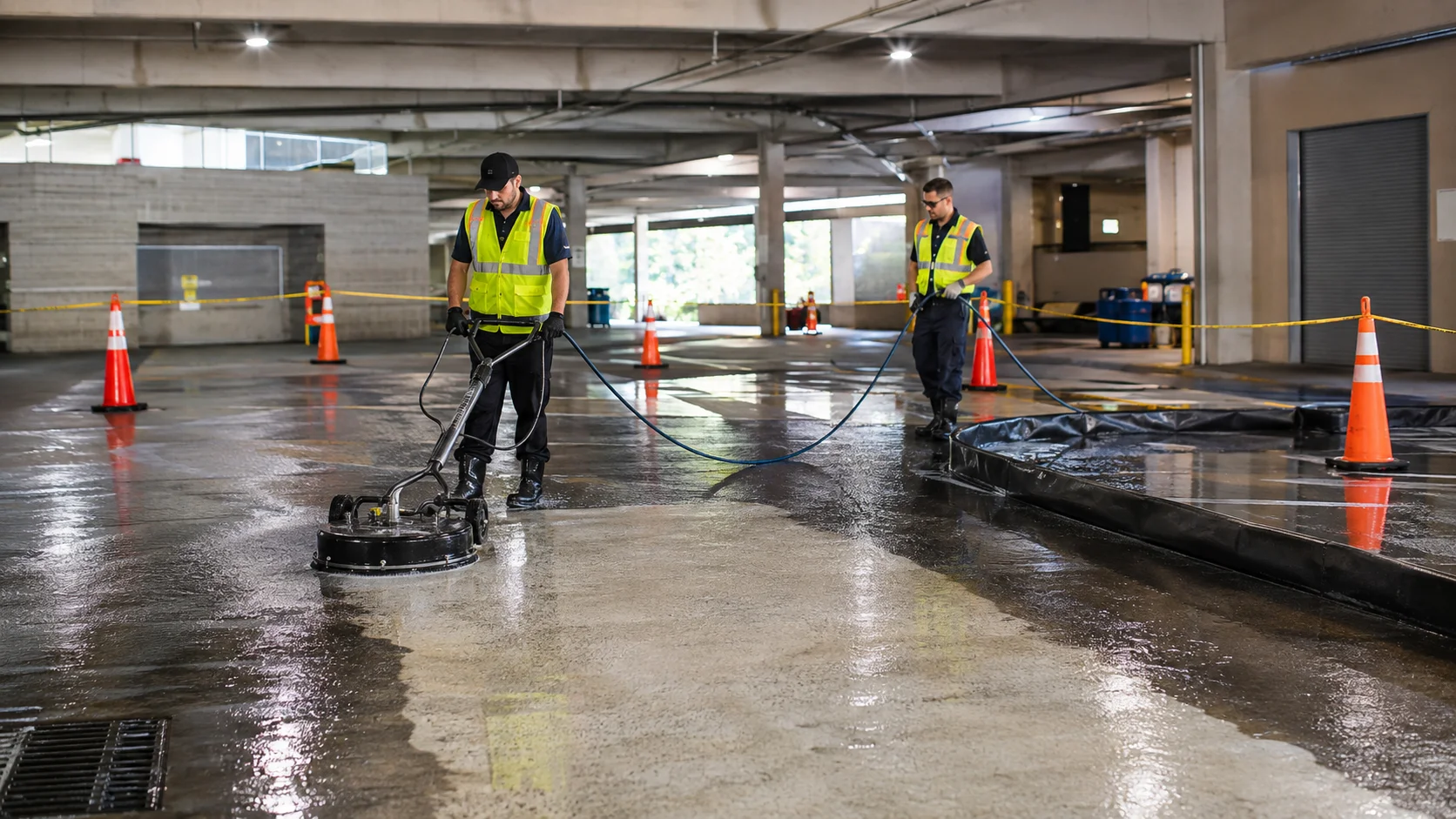
Parking areas collect oil leaks, tire marks, dirt, road salt, and vehicle fluids. These contaminants can become difficult to remove when they remain on concrete or asphalt for extended periods. A commercial pressure washer combined with the right detergent and accessories can help remove surface contamination more efficiently. Hot water systems can be particularly useful where oil and grease are common because heat can help loosen oily buildup before rinsing.
Sidewalks and Walkways
and organic growth. Over time, these contaminants can leave concrete looking stained or poorly maintained. Routine pressure washing helps remove accumulated dirt and organic material while supporting a cleaner appearance. Facility managers should still select pressure and spray patterns carefully because excessive pressure can damage older or weakened concrete.
Building Exteriors
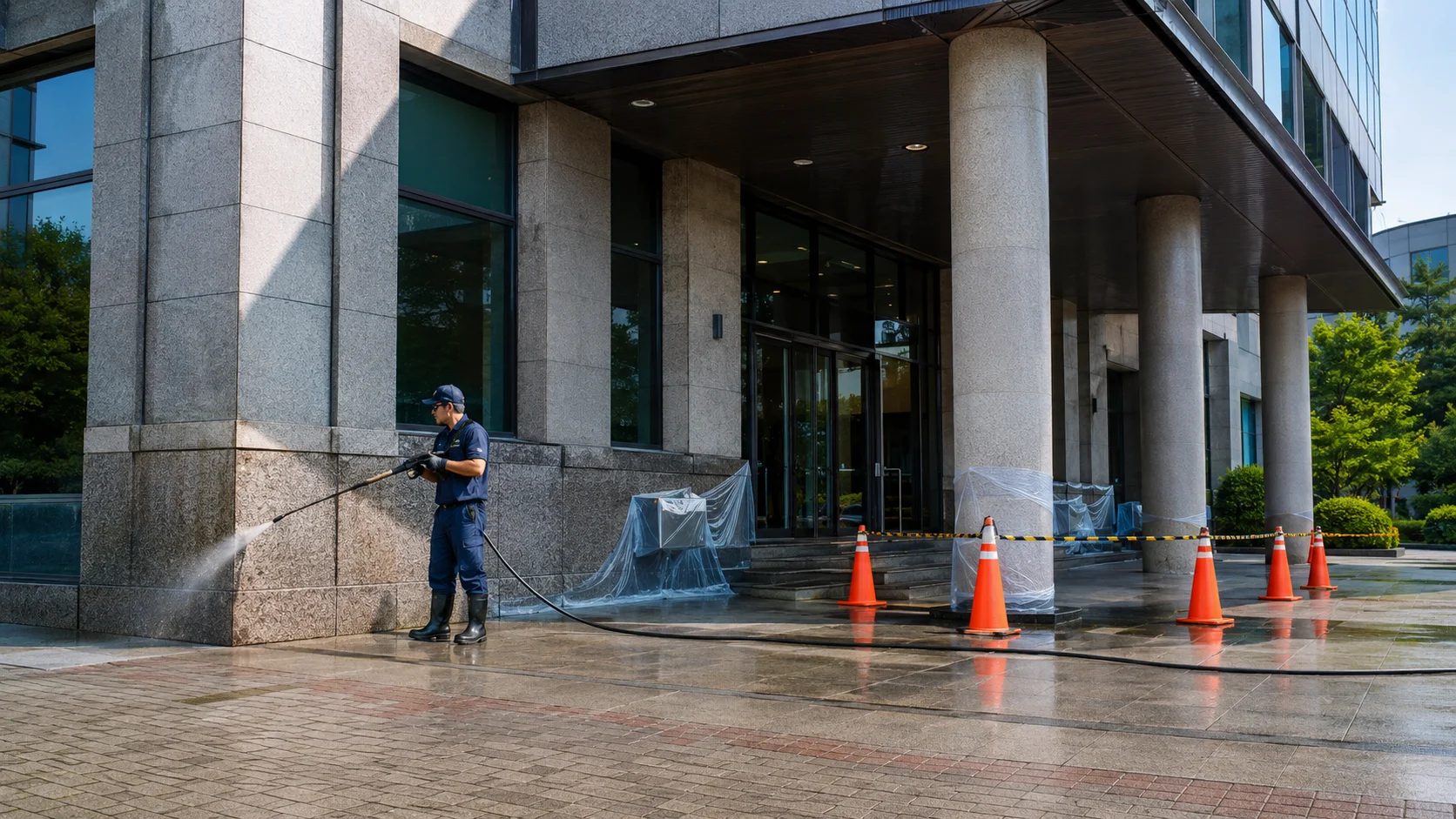
Commercial buildings may require cleaning across brick surfaces, concrete walls, entry areas, outdoor structures, and other exterior materials. Each surface can respond differently to pressure and water temperature. The correct PSI is important to avoid surface damage. Operators should begin with an appropriate pressure setting and adjust the cleaning method based on the material and level of contamination rather than simply using the highest available pressure.
Loading Docks and Service Areas
Industrial and commercial loading zones often experience heavy equipment traffic and exposure to oil, grease, dust, and other contaminants. These areas may require more frequent cleaning than lower-traffic parts of a property. Hot water pressure washers can provide better results in these environments because heat can help break down oily contamination. For facilities with demanding cleaning requirements, equipment should be selected based on both cleaning power and the amount of area that needs to be covered.
Choosing the Right Commercial Pressure Washer for Property Maintenance
Facility managers should consider several factors before selecting equipment. Cleaning frequency, surface types, property size, available water supply, power source, required mobility, and contamination levels all influence the appropriate pressure washer configuration.
A commercial Kärcher pressure washer can be configured for different property maintenance applications, including hot water, cold water, electric, gas, and mobile systems. Choosing equipment according to the actual cleaning workload can help facilities avoid purchasing a machine that is either underpowered for the application or unnecessarily powerful for routine work.
The cleaning environment should also influence equipment selection. Indoor properties may benefit from electric systems, while large outdoor properties may require gas-powered or mobile equipment. Facilities that regularly deal with oil and grease may benefit from hot-water equipment.
What PSI Is Best for Commercial Property Cleaning?
The required PSI depends on the cleaning application.
| Cleaning Application | Recommended PSI |
|---|---|
| Sidewalk cleaning | 2,000–3,000 PSI |
| Parking lot cleaning | 2,500–3,500 PSI |
| Concrete cleaning | 2,500–4,000 PSI |
| Building exterior cleaning | 1,500–3,000 PSI |
| Heavy commercial cleaning | 3,000+ PSI |
Using excessive pressure can damage surfaces, especially older concrete, painted areas, or delicate materials. The best approach is choosing enough pressure to remove contamination while protecting the surface.
Why GPM Matters for Facility Cleaning
For large commercial properties, cleaning speed is extremely important. GPM, or gallons per minute, determines how much water flows through the pressure washer and directly affects rinsing and overall cleaning productivity. Higher water flow can help rinse dirt away more quickly and cover larger areas efficiently. For facility managers responsible for thousands of square feet, selecting equipment with the correct PSI and GPM balance can make a significant difference in cleaning time.
A pressure washer with high PSI but insufficient GPM may not provide the productivity required for large commercial properties. Conversely, selecting excessive flow without considering the cleaning application can increase water consumption unnecessarily. Facility managers should therefore evaluate both measurements when comparing equipment.
Hot Water vs Cold Water Pressure Washers for Commercial Properties
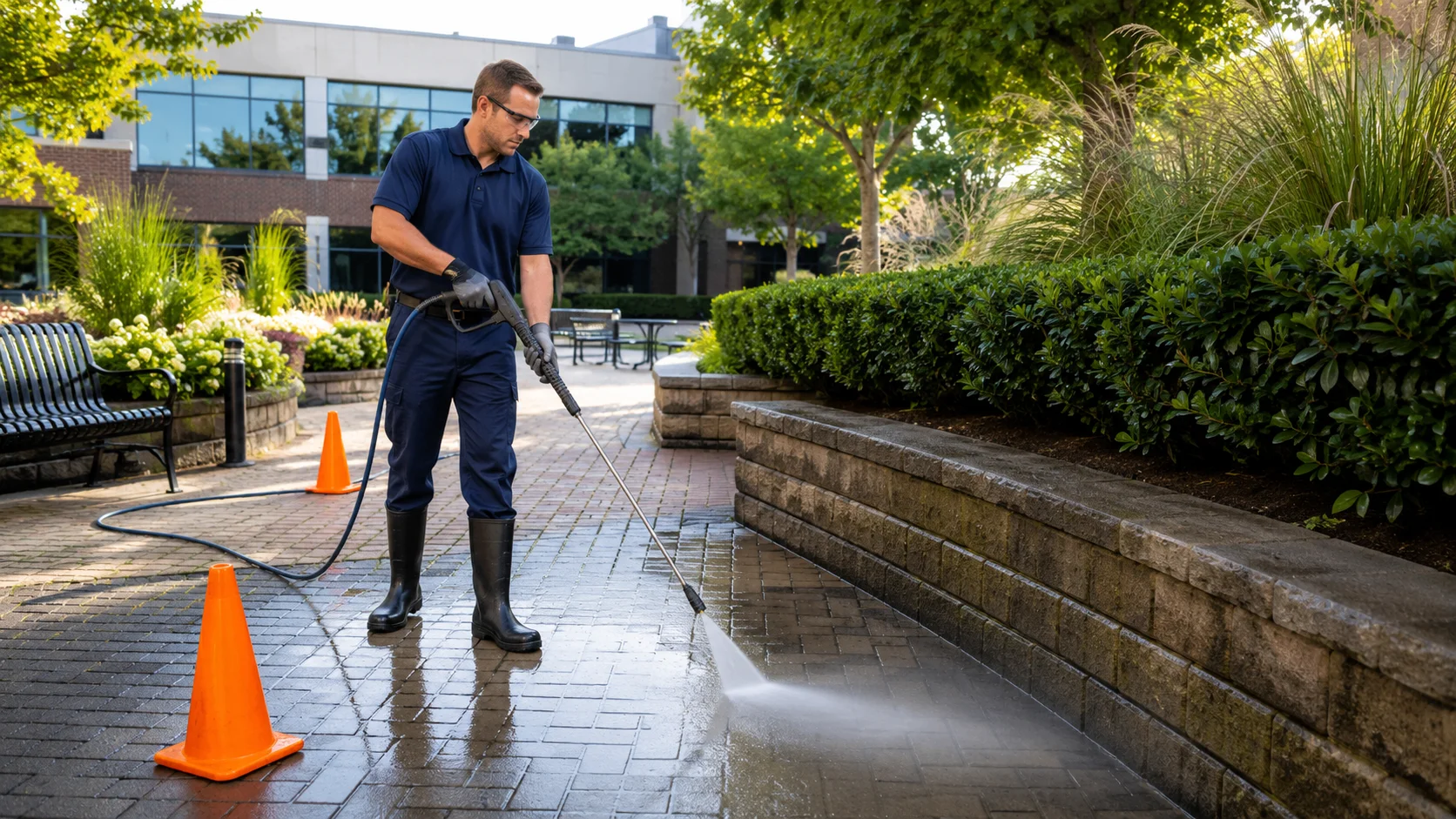
The right water temperature depends on the cleaning challenge. Cold water is generally suitable for loose dirt and general surface cleaning, while hot water can provide an advantage when dealing with grease, oil, and other stubborn contaminants.
Cold Water Pressure Washers
Cold water systems are effective for dirt, dust, mud, loose debris, and general exterior cleaning. They are commonly used for routine property maintenance where heavy grease and oil are not major concerns. Cold-water equipment can also be a practical option for facilities that perform frequent general cleaning and do not need heated water for most applications. The lower equipment complexity can make these systems suitable for straightforward maintenance tasks.
Hot Water Pressure Washers
Hot water systems provide better cleaning performance for oil stains, grease, parking garages, loading docks, and industrial areas. Heat helps break down oily contamination and can reduce the amount of mechanical cleaning effort required. For commercial properties with heavy traffic or industrial activity, hot water pressure washers can be a useful investment. Pressure King offers commercial hot water pressure washers for applications where heated water can improve cleaning performance.
Best Accessories for Commercial Property Maintenance
Accessories can significantly improve cleaning efficiency and help operators adapt equipment to different surfaces and cleaning requirements. The correct accessories can also improve operator control and reduce unnecessary cleaning time. Pressure King provides a range of commercial pressure washer accessories that can support different professional cleaning applications.
Surface Cleaner Attachments
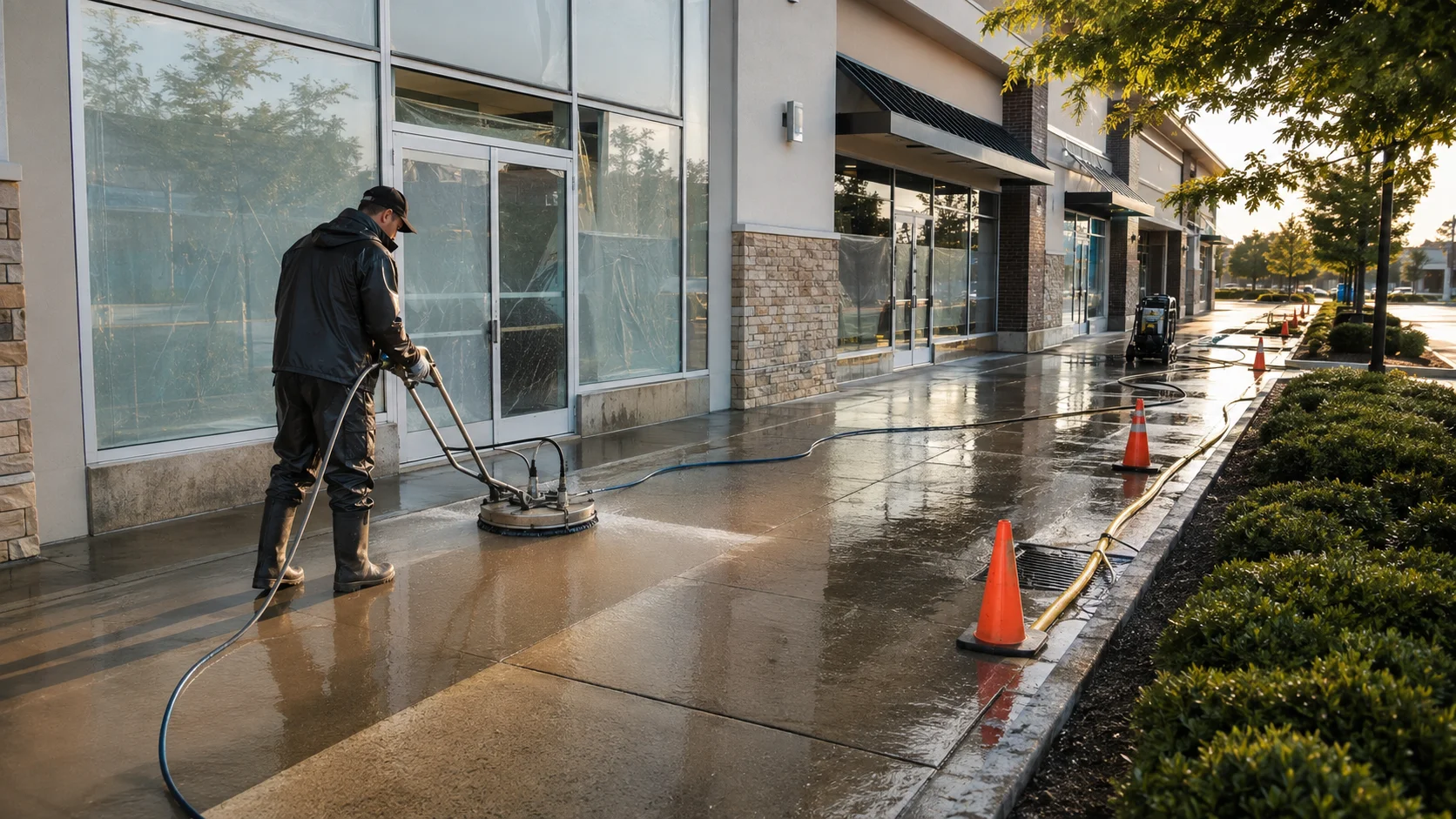
Surface cleaners are useful for sidewalks, parking areas, concrete floors, and other large flat surfaces. They can distribute cleaning power across a wider area and help produce more consistent results than using a spray wand alone. For large properties, a suitable surface cleaner can also reduce the amount of time required to cover expansive concrete areas. This makes the accessory particularly useful for facility managers responsible for recurring sidewalk, parking, and walkway maintenance.
Extension Wands
Extension wands help operators reach building exteriors, elevated surfaces, and other hard-to-access areas. They can reduce the need for ladders or other access equipment in certain cleaning situations. However, operators should still follow appropriate safety procedures and ensure that the pressure, spray pattern, and working distance are suitable for the surface being cleaned.
Commercial Hoses
Heavy-duty hoses improve reliability during frequent cleaning. Commercial hoses are designed to handle higher pressure, repeated movement, and long operating periods. A durable hose can also make equipment easier to position around large properties. Inspect hoses regularly for wear, leaks, damaged fittings, or other signs that could affect safe operation.
Spray Guns and Nozzles
Different nozzles allow operators to adjust cleaning intensity based on the surface. Wider spray patterns are generally useful for broader cleaning tasks, while more concentrated patterns can provide additional cleaning force for stubborn areas. Operators should always choose the nozzle according to the surface and contamination rather than relying on the most aggressive spray pattern.
Detergents
Cleaning chemicals improve results when removing grease, mold, organic stains, and heavy buildup. Detergents can loosen contamination before pressure washing, allowing the water stream to rinse the material away more effectively. For properties that regularly deal with oil and grease, a suitable industrial oil and grease remover can complement pressure washing when used according to the product’s application instructions.
Step-by-Step Commercial Property Pressure Washing Process
A step-by-step pressure washing process helps facility managers clean commercial properties safely and efficiently while protecting surfaces and maintaining a professional appearance.
Step 1: Inspect the Area
Before cleaning, identify the surface material, existing damage, drainage areas, sensitive locations, and nearby property features. This inspection helps operators select an appropriate cleaning method and avoid areas that could be damaged by direct pressure.
Step 2: Remove Loose Debris
Sweep away leaves, trash, loose dirt, and other debris before pressure washing. Removing loose material first allows the pressure washer to focus on bonded contamination and can improve overall cleaning efficiency.
Step 3: Apply Cleaning Solution
For difficult stains, apply an appropriate detergent before pressure washing. Allow the cleaning solution enough time to loosen the contamination, following the product’s recommended application and dwell time.
Step 4: Select Correct Pressure
Choose PSI based on the surface and contamination level. Start with a conservative pressure setting and increase it only when necessary. This approach helps reduce the risk of damaging concrete, painted surfaces, masonry, or other materials.
Step 5: Clean Using Consistent Passes
Move steadily across the surface to avoid uneven cleaning. Maintaining a consistent distance and overlapping passes slightly can help produce a more uniform result across large areas.
Step 6: Rinse Thoroughly
Remove remaining dirt, detergent, and loosened contamination with a thorough rinse. Pay attention to drainage areas and ensure that runoff is managed according to applicable property and environmental requirements.
Commercial Property Pressure Washing Maintenance Schedule
The ideal schedule depends on property type, traffic levels, weather conditions, surface materials, and the amount of contamination present. High-traffic properties may need more frequent cleaning than low-traffic commercial buildings.
Retail Properties
Retail properties may benefit from monthly or seasonal cleaning for store entrances, walkways, parking areas, and other customer-facing surfaces. Keeping these areas clean can help maintain a professional appearance throughout the year.
Apartment Complexes
Apartment complexes commonly require cleaning around sidewalks, pool decks, common areas, entrances, and parking spaces. Cleaning schedules should account for resident traffic, seasonal weather, and areas where organic buildup is common.
Industrial Properties
Industrial properties may require more frequent cleaning because of equipment traffic, oil buildup, manufacturing activity, loading operations, and outdoor material handling. Facility managers should establish a schedule based on the actual contamination levels rather than relying on a fixed calendar alone.
For manufacturing and industrial facilities, Pressure King also provides commercial pressure washing equipment for industrial applications that can support demanding maintenance requirements.
Common Mistakes Facility Managers Should Avoid
Using Residential Equipment
Small machines may not be designed to handle commercial workloads. Using consumer equipment for large properties can increase cleaning time and place unnecessary strain on the machine.
Choosing Equipment Based Only on PSI
Cleaning performance depends on PSI, GPM, temperature, nozzle selection, detergents, and the type of surface being cleaned. Facility managers should evaluate the complete equipment configuration instead of comparing machines based solely on maximum PSI.
Ignoring Preventive Maintenance
Poor equipment maintenance can cause unexpected downtime. Regular inspections help identify worn hoses, pump issues, damaged fittings, and other problems before they interfere with scheduled cleaning.
Using Incorrect Pressure
Too much pressure can damage surfaces, while too little pressure can result in inefficient cleaning. Operators should match pressure to the material and contamination level and test the cleaning approach when working on unfamiliar surfaces.
Pressure Washer Maintenance for Commercial Facilities
Commercial equipment requires regular maintenance to maintain reliability. Important maintenance tasks include checking hoses, inspecting pumps, cleaning filters, checking fittings, monitoring fluid levels, and replacing worn parts when necessary. Maintenance should also include regular inspection of spray guns, nozzles, connections, and other accessories. A well-maintained pressure washer is more likely to provide consistent cleaning performance and remain available when facility teams need it.
When commercial equipment requires professional attention, Pressure King’s commercial pressure washer repair services can support businesses with equipment repair and maintenance needs. Pressure King Inc supports commercial customers throughout New Jersey and New York with Kärcher pressure washers, accessories, and equipment solutions for professional cleaning applications. For facilities that need equipment temporarily for seasonal work or specific projects, commercial pressure washer rentals can also provide a practical option.
How Pressure Washing Improves Commercial Property Value
A clean property creates a better impression for customers, employees, tenants, and visitors. Exterior surfaces are often among the first parts of a commercial property people see, making routine maintenance an important part of overall property management. Regular pressure washing helps maintain appearance, protect surfaces, reduce the accumulation of contaminants, and support safer walking and working areas. Consistent cleaning can also help facility teams identify surface deterioration and maintenance problems earlier.
For property managers, professional cleaning equipment is therefore an important part of long-term facility maintenance. A planned pressure washing program can help keep high-traffic areas in better condition while supporting the property’s overall maintenance strategy.
Conclusion
A commercial property maintenance pressure washer helps facility managers maintain cleaner, safer, and more attractive properties. From sidewalks and parking lots to industrial areas and building exteriors, the right equipment improves cleaning efficiency and reduces maintenance challenges.
For commercial properties throughout New Jersey and New York, Pressure King Inc provides Kärcher commercial pressure washers, accessories, and cleaning solutions designed for demanding facility maintenance applications. Choosing the right pressure washer setup allows businesses to protect their properties while improving operational efficiency.
Frequently Asked Questions
What is the best pressure washer for commercial property maintenance?
The best pressure washer depends on property size, cleaning frequency, and surface types. Commercial Kärcher pressure washers provide options for different facility requirements.
How often should commercial properties be pressure washed?
Frequency depends on traffic, weather, and property type. High-traffic areas may require monthly or seasonal cleaning.
What PSI is needed for commercial sidewalks?
Most sidewalks can be cleaned effectively with 2,000–3,000 PSI depending on surface condition.
Are hot water pressure washers better for parking garages?
Yes. Hot water is especially useful for removing oil, grease, and vehicle-related buildup.
Can pressure washing damage commercial buildings?
Yes, incorrect PSI or techniques can damage surfaces. Proper equipment selection is important.

Michael Adeniran is the CEO of Pressure King Inc. He has been dealing in commercial cleaning equipment for many years. He is one of the leading specialists and experts in commercial cleaning products.


