


Michael Adeniran is the CEO of Pressure King Inc. He has been dealing in commercial cleaning equipment for many years. He is one of the leading specialists and experts in commercial cleaning products.


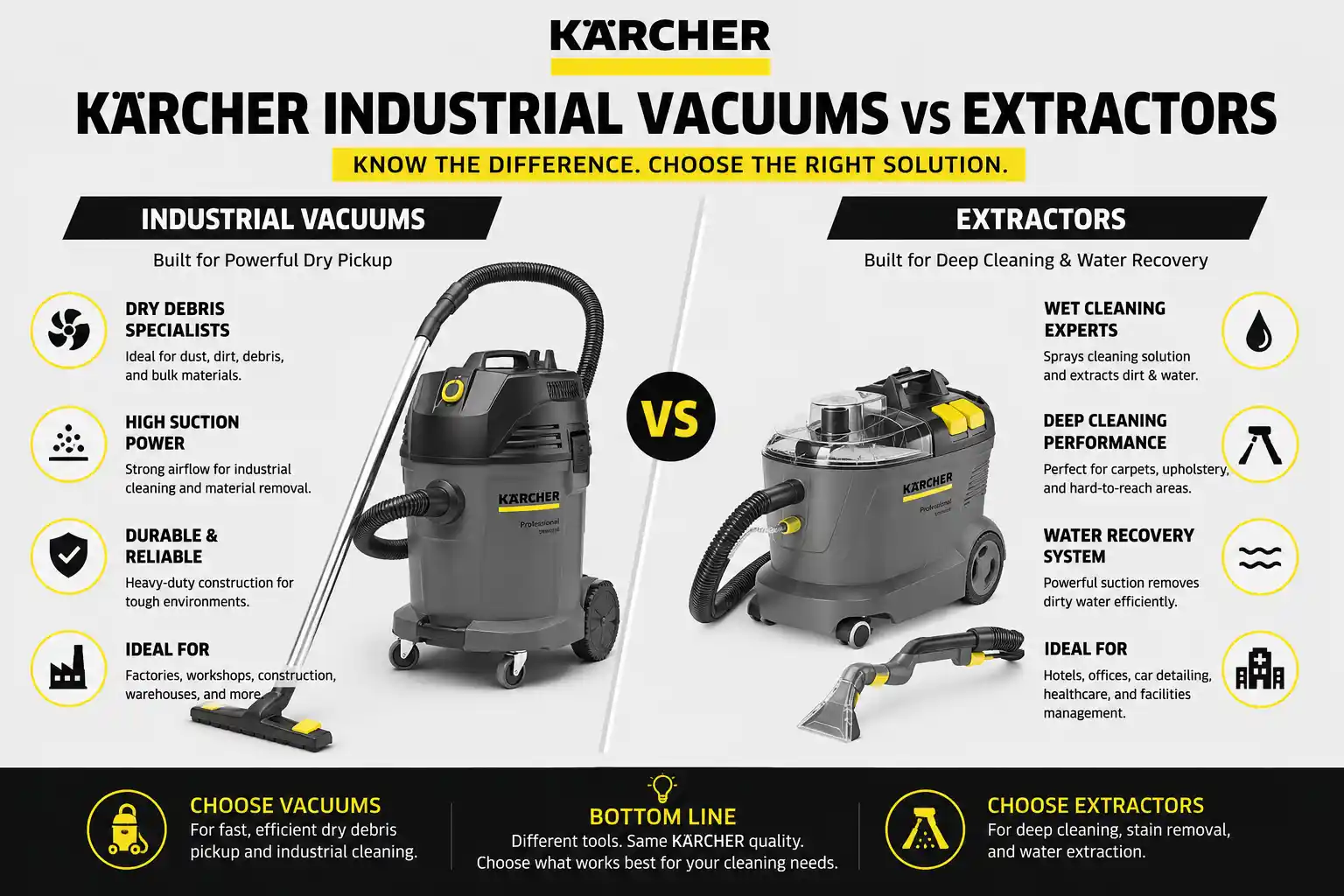
Choosing between industrial & commercial vacuums vs extractors is one of the most common questions facility managers, cleaning contractors, and business owners run into when they upgrade their equipment. Both machines pull dirt off surfaces, both use powerful suction, and both promise a cleaner space. But they are built for very different jobs, and buying the wrong one is an expensive mistake. In this guide, we’ll break down exactly how each machine works, what it cleans best, how the costs compare, and how to pick the right tool for your building. By the end, you’ll know whether you need a vacuum, an extractor, or both.
What Industrial Vacuums vs Extractors Really Means for Commercial Cleaning
The industrial vacuums vs extractors debate comes down to one simple idea: dry pickup versus deep wet cleaning. An industrial vacuum removes loose debris, dust, and sometimes liquid using strong airflow and suction. An extractor goes further by spraying a cleaning solution into a surface, loosening embedded dirt, and then vacuuming that dirty water back out. One cleans the surface, the other cleans deep inside it.
Understanding this difference matters because it directly affects your results, your labor costs, and how long your floors and carpets last. If you only pass a vacuum over a heavily soiled carpet, you’ll pull up the loose grit but leave the ground-in stains behind. If you use an extractor on a warehouse floor covered in dry sawdust and metal chips, you’ll clog it fast. Matching the machine to the mess is the whole point of comparing these two categories carefully.
How Industrial Vacuums Work and What They Clean Best
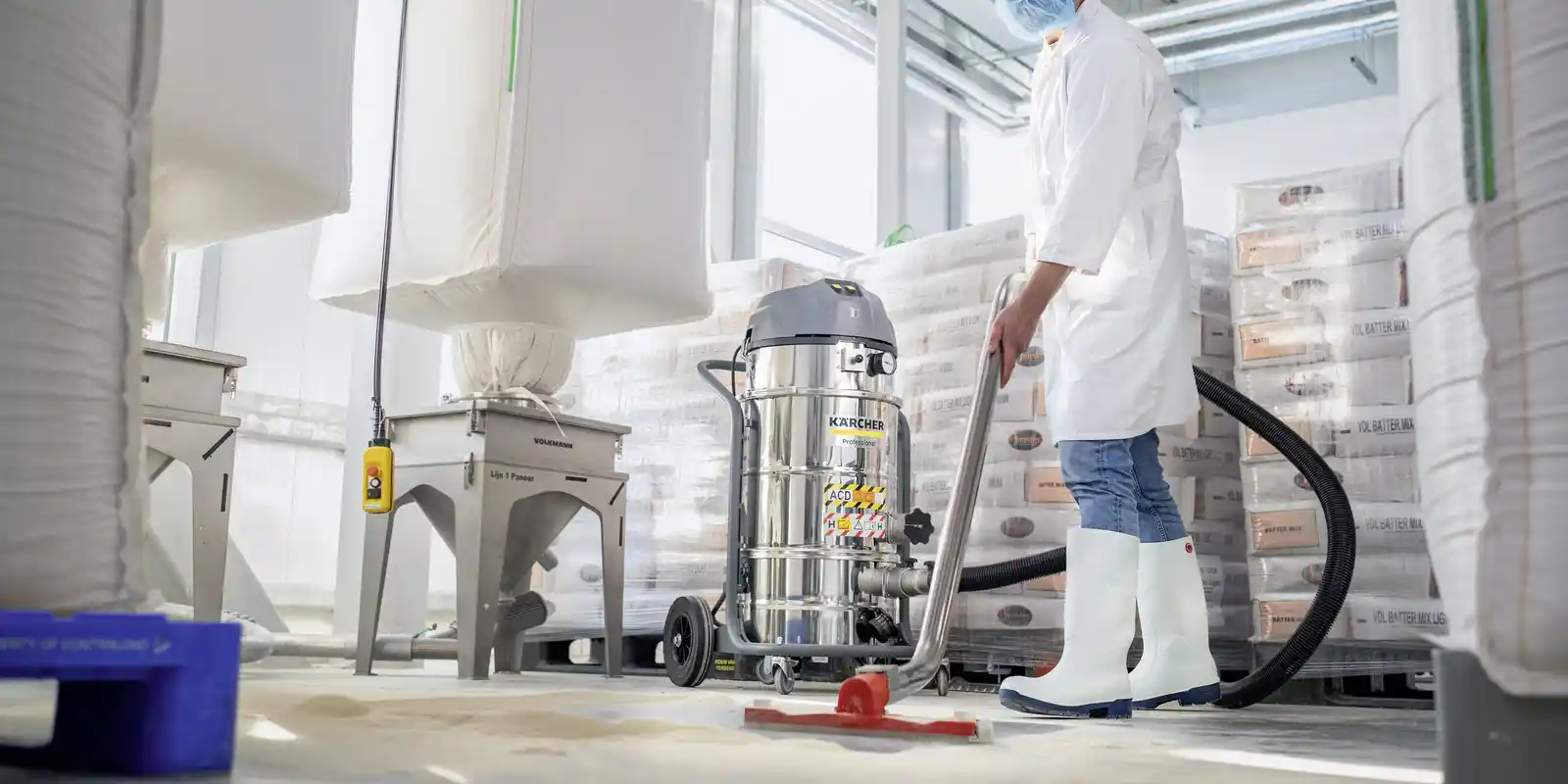
Industrial vacuums are built around two core performance numbers: airflow (measured in CFM) and suction, sometimes called water lift or sealed suction. Airflow moves debris through the hose, while suction lifts heavier material off the surface. Commercial and industrial models are engineered for long run times, larger capacity tanks, and tougher filtration than anything you’d find in a home. They’re the workhorses of manufacturing plants, warehouses, workshops, and any space that generates constant dust or debris.
Because they rely on air rather than water, industrial vacuums are the go-to choice for dry messes and, in wet/dry vaccum versions, for spills and standing liquid. They don’t inject moisture into a surface, so there’s no drying time and no risk of leaving carpets or floors damp. That makes them fast, flexible, and safe for a huge range of everyday cleaning tasks across almost any facility.
Types of Industrial Vacuums You’ll Come Across
Not every industrial vacuum is the same, and the type you choose depends on your environment. Dry vacuums handle dust, dirt, and fine particles. Wet/dry vacuums pick up both liquids and solids, which is ideal for spills and flood cleanup. HEPA vacuums capture very fine particles for spaces with air-quality or safety requirements. Explosion-proof and ATEX-rated vacuums are made for hazardous areas with combustible dust, and continuous-duty models are designed to run all day without overheating.
Where Industrial Vacuums Shine on the Job
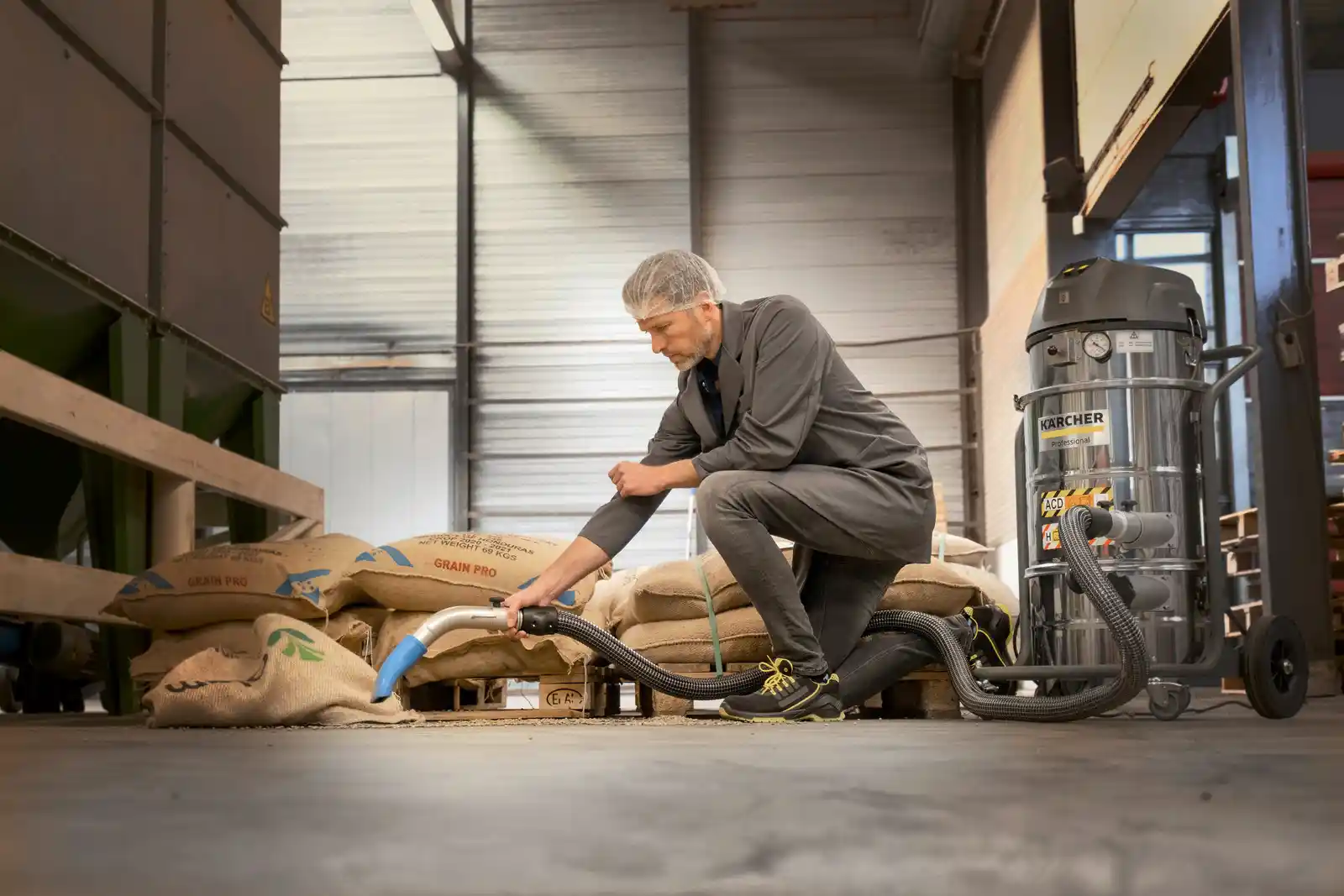
Industrial vacuums are the best fit anywhere dry debris, dust, or spills pile up quickly. Think manufacturing lines covered in shavings, warehouses tracking in dirt, construction sites full of drywall dust, and workshops producing sawdust and metal filings. They’re also perfect for daily maintenance cleaning of hard floors, entryways, and large open areas. Whenever you need fast, no-drying-time pickup of loose material, an industrial vacuum is almost always the right call.
How Extractors Work and Why They Deep Clean Differently
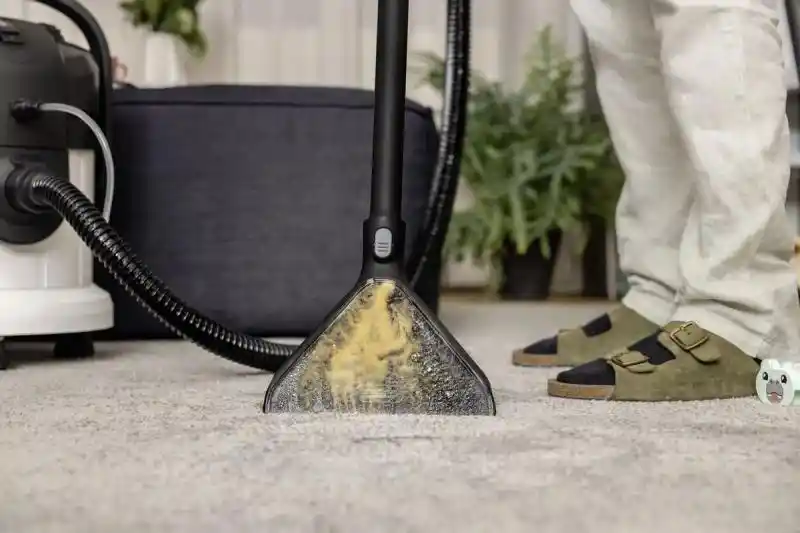
Extractors, often called carpet extractors or hot water extractors, work in a three-step cycle: they spray a water-and-detergent solution onto the surface, agitate or dwell to break up embedded soil, then vacuum the dirty solution back into a recovery tank. This process reaches deep into carpet fibers, upholstery, and porous flooring where a vacuum alone simply can’t go. The result is a genuinely deep clean that lifts stains, odors, and ground-in grime rather than just surface dust.
The trade-off is that extractors introduce moisture, which means drying time and a bit more process to manage. Many commercial models use heated water to boost cleaning power on greasy or heavily soiled areas. Because they’re designed for soft surfaces and deep restoration, extractors are essential for businesses that need carpets, rugs, and upholstered furniture to look and smell fresh, not just be free of loose dirt.
Common Types of Carpet and Floor Extractors
Extractors come in several formats depending on the size of the job. Portable spot extractors are compact and perfect for targeted stain removal on carpets, upholstery, and auto interiors. canister or Box & wand extractors handle larger carpeted areas and heavier soil. Self-contained ride-on and walk-behind extractors cover big commercial floor plans quickly. Some tile and grout extractors are built specifically to flush and recover water from hard, porous surfaces that a standard vacuum would leave grimy.
Best Uses for Extractors in Commercial Settings
Extractors are the right choice wherever soft surfaces need deep, restorative cleaning. Hotels, offices, schools, healthcare facilities, and restaurants rely on them to keep carpets and upholstery looking new and smelling clean. They’re also the tool professional carpet cleaning companies use for stain removal, odor control, and periodic deep cleans. Anytime a surface holds embedded dirt that suction alone can’t lift, an extractor delivers results a vacuum never could on its own.
Key Differences Between Industrial Vacuums and Extractors at a Glance
Before you decide, it helps to see the core differences side by side. The table below sums up how industrial vacuums and extractors compare across the factors that matter most when you’re choosing equipment for a commercial space. Use it as a quick reference, then read on for the detailed pros, cons, and cost breakdown so you can match the machine to your building’s real cleaning demands.
| Factor | Industrial Vacuum | Extractor |
|---|---|---|
| Primary job | Removes dry debris, dust, and (wet/dry) liquids | Deep cleans carpets, upholstery, and soft surfaces |
| Cleaning method | Suction and airflow only | Sprays solution, agitates, then extracts water |
| Uses water | No (or wet pickup only) | Yes — injects and recovers cleaning solution |
| Best surfaces | Hard floors, warehouses, workshops | Carpet, rugs, upholstery, porous flooring |
| Drying time | None | Requires drying time |
| Removes stains | No | Yes |
| Speed | Very fast | Slower, more thorough |
| Typical setting | Manufacturing, construction, hard-floor upkeep | Hotels, offices, carpet cleaning services |
Pros and Cons of Industrial Vacuums
Industrial vacuums bring a lot of practical advantages to a facility, but they aren’t a fix for every mess. Knowing where they excel and where they fall short helps you avoid buying a machine that can’t handle your real workload. Below is an honest look at what you gain and what you give up when you rely on an industrial vacuum as your main cleaning tool.
On the plus side, industrial vacuums are fast, versatile, and low-maintenance. They handle dry debris and liquids without leaving surfaces wet, so there’s no downtime waiting for floors to dry. They come in specialized versions for hazardous dust, fine particles, and continuous use, and they’re generally simpler to operate and service than extractors. For high-traffic hard-floor environments, nothing beats their speed.
The downside is that they only remove what’s loose or on the surface. A vacuum can’t lift set-in stains, deodorize soiled carpet, or restore matted, dirty fibers. If your building has a lot of carpet or upholstery that needs deep cleaning, a vacuum alone will always leave the toughest dirt behind, and you’ll eventually need an extractor to finish the job properly.
Pros and Cons of Extractors
Extractors solve problems that vacuums can’t touch, but they come with their own set of trade-offs. If you understand both sides before you buy, you can plan your cleaning process around the machine’s strengths instead of being frustrated by its limits. Here’s a straight look at what extractors do well and where they can slow you down in a busy commercial operation.
The biggest advantage is deep cleaning power. Extractors pull embedded dirt, stains, and odors out of carpets and upholstery, extending the life of expensive soft flooring and keeping spaces looking professional. Heated models tackle grease and heavy soil that would defeat a vacuum. For any business where carpet appearance affects the customer experience, an extractor is a genuine asset that protects your investment.
The main drawbacks are speed and moisture. Extraction is a slower, multi-step process, and it leaves surfaces damp, so you have to plan for drying time before an area is back in use. Extractors also require more upkeep — solution tanks, recovery tanks, filters, and spray jets all need regular cleaning. They’re not built for dry debris, so they don’t replace a vacuum; they complement it.
Comparing Cost, Maintenance, and Long-Term Value
Cost is a major factor in the industrial vacuums vs extractors decision, and it goes far beyond the sticker price. Industrial vacuums generally cost less up front for comparable capacity and have simpler maintenance — mostly emptying tanks and swapping filters. Extractors tend to cost more because of their pumps, heaters, and dual-tank systems, and they demand more routine care to keep spray jets clear and recovery tanks clean.
But the smarter way to judge value is by looking at the cost of the job you’re trying to do. If you have thousands of square feet of carpet, paying for professional deep cleaning over and over may cost far more than owning an extractor. If your space is mostly hard floors and dry debris, an expensive extractor would sit unused while a vacuum does all the real work. Match your spend to your actual surfaces and cleaning frequency, and both machines pay for themselves quickly.
When to Choose an Industrial Vacuum vs an Extractor for Your Facility
Deciding between industrial vacuums vs extractors gets easy once you look honestly at your building. Start with your surfaces: mostly hard floors, warehouses, or workshops point you toward a vacuum, while lots of carpet and upholstery point you toward an extractor. Then look at your mess type — dry debris and spills call for a vacuum, embedded stains and odors call for an extractor. Your surfaces and your soil almost always answer the question for you.
Frequency matters too. Daily maintenance cleaning across a large hard-floor facility leans heavily on an industrial vacuum, while periodic deep cleans of carpeted areas are extractor territory. Also consider drying time and downtime: if an area can’t be out of service, a no-dry vacuum keeps things moving, whereas carpeted zones that can be cleaned overnight are perfect for extraction. Weigh these factors together and the right machine usually becomes obvious.
Do You Need Both an Industrial Vacuum and an Extractor?
For many commercial operations, the honest answer isn’t one or the other — it’s both. A vacuum handles the daily dry cleaning and spill response, while an extractor takes care of the periodic deep cleans that keep carpets and upholstery in top shape. Together they cover the full range of cleaning your building needs, and they actually work best as a team rather than as competing options.
In fact, proper carpet care almost always requires both machines. You vacuum first to remove loose dirt and grit, then extract to pull out the embedded soil that suction can’t reach. Skipping the vacuum step forces the extractor to deal with debris it wasn’t designed for, which clogs it and shortens its life. If your facility has meaningful amounts of both hard flooring and carpet, owning one of each is usually the most cost-effective long-term setup.
Mistakes to Avoid When Buying Industrial Vacuums or Extractors
The most common mistake is buying based on price alone instead of matching the machine to your surfaces and workload. A cheap vacuum that can’t handle your debris volume, or an extractor too small for your carpet footprint, ends up costing more in labor and replacements. Always start with the job, then choose the machine — never the other way around. Underbuying to save money almost always backfires.
Another frequent error is ignoring the specs that actually matter. For vacuums, that means airflow, suction, tank size, and filtration; for extractors, it means solution and recovery tank capacity, spray pressure, and whether you need heat. People also forget about maintenance access, hose length, and whether the machine fits through their doorways and tight spaces. Finally, don’t assume one machine does everything — expecting a vacuum to deep clean carpet, or an extractor to pick up dry debris, leads to poor results and premature wear.
Conclusion
When it comes to industrial vacuums vs extractors, there’s no single winner, there’s only the right machine for the job in front of you. Industrial vacuums are fast, versatile, and unbeatable for dry debris, dust, and spills on hard surfaces. Extractors deliver the deep, restorative cleaning that carpets and upholstery need to look and smell their best. Match the machine to your surfaces and your mess, and you’ll get better results with less effort and lower long-term costs.
If your facility has a mix of hard floors and carpet, the smartest move is usually to invest in both and let each machine do what it does best. Not sure which equipment fits your space? The team at Pressure King Inc. can help you match the right industrial vacuum or extractor to your building, your budget, and your cleaning schedule — so you buy once and clean right.
Frequently Asked Questions About Industrial Vacuums vs Extractors
Is an extractor the same as a vacuum?
No. A vacuum only uses suction to pick up dry debris or liquids, while an extractor sprays a cleaning solution into a surface and then vacuums it back out. Extractors deep clean carpets and upholstery, whereas vacuums clean the surface only.
Can an industrial vacuum clean carpets?
An industrial vacuum can pick up loose dirt, dust, and grit from carpet, but it can’t remove embedded stains or odors. For a true deep clean of carpeted areas, you need an extractor, ideally after vacuuming first.
Do I need to vacuum before using an extractor?
Yes. Vacuuming first removes loose debris so the extractor can focus on the embedded soil it’s designed to lift. Skipping this step clogs the extractor and gives you a weaker clean overall.
Which is more expensive, an industrial vacuum or an extractor?
Extractors usually cost more up front because of their pumps, heaters, and dual-tank systems. Industrial vacuums are typically cheaper for comparable capacity and are simpler to maintain, though the best value depends on your specific cleaning needs.
What’s better for a warehouse, a vacuum or an extractor?
For a warehouse full of dry debris, dust, and the occasional spill, an industrial vacuum is the clear choice. Extractors are built for carpet and soft surfaces, which most warehouses don’t have.
Can one machine do both jobs?
Some hybrid machines exist, but for demanding commercial work, dedicated equipment almost always performs better. Most facilities with both hard floors and carpet are best served by owning a separate industrial vacuum and extractor.