

Fleet Maintenance Guide: Pressure Washing Trucks, Vans, and Trailers
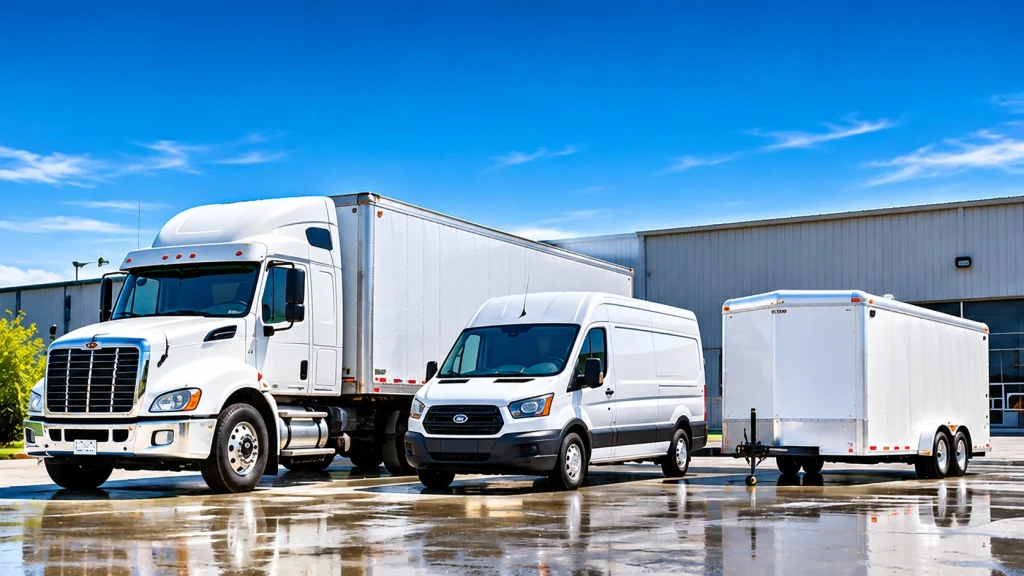
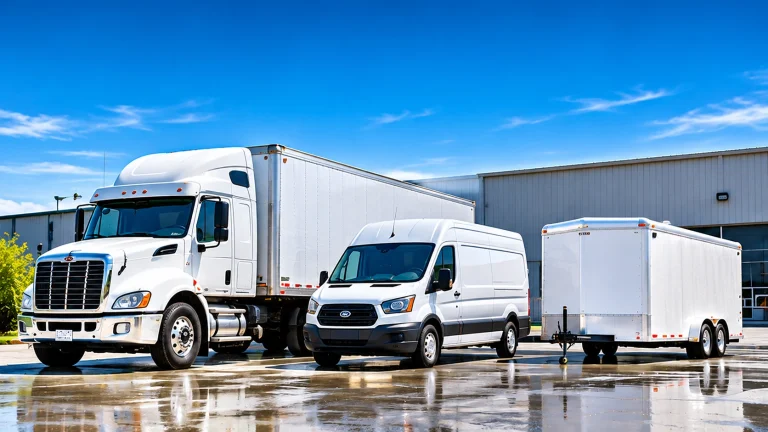
Commercial trucks, vans, and trailers collect dirt, mud, grease, and road salt during daily operations. Over time, this buildup can make vehicle inspections harder. For transportation businesses in New Jersey, regular pressure washing is an important part of fleet maintenance, helping keep vehicles clean, presentable, and ready for daily work.
Pressure washing removes stubborn dirt more efficiently than basic rinsing, but incorrect cleaning methods can damage paint, decals, and sensitive parts. Using suitable fleet pressure washing equipment helps businesses clean commercial vehicles while protecting their exterior surfaces.
The right commercial pressure washing equipment depends on vehicle size, surface condition, and cleaning needs. Fleet managers should consider safe pressure settings, suitable detergents, and washing schedules. This guide covers practical cleaning methods for trucks, vans, and trailers to support regular fleet maintenance.
Why Pressure Washing Matters for Fleet Maintenance
Commercial vehicles spend long hours on highways, construction sites, and city roads. During daily travel, dirt, mud, road salt, and oily residue collect on body panels, wheels, and other exposed areas. Without regular cleaning, this buildup can become harder to remove and may hide early signs of vehicle damage.
Pressure washing helps remove these materials and makes routine vehicle inspections easier. Clean surfaces allow maintenance teams to notice scratches, corrosion, fluid leaks, and damaged components that may otherwise remain hidden under dirt.
Regular cleaning also helps maintain a professional business appearance. Trucks, delivery vans, and branded trailers often represent a company while traveling or making deliveries. Keeping them clean helps businesses present a professional image to customers.
Fleet washing should be part of a wider maintenance plan that includes inspections, mechanical servicing, and timely repairs. Although cleaning cannot prevent every type of vehicle damage, it can help teams identify problems earlier and maintain exterior surfaces.
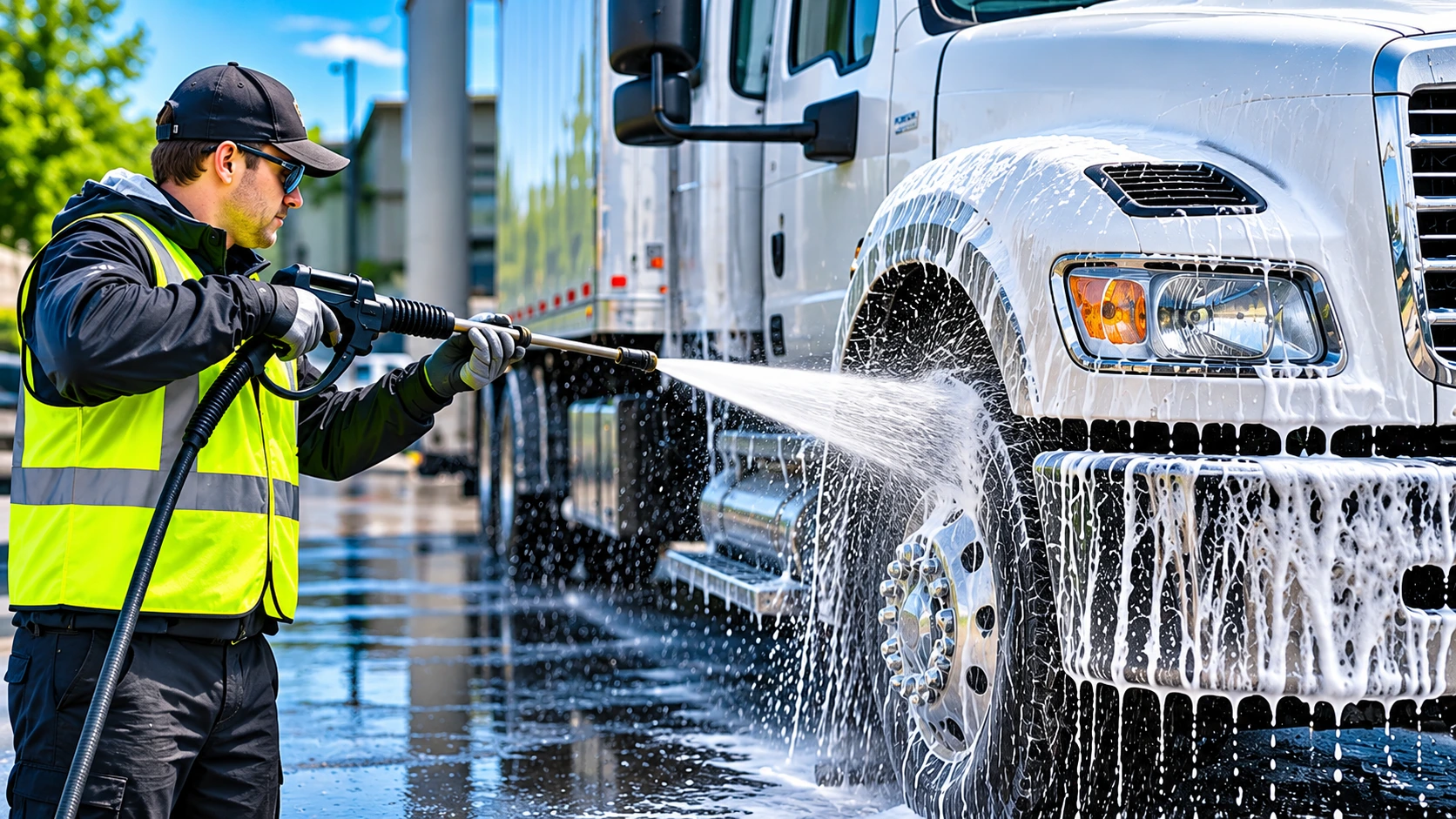
Common Cleaning Challenges for Trucks, Vans, and Trailers
Commercial fleets experience different cleaning problems depending on their routes, working conditions, and vehicle types. Understanding these challenges helps operators select suitable pressure washing methods and cleaning products.
Road Dirt, Mud, and Salt Buildup
Trucks and trailers collect mud, sand, road debris, and salt while traveling through construction sites, dusty roads, and wet conditions. Regular cleaning helps remove buildup from lower panels and wheel wells, reducing the risk of corrosion and surface damage. Regular rinsing and pressure washing help remove these materials before heavy buildup develops.
Oil, Grease, and Stubborn Road Film
Commercial vehicles may collect greasy dirt around wheels, chassis components, and lower body sections. Road film can also form when dust, moisture, traffic residue, and oily materials settle on exterior panels.
Ordinary water may not remove this buildup completely. Suitable commercial vehicle detergents can help loosen grease and road film, making washing more effective.
Sensitive Paint, Decals, and Vehicle Components
Commercial vehicles often have company logos, vinyl graphics, painted panels, mirrors, lights, cameras, and electrical connections. These parts require careful cleaning because concentrated water pressure can loosen decals, damage weakened paint, or force water into sensitive areas.
Choosing Pressure Washing Equipment for Fleet Vehicles
Selecting the right pressure washing equipment helps fleet operators remove dirt, grease, and road buildup without damaging vehicle surfaces. Equipment should match the vehicle type, cleaning needs, and working conditions.
Cold-water pressure washers work well for removing mud, dust, and everyday road dirt, while hot-water models help loosen grease and oily residue on suitable surfaces. Operators should follow manufacturer guidelines to avoid damaging paint, decals, and rubber parts.
Using suitable spray nozzles, safe pressure settings, and vehicle-friendly detergents helps protect exterior surfaces. Wide-angle nozzles and proper spraying distance reduce damage risks, while approved cleaning solutions help remove stubborn dirt and road film.
How to Pressure Wash Fleet Vehicles Safely
A clear washing process helps operators clean commercial vehicles efficiently while reducing unnecessary surface damage. The following steps can be used as a general guide, with adjustments based on vehicle manufacturer instructions.
Step 1: Inspect and Prepare the Vehicle
Park the vehicle in a designated washing area with proper drainage, apply the parking brake, and close all windows and doors. Check for damaged paint, loose decals, worn seals, and exposed electrical parts. Inspect the pressure washer and wear suitable protective gear before starting.
Step 2: Rinse Away Loose Dirt and Mud
Start with a gentle rinse to remove dirt, mud, sand, and debris from lower panels and wheel wells. Keep the nozzle at a safe distance and avoid sensitive parts to prevent surface damage during cleaning.
Step 3: Apply the Right Cleaning Detergent
Apply a vehicle-safe detergent evenly to dirty surfaces, following the manufacturer’s instructions. Let it loosen grease and road dirt without drying, and use a soft brush for stubborn stains instead of excessive water pressure.
Step 4: Wash the Vehicle Body and Wheels
Wash the vehicle using controlled spray movements and a safe distance. Clean body panels, wheels, and lower sections carefully, avoiding direct pressure on mirrors, cameras, lights, seals, and electrical parts. Follow manufacturer guidelines when cleaning underbody components.
Step 5: Complete the Final Rinse and Inspection
Rinse the vehicle thoroughly with clean water to remove detergent and dirt. Check body panels, wheels, and lower sections for missed spots, and make sure lights, cameras, and mirrors are clean and undamaged.
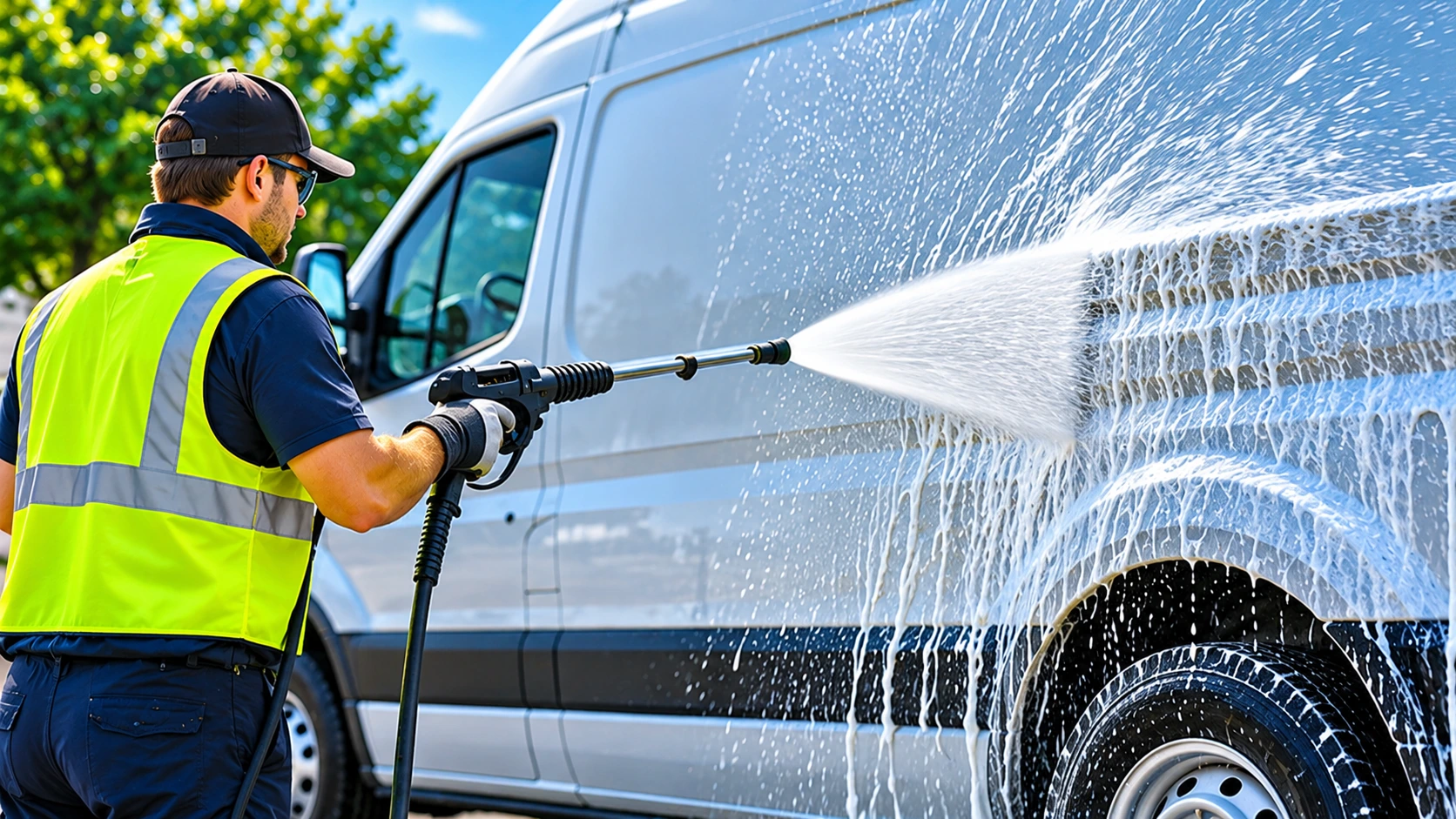
Pressure Washing Different Types of Fleet Vehicles
Trucks, vans, and trailers may collect similar dirt, but their designs and exterior materials require different cleaning methods. Fleet managers should adjust pressure settings, detergents, and cleaning techniques according to each vehicle.
Commercial Trucks
Commercial trucks collect heavy road grime around wheel wells, lower panels, and accessible chassis areas. Trucks operating on construction sites or muddy roads may require more frequent washing than vehicles traveling on cleaner routes.
Delivery Vans
Delivery vans often have painted body panels, windows, plastic trim, mirrors, cameras, and company graphics. These surfaces require careful washing to avoid scratches, water intrusion, or damage to branding.
Cargo Trailers
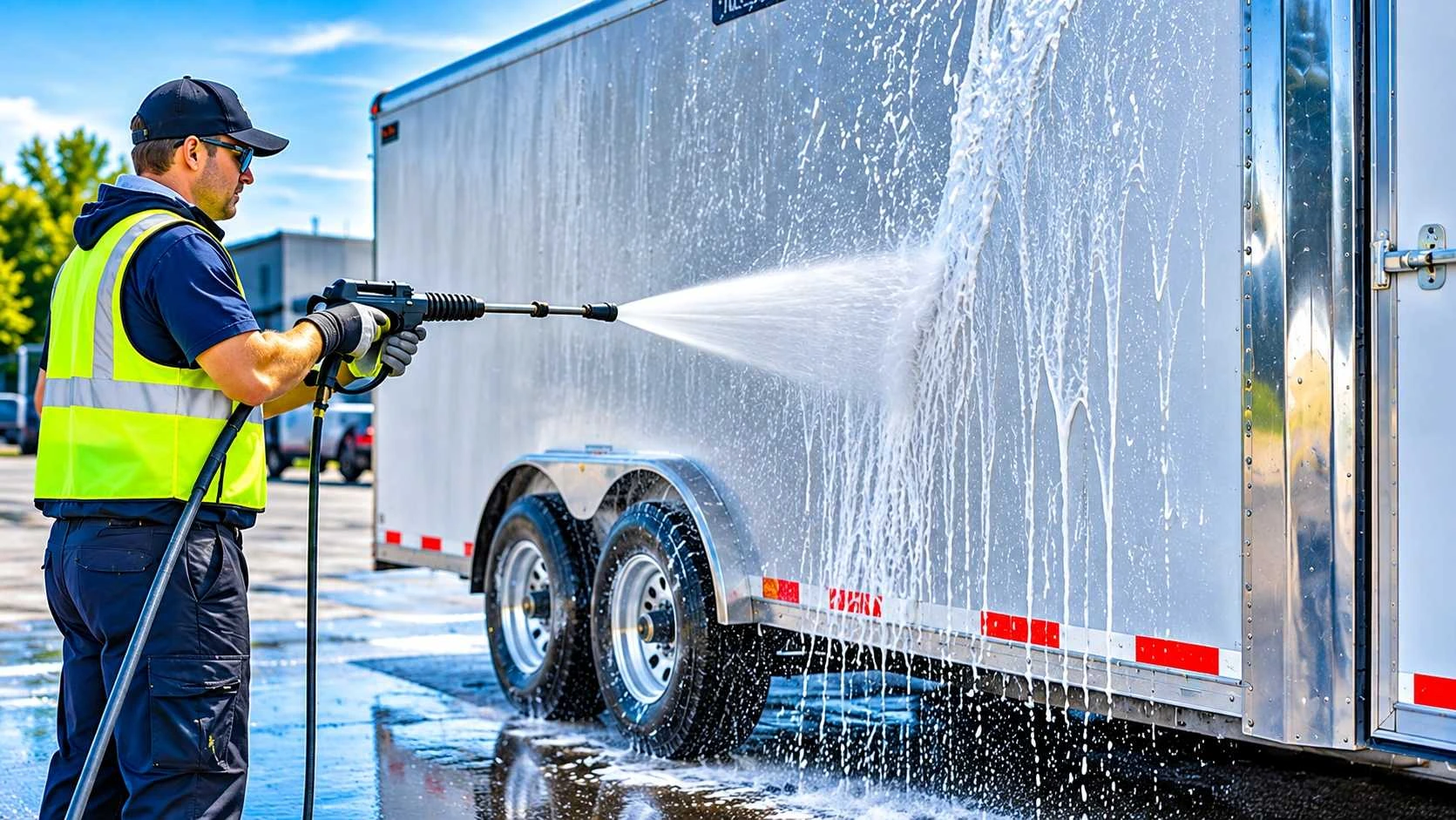
Cargo trailers collect road dirt, dust, mud, and stains on exterior panels, doors, hinges, and lower sections. Using cleaning products suitable for painted metal, aluminum, or fiberglass helps remove buildup without damaging trailer surfaces.
Common Fleet Pressure Washing Mistakes to Avoid
Incorrect washing methods can damage vehicle surfaces, increase maintenance costs, and reduce cleaning results. Fleet operators should avoid these common mistakes:
- Using Excessive Water Pressure: High pressure can damage paint, decals, and seals. Follow manufacturer limits and begin with a gentle setting.
- Choosing the Wrong Spray Nozzle: Narrow spray patterns can damage sensitive surfaces. Select a suitable nozzle and maintain a safe cleaning distance.
- Spraying Electrical Components: Direct pressure washing around cameras, sensors, wiring, and electrical connections can cause damage. Use approved cleaning methods around these parts.
- Using Harsh Cleaning Chemicals: Unsuitable detergents may damage paint, rubber, aluminum, and protective coatings. Choose vehicle-safe cleaning products.
- Washing Hot or Damaged Surfaces: Hot panels can cause detergents to dry quickly, while damaged paint and loose graphics may worsen under pressure. Allow surfaces to cool and inspect them first.
- Ignoring Wastewater Disposal: Fleet washing can produce water containing detergents, grease, and road contaminants. Use appropriate collection and disposal methods according to local requirements.
Building an Effective Fleet Washing and Maintenance Schedule
A regular fleet washing schedule helps transportation businesses manage vehicle cleanliness without disrupting deliveries, service calls, or daily operations. Cleaning frequency should depend on road conditions, vehicle use, weather, and dirt buildup.
Commercial trucks operating on construction sites or winter roads may need more frequent washing because mud and road salt collect quickly. Delivery vans used mainly on paved city roads may require a different cleaning schedule.
Washing should be planned around vehicle availability. Scheduling cleaning during quieter operating hours or planned maintenance periods can help reduce downtime. Grouping vehicles by cleaning requirements may also make the washing process more efficient.
Pressure washing equipment also requires routine maintenance. Operators should inspect hoses, nozzles, spray guns, filters, and connections between jobs. Replacing worn parts and following manufacturer maintenance instructions helps reduce unexpected equipment problems.
Conclusion
Regular pressure washing is an important part of fleet maintenance for commercial trucks, vans, and trailers. Removing road dirt, grease, mud, and salt helps protect vehicle surfaces, maintain a professional appearance, and make routine inspections easier.
Fleet managers should use suitable pressure washing equipment, approved cleaning products, and safe washing methods based on each vehicle’s needs. A consistent cleaning schedule also supports long-term vehicle care while reducing interruptions to daily operations.
For fleet owners and transportation businesses in New Jersey, Pressure King Inc. offers commercial pressure washing equipment for different vehicle cleaning requirements. Choosing the right equipment and following proper cleaning practices helps businesses maintain clean, professional-looking fleets.
FAQs
How often should commercial trucks and fleet vehicles be pressure washed?
Cleaning frequency depends on vehicle use, road conditions, and the amount of dirt collected. Trucks operating in muddy areas or on salted winter roads may require more frequent washing. Fleet managers should inspect vehicles regularly and create schedules based on actual cleaning needs.
Can pressure washing damage commercial vehicle paint or decals?
Yes. Excessive water pressure, incorrect nozzles, harsh detergents, and spraying too close to the surface can damage paint or loosen decals. Following manufacturer instructions, using suitable cleaning products, and maintaining a safe spraying distance helps reduce these risks.
Is hot water better than cold water for fleet pressure washing?
Cold water is generally suitable for removing ordinary road dirt, mud, and dust. Hot water can help loosen grease and oily deposits on approved surfaces. The best choice depends on the type of dirt, vehicle materials, and manufacturer cleaning recommendations.
Can regular fleet pressure washing help prevent vehicle corrosion?
Regular pressure washing helps remove road salt, mud, and dirt that can contribute to corrosion on exposed metal surfaces. Cleaning wheel wells, lower panels, and accessible underbody areas can support long-term vehicle care when done using safe methods.
What is the best time to pressure wash commercial fleet vehicles?
Fleet vehicles should be washed during scheduled downtime or quieter operating hours to avoid disrupting deliveries and transportation services. Washing in moderate temperatures and shaded areas can also help prevent detergents from drying too quickly on vehicle surfaces.

Michael Adeniran is the CEO of Pressure King Inc. He has been dealing in commercial cleaning equipment for many years. He is one of the leading specialists and experts in commercial cleaning products.


