


Michael Adeniran is the CEO of Pressure King Inc. He has been dealing in commercial cleaning equipment for many years. He is one of the leading specialists and experts in commercial cleaning products.


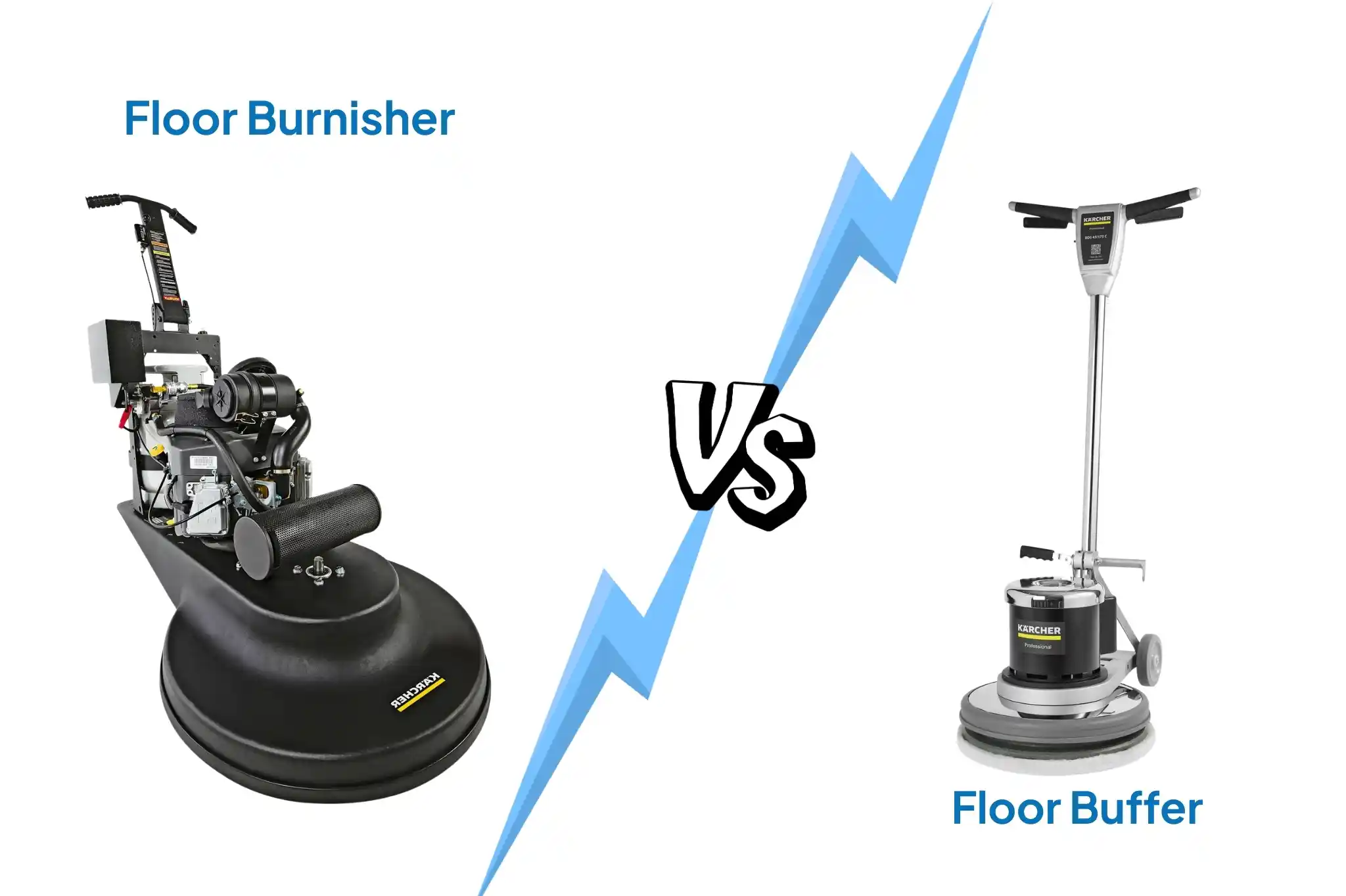
When it comes to professional floor care, few topics create as much confusion as Floor Burnisher Vs Buffer. These machines are usually used synonymously in a discussion, but they have very different applications in an organized floor maintenance program. When one picks the wrong machine, the results will be poor, the floors may be damaged, labor time will be wasteful and unnecessary expenses may be incurred.
It is an advanced guide that dissects the floor buffer vs burnisher argument, analyzing how each machine functions, what jobs they are better at, and how to determine the correct choice of the machine in your facility. Regardless of whether you are operating a hospital, a school, a warehouse, a retail store or a commercial office, it is important to know about the burnisher vs buffer comparison to be in the position to have a long-term floor performance.
Understanding the Basics: Why Floor Burnishers and Buffers Are Often Confused
Both the machines are similar at first sight. The confusion is brought about by the fact that the two are occasionally called polishers or floor maintainers.
As a matter of fact, there is a difference between buffer and polisher in terms of speed, intent, and outcomes. Burnishers are meant to help in the process of glossing products and preserving shine, whereas buffers are meant to help clean things and prepare them. The awareness of this difference would facilitate the explanation of the general debate of floor maintainer vs floor polisher.
What Is a Floor Buffer?
A floor buffer or low speed or normal speed floor machine is mainly used in cleaning, scrubbing and preparation of finishes.
How a Floor Buffer Works
- Operates at 175–350 RPM
- Uses friction and cleaning solution to remove dirt, scuffs, and scratches
- Prepares floors for refinishing or sealing
Common Uses
- Deep cleaning hard floors
- Stripping or removing old floor finish
- Light polishing and surface restoration
- Scrubbing grout or uneven surfaces
Understanding how to use a buffer on floors correctly is crucial. Operators typically move the machine side to side, allowing the pad to gently scrub the surface without gouging or uneven wear.
Floors Best Suited for Buffers
- Vinyl Composition Tile (VCT)
- Concrete
- Marble and natural stone (with correct pads)
- Terrazzo
Buffers are versatile machines, but they are not designed to deliver a high-gloss, mirror-like finish.
What Is a Floor Burnisher?
A floor burnisher is a high-speed or ultra-high-speed machine used exclusively for polishing and gloss enhancement.
How a Floor Burnisher Works
- Operates at 1,000–3,000+ RPM
- Uses heat and friction to harden and smooth floor finish
- Produces a reflective, wet-look shine
Unlike buffers, burnishers do not clean deeply. Instead, they refine the top layer of the floor finish.
Types of Floor Burnishers
- Electric corded burnishers
- Battery-powered burnishers
- Propane burnishers (for large facilities)
Burnishers are the final step in a floor care routine, making them ideal for high-traffic commercial environments.
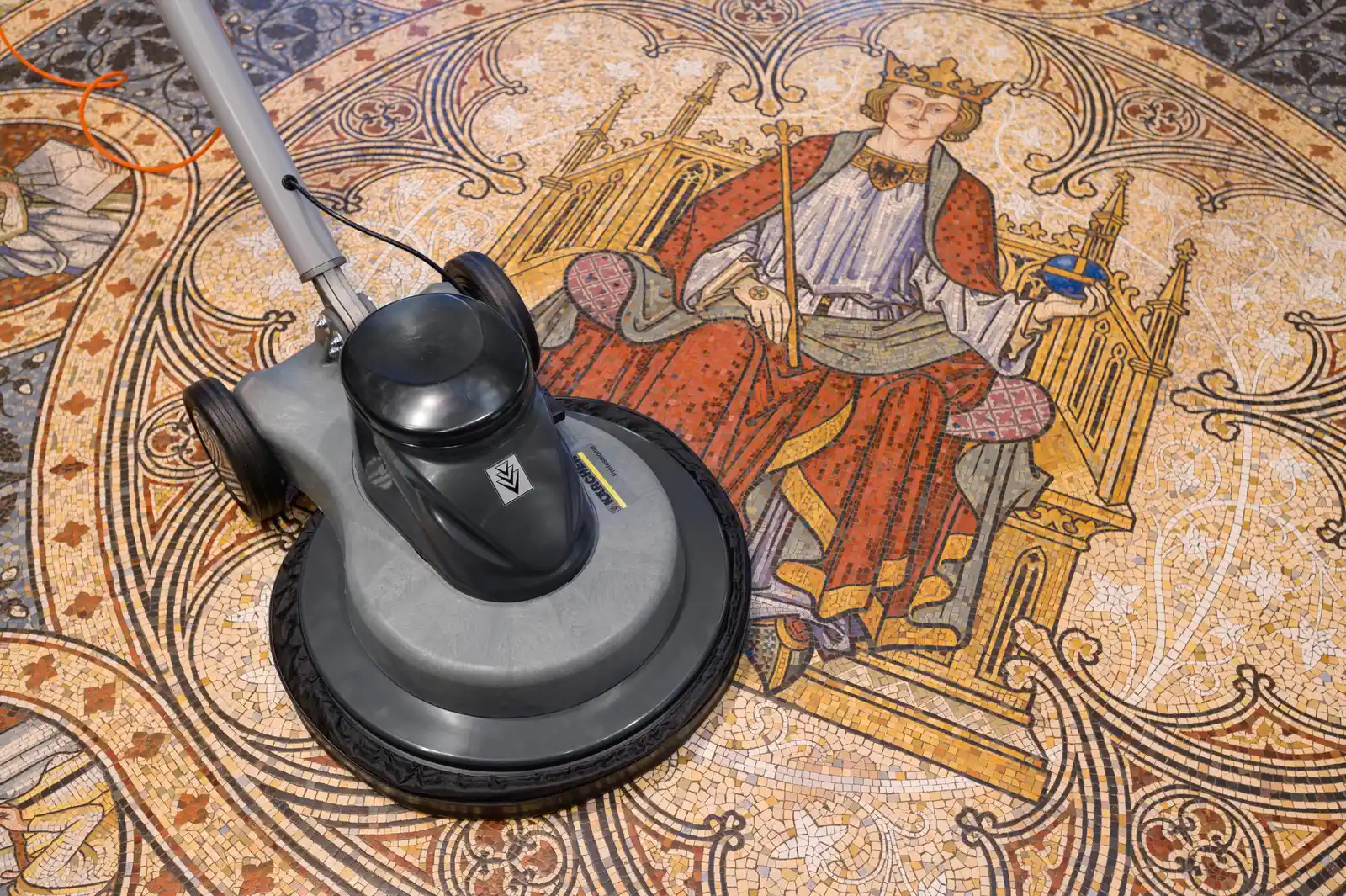
Floor Burnisher Vs Buffer: Side-by-Side Comparison
When you are choosing the correct machine to use in cleaning the floor, it is important to understand the Floor Burnisher Vs Buffer comparison. Although most of these machines are used interchangeably, the truth is that the floor buffer vs burnisher argument is always about speed, intent, and the end result that you desire. A clear explanation on the difference between a burnisher and a buffer is provided below in order to make an informed decision.
Speed and Operating Power
Among the most evident differences is machine speed. Floor buffers travel at moderate to low speed which is normally 175-350 RPM. This renders them perfect in regulated cleaning and repair duties. Floor Burnishers, conversely, operate at high speed between 1,500-3,000 RPM with fast friction and heat. This difference directly makes a difference between burnishing and polishing because while burnishing is aimed at improving shine, polishing is aimed at cleaning the surface and preparing it.
- Buffer: 175–350 RPM
- Burnisher: 1,000–3,000+ RPM
Primary Function and Use Case
A floor polisher can be called a floor maintainer (not floor buffer) and is designed to be versatile. It is able to scrub floors, light soil, strip old finishes as well as apply polish. This is a good feature that can be used in day-to-day or weekly servicing. When operators are aware of the correct use of a buffer on a floor, they can clean and polish a surface and prepare it without damaging it.
Burnishers are even more specialized. They are used mainly to add or recover the shine on already-finished floors. They do not need deep cleaning or stripping, they are only needed to ensure a high-shining look in high-traffic locations.
- Buffer: Cleaning, scrubbing, finish preparation
- Burnisher: Polishing and gloss maintenance
Finish Quality and Visual Results
In the comparison between burnishing vs polishing, the result is obvious in the ultimate appearance. Buffers provide an attractive finish, which is clean and smooth and satin-like and can be used in offices, schools, and health institutions. Burnishers are of high-gloss and mirror finish and are therefore best suited to retail outlets, hotel lobbies and show rooms where appearance is important.
- Buffer: Can be used on unfinished or worn floors
- Burnisher: Requires a finished and sealed surface
Surface Compatibility
The difference between buffer and polisher also extends to floor compatibility. Buffers work well on a wide range of surfaces, including vinyl, tile, concrete, and stone. Burnishers are best suited for resilient floors with a protective finish, as excessive heat on untreated surfaces may cause damage.
- Buffer: Moderate training required
- Burnisher: Requires proper technique to avoid swirl marks
Skill Level and Cost Considerations
Buffers are simpler to use and less expensive to maintain hence a viable option when it comes to normal maintenance. Burnishers need operator control and are more expensive but provide the time saving advantage of high appearance settings.
This clear contrast highlights the practical difference between buffer and polisher in daily cleaning operations.
When Should You Use a Floor Buffer?
A floor buffer is best used when your flooring shows signs of wear, embedded dirt, scuffs, or uneven finish buildup. Rather than enhancing gloss, buffers address the surface issues that impact durability, safety, and cleanliness. This makes them the backbone of daily and weekly maintenance routines across offices, schools, hospitals, and industrial facilities.
Ideal Situations for Buffers
Removing ground-in dirt and stains
Buffers operate at controlled, low speeds, allowing pads and cleaning solutions to loosen and lift stubborn soil. In the burnisher vs buffer comparison, this is where buffers outperform burnishers, as high-speed machines are not designed for deep soil removal.
Eliminating scuff marks and scratches
One of the most common applications, and a key part of how to use a buffer on floors, is scuff and scratch removal. Buffers smooth surface imperfections and blend minor abrasions without damaging the floor finish, supporting long-term floor health.
Preparing floors for new finish application
In burnishing vs polishing, polishing with a buffer is the correct step before applying fresh finish. Buffers strip old residue, level uneven coatings, and ensure proper adhesion, something a burnisher cannot achieve.
Deep cleaning high-traffic areas
High-traffic zones demand frequent corrective care. A buffer, often referred to in the floor maintainer vs floor polisher category, is ideal for restoring cleanliness and consistency in entryways, corridors, and workspaces where soil buildup is constant.
In summary, when comparing the floor buffer vs burnisher, a floor buffer should be your go-to choice whenever floors need cleaning, repair, or preparation. It plays a critical role in burnishing vs polishing workflows and clearly defines the difference between buffer and polisher, making it indispensable for professional floor maintenance.
Understanding how to use a buffer on floors properly ensures even results and extends the life of both the floor and the machine.
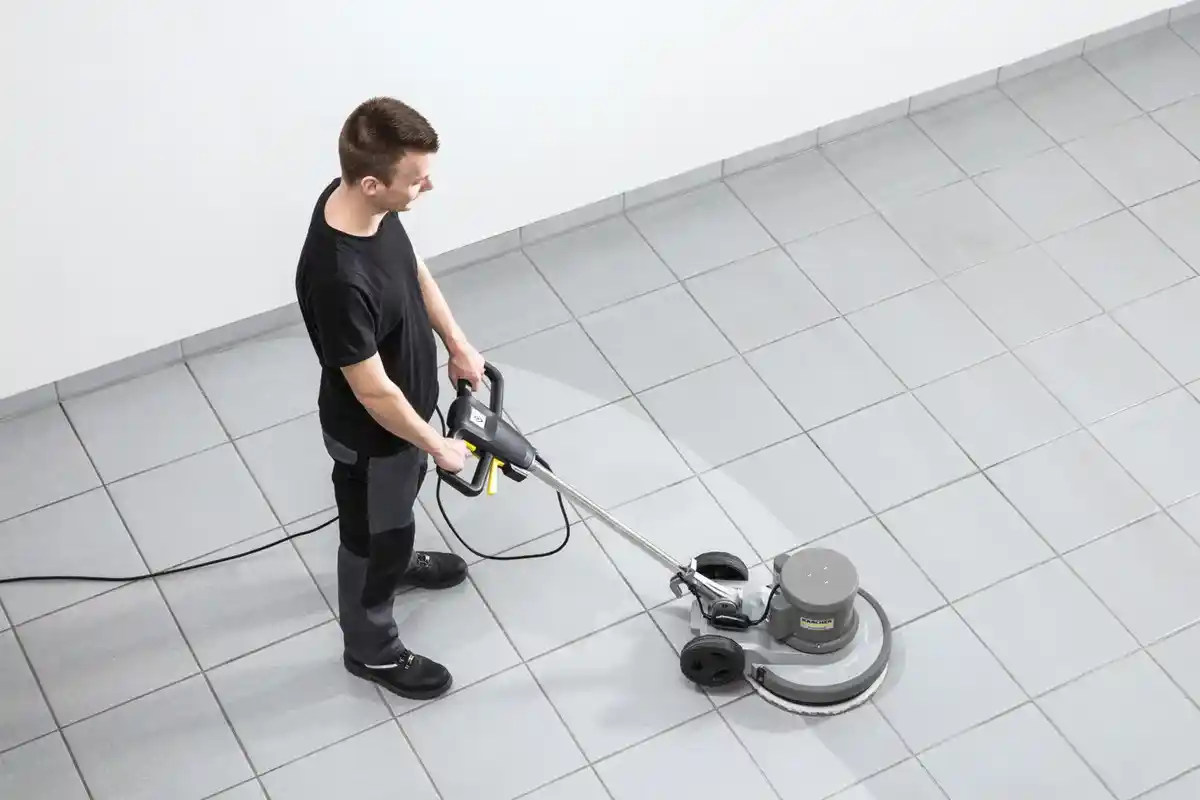
When Is a Floor Burnisher the Better Choice?
In the Floor Burnisher Vs Buffer comparison, a floor burnisher becomes the better choice when the goal shifts from corrective cleaning to cosmetic enhancement. While the floor buffer vs burnisher debate often centers on versatility, burnishers excel in environments where appearance, shine, and first impressions matter most. Understanding the burnisher vs buffer distinction helps determine when high-speed performance delivers better results than routine maintenance.
Ideal Situations for Using a Floor Burnisher
- Enhancing high-gloss appearance in visible spaces
In the burnishing vs polishing comparison, burnishing is the final step that delivers a mirror-like shine. Burnishers are ideal for retail stores, hotel lobbies, corporate entrances, and showrooms where floors must look polished and professional at all times. - Maintaining shine on finished floors
A burnisher works best on resilient flooring with a protective finish already applied. This highlights a key difference between buffer and polisher, buffers prepare and clean, while burnishers maintain and elevate shine without adding new finish. - Reducing the need for frequent refinishing
Regular burnishing helps extend the life of floor coatings by smoothing micro-scratches and redistributing the finish. In the floor maintainer vs floor polisher discussion, burnishers reduce downtime and labor by minimizing how often floors need stripping and recoating. - Fast touch-ups in high-traffic environments
Compared to buffers, burnishers cover large areas quickly. In the floor buffer vs burnisher comparison, this speed advantage makes burnishers ideal for busy facilities that require rapid gloss restoration with minimal disruption.
Airports, malls, hotels, and retail stores rely heavily on burnishers to maintain a polished image without frequent refinishing. Transform your floors from dull to spotless. Upgrade to our high-performance floor cleaning machines now and save time and labor.
Burnishing vs Polishing: What’s the Real Difference?
In professional floor care, the terms burnishing and polishing are often used interchangeably, but they are not the same. Understanding the real difference between these two processes is essential for choosing the right equipment, protecting your flooring investment, and achieving the desired appearance. While both methods aim to improve floor aesthetics, they work in very different ways and serve distinct purposes.
What Is Polishing?
Polishing is a low- to medium-speed floor maintenance process that focuses on cleaning, smoothing, and preparing the floor surface. It is typically performed using a floor buffer or polisher operating at 175–350 RPM with appropriate pads. The main goal of polishing is to remove light scratches, scuffs, and surface dirt while evenly distributing or refreshing the floor finish.
Polishing is often part of routine floor maintenance. It helps extend the life of the floor finish by keeping surfaces clean and uniform, rather than relying on aggressive methods. This process is ideal for facilities such as offices, schools, hospitals, and warehouses where functionality, safety, and consistent cleanliness matter more than high-gloss shine.
What Is Burnishing?
Burnishing is a high-speed finishing process designed to enhance shine rather than clean the floor. Using a burnisher operating at 1,500–3,000 RPM, burnishing creates friction and heat that softens the top layer of floor finish. This heat allows the finish to flow and level out, producing a bright, reflective, “wet-look” gloss.
Burnishing is most effective on floors that already have a protective finish applied. It is commonly used in high-visibility areas such as retail spaces, hotel lobbies, airports, and commercial corridors where appearance plays a major role in customer perception.
Key Differences Between Burnishing and Polishing
The biggest distinction between burnishing vs polishing lies in purpose and outcome. Polishing focuses on cleaning, surface preparation, and finish maintenance. Burnishing focuses on restoring or amplifying shine. Polishing improves durability and consistency, while burnishing improves visual impact.
Key Differences Between Burnishing and Polishing
- Purpose
- Polishing: Focuses on cleaning, smoothing, and maintaining the floor surface.
- Burnishing: Aims to enhance gloss and restore a high-shine finish.
- Machine Speed
- Polishing: Uses low- to medium-speed machines (175–350 RPM).
- Burnishing: Uses high-speed machines (1,500–3,000 RPM).
- Primary Outcome
- Polishing: Leaves a clean, even, satin or semi-gloss finish.
- Burnishing: Produces a mirror-like, high-gloss appearance.
- Floor Impact
- Polishing: Gentle on floors and suitable for frequent maintenance.
- Burnishing: Generates heat and friction, requiring compatible finishes to prevent damage.
- Equipment Used
- Polishing: Performed with floor buffers or polishers and various pad types.
- Burnishing: Performed with high-speed burnishers and specialized burnishing pads.
- Surface Compatibility
- Polishing: Works on a wide range of surfaces including vinyl, tile, stone, and concrete.
- Burnishing: Best suited for resilient floors with protective finishes.
- Maintenance Frequency
- Polishing: Ideal for daily or weekly maintenance routines.
- Burnishing: Used periodically to restore shine in high-traffic or high-visibility areas.
- Skill Level Required
- Polishing: Easier to control and suitable for general cleaning staff.
- Burnishing: Requires more operator skill due to speed and heat generation.
- Ideal Use Environments
- Polishing: Offices, schools, hospitals, warehouses.
- Burnishing: Retail stores, hotel lobbies, airports, commercial corridors.
Floor Types and Machine Compatibility
Understanding floor type compatibility is a critical part of the Floor Burnisher Vs Buffer decision. While the floor buffer vs burnisher comparison often focuses on performance and shine, surface suitability is just as important. Using the wrong machine, or the wrong pad, can lead to costly, irreversible damage. Knowing the difference between buffer and polisher ensures each floor type receives the correct level of care within a professional maintenance program.
Vinyl Composition Tile (VCT)
VCT is one of the most common commercial flooring materials and highlights the classic burnisher vs buffer use case.
- Buffer: Buffers are used for scrubbing, stripping old finishes, and surface preparation. Understanding how to use a buffer on floors is essential for maintaining VCT, as improper pressure or pads can remove too much finish.
- Burnisher: Burnishers are used strictly for gloss maintenance on VCT that already has a protective coating. This reflects the core principle of burnishing vs polishing, clean first, shine later.
Concrete Floors
Concrete floors require careful evaluation before choosing equipment, making them a key consideration in the floor buffer vs burnisher discussion.
- Buffer: Buffers are excellent for deep cleaning, stain removal, and preparing concrete for sealing or coating. In the floor maintainer vs floor polisher category, buffers provide controlled abrasion for surface correction.
- Burnisher: Burnishers should only be used on densified or coated concrete. High-speed burnishing on raw concrete can cause uneven wear, overheating, and surface degradation.
Marble and Stone Floors
Natural stone surfaces demand precision, reinforcing the importance of understanding the difference between buffer and polisher.
- Buffer: Buffers are commonly used for honing, cleaning, and light restoration with stone-safe pads.
- Burnisher: Burnishers can only be used with proper stone-specific pads and finishes. Without correct materials, high-speed burnishing may permanently dull or etch the surface, an important distinction in burnishing vs polishing.
Hardwood and Laminate Floors
These surfaces are the most sensitive in the Floor Burnisher Vs Buffer comparison.
- Buffer: Buffers may be used sparingly with soft pads for light cleaning, but excessive moisture or pressure can cause damage.
- Burnisher: Burnishers are generally not recommended, as heat and friction can warp, discolor, or remove protective coatings.
Using the wrong machine on the wrong surface can cause permanent damage. Proper training, pad selection, and understanding burnisher vs buffer compatibility are essential for protecting floors and maximizing equipment performance.
From scrubbers to pressure washers, discover the commercial cleaning equipment that keeps your facility spotless.
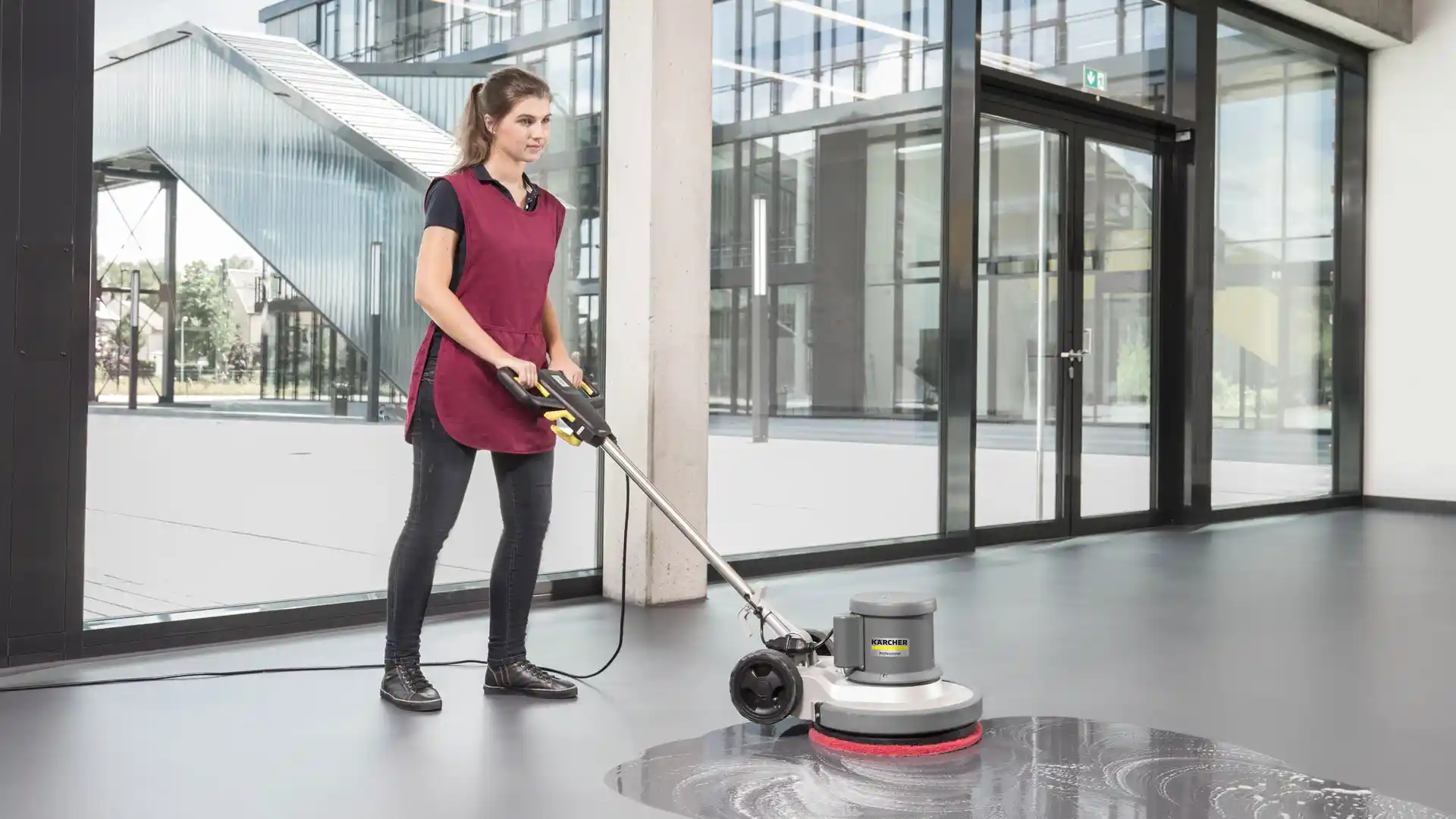
Cost Comparison: Floor Burnisher Vs Buffer
.When evaluating the Floor Burnisher Vs Buffer, cost is a crucial factor for facility managers and cleaning professionals. While both machines serve essential roles, understanding floor buffer vs burnisher expenses, including purchase, operation, and long-term ROI, helps make an informed investment decision.
Initial Purchase Cost
- Buffers: Buffers typically have a lower upfront cost, making them a practical choice for facilities prioritizing budget-friendly maintenance solutions. They provide versatility in floor maintainer vs floor polisher tasks without the need for high investment.
- Burnishers: Burnishers require a higher initial investment, especially high-speed or propane-powered models. However, this cost reflects their specialized purpose in delivering superior gloss and efficiency for high-traffic, high-visibility areas.
Operating Costs
- Buffers: Using a buffer can be more labor-intensive. Cleaning, stripping, and polishing with a buffer often takes longer, and multiple passes may be required, especially in large facilities. This is an important factor in burnisher vs buffer comparisons, as buffers focus on corrective maintenance rather than fast gloss restoration.
- Burnishers: Burnishers provide faster results due to high-speed operation. They reduce the frequency of floor recoating and stripping, saving time and minimizing labor costs over repeated maintenance cycles. This efficiency is a key distinction in burnishing vs polishing routines.
Long-Term ROI
While burnishers cost more upfront, they can offer significant long-term value. By maintaining floors at a high gloss and reducing the need for full refinishing, burnishers can lower material and labor expenses over time. In contrast, buffers, though less expensive initially, may require more frequent use, additional pads, and chemical products to maintain comparable results, especially in high-traffic or visually critical areas. Understanding the difference between buffer and polisher highlights why burnishers, despite higher initial costs, often deliver a better return on investment in the long run.
In summary, the floor buffer vs burnisher decision should balance budget, labor capacity, and the desired appearance. Buffers offer versatility and lower upfront costs, while burnishers provide efficiency, high-gloss results, and cost savings over time for facilities that prioritize visual impact.
Pros and Cons of Floor Buffers
Advantages
- Versatile and multifunctional
- Suitable for deep cleaning
- Lower equipment cost
Limitations
- Cannot achieve high-gloss finishes
- Slower for large areas
- Requires more frequent floor recoating
Pros and Cons of Floor Burnishers
While both machines are essential in professional floor maintenance, burnishers specialize in burnishing vs polishing, delivering a high-gloss finish and reducing the frequency of refinishing. Here’s a look at the pros and cons of using floor burnishers.
| Aspect | Pros | Cons |
| Floor Finish | Produces a high-gloss, mirror-like shine that enhances floor appearance | Not suitable for all floor types (raw concrete, hardwood, delicate stone) |
| Efficiency | High-speed operation covers large areas quickly, reducing labor time | Requires skilled operators to avoid damage from heat and friction |
| Maintenance Impact | Extends the life of floor finish by smoothing micro-scratches | Cannot replace buffers for deep cleaning or stripping |
| Chemical Usage | Requires minimal cleaning chemicals compared to scrubbing or stripping | Limited effectiveness without proper floor finish in place |
| Professional Appearance | Creates a polished, premium look ideal for high-visibility areas | Overuse may dull floors if incorrect pads or finishes are used |
| Cost Consideration | Reduces long-term refinishing and recoating expenses | Higher initial purchase cost, especially for high-speed or propane models |
| Versatility | Excellent for gloss maintenance and appearance enhancement | Less versatile than buffers for general floor care tasks |
Conclusion
The debate over Floor Burnisher Vs Buffer isn’t about which machine is better, it’s about which machine is right for the job. Buffers are essential for cleaning and preparation, while burnishers deliver the shine and durability modern facilities demand.
By understanding the true floor buffer vs burnisher distinction, recognizing burnishing vs polishing, and knowing the difference between buffer and polisher, you can build a smarter, more cost-effective floor maintenance strategy that protects your investment and enhances your space.
Maximize your cleaning efficiency with the right pressure washer. Visit Pressure King today for a free consultation and source heavy-duty commercial and industrial cleaning equipment engineered for warehouses, facilities, and large-scale operations in Bergen County, NJ.
Frequently Asked Questions
What’s the difference between a floor burnisher and a floor buffer?
A floor buffer is a low-speed machine used for cleaning, scrubbing, stripping, and polishing floors. A floor burnisher is a high-speed machine designed to enhance gloss and restore shine on already-finished floors, focusing on appearance rather than cleaning.
Can you buff with a burnisher?
No, a burnisher cannot replace a buffer. Burnishers are not designed for scrubbing or stripping. Buffing requires controlled, low-speed operation to clean and prepare floors, while burnishers are used only for gloss enhancement on clean, finished surfaces.
What is the purpose of burnishing floors?
The purpose of burnishing is to restore and enhance floor shine by using high-speed friction and heat. It smooths micro-scratches, improves reflectivity, and extends the life of the floor finish without applying additional coatings.
Is burnishing better than polishing?
Burnishing is not better than polishing, it serves a different purpose. Polishing cleans and maintains the floor surface, while burnishing enhances gloss. The best results come from using polishing for routine care and burnishing for high-shine maintenance.