

How To Remove Oil Stains From Concrete
Oil stains on concrete are a typical nuisance in garages, driveways, and patios. Cars and other vehicles can leave behind small oil leaks, creating dark, greasy spots that make otherwise clean concrete look dirty and neglected. Fresh stains are relatively easy to clean because the oil has not had enough time to soak deeply into the porous surface. However, dealing with older, dried-in stains can be much more difficult and may require stronger cleaning methods. That’s why it is essential to act quickly and treat oil spills as soon as you notice them.
This guide will show you how to remove oil from concrete using some simple steps. You will find easy cleans for fresh stains, stronger solutions for old ones, as well as some recommendations to help keep your concrete looking clean.
Key Takeaways
- Absorb fresh oil before applying water or a cleaning solution.
- Match the cleaning method to the age and depth of the stain.
- Use a concrete-safe degreaser for stains that dish soap cannot remove.
- Allow the cleaner enough dwell time to break down the oil.
- Pressure washing works best after the oil has been pretreated.
- Some deep stains may become lighter without disappearing completely.
Why Oil Stains Stick to Concrete
Although concrete seems solid, it is porous. Porous means there are tiny holes allowing oil to quickly soak into the concrete. Understanding how to remove oil stain from concrete starts with acting quickly. Once oil seeps into the small holes, it does not just sit on the surface, but instead, it sinks into the concrete, making it nearly impossible to clean off.
Surface stains are generally lighter and can be cleaned by scrubbing. Deep stains will require stronger cleaners and or cleaning methods. The same challenge may happen with other difficult stains, such as when you try to remove paint from concrete, Oil and paint stay in these little openings, making oil stains and paint stains ‘stick’ to concrete more than other surfaces. If you’re researching how to get oil off concrete, start with quick action.
Identify the Oil Stain Before Cleaning
Before removing oil stains from concrete, look at the stain’s age, size, moisture level, and location. These details will help you choose an appropriate cleaning method.
Fresh oil spills
A fresh stain may look wet, shiny, or dark. The oil may still be sitting partly on the surface. Absorb as much of it as possible before applying water. Quick action can prevent the oil from soaking deeper into the concrete and becoming harder to remove.
Older oil stains
An older stain usually looks dry and discolored. Because the oil has had more time to enter the concrete, it may require a poultice, alkaline degreaser, hot water, or pressure washing. Several cleaning attempts may be needed if the stain has penetrated deeply into the concrete.
Large commercial stains
Large oil and grease stains around repair shops, warehouses, loading areas, and equipment yards may require commercial cleaning chemicals and professional-grade equipment. Always consider drainage and chemical-disposal requirements before beginning. Proper containment can help prevent contaminated water and cleaning chemicals from reaching nearby drains or surrounding surfaces.
Easy Ways for New Oil Stains
New oil spots are much easier to address than old oil stains because, if done quickly enough, you stop the oil from sinking too far into the concrete. When learning how to clean oil stains from concrete, preparation is key. Start by clearing debris and pre-wetting the area slightly. There are a few easy methods.
1. Absorb the Spill
As soon as you see the oil spill, cover it with kitty litter, cornstarch, or baking soda. These will soak up the oil that is sitting on the surface. Leave it on for a few hours and then sweep up the absorption. Leave the absorbent material in place until it has collected as much oil as possible. A small fresh spill may need a few hours, while a larger spill may need to remain covered overnight. Sweep it up and dispose of it according to local regulations.
2. Scrub with Dish Soap and Hot Water after Absorption
After absorbing the loose oil, apply a small amount of grease-cutting dish soap to the stained area. Add hot but not dangerously boiling water and scrub the concrete with a stiff nylon brush. Then, pour a few drops of dish soap on the space, add hot water, and scrub the place with a stiff scrub brush or a broom. Dish soap will break down the oil and help create lift off the concrete.
3. Rinse the Area and Repeat as Needed
Rinse the treated area with clean water while preventing contaminated runoff from entering storm drains, soil, or nearby landscaping. Inspect the concrete after it dries because wet concrete can temporarily hide discoloration. The best way to remove oil stains from concrete depends on whether the stain is fresh or old. For fresh spills, immediate absorption is critical. For set-in stains, use a strong alkaline degreaser designed specifically for concrete surfaces.
Step-by-Step Method for Removing an Oil Stain
If you want a simple process for how to remove an oil stain from concrete, follow these steps:
Step 1: Protect the surrounding area
Move vehicles, tools, furniture, and other objects away from the stain. Cover nearby plants or sensitive materials if the cleaner could affect them.
Step 2: Absorb any loose oil
Apply kitty litter, baking soda, or an oil-absorbent product. Allow it to collect the surface oil before sweeping it away. For larger spills, leave the absorbent material in place longer to soak up as much oil as possible.
Step 3: Apply a suitable cleaner
Use dish soap for a small, fresh stain or a concrete-safe degreaser for heavier contamination. Read the product label to confirm dilution, surface compatibility, and dwell time.
Step 4: Allow enough dwell time
Give the cleaner time to break down the oil, but do not allow it to dry completely on the concrete. The required time will depend on the product. Following the manufacturer’s recommended dwell time can help loosen the stain without allowing the cleaner to leave a residue.
Step 5: Scrub the concrete
Use a stiff nylon brush to work the cleaner into the stained area. Avoid metal brushes that may scratch the concrete or leave particles that can later create rust marks.
Step 6: Rinse and inspect
Rinse the area thoroughly and allow it to dry before judging the result. Repeat the process if the stain remains visible. This method can remove oil stains from concrete more effectively than rinsing the surface without pretreatment.
Cleaning Tips for Old Oil Stains on Concrete Surfaces
Removing an old stain is more difficult than removing a fresh stain. If you want to know how to lift oil stains from concrete, focus on drawing the oil upward from the pores. Poultices are particularly effective for this.
1. A poultice
A poultice is a thick, absorbent paste placed over the stain. One simple option is a mixture of baking soda and enough water to create a spreadable paste. Cover the stained area with the paste and allow it to remain in place for several hours or until it has dried. The absorbent material may help pull some of the oil toward the surface. Sweep or scrape away the dried material and inspect the area. A poultice is made from a paste of baking soda and some water. Spread the paste over the stain, and let it sit and absorb for several hours. This mixture draws the oil up out of the concrete. This is a good starting point for how to remove old oil stains from concrete.
2. A commercial cleaner
For some stubborn stains, you can use an actual grease remover. For some more difficult stains, you can additionally use a commercial or industrial grease remover. A grease remover is made to lift oil from concrete. It works better than baking soda paste because it can soak in more deeply. Just make sure to follow the directions on the product label. Just follow the directions on the product label for best results.
3. Heavy-duty: degreaser
Learning how to get an oil stain out of concrete involves patience and persistence. Begin with absorption, then apply a degreasing solution. Sealing your floor afterward can help prevent recurrence. Some heavy-duty cleaners require careful handling and may not be suitable for every surface or environment. Do not mix different cleaners, and always follow the safety information on the label.
How Long Should a Degreaser Sit on Concrete?
Dwell time gives a cleaner an opportunity to break down oil before scrubbing or pressure washing. However, there is no single dwell time that applies to every product. Always use the time stated on the cleaner’s label. Some products may work within several minutes, while others require a longer period. During treatment:
- Keep the cleaner from drying completely.
- Do not exceed the recommended concentration.
- Avoid applying it to hot concrete in direct sunlight.
- Reapply or lightly mist the surface only if the label permits it.
- Rinse the concrete as directed by the manufacturer.
Using more chemical or leaving it on indefinitely will not necessarily produce a better result and may damage nearby materials.
Oil Stain on Cement Removal with Pressure Washing
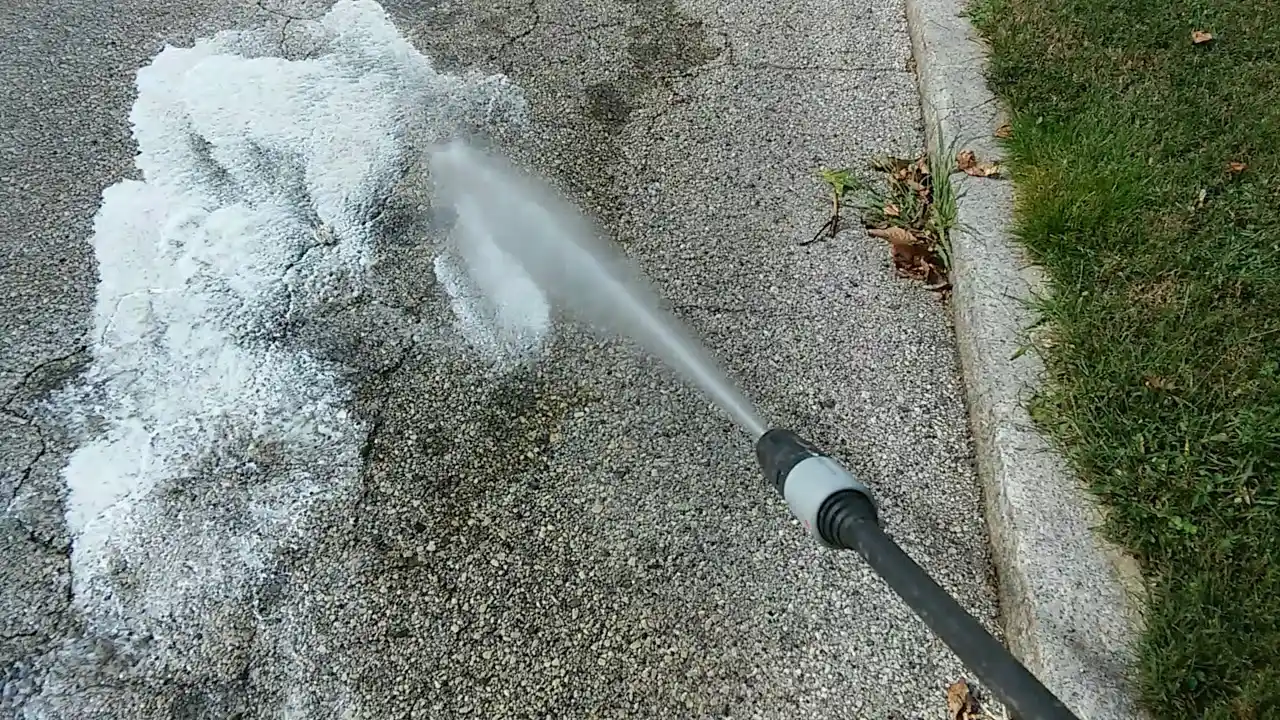
Effective oil stain on cement removal begins with identifying how long the stain has been present. Using a pressure washer is one of the best ways to remove tough stains from concrete surfaces. Here’s a guide on how to do it: However, water pressure alone may not completely remove a deep oil stain. Pretreating the area with the correct cleaner usually delivers better results.
The Power of a Pressure Washer
A pressure washer delivers water with enough force to loosen material attached to a concrete surface. It can clean a larger area more efficiently than manual scrubbing, particularly on driveways, garage floors, and commercial concrete. The goal is not simply to use the highest available pressure. Cleaning performance also depends on water flow, temperature, nozzle choice, detergent, distance from the surface, and operator technique.
Using the Correct Cleaner
Using a compatible pressure washer detergent can improve the cleaning process. The detergent helps loosen oil so that scrubbing and pressure washing can remove more of the residue. Confirm that the detergent is suitable for concrete, oil contamination, and your pressure washer’s chemical-delivery system. Never run an incompatible cleaner through the machine.
How to Pressure Wash Cement Surfaces
Give the cleaner time to break down the oil, but do not allow it to dry completely on the concrete. The required time will depend on the product. Keeping the surface slightly damp during this stage can help the cleaner work more effectively.
Hot-Water vs. Cold-Water Pressure Washing
Both hot-water and cold-water pressure washers can clean concrete, but they perform differently when oil and grease are involved.
| Cleaning factor | Cold-water pressure washer | Hot-water pressure washer |
| Loose dirt and mud | Effective | Effective |
| Light, fresh oil residue | May work with pretreatment | Generally more effective |
| Heavy grease | Requires a suitable degreaser | Heat can help break down grease |
| Equipment cost | Usually lower | Usually higher |
| Common use | Routine residential cleaning | Commercial and industrial cleaning |
Cold water may be suitable for light surface stains when combined with a concrete-safe detergent. For older or heavier oil buildup, hot water can help soften and break down grease before it is rinsed away.
Heat does not guarantee complete removal. The cleaner, water flow, pressure, surface condition, and cleaning technique still affect the final result.
What Pressure Washer Settings Should You Use?
When using a pressure washer to remove oil stain from concrete, begin with a moderate setting and test a small area. Stronger pressure is not always safer or more effective. A wide-angle nozzle is generally a better starting point than a narrow, concentrated stream. Maintain a safe distance between the nozzle and the concrete, and move the spray continuously.
Older, cracked, weak, decorative, coated, or recently installed concrete requires additional caution. Excessive pressure can etch the surface, expose aggregate, damage a coating, or leave permanent cleaning lines. Follow the equipment manufacturer’s instructions and consider professional guidance if you are uncertain about the condition of the concrete.
Common Mistakes to Avoid
Even the right cleaner may provide disappointing results when used incorrectly. Avoid these common mistakes when removing oil stains from concrete:
Rinsing a fresh spill immediately
Water can spread fresh oil across a larger area. Absorb loose oil before rinsing or scrubbing. Keeping the surface damp during this period can help the cleaner work effectively.
Using only high pressure
Pressure alone may push contamination around without breaking down the grease. Pretreatment usually improves the result. Following the manufacturer’s instructions for the recommended dwell time can help achieve better results.
Mixing cleaning chemicals
Combining chemicals can create dangerous fumes or reactions. Use one product as directed and never mix cleaners unless the manufacturer specifically permits it.
Letting the cleaner dry
A cleaner that dries on concrete may leave residue or discoloration. Follow the label and keep the treated area properly wet during its recommended dwell time.
Using a metal brush
Metal bristles may scratch the concrete or leave particles behind. A stiff nylon brush is generally a safer choice. Keep the area wet during the dwell time to prevent the cleaner from drying before it has finished working.
Judging the surface while it is wet
Wet concrete looks darker and may hide the remaining stain. Allow the area to dry fully before deciding whether another treatment is necessary.
Dealing with Tough Stains and Professional Help
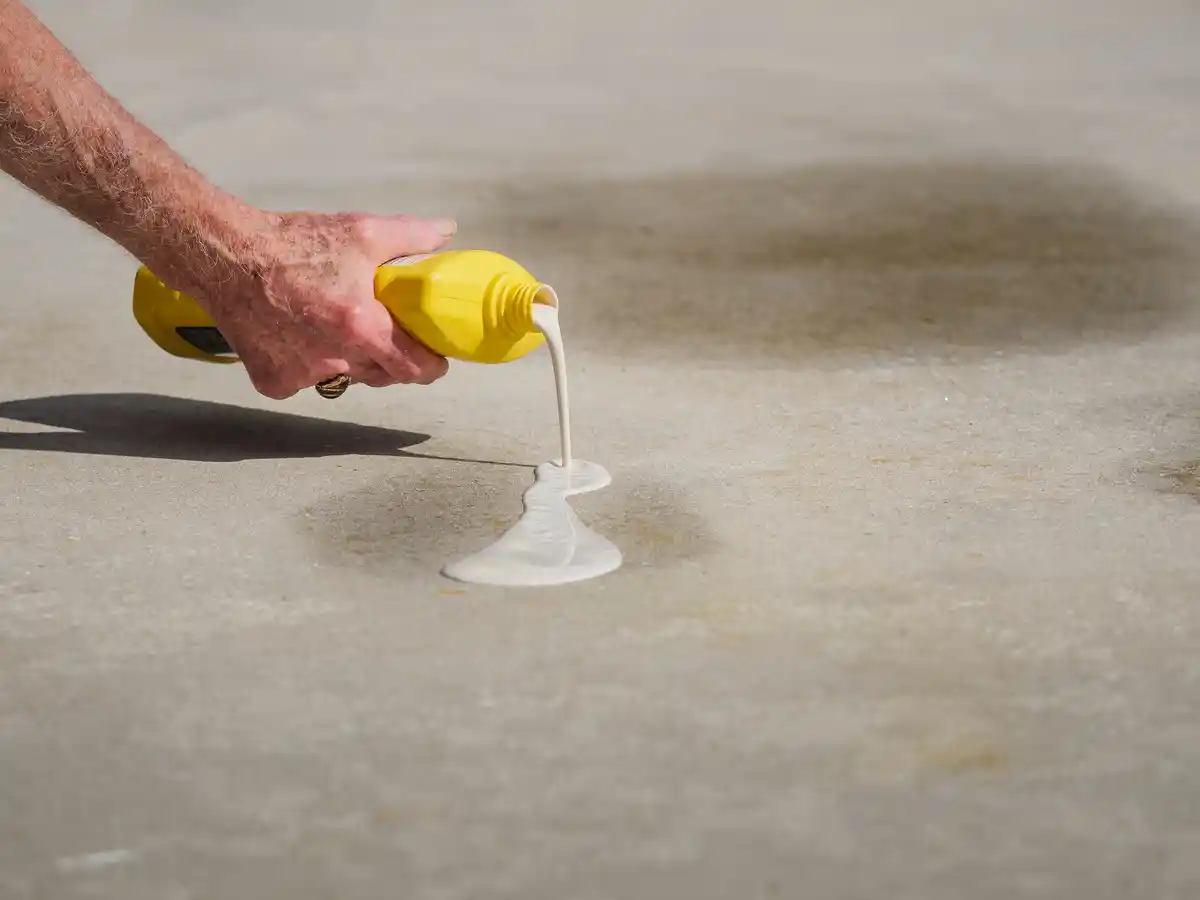
Finding the best way to remove an oil stain from concrete often involves combining chemical treatment with mechanical cleaning. No matter how many times they are treated, some deep oil stains may not disappear completely. Oil can travel far into porous concrete and leave permanent discoloration. Repeated cleaning may make the stain lighter and less noticeable without restoring the original color.
Professional contractors may use stronger equipment, hot water, surface cleaners, commercial degreasers, and wastewater-recovery systems. They can also evaluate whether sealing the surface after cleaning would be beneficial. Like removing mold from concrete, large or persistent oil-removal jobs may be safer and more manageable with professional assistance.
Can Every Oil Stain Be Completely Removed?
Unfortunately, complete removal is not always possible. The final result depends on:
- How long the oil has remained on the surface
- The type and amount of oil
- The porosity and age of the concrete
- Whether the surface has been sealed
- Previous cleaning attempts
- The cleaner and equipment used
Fresh spills on sealed concrete offer the best chance of complete removal. Older stains on unsealed concrete may leave a shadow even after repeated treatment. Setting realistic expectations is an important part of understanding how to remove oil stains from concrete. The goal may be to reduce the stain significantly rather than restore the concrete to a perfectly uniform color.
Preventing Future Oil Stains
The most effective means of not having to go through the process of removing oil stains from concrete again is to stop them before they start. You can stop future problems by sealing the concrete so the oil will not soak in so quickly. The difference is actually being proactive and cleaning up spills immediately. Quick action and simple maintenance will keep your garage or driveway cleaner for long periods of time.
You can also take the following preventive measures:
- Place an oil-resistant mat beneath a leaking vehicle or machine.
- Repair automotive and equipment leaks promptly.
- Keep absorbent material in the garage or work area.
- Clean small spills as soon as they occur.
- Inspect high-risk areas regularly.
- Avoid allowing used oil containers to sit directly on concrete.
Safety and Environmental Precautions
Cleaning oil from concrete involves more than improving its appearance. Oil, degreasers, and contaminated rinse water can affect nearby soil, plants, drains, and waterways.
Before starting:
- Wear gloves, eye protection, and any equipment specified on the product label.
- Ventilate enclosed garages and indoor work areas.
- Keep children and pets away from the treatment area.
- Do not allow oily water to enter a storm drain.
- Contain and collect contaminated runoff when required.
- Dispose of oily absorbents according to local regulations.
- Never mix degreasers, bleach, acids, solvents, or other cleaners.
For a large spill or commercial cleaning project, check local wastewater and disposal requirements before beginning.
Conclusion
Oil stains may make concrete appear old and dirty, but they can be removed. Understanding how to remove oil stains from concrete requires knowing that concrete is highly porous
To effectively remove oil from concrete, combine absorption, degreasing, and thorough rinsing. Absorb fresh oil first, then apply a strong concrete cleaner. Allow adequate dwell time so the product can break down oil molecules.
With prompt action, the right cleaners, and professional services if needed, you can keep your surfaces looking new. A small effort can save you from larger cleaning jobs in the future.
Bring back the fresh look of your concrete with Pressure King’s expert cleaning services. Call today and let us handle the tough stains for you!
Frequently Asked Question
How to remove old oil stains from concrete?
Old stains are harder to clean. You can use a poultice with baking soda, a grease remover, or a strong degreaser. Pressure washing also helps.
Does Dawn dish soap remove oil from concrete?
Yes, Dawn dish soap can help with fresh stains. Mix it with hot water, scrub the spot, and rinse. For old stains, stronger cleaners may be needed.
Will WD-40 remove oil stains from concrete?
WD-40 can loosen light oil stains. Spray it on the spot, let it sit, then scrub and rinse. It may not work well for deep or old stains.
Does vinegar remove oil from concrete?
Vinegar is good for general cleaning, but it’s not strong enough for oil stains. Use it only for light marks or as a mild cleaner after scrubbing.
How to remove oil stains from driveway?
For driveways, start by covering the stain with kitty litter or baking soda to absorb oil. Then scrub with dish soap or use a degreaser. For tough stains, pressure washing with a pressure washer detergent is very effective.
What is the quickest way to remove oil from concrete?
For a fresh spill, immediately cover the oil with an absorbent material. Once the surface oil has been collected, apply a grease-cutting cleaner, scrub the area, and rinse it. Acting before the oil penetrates deeply provides the best chance of quick removal.
Can a pressure washer completely remove an oil stain?
A pressure washer can remove loosened oil and cleaning residue, but water pressure alone may not eliminate a deep stain. Pretreating the concrete with a suitable degreaser and allowing enough dwell time usually produces better results.
What is the best method to remove an oil stain from concrete?
The best method depends on the stain’s age and depth. For a fresh stain, absorb the oil before using dish soap or degreaser. For an older stain, apply a concrete-safe commercial cleaner, scrub the area, and pressure wash it if necessary.

Michael Adeniran is the CEO of Pressure King Inc. He has been dealing in commercial cleaning equipment for many years. He is one of the leading specialists and experts in commercial cleaning products.


