Pressure Washer Keeps Shutting Off: Causes and Fixes
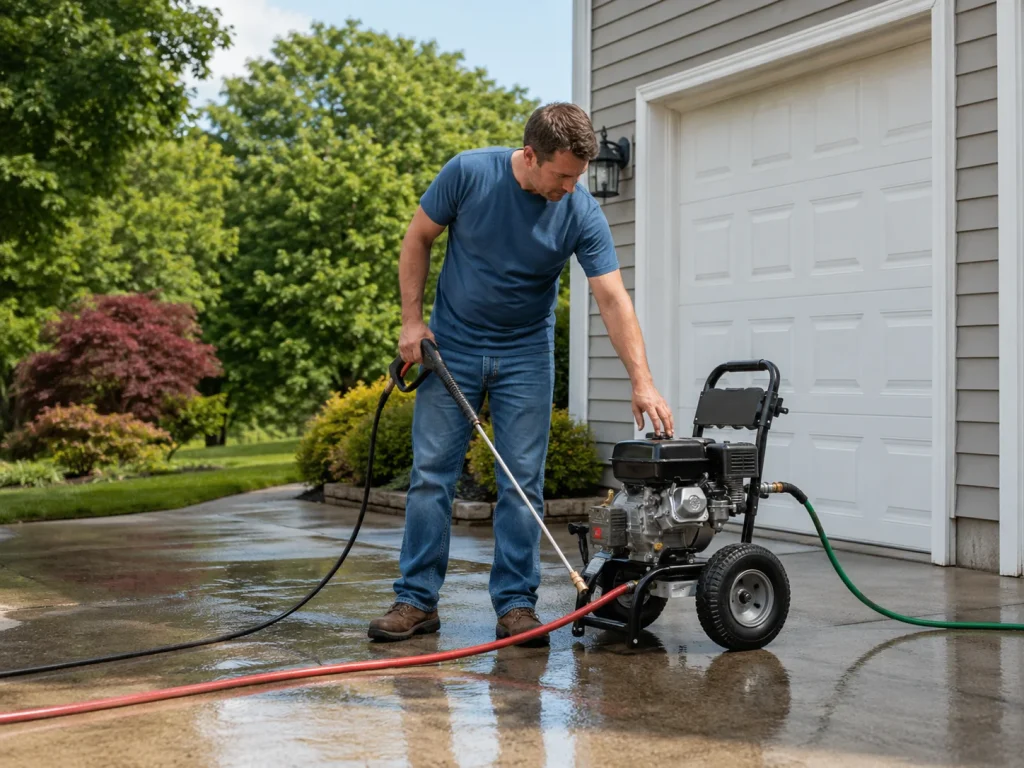
A pressure washer keeps shutting off when something interrupts the machine’s normal water flow, pressure regulation, engine operation, or electrical supply. The problem can happen immediately after starting, when the trigger is squeezed, or after several minutes of use. Finding the exact cause is important because repeatedly restarting the machine can place unnecessary strain on its components.
Both gas and electric pressure washers can shut down for different reasons. Common causes include pressure washer overheating, restricted water flow, clogged nozzles, fuel problems, electrical faults, pump issues, and a malfunctioning unloader valve. For businesses that depend on reliable equipment, choosing the right commercial pressure washers can also help match equipment capacity to the cleaning application.
Identifying Why a Pressure Washer Keeps Shutting Off
A pressure washer is designed to maintain stable water flow and operating pressure throughout a cleaning job. When something prevents the pump, motor, or engine from working correctly, the machine may automatically stop or lose power. Some machines shut down as a protective response to excessive heat, low water flow, or abnormal operating conditions.
The timing of the shutdown can provide an important clue. A machine that stops immediately may have a setup, water-flow, or pressure-related issue, while one that runs for several minutes may be experiencing overheating or engine problems. If a pressure washer loses pressure after a few seconds and then shuts down, check the water supply, nozzle, unloader valve, and pump before assuming the motor or engine has failed.
Common Reasons a Pressure Washer Keeps Shutting Off
Several problems can cause a pressure washer to stop unexpectedly. A restricted water supply, clogged filter, blocked nozzle, faulty unloader valve, overheating, fuel problem, or damaged pump can interrupt normal operation. Electric machines may also cut out because of electrical protection systems or power-supply problems.
Pressure Washer Overheating
Pressure washer overheating can cause the machine to shut down as a protective measure. Restricted water flow, prolonged operation, blocked ventilation, or operating conditions outside the manufacturer’s recommendations can contribute to excessive heat.
Insufficient Water Supply
A pressure washer needs an adequate water supply to keep the pump operating correctly. A restricted faucet, kinked inlet hose, clogged filter, or insufficient flow can cause the pump to struggle and may eventually make the machine stop.
Clogged or Incorrect Nozzle
A clogged or incorrectly sized nozzle can interfere with normal pressure and water flow. Remove the nozzle, inspect it for debris, and make sure its size and type match the pressure washer manufacturer’s requirements.
Dirty Air Filter or Fuel System
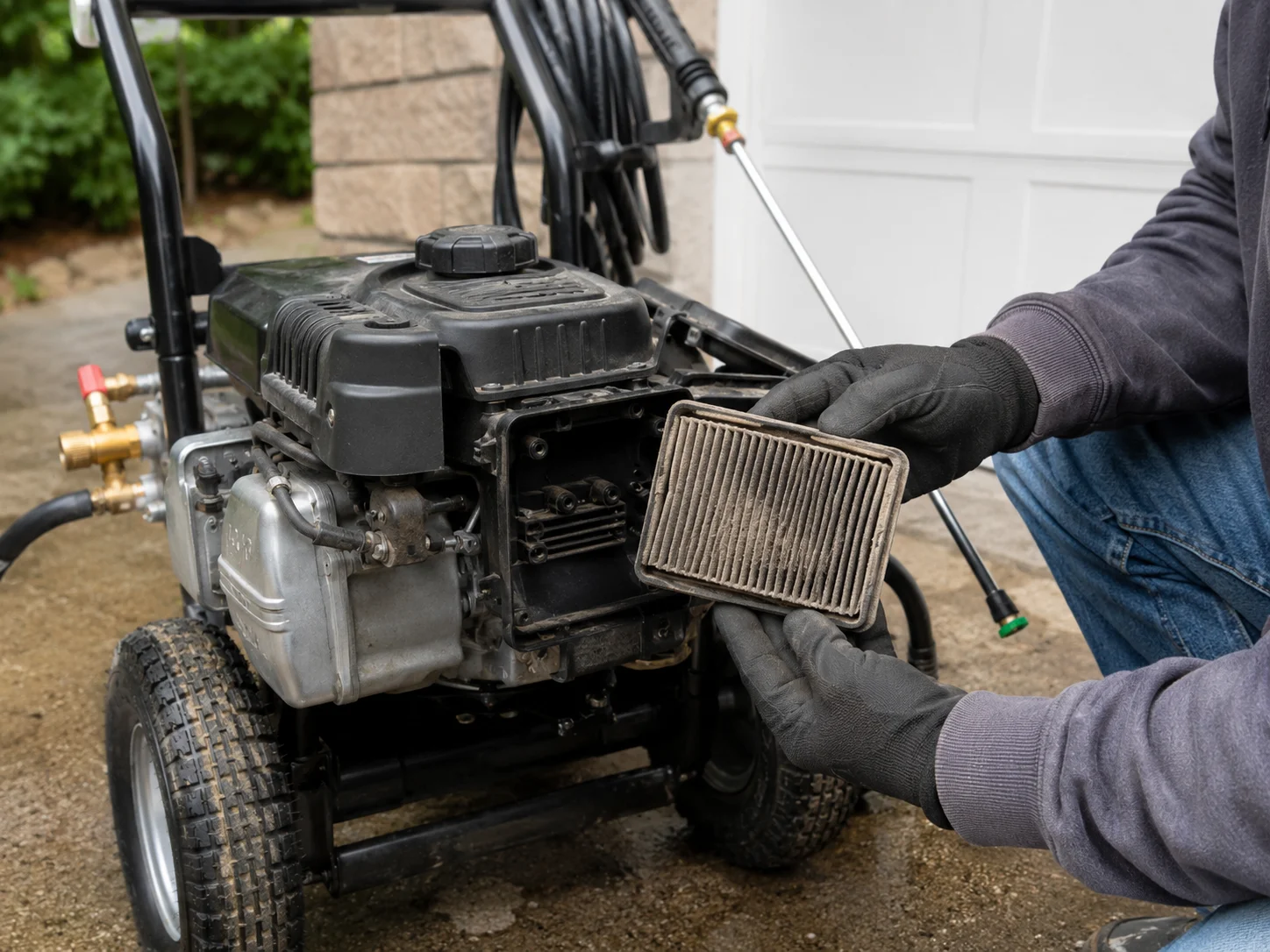
Gas pressure washers depend on clean air and a consistent fuel supply for stable engine operation. A dirty air filter, clogged fuel filter, contaminated fuel, or carburettor problem can cause the engine to run poorly, start and then die, or shut down during use.
Faulty Spark Plug on Gas Models
A worn or fouled spark plug can cause an unstable engine or prevent it from continuing to run. Inspect the spark plug according to the manufacturer’s maintenance instructions and replace it if it is worn or damaged.
Electrical Problems on Electric Models
An electric pressure washer may stop because of an overloaded circuit, damaged power connection, extension-cord issue, or built-in electrical protection. If the machine repeatedly cuts out, check the power source and follow the manufacturer’s electrical requirements.
Bad Unloader Valve
The unloader valve regulates pressure and redirects water when the spray gun is released. If the valve sticks, becomes dirty, wears out, or is incorrectly adjusted, it can cause unstable pressure and may contribute to shutdowns.
Pump Problems
The pump is responsible for moving water through the pressure washer and maintaining operating pressure. Worn valves, damaged seals, contamination, or other pump problems can cause pressure fluctuations, poor performance, and unexpected shutdowns.
Why Does My Pressure Washer Shut Off When I Squeeze the Trigger?
If the machine shuts down when you squeeze the trigger, the pump may be unable to handle the operating load. This can happen when the water supply is restricted, the nozzle is blocked, the pump has a problem, or the unloader valve is not regulating pressure correctly. The sudden change in operating conditions exposes problems that may not appear while the machine is running without spraying.
Start by checking the water supply and inlet filter, then inspect the nozzle and hose for restrictions. If the machine still shuts off when pressure is applied, the unloader valve and pump should be examined according to the manufacturer’s service instructions. For commercial equipment, professional troubleshooting can help prevent unnecessary replacement of otherwise serviceable components.
Why Does My Pressure Washer Start Then Die?
When a power washer starts and then dies, the cause may be related to fuel, airflow, ignition, overheating, or water flow. Gas models may have issues such as old fuel, a dirty carburettor, or a clogged air filter, while electric models can shut down due to overheating, power issues, or motor protection. Note when the machine stops before spraying, when the trigger is pulled, or after several minutes to help identify the underlying problem.
Fuel and Carburettor Problems
Old or contaminated fuel can interfere with engine operation, while a dirty carburettor can restrict fuel delivery. Use the fuel type recommended by the manufacturer and service the fuel system according to its maintenance instructions.
Overheating Protection
A machine that starts and then stops as it becomes hot may be responding to excessive operating temperature. Allow it to cool and check water flow, ventilation, and operating conditions before restarting.
Engine Airflow Problems
A restricted air filter can reduce the airflow needed for proper combustion. Inspect and clean or replace the filter according to the manufacturer’s recommended maintenance schedule.
Spark Plug Problems
A worn, fouled, or damaged spark plug can cause the engine to misfire, run unevenly, or shut down shortly after starting. Inspect the spark plug and replace it if necessary according to the manufacturer’s specifications.
Gas vs. Electric Pressure Washer Shutting Off
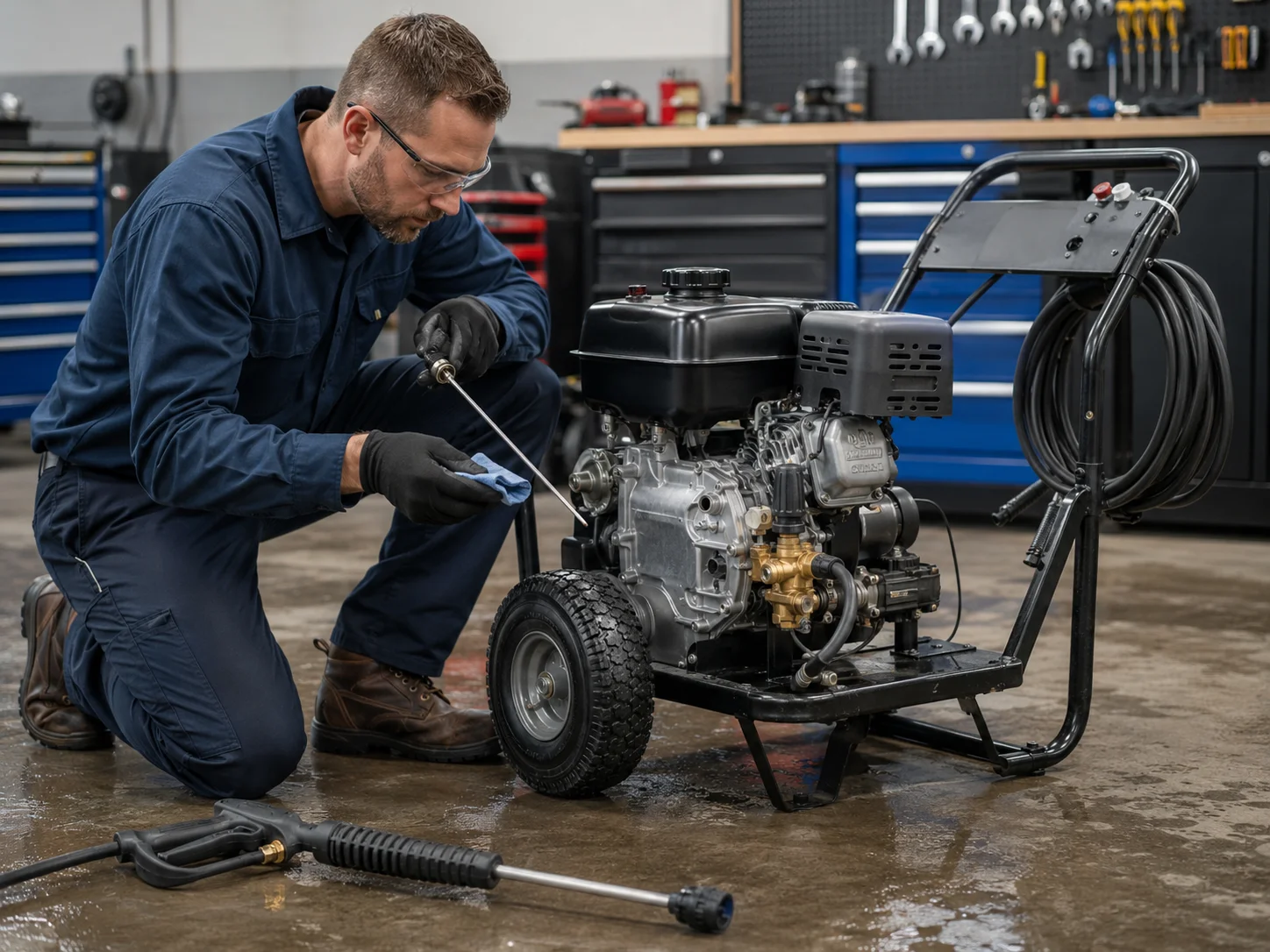
Gas and electric pressure washers can shut off because of restricted water flow, clogged nozzles, pump problems, or faulty unloader valves, but their power systems create different troubleshooting needs. Gas pressure washers can also experience fuel delivery, carburetor, spark plug, air filter, and engine overheating problems, while electric models may cut out because of power supply issues, motor overheating, overloaded circuits, or built-in protection systems.
Understanding the difference can make troubleshooting more efficient. If a gas pressure washer keeps shutting off, check the fuel, air, ignition, engine temperature, and pump system. If an electric model keeps cutting out, inspect the power source, connections, motor protection, water supply, and pump. For demanding outdoor and commercial applications, commercial gas pressure washers can provide high-pressure cleaning performance without depending on an electrical outlet.
Pressure Washer Loses Pressure After a Few Seconds
A pressure washer loses pressure after a few seconds when the pump initially builds pressure but cannot maintain consistent water flow or pressure. A partially blocked nozzle, restricted inlet, dirty filter, air entering the pump, or faulty unloader valve can all produce this symptom. Persistent pressure loss can indicate internal wear that requires professional diagnosis. For heavy-duty commercial cleaning, 4000 PSI pressure washers can provide substantial cleaning power when the application requires higher pressure.
Clogged Nozzle
A nozzle blocked by dirt or mineral deposits can restrict water flow and disrupt pressure. Clean or replace the nozzle according to the manufacturer’s instructions and verify that the correct nozzle is being used.
Restricted Hose or Filter
A kinked inlet hose or clogged filter can reduce the water reaching the pump. Inspect the entire inlet side and remove restrictions before assuming the pump is damaged.
Unloader Valve Problems
A worn, dirty, or incorrectly adjusted unloader valve can cause pressure to fluctuate or fall during operation. If cleaning and basic checks do not help, the valve may need professional adjustment or replacement.
New Pressure Washer Keeps Shutting Off
A new pressure washer keeps shutting off for several possible reasons, and the problem does not necessarily mean the machine is defective. Incorrect assembly, inadequate water flow, an unsuitable power supply, or failure to follow the manufacturer’s startup procedure can cause operating problems. New equipment should always be set up according to its specific instructions.
Incorrect Setup
Incorrect hose connections, inadequate water flow, an unsuitable nozzle, or failure to follow the startup procedure can cause a new machine to operate improperly. Review the manufacturer’s setup instructions carefully before troubleshooting internal components.
Water Supply Problems
A new machine can still shut down if the water source does not provide sufficient flow. Check the faucet, hose, inlet filter, and connections to confirm that the pump receives adequate water.
Defective or Misconfigured Components
If correct setup and adequate water flow do not resolve the problem, a component may be defective or incorrectly configured. Use the manufacturer’s warranty or authorized service process instead of disassembling a new machine unnecessarily. For particularly demanding applications, 5000 PSI pressure washers provide higher-pressure cleaning capability.
How to Fix a Pressure Washer That Keeps Shutting Off
The best pressure washer keeps shutting off fix depends on the underlying cause. Start by checking the water supply, hoses, filters, nozzle, power source, and connections before inspecting the unloader valve, pump, engine, or motor. Avoid repeatedly restarting an overheating or malfunctioning machine, as continued use can worsen the problem. Commercial users can benefit from professional diagnostics, repairs, and quality replacement parts to reduce downtime.
Pressure King also offers commercial pressure washer equipment for different cleaning applications and operating requirements.
Check the Water Supply
Make sure the water source provides adequate flow for the pressure washer. Inspect the faucet, inlet hose, filter, and connections for restrictions, kinks, or debris that could limit water delivery.
Inspect the Nozzle
Remove and inspect the nozzle for blockage or damage. Clean or replace it as recommended by the manufacturer and make sure its specifications match the pressure washer.
Check the Oil and Fuel
Gas-powered pressure washers should have the correct oil level and fresh, manufacturer-approved fuel. Low oil or fuel-system problems can cause some engines to shut down or operate inconsistently.
Clean the Filters
Inspect the inlet water filter, air filter, and fuel filter where applicable. A clogged filter can restrict water, air, or fuel flow and contribute to unstable operation.
Inspect the Unloader Valve
Check the unloader valve for contamination, damage, or incorrect adjustment. Because improper adjustment can affect operating pressure, follow the manufacturer’s specifications or have a qualified technician perform the service.
Allow the Machine to Cool
If overheating is suspected, switch the machine off and allow it to cool completely. Before restarting, identify possible causes such as restricted water flow, blocked ventilation, excessive workload, or inadequate maintenance.
How to Prevent Pressure Washer Overheating and Shutdowns
Preventative maintenance can reduce pressure washer overheating and unexpected shutdowns. Before use, check the water supply, hoses, filters, nozzle, power source, oil, and fuel as applicable. During operation, monitor water flow, pressure, engine or motor performance, and temperature. If the machine starts losing pressure, overheating, or cycling repeatedly, stop using it and identify the cause instead of continuing operation.
After each job, follow the manufacturer’s shutdown procedure and release system pressure safely. Clean the nozzle, inspect filters and hoses, and store the equipment properly to prevent debris, kinks, and minor damage from developing into larger problems. For commercial users, regular maintenance and timely repairs can reduce downtime and extend equipment life, while Pressure King can provide equipment, parts, repairs, rentals, and technical support when needed.
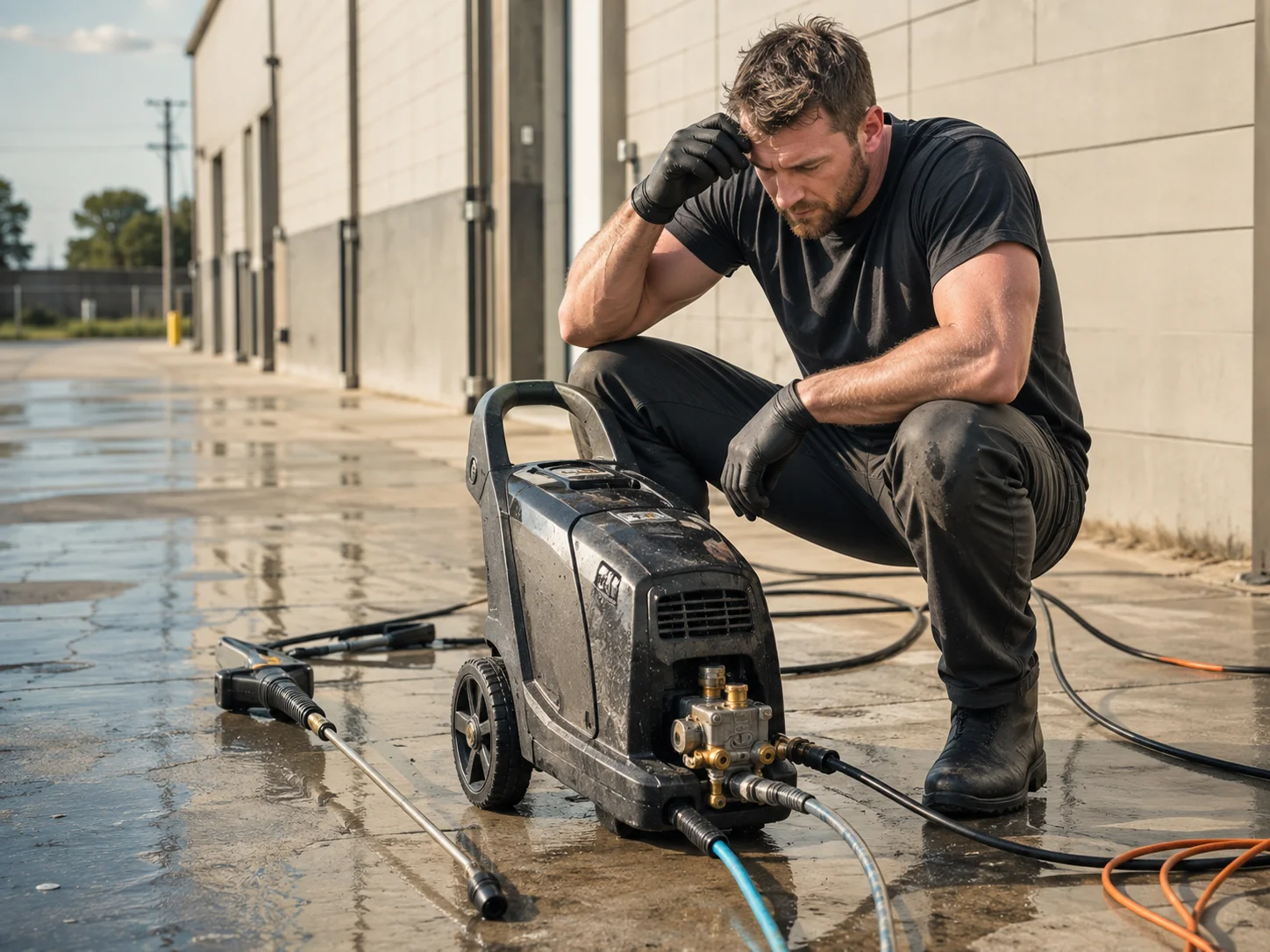
When to Repair or Replace Your Pressure Washer
Not every shutdown problem requires a replacement pressure washer. Many issues involve serviceable components such as nozzles, filters, hoses, spark plugs, unloader valves, or other replaceable parts. Repairing these components can restore performance and extend the useful life of a machine that is otherwise in good condition.
Replacement may make more sense when the pump or engine has extensive damage, failures occur repeatedly, or repair costs approach the value of replacement equipment. Commercial operators should also consider downtime, maintenance history, available parts, and whether the current machine provides the pressure and flow required for their applications. For commercial cleaning operations, 4 GPM pressure washers can be considered when water flow and cleaning performance need to be balanced with the requirements of the application.
Conclusion
When a pressure washer keeps shutting off, the cause may be something as simple as a clogged nozzle or inadequate water supply, or it may involve overheating, an unloader valve, pump problems, fuel delivery, or electrical protection. The timing of the shutdown provides a useful clue. A machine that stops when the trigger is squeezed requires different troubleshooting from one that shuts down after several minutes.
Start with the water supply, hose, filter, nozzle, and power or fuel system before moving to internal components. If the pressure washer continues shutting down, especially during commercial use, professional inspection can help identify the problem and prevent unnecessary equipment downtime. For businesses considering Kärcher pressure washers, Pressure King offers commercial and industrial models suited to different cleaning requirements.
Frequently Asked Questions
Why does my pressure washer shut off when I squeeze the trigger?
The machine may shut off when the trigger is squeezed because the pump is struggling under load. A restricted water supply, clogged nozzle, faulty unloader valve, or pump problem can cause this symptom.
Why will my pressure washer start but not stay running?
A pressure washer may start and then stop because of fuel, airflow, ignition, overheating, or water-flow problems. On gas models, inspect the fuel and air systems, while electric models should be checked for power and overheating issues.
What are the symptoms of a bad unloader valve on a pressure washer?
Common symptoms include fluctuating pressure, sudden pressure changes, unusual cycling, and poor pressure control when the trigger is squeezed or released. These symptoms can also have other causes, so the water supply and nozzle should be checked first.
Why does my pressure washer keep shutting off after a few minutes?
A machine that shuts off after several minutes may be overheating or experiencing restricted water flow. Gas models can also have engine-related problems, while electric machines may activate thermal or electrical protection.
Why does my washer keep stopping?
Your pressure washer may keep stopping because of inadequate water flow, overheating, a blocked nozzle, pump problems, an unloader valve issue, or an engine or electrical fault. The timing and conditions of the shutdown can help identify the cause.
Why does my pressure washer keep turning off?
A pressure washer can keep turning off when its engine, motor, pump, or protective system detects abnormal operating conditions. Check water flow, nozzle, filters, temperature, and the machine’s power or fuel supply.
Why does my gas pressure washer keep shutting off?
A gas pressure washer can shut off because of fuel problems, a clogged air filter, spark-plug issues, carburetor problems, overheating, or pump restrictions. Follow the manufacturer’s troubleshooting and maintenance procedures.
Why does my electric pressure washer keep cutting out?
An electric pressure washer may cut out because of an overloaded circuit, inadequate power supply, overheating, restricted water flow, or a pump problem. Check the electrical supply and water system before investigating internal components.
Why does my pressure washer lose pressure after a few seconds?
Pressure loss after a few seconds can be caused by a clogged nozzle, restricted water supply, dirty inlet filter, air entering the pump, or an unloader valve problem. Check these components systematically before assuming the pump has failed.
Can overheating cause a pressure washer to shut off?
Yes. Pressure washer overheating can activate protective systems or cause the machine to stop operating normally. Restricted water flow, excessive continuous operation, blocked ventilation, and inadequate maintenance can contribute to overheating.
Can a clogged filter make a pressure washer shut off?
A clogged filter can restrict water, air, or fuel flow depending on which filter is affected. This restriction can cause poor performance, pressure loss, overheating, or shutdowns.
Should I keep restarting a pressure washer that shuts off?
No. Repeatedly restarting a machine that continues to shut down can worsen an underlying mechanical, electrical, or overheating problem. Stop the machine, allow it to cool if necessary, and troubleshoot the cause before continuing operation.

Michael Adeniran is the CEO of Pressure King Inc. He has been dealing in commercial cleaning equipment for many years. He is one of the leading specialists and experts in commercial cleaning products.