


Michael Adeniran is the CEO of Pressure King Inc. He has been dealing in commercial cleaning equipment for many years. He is one of the leading specialists and experts in commercial cleaning products.


Cleaning large floor areas is very different from cleaning small offices or residential spaces. In commercial environments, the goal is not only cleanliness but also efficiency, speed, and consistency. Large facilities such as hotels, airports, schools, warehouses, and corporate offices require equipment that can perform continuously without slowing down operations. Choosing the wrong vacuum can increase labor hours, reduce cleaning quality, and create unnecessary operational costs. On the other hand, the right commercial vacuum helps cleaning teams complete tasks faster while maintaining a professional appearance across large spaces.
When people ask what types of commercial vacuums work best for large floor areas, the answer depends on several factors. Floor type, layout, traffic level, and cleaning frequency all play a role. Some vacuums are designed for detailed cleaning, while others are built for maximum coverage. Understanding these differences allows facility managers and cleaning professionals to invest in equipment that delivers long-term value instead of short-term convenience.
Understanding Cleaning Requirements in Large Commercial Spaces
Why Large Floor Areas Need Specialized Vacuums
Large floor areas accumulate dirt differently compared to smaller spaces. High foot traffic brings in dust, sand, debris, and fine particles that settle deep into carpets or spread across hard surfaces. Over time, this buildup affects both appearance and indoor air quality. Standard vacuums struggle because they are designed for shorter usage periods and smaller cleaning zones. In large facilities, machines often run for hours daily, which requires stronger motors, larger dust capacity, and durable construction.
Specialized commercial vacuums are engineered to handle this workload. They offer wider cleaning paths, stronger airflow, and better filtration systems that prevent dust from recirculating into the air. This becomes especially important in environments such as healthcare facilities, educational institutions, and offices where air cleanliness matters. Using equipment designed specifically for large areas ensures that cleaning teams can maintain consistent results without overworking staff or equipment.
Common Cleaning Challenges in Large Facilities
Cleaning large commercial areas comes with several challenges that directly impact productivity. One major issue is time. Large spaces require faster cleaning methods because cleaning windows are often limited to early mornings or late evenings. Another challenge is operator fatigue. Pushing heavy equipment across large floors for extended periods can reduce efficiency and increase errors. Additionally, many facilities have mixed flooring types, requiring machines that can adapt without constant adjustments.
There is also the challenge of maintaining consistent results. Large carpeted areas can quickly show traffic patterns if cleaning is uneven. Dust accumulation in corners or along pathways creates an unprofessional appearance. Because of these factors, businesses must select vacuum types that balance speed, power, and usability rather than focusing only on price or brand.
Key Features That Matter in Large-Area Commercial Vacuums
Cleaning Width and Productivity
Cleaning width is one of the most important factors when selecting a vacuum for large areas. A wider cleaning path means fewer passes across the same floor, which directly reduces cleaning time. In commercial cleaning operations, even small improvements in efficiency can translate into significant labor savings over time. Wide-area vacuums are specifically designed to maximize productivity by covering more ground with each movement.
For example, a standard upright vacuum may require multiple passes to clean a hallway, while a wide-area vacuum can complete the same job in half the time. This becomes especially valuable in facilities with large open spaces such as convention centers or office floors. The wider cleaning width also helps maintain uniform carpet appearance, reducing visible cleaning lines and improving overall presentation.
Suction Power and Brush Performance
Suction power alone does not guarantee effective cleaning. In commercial environments, brush performance plays an equally important role. Brushes loosen embedded dirt from carpet fibers while suction removes it efficiently. Without proper brush agitation, dirt remains trapped below the surface, leading to faster wear and dull-looking carpets.
High-quality commercial vacuums combine strong suction with consistent brush rotation. This combination ensures deep cleaning even in high-traffic areas. Machines designed for large spaces often include separate motors for suction and brush systems, allowing them to maintain performance during long cleaning sessions. This consistency is essential for facilities that require daily cleaning without performance drop-offs.
Dust Capacity and Filtration
Large floor areas naturally produce more debris, which means vacuums must hold more dirt before requiring emptying. Larger dust bags or tanks reduce interruptions and allow operators to work continuously. Frequent stops to empty smaller bags slow down productivity and increase cleaning time.
Filtration is equally important. Commercial environments benefit from HEPA or advanced filtration systems that trap fine particles and allergens. This improves indoor air quality and creates a healthier environment for occupants. In buildings with heavy daily traffic, proper filtration prevents dust from being redistributed into the air during cleaning.
Operator Comfort and Ease of Use
Commercial vacuums are often used for several hours at a time, so operator comfort directly affects efficiency. Ergonomic handles, balanced weight distribution, and smooth maneuverability reduce fatigue and allow cleaning staff to maintain consistent performance. Machines that are difficult to push or control can slow down cleaning speed and increase physical strain.
Ease of maintenance also matters. Simple bag replacement, accessible filters, and durable components reduce downtime and keep machines operational. When equipment is easy to use and maintain, cleaning teams work faster and more confidently, which ultimately improves overall results.
Upright Commercial Vacuums
Best Applications for Upright Vacuums
Upright commercial vacuums remain one of the most common choices in commercial cleaning, particularly in environments with moderate-sized carpet areas. They are familiar, easy to operate, and effective for deep carpet cleaning. Hotels, small office buildings, and retail spaces often rely on upright vacuums because they offer strong brush agitation and reliable suction in a compact design.
These vacuums are especially useful in areas where detailed cleaning is required around furniture and narrow pathways. Their compact size allows operators to navigate tighter spaces compared to larger machines. For facilities with segmented layouts rather than open floors, upright vacuums provide flexibility and consistent results.
Advantages and Limitations
The main advantages of upright vacuums include ease of use, strong carpet cleaning capability, and relatively lower cost compared to larger machines. However, their narrower cleaning width makes them less efficient for very large open areas. Cleaning expansive floors with an upright vacuum can take significantly longer, increasing labor costs over time. For this reason, many large facilities use upright vacuums as secondary machines for detail cleaning rather than primary equipment.
Backpack Commercial Vacuums
Speed and Mobility Benefits
Backpack vacuums are designed for mobility and efficiency in areas with obstacles. Instead of pushing a machine, the operator carries the vacuum, allowing faster movement across spaces such as classrooms, offices, and theaters. This design reduces physical effort and increases productivity in environments where maneuverability is more important than cleaning width.
Because operators can move freely, backpack vacuums are particularly effective in spaces with desks, chairs, or tight layouts. They also allow easy cleaning of stairs and elevated surfaces. In facilities where flexibility is required, backpack systems often improve overall cleaning speed.
Ideal Cleaning Environments
Backpack vacuums perform best in schools, office environments, hospitality settings, and areas with frequent layout changes. However, they are not ideal for large open carpeted areas because their cleaning path remains relatively narrow. In such spaces, wide-area vacuums deliver better efficiency by covering more ground per pass.
Wide-Area Commercial Vacuums
Why Wide-Area Machines Are Built for Large Floors
Wide-area vacuums are specifically engineered for large carpeted spaces where speed and coverage matter most. Instead of focusing on maneuverability, these machines prioritize productivity. A wider cleaning path allows operators to clean large sections quickly, making them ideal for facilities with open layouts and minimal obstacles.
These machines reduce cleaning time significantly, which is why they are commonly used in airports, convention centers, and large office buildings. By minimizing the number of passes required, wide-area vacuums reduce operator fatigue and improve consistency across large floors.
Introducing the Kärcher CV 66/2 Wide Area Vacuum
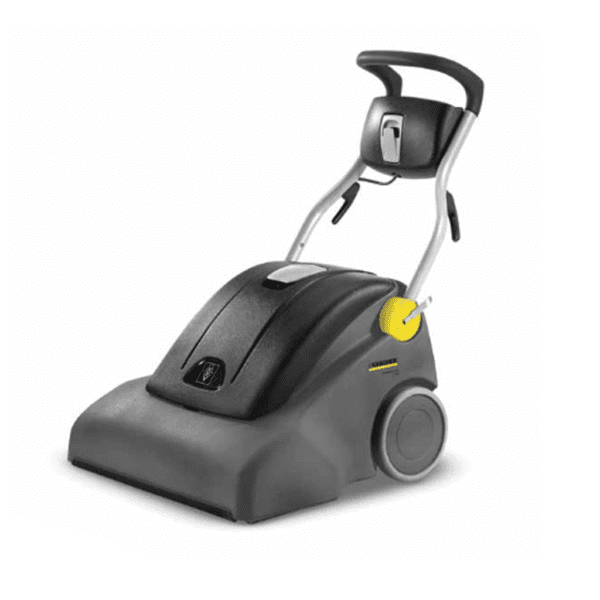
A strong example in this category is the Kärcher CV 66/2 Wide Area Vacuum, designed specifically for large commercial carpet areas where efficiency is critical. With its wide 66 cm cleaning width, this machine allows cleaning teams to cover substantially more area compared to standard upright vacuums. The result is faster cleaning cycles without compromising performance.
The dual motor system ensures that suction and brush operation remain consistent even during long cleaning sessions. This helps remove deeply embedded dirt while maintaining steady airflow. The large filter bag capacity reduces interruptions, allowing operators to clean larger zones without stopping frequently. Adjustable brush height also makes the machine suitable for different commercial carpet types, adding flexibility for multi-use facilities.
Because of these features, the Kärcher CV 66/2 is widely used in hotels, large office spaces, educational facilities, and convention centers where large carpeted areas require daily maintenance.
Where Wide-Area Vacuums Deliver Maximum Value
Wide-area vacuums deliver the most value in long corridors, open office floors, ballrooms, and retail environments with extensive carpet coverage. In these settings, they can reduce cleaning time dramatically compared to traditional vacuums. Facilities aiming to improve efficiency while maintaining professional cleanliness often see the greatest benefit from wide-area machines.
Walk-Behind and Ride-On Vacuum Sweepers
Industrial-Level Productivity
For extremely large facilities such as warehouses or distribution centers, walk-behind and ride-on vacuum sweepers provide unmatched productivity. These machines are designed to clean massive floor areas quickly with minimal physical effort. Operators can cover thousands of square feet in a short time, making them ideal for industrial environments.
Ride-on sweepers are especially useful where continuous cleaning is required. They allow operators to work comfortably for extended periods while maintaining consistent performance. Although the initial investment is higher, the reduction in labor hours often justifies the cost for large operations.
When These Machines Make Sense
These machines make sense in facilities with very large open floors and minimal obstacles. However, they may not be practical for carpet-heavy environments or smaller commercial spaces where maneuverability is required.
Wet and Dry Commercial Vacuums
Handling Mixed Cleaning Tasks
Wet and dry commercial vacuums are built for versatility rather than speed. They can handle liquid spills, heavy debris, and dust in a single machine, making them valuable for maintenance teams and industrial environments. These vacuums are commonly used in workshops, construction sites, and manufacturing facilities where cleaning conditions vary throughout the day.
Their ability to handle different types of messes makes them useful as supplementary equipment in large facilities. However, they are not typically the primary solution for routine cleaning of large carpeted areas because their cleaning width is limited.
Industries That Benefit Most
Industries such as manufacturing, automotive services, and construction benefit the most from wet and dry vacuums. They provide flexibility and durability, allowing teams to address unexpected cleaning needs quickly and efficiently.
Choosing the Right Vacuum Based on Floor Type
Carpeted Areas
Carpeted areas require strong suction and effective brush agitation to remove embedded dirt. Wide-area vacuums or high-performance uprights are usually the best choice because they maintain consistent cleaning across large surfaces. Facilities with extensive carpeting benefit greatly from machines designed specifically for carpet productivity.
Hard Floors
Hard floors require efficient dust collection without scattering debris. Sweepers or backpack vacuums often perform well because they allow faster movement and better edge cleaning. In very large spaces, combining sweepers with vacuum systems provides optimal results.
Mixed Flooring Environments
Many commercial facilities include both carpet and hard floor areas. In these cases, using multiple vacuum types often provides the best outcome. Wide-area vacuums handle open carpet sections, while uprights or backpack vacuums manage detailed cleaning and transitions between surfaces.
How to Select the Right Vacuum for Your Facility Size
Small vs Medium vs Large Spaces
Small facilities typically benefit from upright or backpack vacuums due to flexibility and lower cost. Medium-sized spaces may require a combination of upright and wide-area machines. Large facilities, especially those with open carpeted floors, benefit most from wide-area vacuums or sweepers that prioritize coverage and efficiency.
Productivity and Labor Cost Considerations
Labor costs often represent the largest expense in commercial cleaning operations. Equipment that reduces cleaning time can significantly lower operational costs over the long term. Wide-area vacuums, particularly models designed for productivity like the Kärcher CV 66/2, allow cleaning teams to complete tasks faster while maintaining consistent results. This balance between performance and efficiency is what ultimately determines the best vacuum choice.
Conclusion
The best commercial vacuums for large floor areas are those that balance cleaning performance with productivity. Upright and backpack vacuums remain valuable for detailed cleaning, but wide-area vacuums stand out when speed and coverage are priorities. Machines like the Kärcher CV 66/2 Wide Area Vacuum are built specifically for large carpeted environments, allowing cleaning teams to cover more ground efficiently while maintaining consistent cleaning quality. Selecting the right vacuum based on floor type, facility size, and operational needs ensures cleaner spaces, reduced labor effort, and better long-term value.
FAQs
1. What is the best vacuum type for large carpeted commercial areas?
Wide-area commercial vacuums are generally the best option because they clean faster and cover more space per pass.
2. Is the Kärcher CV 66/2 suitable for daily commercial cleaning?
Yes, it is designed for daily use in large commercial environments such as offices, hotels, and convention centers.
3. Are backpack vacuums better for large spaces?
They are better for areas with obstacles, but wide-area vacuums are faster in open carpeted spaces.
4. Can one vacuum handle all commercial cleaning needs?
Most facilities use multiple vacuum types to achieve the best results across different floor types.
5. How do wide-area vacuums improve efficiency?
They reduce cleaning time by covering more floor area in fewer passes, lowering labor effort and operational costs.