Pressure Washer Nozzle Chart: Complete Guide to Colors, Sizes, and Uses

Choosing the right pressure washer nozzle can make a major difference in cleaning performance, safety, and efficiency. A pressure washer may have powerful cleaning capability, but the nozzle determines how that power is delivered to the surface. The wrong nozzle can make cleaning slower, waste water, or even damage surfaces such as vehicle paint, coatings, wood, or delicate materials.
A pressure washer nozzle chart helps users quickly understand the purpose of different spray tips, including nozzle colors, spray angles, and sizes. Whether you are cleaning vehicles, concrete surfaces, construction equipment, commercial buildings, or industrial facilities, selecting the correct nozzle allows you to achieve better results without unnecessary surface damage.
At Pressure King Inc, we help businesses in New Jersey and New York choose professional Kärcher pressure washing equipment, accessories, and replacement parts based on their cleaning needs. Understanding how pressure washer tips work is an important step in getting the best performance from your equipment.
This guide explains the pressure washer nozzle color chart, nozzle sizing, spray patterns, application recommendations, and how commercial users can select the right pressure washer nozzle for different cleaning tasks.
What Is a Pressure Washer Nozzle?
A pressure washer nozzle, also called a spray tip or power washer end, is the attachment connected to the end of a pressure washer wand or spray gun. It controls the direction, width, and intensity of the water spray coming from the machine.
Different nozzles create different spray patterns. Some concentrate water into a narrow stream for heavy cleaning, while others spread water over a wider area for safer and more efficient coverage.
For example:
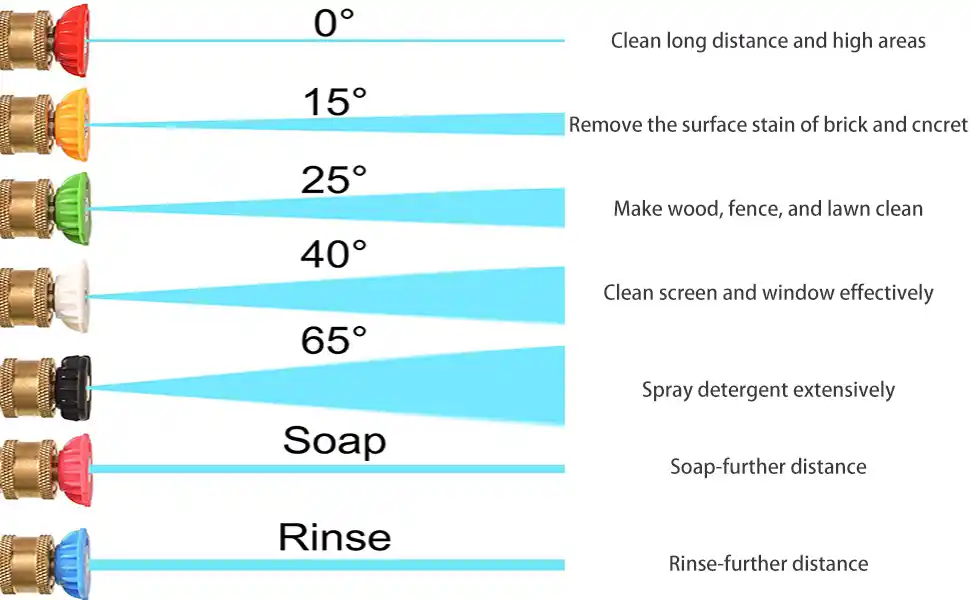
- A 0-degree nozzle creates a highly concentrated stream.
- A 25-degree nozzle provides balanced cleaning coverage.
- A 40-degree nozzle creates a wider, gentler spray.
- A soap nozzle applies detergent at low pressure.
Because each cleaning application requires different levels of force and coverage, professional operators often use multiple nozzle options instead of relying on a single tip.
Why Choosing the Correct Pressure Washer Nozzle Matters
The nozzle you choose affects both cleaning results and surface protection. Many users assume that higher pressure always creates better cleaning, but that is not always true. The correct nozzle allows you to use the available cleaning power more effectively.
Using the right pressure washer tip helps:
- Improve cleaning speed
- Cover more surface area
- Reduce water waste
- Protect sensitive materials
- Improve operator control
- Maintain consistent cleaning results
For commercial users, nozzle selection becomes even more important because pressure washers often operate for longer periods and across different surfaces. A construction company may need stronger tips for equipment cleaning, while a fleet cleaning business may require wider spray patterns to safely wash vehicles. Industrial facilities may use multiple nozzle types depending on whether they are removing dirt, grease, or applying cleaning chemicals.

Pressure Washer Nozzle Chart Explained
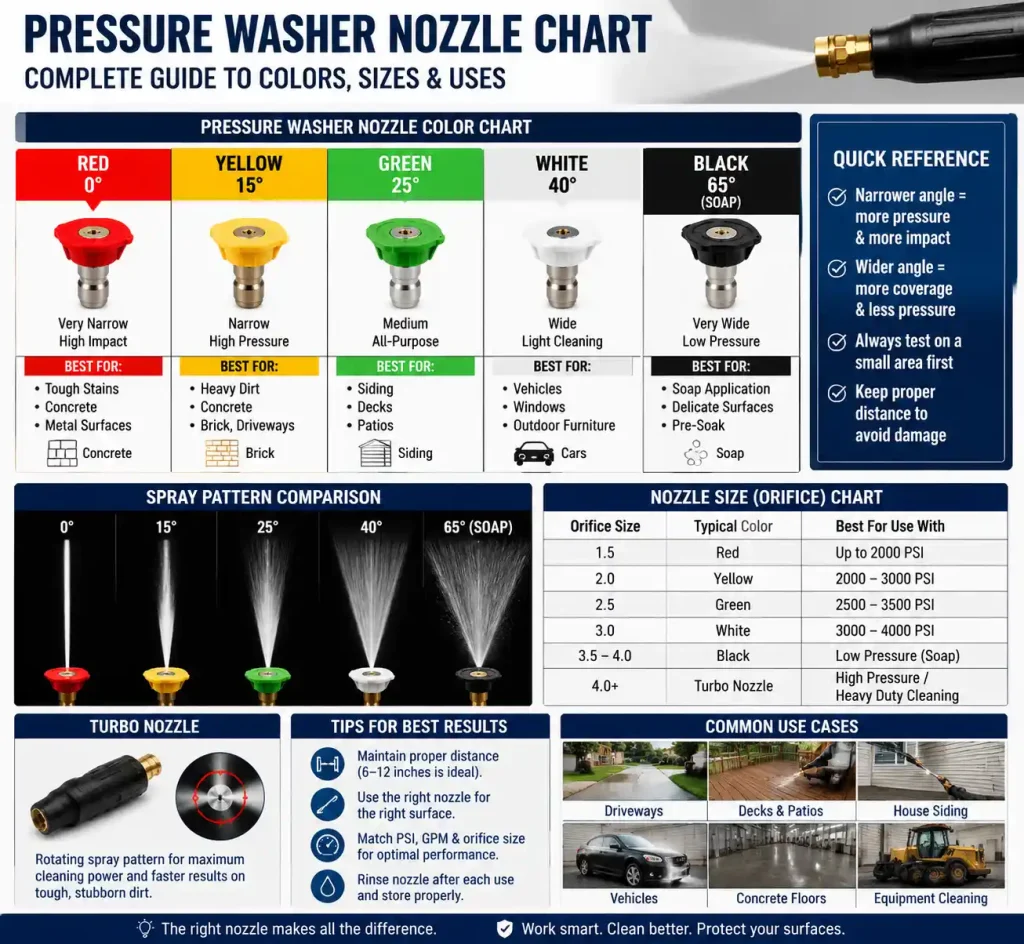
The most common pressure washer nozzles follow a color-coded system. The color identifies the spray angle and recommended use.
Below is a basic pressure washer nozzles chart:
| Nozzle Color | Spray Angle | Main Purpose | Common Applications |
| Red | 0° | Maximum concentrated cleaning | Heavy buildup, small areas, tough stains |
| Yellow | 15° | Strong cleaning power | Concrete, equipment, hard surfaces |
| Green | 25° | General-purpose cleaning | Driveways, buildings, equipment |
| White | 40° | Gentle wide cleaning | Vehicles, painted surfaces, delicate areas |
| Black | 65° | Low-pressure detergent application | Soap and chemical application |
This pressure washer nozzle color chart is designed as a general guide. The ideal nozzle depends on the surface, cleaning requirement, and pressure washer specifications.
Commercial operators often keep several nozzle options available so they can quickly adjust cleaning performance without changing equipment.
Pressure Washer Nozzle Color Chart and Spray Angles Explained
Red Pressure Washer Nozzle (0 Degree)
The red nozzle creates the narrowest and most concentrated spray pattern available in standard pressure washer tips. Because the water stream is focused into a very small area, it produces high impact cleaning power.
This nozzle is mainly used for targeted cleaning where strong force is required.
Common uses include:
- Removing stubborn buildup from durable surfaces
- Cleaning small areas with heavy contamination
- Breaking loose hard deposits
However, the red nozzle requires careful handling because the concentrated spray can easily damage surfaces.
Avoid using a 0-degree nozzle on:
- Vehicle paint
- Wood surfaces
- Vinyl siding
- Soft materials
- Delicate coatings
For most cleaning jobs, professional users prefer a wider spray angle that provides better coverage with lower risk.
Yellow Pressure Washer Nozzle (15 Degree)
The yellow 15-degree nozzle provides strong cleaning power while covering more area than the red tip. It is commonly used for demanding cleaning applications where more force is needed but a slightly wider spray pattern is preferred.
Typical applications include:
- Construction equipment cleaning
- Concrete surfaces
- Heavy dirt removal
- Industrial equipment
This nozzle is popular among commercial users because it provides a good balance between cleaning power and control.
For example, contractors cleaning construction machinery may use a yellow nozzle to remove mud, dust, and heavy buildup from durable equipment surfaces.
Green Pressure Washer Nozzle (25 Degree)
The green 25-degree nozzle is one of the most commonly used pressure washer tips because it provides a balanced combination of cleaning power and coverage.
It is considered a versatile option for many everyday cleaning applications.
Common uses include:
- Sidewalks
- Driveways
- Outdoor surfaces
- Commercial buildings
- General equipment cleaning
Many professionals use the green nozzle as their standard cleaning tip because it works well across a wide range of surfaces.
For businesses that perform general maintenance cleaning, having a reliable 25-degree nozzle is often essential.
White Pressure Washer Nozzle (40 Degree)
The white nozzle creates a wider spray pattern and delivers a gentler cleaning effect. Because the water pressure is distributed across a larger area, it reduces the risk of surface damage.
It is commonly used for:
- Vehicle washing
- Painted surfaces
- Windows
- Outdoor furniture
- Sensitive materials
The white nozzle is often recommended as the best pressure washer nozzle for car washing because it provides effective cleaning while being safer for automotive surfaces.
For fleet cleaning operations, operators may combine a white nozzle with appropriate detergents and professional equipment to achieve efficient results without damaging vehicle finishes.
Black Pressure Washer Nozzle (65 Degree)
The black nozzle is designed primarily for applying detergents and cleaning solutions. It produces a very wide spray pattern with low pressure, allowing chemicals to be applied evenly across surfaces.
Common uses include:
- Applying soap
- Pre-treating surfaces
- Chemical application
This nozzle is not designed for removing heavy dirt. Instead, it prepares surfaces before switching to a higher-pressure cleaning tip.
For commercial cleaning operations, proper detergent application can reduce cleaning time and improve overall results.
Pressure Washer Nozzle Sizes Explained
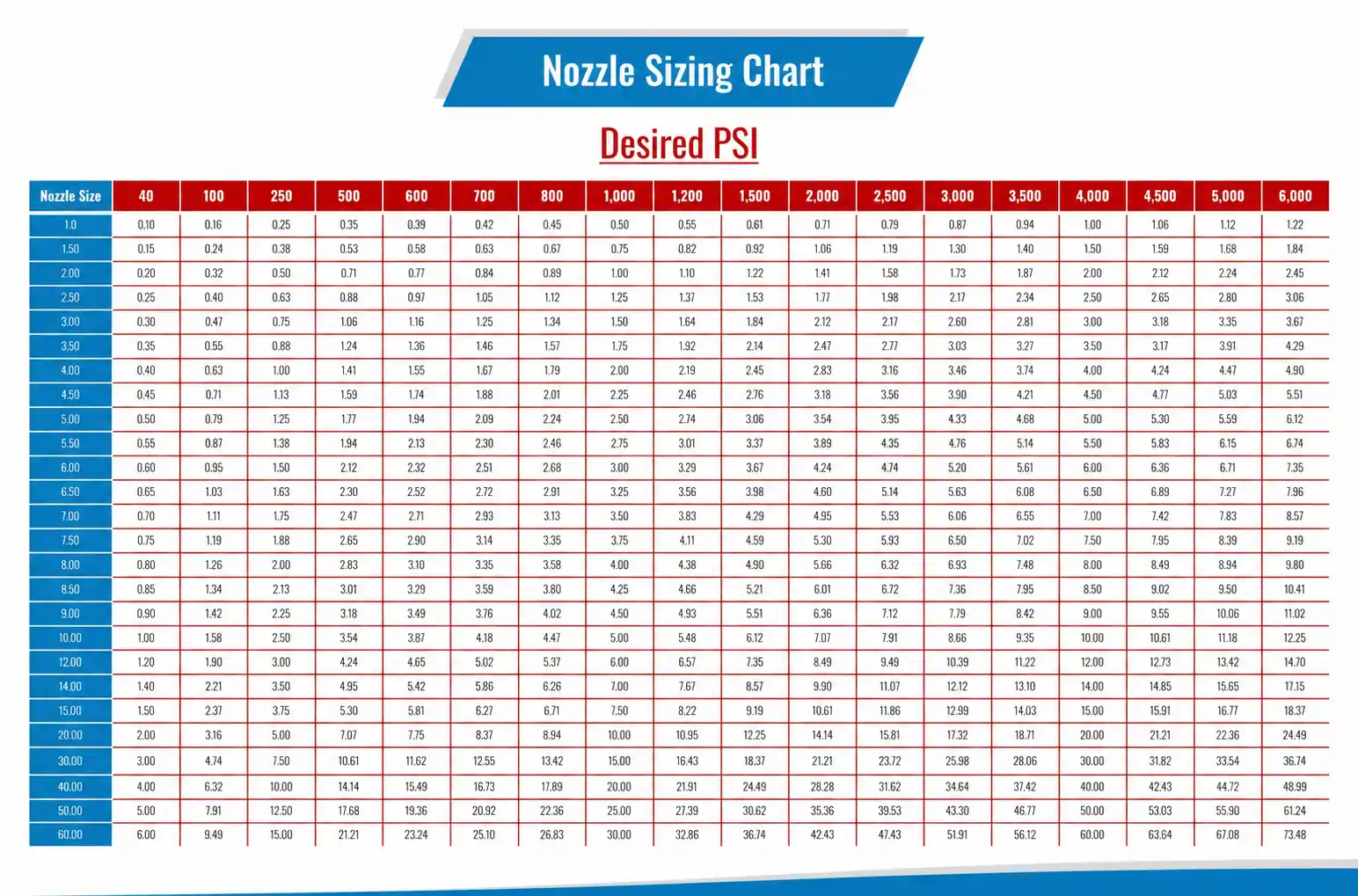
While nozzle color tells you the spray angle and general purpose, nozzle size determines how much water flows through the tip and how the pressure washer performs. Selecting the correct nozzle size is especially important for commercial and industrial equipment because an incorrect size can affect cleaning efficiency and place unnecessary stress on the machine.
A pressure washer nozzle size is selected based on the machine’s PSI and GPM ratings. The nozzle must allow the right amount of water flow for the pump to operate efficiently. Using a nozzle that is too small can create excessive pressure, while a nozzle that is too large can reduce cleaning performance.
For professional users, especially those operating commercial Kärcher equipment, matching the nozzle size with the machine specifications helps maintain consistent performance and protects important components such as the pump.
What Does Pressure Washer Nozzle Size Mean?
Pressure washer nozzle size refers to the opening inside the spray tip that controls water flow. The size determines how much water passes through the nozzle at a specific pressure.
A smaller opening creates:
- Higher pressure concentration
- Stronger impact
- Less water flow
A larger opening creates:
- More water flow
- Wider cleaning capability
- Reduced pressure intensity
The goal is to select a nozzle that matches your pressure washer output. The correct size allows the machine to work efficiently while delivering the right cleaning power for the application.
Pressure Washer Nozzles Sizing Chart
The following pressure washer nozzles sizing chart provides general guidance for common applications:
| Nozzle Size | Typical Application |
|---|---|
| 2.0 | Small electric pressure washers and light cleaning |
| 2.5 | Residential cleaning applications |
| 3.0 | Light commercial cleaning |
| 4.0 | Commercial pressure washing equipment |
| 5.0+ | Heavy-duty industrial applications |
The exact nozzle size depends on your machine’s PSI and GPM specifications. Always check manufacturer recommendations before selecting a replacement nozzle. For businesses using professional equipment, the correct nozzle selection helps maintain productivity and avoid unnecessary wear on the pressure washer system.
How to Choose the Right Pressure Washer Nozzle Size
Choosing the correct nozzle size requires understanding your equipment and cleaning requirements. A nozzle that works well for one machine may not provide the same results on another pressure washer.
Consider these factors before selecting a nozzle:
Check Your Pressure Washer Specifications
Start by checking:
- PSI rating
- GPM rating
- Manufacturer recommendations
These specifications determine the amount of water flow the nozzle needs to handle. For example, a commercial pressure washer producing higher water flow requires a different nozzle size compared to a smaller residential machine.
Consider the Cleaning Application
The surface you are cleaning also affects nozzle selection.
Examples:
- Vehicle cleaning requires controlled, gentle spray patterns.
- Concrete and heavy equipment may require stronger cleaning tips.
- Chemical application requires low-pressure nozzles.
Choosing based on the cleaning task prevents unnecessary surface damage and improves efficiency.
Match Nozzle Size With Commercial Equipment
Commercial users often operate pressure washers for several hours at a time. Using the correct nozzle helps maintain stable performance during extended cleaning jobs. For Kärcher commercial pressure washers and industrial cleaning systems, operators should always use compatible nozzle sizes designed for the machine’s specifications.
Pressure Washer Nozzle Chart for Different Cleaning Applications
Different industries and cleaning projects require different nozzle options. There is no single “best” nozzle for every job. The right choice depends on the material being cleaned, the level of contamination, and the desired cleaning result.
Below is an application-based pressure washer nozzle chart:
| Cleaning Application | Recommended Nozzle | Reason |
| Cars and vehicles | White 40° | Provides safer cleaning coverage |
| Concrete surfaces | Green 25° / Yellow 15° | Provides stronger surface cleaning |
| Construction equipment | Yellow 15° | Removes heavy dirt and buildup |
| Industrial floors | Green 25° | Balanced cleaning coverage |
| Heavy contamination | Turbo nozzle | Increases cleaning impact |
| Soap application | Black 65° | Applies detergent evenly |
Best Pressure Washer Nozzle for Car Washing
The best nozzle for pressure washer for car washing is generally the white 40-degree nozzle because it provides a wider spray pattern with reduced surface impact. Vehicle surfaces, especially painted areas, require controlled cleaning. A narrow high-impact spray can damage paint, remove protective coatings, or leave visible marks if used incorrectly.
For vehicle cleaning, professionals typically use:
- White 40-degree nozzle
- Low-pressure detergent nozzle
- Appropriate vehicle-safe cleaning chemicals
A wider spray allows operators to cover more surface area while maintaining safer cleaning conditions. For commercial fleet operators, nozzle selection becomes even more important because vehicles are cleaned frequently. The correct nozzle helps maintain appearance while reducing the risk of repeated surface damage.
Best Pressure Washer Nozzle for Concrete Surfaces
Concrete is a durable material, but choosing the wrong pressure washer nozzle can still create problems. A nozzle with too much concentrated force may damage older, weaker, or already worn concrete surfaces. The right nozzle depends on the condition of the surface, the type of buildup, and the cleaning goal.
Before selecting a nozzle, it is also important to understand the relationship between nozzle selection and machine pressure. Using the correct combination of spray angle, nozzle size, and operating pressure helps achieve better cleaning results while protecting the surface. For more details about selecting the correct pressure level, read our guide on pressure washer PSI for concrete.
Green 25-Degree Nozzle
The green 25-degree nozzle is one of the most commonly used tips for concrete cleaning because it provides a good balance between cleaning power and surface coverage. It spreads the water stream across a wider area compared to narrower tips, making it suitable for regular maintenance cleaning.
Common applications include:
- Sidewalks
- Commercial walkways
- Patios
- Warehouse floors
- Parking areas
For general concrete maintenance, the green nozzle is often the best starting point because it provides effective cleaning without being overly aggressive.
Yellow 15-Degree Nozzle
The yellow 15-degree nozzle creates a stronger, more concentrated spray pattern than the green nozzle. It is commonly used when concrete surfaces have heavier buildup that requires additional cleaning force.
Common applications include:
- Construction areas
- Heavy dirt and mud buildup
- Equipment cleaning areas
- Industrial concrete surfaces
Because this nozzle delivers more concentrated impact, operators should maintain proper distance and test a small area before cleaning the entire surface.
Turbo Nozzle
A turbo nozzle uses a rotating spray pattern to combine the impact of a narrow stream with the coverage of a wider spray. This makes it useful for removing stubborn buildup from durable concrete surfaces.
Common applications include:
- Heavy stains
- Construction residue
- Older concrete buildup
- Industrial cleaning applications
However, turbo nozzles should be used carefully because their increased impact can damage weaker concrete or surfaces with protective coatings.
For large concrete cleaning projects, the right combination of nozzle, pressure setting, and cleaning technique can significantly improve results. Businesses handling frequent concrete cleaning should also consider professional-grade equipment and accessories designed for commercial applications.
Pressure Washer Nozzle Selection for Construction Equipment
Construction equipment is exposed to mud, dust, cement residue, and heavy debris. Cleaning these machines requires stronger spray patterns and durable equipment.
Common nozzle choices include:
- Yellow 15-degree nozzle
- Green 25-degree nozzle
- Turbo nozzle for stubborn areas
Construction operators should avoid using extremely concentrated tips on sensitive machine components, seals, or painted areas. The correct nozzle combination allows operators to remove buildup effectively while protecting equipment surfaces.
Pressure Washer Nozzle Selection for Industrial Facilities
Industrial facilities often require cleaning solutions that balance power, efficiency, and safety. Manufacturing plants, warehouses, and service facilities may deal with:
- Oil
- Grease
- Dust
- Production residue
- Equipment contamination
Recommended nozzle choices:
- Green nozzle for general cleaning
- Yellow nozzle for heavy buildup
- Black nozzle for detergent application
Commercial cleaning teams often keep multiple nozzle options available so they can adjust quickly based on the cleaning requirement. For industrial applications, the nozzle is only one part of the complete cleaning setup. The pressure washer type, detergent selection, hose, gun, and accessories all contribute to final performance.

Pressure Washer Tips Color Code by Number Explained
In addition to colors, pressure washer nozzle tips are often identified by numbers that represent the spray angle.
The most common numbering system includes:
| Number Code | Spray Angle | Purpose |
| 0 | 0-degree | Concentrated cleaning |
| 15 | 15-degree | Strong surface cleaning |
| 25 | 25-degree | General cleaning |
| 40 | 40-degree | Gentle cleaning |
| 65 | 65-degree | Detergent application |
Understanding pressure washer tips color code by number makes it easier for operators to identify the correct nozzle quickly. For commercial cleaning teams, numbered tips are especially useful because multiple operators may use the same equipment, and quick identification reduces setup time.
Turbo Nozzle vs Standard Pressure Washer Tips
A turbo nozzle is different from traditional pressure washer tips because it combines the impact of a narrow spray with a rotating motion. Instead of producing a fixed spray pattern, a turbo nozzle spins the water stream in a circular motion, creating a wider cleaning path while maintaining strong cleaning power.
Turbo nozzles are commonly used when standard pressure washer tips are not providing enough cleaning performance. They can help remove stubborn buildup faster while reducing the amount of time spent cleaning large areas.
Common applications for turbo nozzles include:
- Heavy dirt buildup
- Concrete surfaces
- Construction equipment
- Industrial areas
- Removing stubborn stains from durable surfaces
However, turbo nozzles should be used carefully. They are not recommended for delicate surfaces such as vehicle paint, wood, vinyl siding, or soft materials because the rotating impact can cause damage. For commercial users, a turbo nozzle can be a valuable addition to a pressure washer accessory collection, especially when cleaning challenging surfaces that require extra power.
Standard Pressure Washer Tips vs Turbo Nozzles: Which One Should You Use?
Choosing between standard tips and turbo nozzles depends on the cleaning requirement.
| Feature | Standard Pressure Washer Tips | Turbo Nozzle |
|---|---|---|
| Spray Pattern | Fixed angle | Rotating spray |
| Surface Coverage | Depends on angle | Wider impact area |
| Cleaning Power | Adjustable | Higher impact |
| Best For | General cleaning | Tough buildup |
| Surface Safety | Easier to control | Requires more caution |
For regular cleaning tasks, standard pressure washer tips provide better control. For heavy-duty applications, turbo nozzles can improve productivity. Professional operators often keep both options available so they can select the right tool for each surface.
How to Choose the Right Pressure Washer Nozzle for Commercial Cleaning
Commercial cleaning requires a different approach compared to occasional residential use. Businesses often clean larger areas, operate equipment for longer periods, and handle more challenging contaminants. When selecting a pressure washer nozzle for commercial applications, consider:
Type of Surface
The surface material should always be the first consideration.
Examples:
- Concrete can handle stronger spray patterns.
- Vehicles require gentler nozzles.
- Painted surfaces need controlled pressure.
- Industrial equipment may require stronger cleaning tips.
Using the correct nozzle protects surfaces and improves cleaning efficiency.
Type of Contamination
The type of dirt or buildup also determines nozzle selection.
Light contamination may require:
- Green nozzle
- White nozzle
Heavy contamination may require:
- Yellow nozzle
- Turbo nozzle
Oil, grease, and industrial residue may also require proper detergents along with the correct pressure washer tip.
Cleaning Area Size
Large commercial spaces require efficient coverage.
For example:
- A warehouse floor may benefit from a surface cleaner and green nozzle combination.
- Heavy equipment may require a yellow nozzle for focused cleaning.
- Fleet vehicles may require wider spray patterns.
Selecting the right nozzle helps reduce cleaning time and improves productivity.
Common Pressure Washer Nozzle Mistakes to Avoid
Even experienced users can make mistakes when selecting or using pressure washer tips. Understanding common errors helps prevent equipment problems and surface damage.
Using the Strongest Nozzle for Every Job
One of the most common mistakes is assuming the strongest nozzle will always provide better cleaning results. A 0-degree red nozzle may provide maximum impact, but it is not suitable for most applications.
Using excessive force can:
- Damage surfaces
- Remove coatings
- Create marks
- Increase repair costs
The goal is not maximum pressure. The goal is the correct combination of pressure, spray pattern, and cleaning technique.
Choosing a Nozzle Without Considering the Surface
Every surface has different cleaning requirements.
For example:
A concrete floor and a painted vehicle should not be cleaned using the same pressure washer tip. Concrete may require stronger cleaning, while vehicles need a wider and gentler spray pattern. Always consider the surface before selecting a nozzle.
Ignoring Nozzle Size Compatibility
A pressure washer nozzle must match the machine’s PSI and GPM output.
Using an incorrect nozzle size can affect:
- Cleaning performance
- Pressure output
- Pump efficiency
Commercial equipment users should always verify nozzle compatibility before installation.
Continuing to Use Worn Nozzles
Pressure washer nozzles wear over time because water continuously passes through the opening at high speed.
A worn nozzle may cause:
- Reduced cleaning performance
- Uneven spray patterns
- Increased water consumption
- Incorrect pressure output
Replacing worn tips helps maintain consistent cleaning results.
How to Maintain Pressure Washer Nozzles
Proper maintenance helps extend nozzle life and keeps cleaning performance consistent. Pressure washer tips may be small components, but they have a major impact on overall equipment performance.
Follow these maintenance practices:
Clean Nozzles Regularly
Mineral deposits, dirt, and debris can block nozzle openings and affect spray performance.
After use:
- Flush the nozzle with clean water
- Remove visible debris
- Store it properly
Avoid using sharp objects that can damage the nozzle opening.
Store Tips Properly
Pressure washer nozzles should be stored in a dry and protected location.
Many professional users keep tips in:
- Nozzle holders
- Equipment cases
- Accessory storage boxes
Proper storage prevents damage and makes it easier to find the correct tip during cleaning jobs.
Inspect for Wear
Regularly check nozzles for:
- Uneven spray patterns
- Visible damage
- Reduced cleaning power
Commercial operators should inspect tips more frequently because their equipment operates for longer periods.
When Should You Replace a Pressure Washer Nozzle?
Pressure washer nozzles do not last forever. Over time, the opening inside the tip becomes larger due to constant water flow, which changes the spray performance.
Signs that a nozzle needs replacement include:
- Spray pattern is no longer even
- Cleaning takes longer than usual
- Pressure feels weaker
- Water flow appears inconsistent
- The nozzle shows visible damage
For commercial users, replacing worn tips regularly helps maintain productivity and prevents inaccurate cleaning results. Businesses using Kärcher commercial pressure washers should choose compatible replacement nozzles designed for their equipment specifications.
Pressure Washer Nozzle Buying Guide: What to Look For
When purchasing replacement pressure washer nozzles, consider the following factors:
Material Quality
Professional nozzles are designed with durable materials that can withstand high pressure and frequent use. Commercial users should avoid low-quality tips because they may wear quickly and affect cleaning performance.
Compatibility
Before buying a nozzle, check:
- Connection type
- Pressure rating
- Machine specifications
- Spray angle requirements
A nozzle that does not match your pressure washer may not perform correctly.
Cleaning Application
Choose nozzles based on the work you perform.
Examples:
- Vehicle cleaning → White 40-degree
- General maintenance → Green 25-degree
- Heavy-duty cleaning → Yellow 15-degree
- Detergent application → Black 65-degree
For professional applications, having multiple nozzle options provides more flexibility.
Conclusion
A pressure washer nozzle chart makes it easier to understand the differences between nozzle colors, spray angles, and sizes. Choosing the correct pressure washer tip improves cleaning efficiency, protects surfaces, and helps your equipment perform as designed.
The best nozzle depends on your specific application. Vehicles usually require wider and gentler spray patterns, while concrete, construction equipment, and industrial surfaces may require stronger cleaning tips. Understanding nozzle selection allows users to clean more effectively without unnecessary damage.
For businesses in New Jersey and New York, Pressure King Inc provides professional Kärcher pressure washers, pressure washer nozzles, accessories, and commercial cleaning equipment. Whether you need replacement tips or a complete pressure washing solution, selecting the right equipment setup helps improve productivity, safety, and long-term performance.
Frequently Asked Questions About Pressure Washer Nozzles Chart
What do the colors on a pressure washer nozzle chart mean?
The colors represent different spray angles and cleaning applications. Red is a concentrated 0-degree spray, yellow is 15 degrees, green is 25 degrees, white is 40 degrees, and black is used for low-pressure detergent application.
Which pressure washer nozzle is best for car washing?
The best pressure washer nozzle for car washing is usually the white 40-degree nozzle because it provides a wider spray pattern that cleans effectively while reducing the risk of damaging vehicle paint.
Which pressure washer nozzle is best for concrete?
A green 25-degree nozzle is commonly used for general concrete cleaning, while a yellow 15-degree nozzle or turbo nozzle may be better for tougher buildup on durable concrete surfaces.
Are pressure washer nozzles universal?
Many pressure washer nozzles use standard quick-connect fittings, but compatibility depends on the wand, pressure rating, and equipment specifications. Always verify before purchasing replacement tips.
How do I know what size pressure washer nozzle I need?
The correct nozzle size depends on your pressure washer’s PSI and GPM ratings. Check your machine specifications and select a nozzle designed to match its output.
What is the strongest pressure washer nozzle?
The red 0-degree nozzle provides the most concentrated spray force among standard tips. However, it should only be used on suitable durable surfaces because it can cause damage.
How often should pressure washer tips be replaced?
Replacement frequency depends on usage. Commercial operators may need to replace tips more often because of extended operation, while occasional users may replace them only when performance decreases.

Michael Adeniran is the CEO of Pressure King Inc. He has been dealing in commercial cleaning equipment for many years. He is one of the leading specialists and experts in commercial cleaning products.